

Corn pone, fried
Common food

Photo: Wikipedia
Corn pone is a dense, fried cornmeal cake, a staple of Southern US cuisine with a crispy, golden-brown exterior and a moist, tender, corn-forward interior. Nutritionally, it's a carb-rich energy source, with nearly 38g of carbohydrates per 100g providing quick fuel.
Calorie split: 5% protein · 60% carbs · 35% fat
↓ Full nutrition💚 Why it's loved
People love corn pone for its satisfying, hearty texture and the deep, sweet corn flavor that intensifies when fried. It's cherished as a versatile side that evokes home cooking and Southern heritage.
⚠️ Watch-outs & how to enjoy it better
The high carbohydrate content can cause blood-sugar spikes, and the frying method adds significant fat. To counteract this, pair it with a protein-rich dish like beans or fried chicken, and practice portion control by enjoying a single pone as part of a balanced plate.
Key benefits
- Excellent source of quick energy from complex carbohydrates
- Provides a modest amount of plant-based protein
- Contains dietary fiber for digestive health
- A comforting, culturally significant comfort food
🍽️ Popular dishes

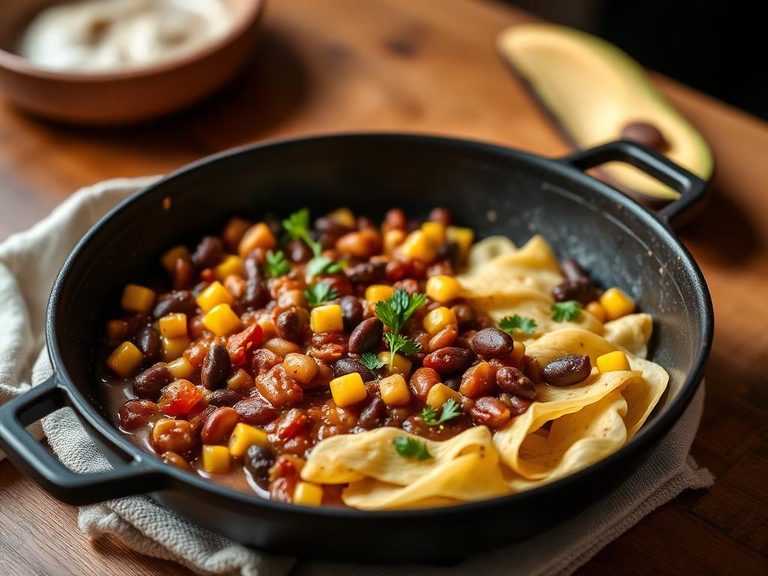
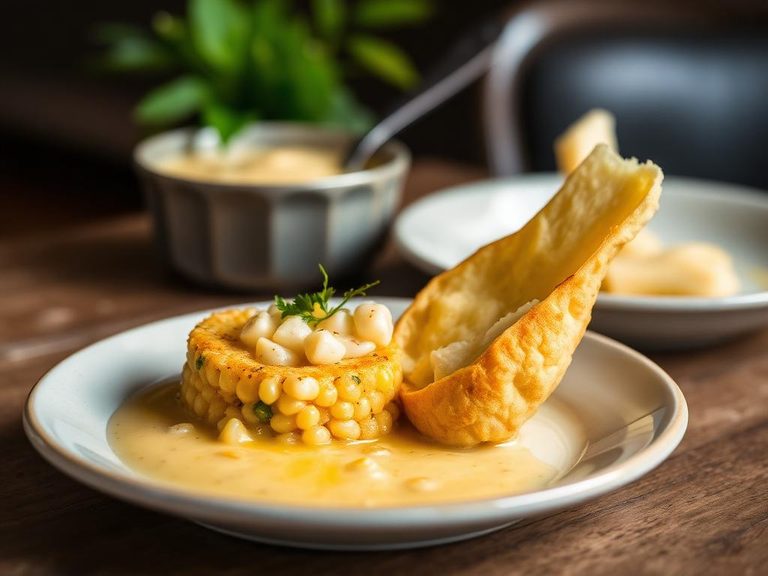
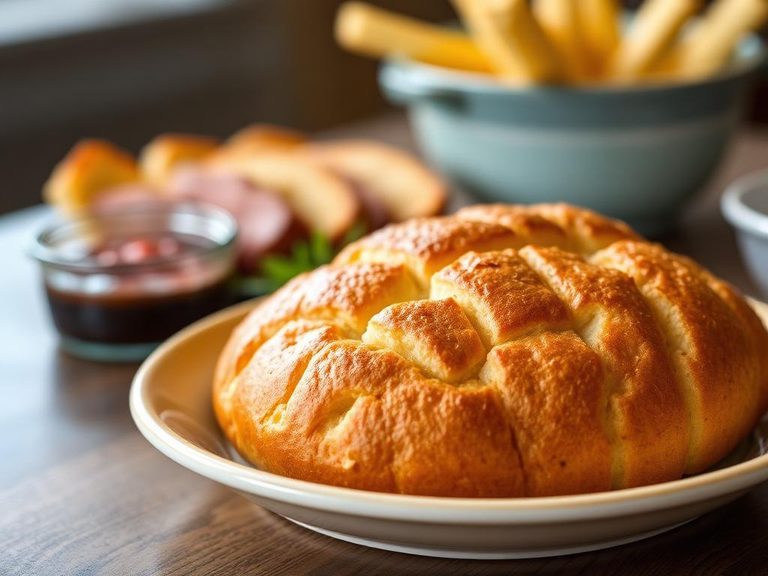
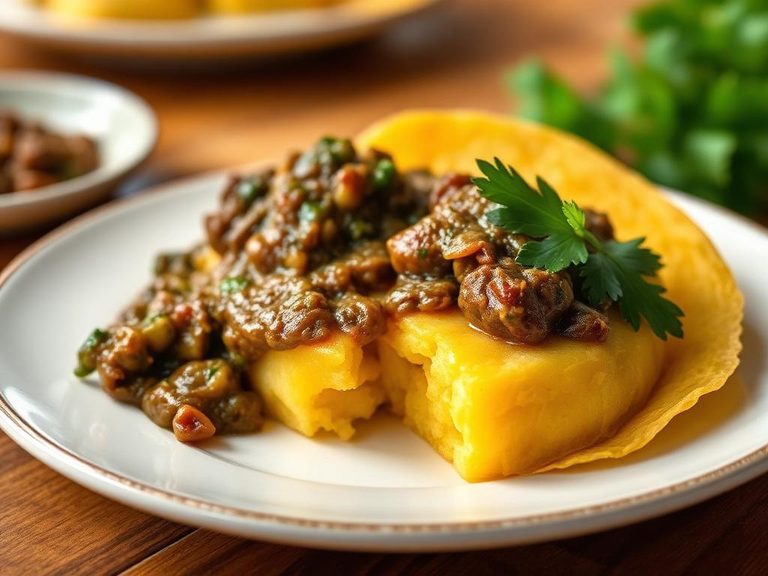
🌍 Where it's eaten
💡 Did you know?
The name 'pone' is thought to derive from the Algonquian word 'apone,' meaning a type of bread, highlighting its deep Native American roots before becoming a cornerstone of Southern cooking.
Full nutrition (USDA data · scales with serving)
| Water | 47.0 g |
| Energy | 254 kcal |
| Protein | 3.3 g |
| Total lipid (fat) | 9.8 g |
| Carbohydrate, by difference | 37.8 g |
| Fiber, total dietary | 1.8 g |
| Total Sugars | 0.76 g |
| Calcium, Ca | 108 mg |
| Iron, Fe | 2.3 mg |
| Magnesium, Mg | 16.0 mg |
| Phosphorus, P | 85.0 mg |
| Potassium, K | 68.0 mg |
| Sodium, Na | 417 mg |
| Zinc, Zn | 0.31 mg |
| Copper, Cu | 0.04 mg |
| Selenium, Se | 4.9 ug |
| Vitamin C, total ascorbic acid | 0.00 mg |
| Thiamin | 0.21 mg |
| Riboflavin | 0.16 mg |
| Niacin | 2.1 mg |
| Vitamin B-6 | 0.08 mg |
| Folate, total | 69.0 ug |
| Folic acid | 59.0 ug |
| Folate, food | 10.0 ug |
| Folate, DFE | 110 ug |
| Choline, total | 3.9 mg |
| Vitamin B-12 | 0.00 ug |
| Vitamin B-12, added | 0.00 ug |
| Vitamin A, RAE | 5.0 ug |
| Retinol | 0.00 ug |
| Carotene, beta | 41.0 ug |
| Carotene, alpha | 27.0 ug |
| Cryptoxanthin, beta | 0.00 ug |
| Lycopene | 0.00 ug |
| Lutein + zeaxanthin | 688 ug |
| Vitamin E (alpha-tocopherol) | 0.61 mg |
| Vitamin E, added | 0.00 mg |
| Vitamin D (D2 + D3) | 0.00 ug |
| Vitamin K (phylloquinone) | 4.8 ug |
| Alcohol, ethyl | 0.00 g |
| Caffeine | 0.00 mg |
| Theobromine | 0.00 mg |
Fat & fatty acid profile (per 100g)
| Fatty acids, total saturated | 2.3 g |
| SFA 4:0 | 0.00 g |
| SFA 6:0 | 0.00 g |
| SFA 8:0 | 0.00 g |
| SFA 10:0 | 0.00 g |
| SFA 12:0 | 0.00 g |
| SFA 14:0 | 0.01 g |
| SFA 16:0 | 1.2 g |
| SFA 18:0 | 1.0 g |
| Fatty acids, total monounsaturated | 3.9 g |
| MUFA 16:1 | 0.00 g |
| MUFA 18:1 | 3.9 g |
| MUFA 20:1 | 0.01 g |
| MUFA 22:1 | 0.00 g |
| Fatty acids, total polyunsaturated | 2.9 g |
| PUFA 18:2 | 2.7 g |
| PUFA 18:3 | 0.18 g |
| PUFA 18:4 | 0.00 g |
| PUFA 20:4 | 0.00 g |
| PUFA 20:5 n-3 (EPA) | 0.00 g |
| PUFA 22:5 n-3 (DPA) | 0.00 g |
| PUFA 22:6 n-3 (DHA) | 0.00 g |
| Cholesterol | 0.00 mg |
FAQ
What is the difference between corn pone and cornbread?
Corn pone is typically fried in a skillet or deep-fried, resulting in a denser, chewier texture and a crispier crust. Cornbread is usually baked in a pan or skillet, making it lighter and more cake-like.
Can corn pone be made ahead of time?
Yes. Cooked pones can be cooled and refrigerated for 3-4 days. Reheat them in a skillet or oven to restore crispness. They can also be frozen for up to 3 months.
Is corn pone gluten-free?
Traditionally, yes, as it's made from cornmeal. However, always check for cross-contamination if you have celiac disease, and ensure no wheat flour was added to the recipe.
Nutrient density (calculated · NRF9.3)
Nutrient Rich Foods index: beneficial nutrients (protein, fiber, vitamins, minerals) minus saturated fat, added sugar & sodium, per 100 kcal.
NRF9.3 index — Fulgoni, Keast & Drewnowski, 2009. Computed from USDA nutrients.
Weight-loss friendliness (composite index)
Energy density 2.54 kcal/g · 5% calories from protein · 1.8 g fiber · 0.8 g sugar per 100 g.
Composite of energy density (Rolls et al., 1999), protein & fiber satiety, minus sugar. A calculated heuristic — ranks satiety-per-calorie, not a clinical measure.
Dietary load (calculated from USDA values)
Potential renal acid load. Positive = acid-forming, negative = alkaline-forming.
Sodium-to-potassium ratio: 6.13 (lower is better — aim for ≤ 1)
Sodium:potassium per WHO potassium guidance. Computed from USDA nutrients.