Corn, cooked, from restaurant
Common food
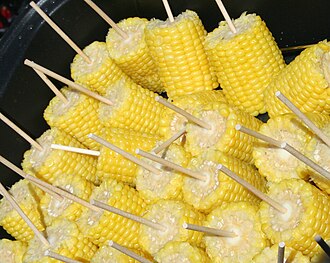
Photo: Wikipedia
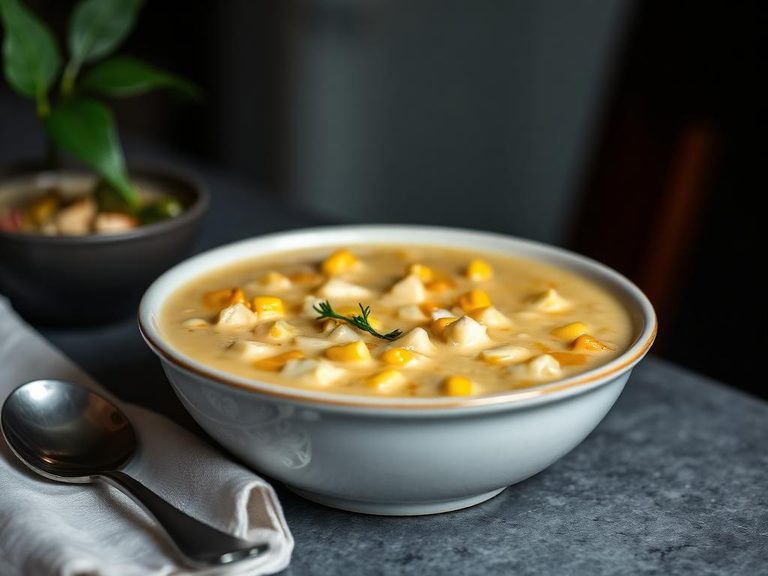
Restaurant-style cooked corn is a sweet, buttery side dish with a satisfying, juicy pop and a tender-crisp texture. It delivers a notable 5.43g of fat per 100g, often from added butter or oil, alongside a solid 17.73g of carbohydrates. This preparation transforms simple kernels into a rich, indulgent treat that is a staple on many dinner tables.
💚 Why it's loved
People love it for its comforting, sweet flavor and satisfying crunch, often enhanced by the rich, savory notes of butter and salt. It's a versatile side that pairs perfectly with grilled meats, BBQ, and summer gatherings, evoking a sense of casual, shared meals.
⚠️ Watch-outs & how to enjoy it better
The added butter and potential for high sodium in restaurant preparations can make it a higher-calorie, less heart-healthy choice. To counteract this, opt for a smaller portion, request it with less butter or salt, and pair it with a lean protein or a large, fiber-rich salad to balance the meal and mitigate blood-sugar spikes.
Key benefits
- Good source of dietary fiber (1.9g per 100g) for digestive health.
- Provides plant-based protein (3.11g per 100g).
- Contains antioxidants like lutein and zeaxanthin for eye health.
- Naturally gluten-free and a common whole-grain option.
🍽️ Popular dishes
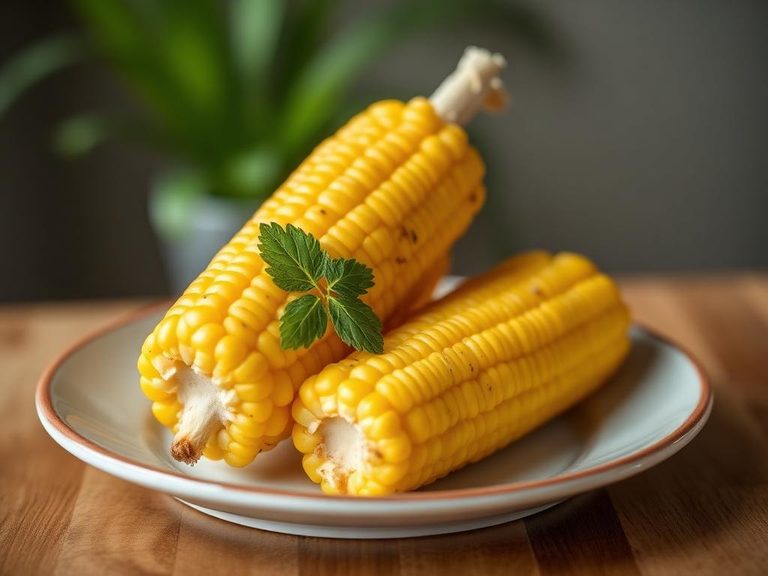
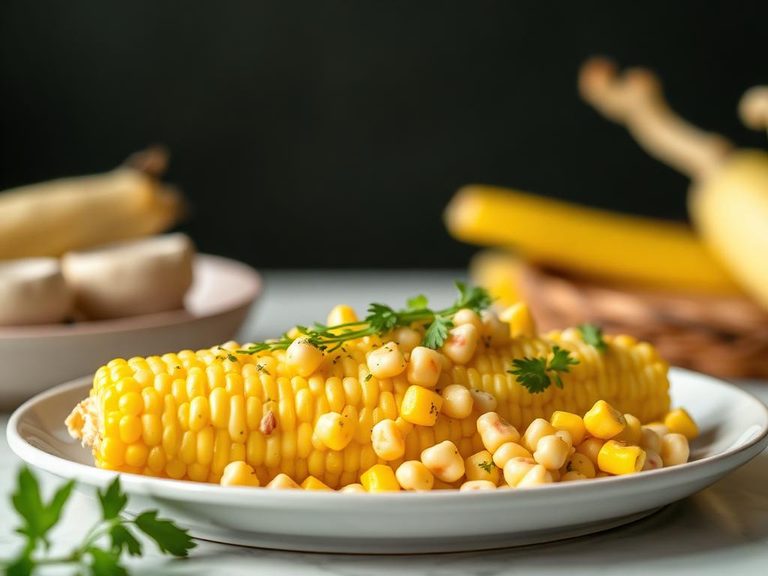
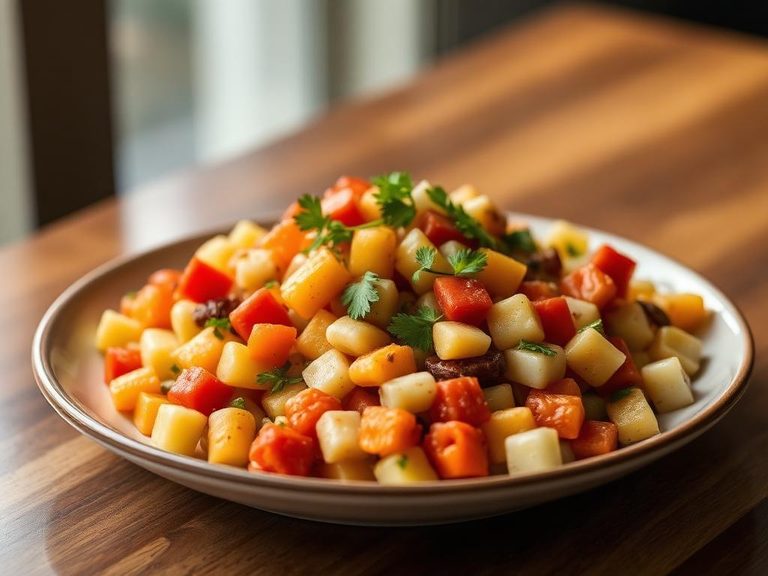

🌍 Where it's eaten
💡 Did you know?
A single ear of corn has an average of 800 kernels arranged in 16 rows, and each silk thread is connected to a single kernel.
Full nutrition (scales with serving)
| Water | 72.6 g |
| Energy | 119 kcal |
| Protein | 3.1 g |
| Total lipid (fat) | 5.4 g |
| Carbohydrate, by difference | 17.7 g |
| Fiber, total dietary | 1.9 g |
| Total Sugars | 5.9 g |
| Calcium, Ca | 3.0 mg |
| Iron, Fe | 0.50 mg |
| Magnesium, Mg | 35.0 mg |
| Phosphorus, P | 85.0 mg |
| Potassium, K | 257 mg |
| Sodium, Na | 212 mg |
| Zinc, Zn | 0.44 mg |
| Copper, Cu | 0.05 mg |
| Selenium, Se | 0.60 ug |
| Vitamin C, total ascorbic acid | 5.5 mg |
| Thiamin | 0.13 mg |
| Riboflavin | 0.05 mg |
| Niacin | 1.6 mg |
| Vitamin B-6 | 0.11 mg |
| Folate, total | 34.0 ug |
| Folic acid | 0.00 ug |
| Folate, food | 34.0 ug |
| Folate, DFE | 34.0 ug |
| Choline, total | 22.2 mg |
| Vitamin B-12 | 0.00 ug |
| Vitamin B-12, added | 0.00 ug |
| Vitamin A, RAE | 27.0 ug |
| Retinol | 18.0 ug |
| Carotene, beta | 50.0 ug |
| Carotene, alpha | 14.0 ug |
| Cryptoxanthin, beta | 104 ug |
| Lycopene | 0.00 ug |
| Lutein + zeaxanthin | 580 ug |
| Vitamin E (alpha-tocopherol) | 0.69 mg |
| Vitamin E, added | 0.00 mg |
| Vitamin D (D2 + D3) | 0.00 ug |
| Vitamin K (phylloquinone) | 3.7 ug |
| Fatty acids, total saturated | 1.4 g |
| SFA 4:0 | 0.03 g |
| SFA 6:0 | 0.02 g |
| SFA 8:0 | 0.01 g |
| SFA 10:0 | 0.03 g |
| SFA 12:0 | 0.03 g |
| SFA 14:0 | 0.10 g |
| SFA 16:0 | 0.84 g |
| SFA 18:0 | 0.27 g |
| Fatty acids, total monounsaturated | 1.9 g |
| MUFA 16:1 | 0.03 g |
| MUFA 18:1 | 1.8 g |
| MUFA 20:1 | 0.03 g |
| MUFA 22:1 | 0.00 g |
| Fatty acids, total polyunsaturated | 1.7 g |
| PUFA 18:2 | 1.5 g |
| PUFA 18:3 | 0.15 g |
| PUFA 18:4 | 0.00 g |
| PUFA 20:4 | 0.00 g |
| PUFA 20:5 n-3 (EPA) | 0.00 g |
| PUFA 22:5 n-3 (DPA) | 0.00 g |
| PUFA 22:6 n-3 (DHA) | 0.00 g |
| Cholesterol | 3.0 mg |
| Alcohol, ethyl | 0.00 g |
| Caffeine | 0.00 mg |
| Theobromine | 0.00 mg |
FAQ
Is restaurant-style cooked corn healthy?
It can be part of a healthy diet, but restaurant versions often contain added butter and salt, increasing the fat and sodium content. Enjoy it in moderation and consider asking for it with less butter or salt.
How does cooking affect the nutritional value of corn?
Cooking corn can increase the availability of some antioxidants like lutein and zeaxanthin, but it may slightly reduce the content of heat-sensitive vitamins like vitamin C. The addition of fats (like butter) can also increase calorie and fat content.
Can I eat corn if I'm watching my blood sugar?
Corn has a moderate glycemic index and contains fiber, which can help manage blood sugar. However, the added sugars and fats in restaurant preparations can affect blood sugar levels. Pairing it with protein and healthy fats, and controlling portion size, can help.