

Cobbler, peach
Common food

Photo: Wikipedia
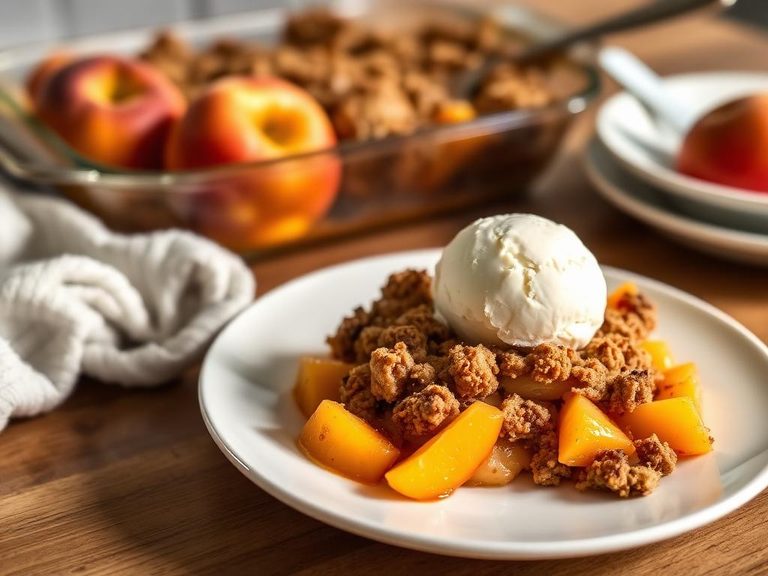
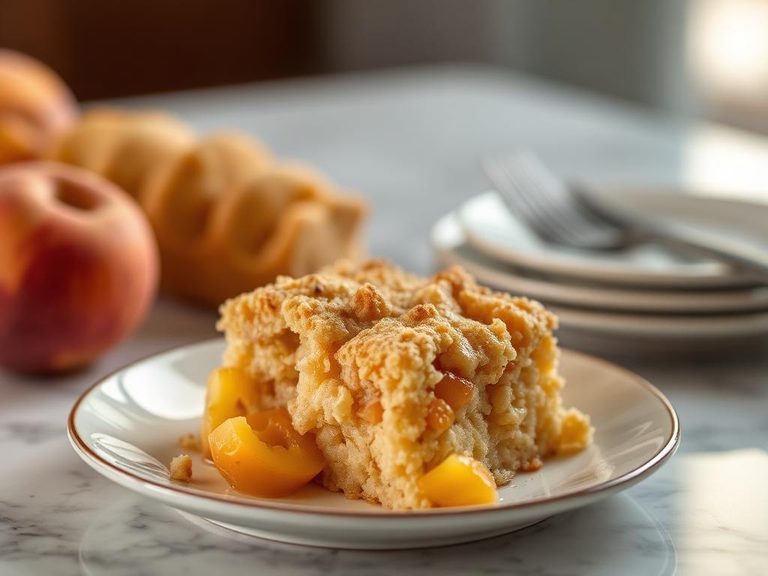
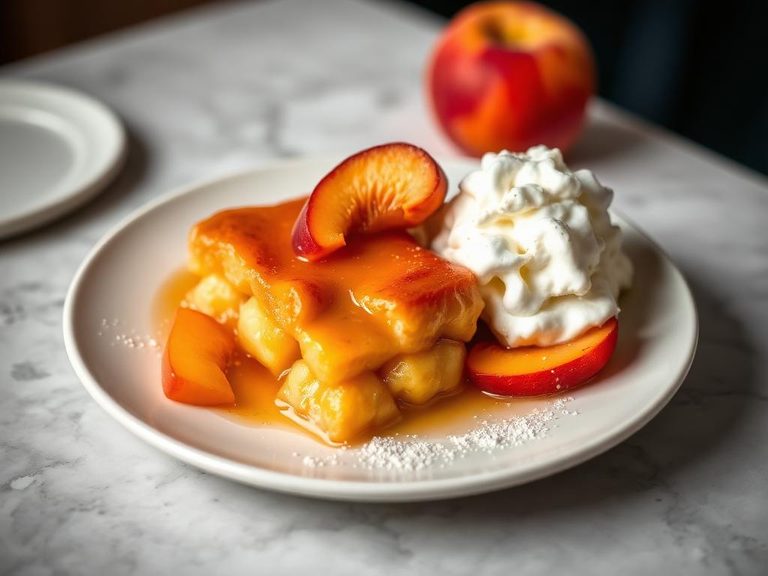
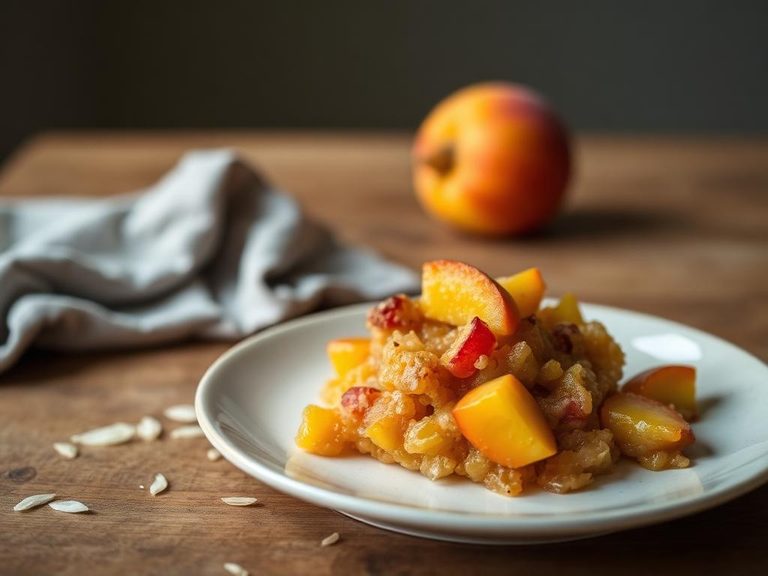
Peach cobbler is a warm, comforting dessert featuring sweet, juicy peaches baked under a golden, cake-like or biscuit-style topping. The peaches soften into a jammy, fragrant filling, while the topping provides a tender, slightly crisp contrast. Nutritionally, it's a carbohydrate-rich treat, primarily from the fruit's natural sugars and the flour in the crust.
Calorie split: 4% protein · 60% carbs · 36% fat
↓ Full nutrition💚 Why it's loved
People adore peach cobbler for its nostalgic, homey appeal and the perfect balance of sweet, tangy fruit with a buttery, comforting crust. It's a versatile dessert that can be served warm with ice cream, whipped cream, or on its own.
⚠️ Watch-outs & how to enjoy it better
The high sugar and refined carbohydrate content can cause rapid blood sugar spikes, making it less suitable for those managing diabetes or watching their glycemic load. To mitigate this, pair a modest portion with a source of protein or fat (like a scoop of plain Greek yogurt or a handful of nuts) to slow sugar absorption.
Key benefits
- Provides quick energy from carbohydrates
- Contains some dietary fiber from the peach filling
- Offers a small amount of vitamin C from the peaches
- A classic, comforting dessert for social gatherings
🍽️ Popular dishes

🌍 Where it's eaten
💡 Did you know?
The word 'cobbler' likely comes from the cobblestone-like appearance of the biscuit dough dropped onto the fruit filling, resembling a rough, uneven street.
Full nutrition (USDA data · scales with serving)
| Water | 55.4 g |
| Energy | 217 kcal |
| Protein | 2.2 g |
| Total lipid (fat) | 8.7 g |
| Carbohydrate, by difference | 33.0 g |
| Fiber, total dietary | 1.7 g |
| Total Sugars | 16.6 g |
| Calcium, Ca | 9.0 mg |
| Iron, Fe | 1.1 mg |
| Magnesium, Mg | 9.0 mg |
| Phosphorus, P | 32.0 mg |
| Potassium, K | 119 mg |
| Sodium, Na | 182 mg |
| Zinc, Zn | 0.21 mg |
| Copper, Cu | 0.06 mg |
| Selenium, Se | 2.3 ug |
| Vitamin C, total ascorbic acid | 1.7 mg |
| Thiamin | 0.10 mg |
| Riboflavin | 0.06 mg |
| Niacin | 1.3 mg |
| Vitamin B-6 | 0.03 mg |
| Folate, total | 22.0 ug |
| Folic acid | 15.0 ug |
| Folate, food | 7.0 ug |
| Folate, DFE | 32.0 ug |
| Choline, total | 6.6 mg |
| Vitamin B-12 | 0.00 ug |
| Vitamin B-12, added | 0.00 ug |
| Vitamin A, RAE | 14.0 ug |
| Retinol | 0.00 ug |
| Carotene, beta | 139 ug |
| Carotene, alpha | 1.0 ug |
| Cryptoxanthin, beta | 57.0 ug |
| Lycopene | 0.00 ug |
| Lutein + zeaxanthin | 37.0 ug |
| Vitamin E (alpha-tocopherol) | 0.42 mg |
| Vitamin E, added | 0.00 mg |
| Vitamin D (D2 + D3) | 0.00 ug |
| Vitamin K (phylloquinone) | 3.2 ug |
| Alcohol, ethyl | 0.00 g |
| Caffeine | 0.00 mg |
| Theobromine | 0.00 mg |
Fat & fatty acid profile (per 100g)
| Fatty acids, total saturated | 2.8 g |
| SFA 4:0 | 0.00 g |
| SFA 6:0 | 0.00 g |
| SFA 8:0 | 0.00 g |
| SFA 10:0 | 0.00 g |
| SFA 12:0 | 0.00 g |
| SFA 14:0 | 0.08 g |
| SFA 16:0 | 1.6 g |
| SFA 18:0 | 1.0 g |
| Fatty acids, total monounsaturated | 4.1 g |
| MUFA 16:1 | 0.12 g |
| MUFA 18:1 | 3.9 g |
| MUFA 20:1 | 0.05 g |
| MUFA 22:1 | 0.00 g |
| Fatty acids, total polyunsaturated | 1.1 g |
| PUFA 18:2 | 1.0 g |
| PUFA 18:3 | 0.04 g |
| PUFA 18:4 | 0.00 g |
| PUFA 20:4 | 0.01 g |
| PUFA 20:5 n-3 (EPA) | 0.00 g |
| PUFA 22:5 n-3 (DPA) | 0.00 g |
| PUFA 22:6 n-3 (DHA) | 0.00 g |
| Cholesterol | 0.00 mg |
FAQ
Is peach cobbler the same as peach pie?
No. A cobbler has a fruit filling topped with a batter or biscuit dough that bakes into a cake-like layer, while a pie has a bottom crust (and often a top crust) with the fruit enclosed.
Can I use frozen peaches for cobbler?
Yes, frozen peaches work well. Thaw and drain them first to prevent a soggy filling, and you may need to slightly increase the thickener (like cornstarch) in the recipe.
How do I store leftover peach cobbler?
Cover and refrigerate for up to 3-4 days. Reheat slices in the oven or microwave until warmed through.
Nutrient density (calculated · NRF9.3)
Nutrient Rich Foods index: beneficial nutrients (protein, fiber, vitamins, minerals) minus saturated fat, added sugar & sodium, per 100 kcal.
NRF9.3 index — Fulgoni, Keast & Drewnowski, 2009. Computed from USDA nutrients.
Weight-loss friendliness (composite index)
Energy density 2.17 kcal/g · 4% calories from protein · 1.7 g fiber · 16.6 g sugar per 100 g.
Composite of energy density (Rolls et al., 1999), protein & fiber satiety, minus sugar. A calculated heuristic — ranks satiety-per-calorie, not a clinical measure.
Dietary load (calculated from USDA values)
Potential renal acid load. Positive = acid-forming, negative = alkaline-forming.
Sodium-to-potassium ratio: 1.53 (lower is better — aim for ≤ 1)
Sodium:potassium per WHO potassium guidance. Computed from USDA nutrients.