

Chocolate candy, coconut filled
Common food

Photo: Wikipedia
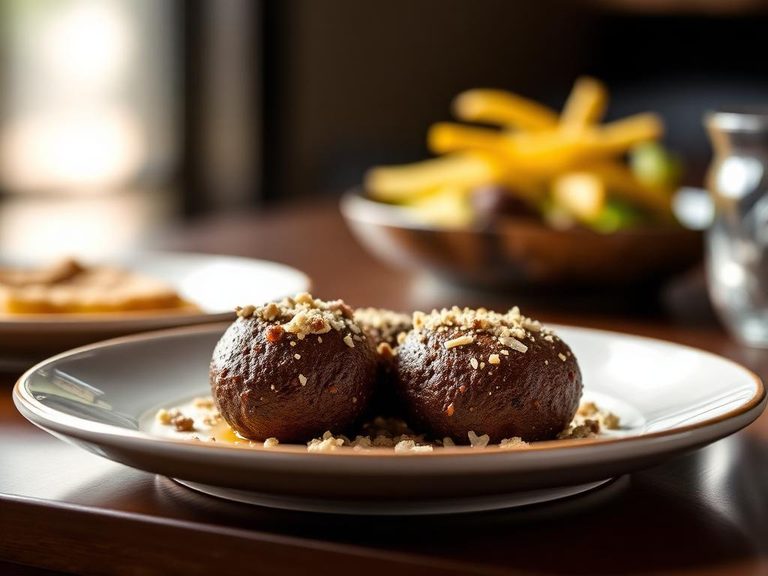
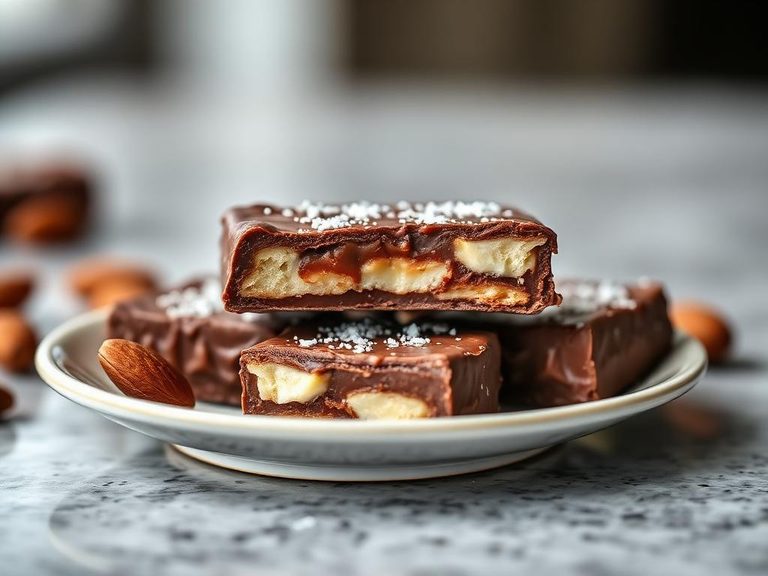
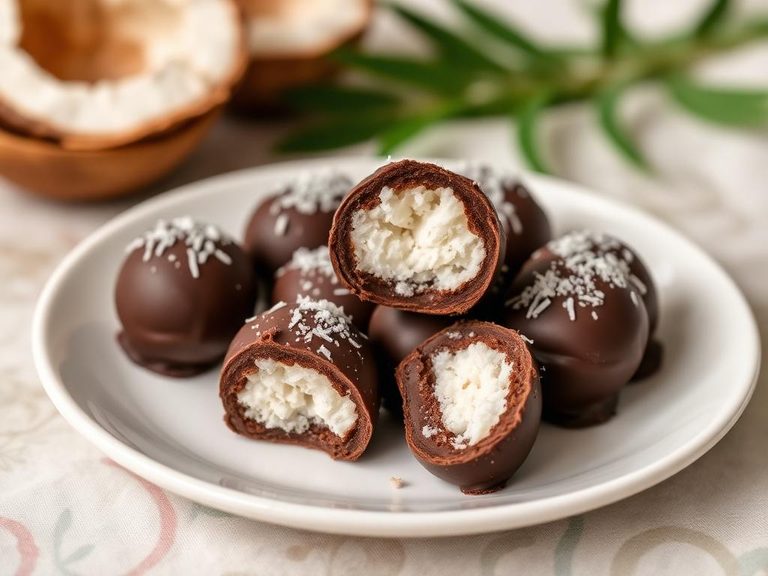
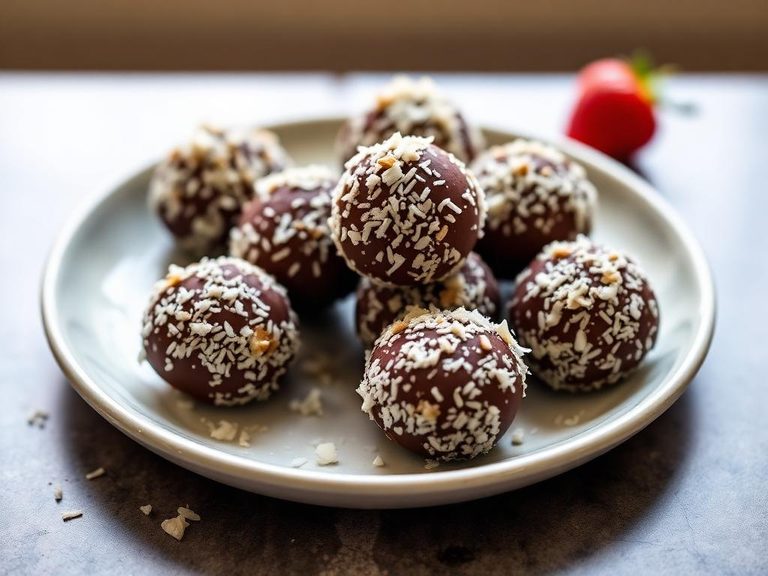
A decadent confection featuring a creamy, sweet coconut filling enrobed in a smooth chocolate shell, offering a delightful contrast of textures from chewy to crisp. Nutritionally, it is a high-energy treat, providing 500 kcal per 100g with a significant sugar content of 44.1g, making it a source of quick energy but also a food to enjoy in moderation.
Calorie split: 4% protein · 46% carbs · 50% fat
↓ Full nutrition💚 Why it's loved
People adore this candy for its classic, indulgent combination of rich chocolate and tropical, chewy coconut, which evokes a sense of nostalgia and comfort. Its versatility makes it a beloved snack, dessert component, or gift, deeply embedded in many cultures as a sweet treat for celebrations and everyday enjoyment.
⚠️ Watch-outs & how to enjoy it better
The high sugar content (44.1g per 100g) can cause rapid blood-sugar spikes, making it unsuitable for those managing diabetes or insulin resistance. To counteract this, pair a small portion with a source of protein or healthy fat (like nuts) to slow sugar absorption, and practice strict portion control (e.g., one piece instead of several). Additionally, coconut is a tree nut allergen, and chocolate may contain dairy; those with allergies should check labels and consider alternative fillings.
Key benefits
- Provides a quick source of energy from carbohydrates and fats.
- Contains dietary fiber (4.1g per 100g) which can aid digestion.
- Offers a small amount of plant-based protein (5.44g per 100g).
- Coconut provides medium-chain triglycerides (MCTs), which are metabolized differently than other fats.
- Can serve as a mood-boosting treat due to chocolate's theobromine and sugar's effect on serotonin.
🍽️ Popular dishes


🌍 Where it's eaten
💡 Did you know?
The Mounds and Almond Joy candy bars were created by the Peter Paul Candy Manufacturing Company in the 1920s, and their iconic coconut filling was originally made using shredded coconut imported from the Philippines, which was cheaper and more abundant than other sources at the time.
Full nutrition (USDA data · scales with serving)
| Water | 8.8 g |
| Energy | 500 kcal |
| Protein | 5.4 g |
| Total lipid (fat) | 27.8 g |
| Carbohydrate, by difference | 56.9 g |
| Fiber, total dietary | 4.1 g |
| Total Sugars | 44.1 g |
| Calcium, Ca | 33.0 mg |
| Iron, Fe | 2.2 mg |
| Magnesium, Mg | 65.0 mg |
| Phosphorus, P | 112 mg |
| Potassium, K | 342 mg |
| Sodium, Na | 138 mg |
| Zinc, Zn | 1.2 mg |
| Copper, Cu | 0.43 mg |
| Selenium, Se | 6.5 ug |
| Vitamin C, total ascorbic acid | 0.40 mg |
| Thiamin | 0.06 mg |
| Riboflavin | 0.11 mg |
| Niacin | 0.45 mg |
| Vitamin B-6 | 0.09 mg |
| Folate, total | 8.0 ug |
| Folic acid | 0.00 ug |
| Folate, food | 8.0 ug |
| Folate, DFE | 8.0 ug |
| Choline, total | 13.8 mg |
| Vitamin B-12 | 0.00 ug |
| Vitamin B-12, added | 0.00 ug |
| Vitamin A, RAE | 0.00 ug |
| Retinol | 0.00 ug |
| Carotene, beta | 0.00 ug |
| Carotene, alpha | 0.00 ug |
| Cryptoxanthin, beta | 0.00 ug |
| Lycopene | 0.00 ug |
| Lutein + zeaxanthin | 5.0 ug |
| Vitamin E (alpha-tocopherol) | 1.5 mg |
| Vitamin E, added | 0.00 mg |
| Vitamin D (D2 + D3) | 0.00 ug |
| Vitamin K (phylloquinone) | 1.5 ug |
| Alcohol, ethyl | 0.00 g |
| Caffeine | 16.0 mg |
| Theobromine | 124 mg |
Fat & fatty acid profile (per 100g)
| Fatty acids, total saturated | 19.7 g |
| SFA 4:0 | 0.00 g |
| SFA 6:0 | 0.11 g |
| SFA 8:0 | 1.3 g |
| SFA 10:0 | 1.0 g |
| SFA 12:0 | 7.5 g |
| SFA 14:0 | 2.8 g |
| SFA 16:0 | 3.6 g |
| SFA 18:0 | 3.3 g |
| Fatty acids, total monounsaturated | 1.9 g |
| MUFA 16:1 | 0.04 g |
| MUFA 18:1 | 1.9 g |
| MUFA 20:1 | 0.01 g |
| MUFA 22:1 | 0.00 g |
| Fatty acids, total polyunsaturated | 0.69 g |
| PUFA 18:2 | 0.73 g |
| PUFA 18:3 | 0.01 g |
| PUFA 18:4 | 0.00 g |
| PUFA 20:4 | 0.01 g |
| PUFA 20:5 n-3 (EPA) | 0.00 g |
| PUFA 22:5 n-3 (DPA) | 0.00 g |
| PUFA 22:6 n-3 (DHA) | 0.00 g |
| Cholesterol | 2.0 mg |
FAQ
Is chocolate coconut candy gluten-free?
Most chocolate coconut candies are gluten-free, as they primarily contain chocolate, coconut, and sugar. However, always check labels for cross-contamination or added ingredients like malt or wheat-based fillers, especially in artisanal or imported brands.
How does the fat content in coconut affect nutrition?
Coconut is high in saturated fats, but a significant portion is medium-chain triglycerides (MCTs), which are metabolized more quickly for energy than long-chain fats. While this can support energy levels, the overall high fat and calorie content (27.82g fat per 100g) means it should be consumed in moderation, especially for those monitoring heart health.
Can I make a healthier version at home?
Yes, you can reduce sugar by using dark chocolate (70%+ cocoa) and unsweetened shredded coconut, sweetening with natural alternatives like dates or a small amount of honey. Adding nuts or seeds can increase protein and fiber, making it more balanced while retaining the classic flavor.
Nutrient density (calculated · NRF9.3)
Nutrient Rich Foods index: beneficial nutrients (protein, fiber, vitamins, minerals) minus saturated fat, added sugar & sodium, per 100 kcal.
NRF9.3 index — Fulgoni, Keast & Drewnowski, 2009. Computed from USDA nutrients.
Weight-loss friendliness (composite index)
Energy density 5.00 kcal/g · 4% calories from protein · 4.1 g fiber · 44.1 g sugar per 100 g.
Composite of energy density (Rolls et al., 1999), protein & fiber satiety, minus sugar. A calculated heuristic — ranks satiety-per-calorie, not a clinical measure.
Dietary load (calculated from USDA values)
Potential renal acid load. Positive = acid-forming, negative = alkaline-forming.
Sodium-to-potassium ratio: 0.40 (lower is better — aim for ≤ 1)
Sodium:potassium per WHO potassium guidance. Computed from USDA nutrients.