Cheeseburger, from fast food, 1 large patty
Common food
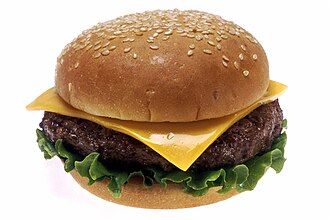
Photo: Wikipedia
A classic fast-food cheeseburger is a savory, handheld meal featuring a single, flame-grilled or griddled beef patty topped with a slice of melted American cheese, nestled in a soft, toasted sesame seed bun. The taste is a rich umami punch from the beef and cheese, balanced by the sweetness of the bun and condiments like ketchup or pickles. Nutritionally, it's a dense source of protein and fat, with a moderate calorie count for a substantial bite.
💚 Why it's loved
People love it for the deeply satisfying combination of savory, salty, and slightly sweet flavors, along with the comforting contrast of textures from the soft bun, juicy patty, and melted cheese. It's a cultural icon of casual dining and a go-to for convenience and instant gratification.
⚠️ Watch-outs & how to enjoy it better
The high sodium and saturated fat content can be a concern for heart health and blood pressure management, and the refined carbohydrates in the white bun may cause a rapid blood-sugar spike. To counteract, opt for a single-patty version, skip high-sodium extras like extra cheese or bacon, and pair it with a side salad or apple slices instead of fries to increase fiber and balance the meal.
Key benefits
- High-quality protein source for muscle maintenance
- Provides essential fats and iron from the beef patty
- Convenient and calorie-dense for quick energy
- Contains calcium from the cheese slice
- A familiar, comforting food that can be part of a balanced diet
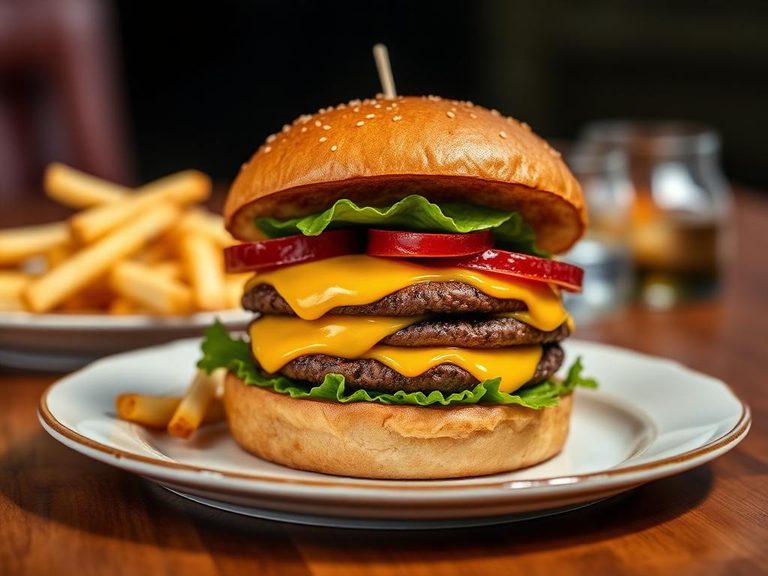
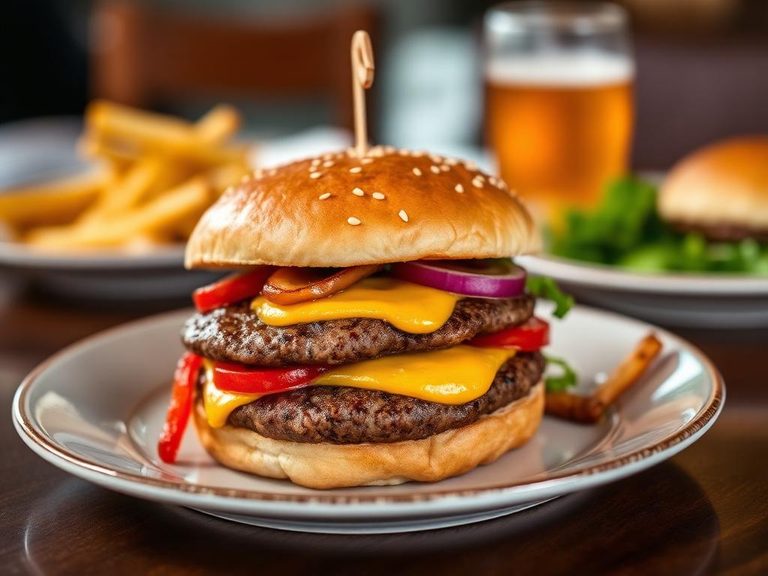
🍽️ Popular dishes



🌍 Where it's eaten
💡 Did you know?
The cheese on a classic fast-food cheeseburger is typically American cheese, which was invented in 1916 by James L. Kraft and is engineered to melt perfectly without separating into oil and solids.
Full nutrition (scales with serving)
| Water | 46.1 g |
| Energy | 299 kcal |
| Protein | 18.7 g |
| Total lipid (fat) | 17.6 g |
| Carbohydrate, by difference | 15.3 g |
| Fiber, total dietary | 0.50 g |
| Total Sugars | 2.5 g |
| Calcium, Ca | 187 mg |
| Iron, Fe | 2.4 mg |
| Magnesium, Mg | 22.0 mg |
| Phosphorus, P | 215 mg |
| Potassium, K | 228 mg |
| Sodium, Na | 453 mg |
| Zinc, Zn | 3.4 mg |
| Copper, Cu | 0.08 mg |
| Selenium, Se | 23.2 ug |
| Vitamin C, total ascorbic acid | 0.40 mg |
| Thiamin | 0.18 mg |
| Riboflavin | 0.24 mg |
| Niacin | 4.2 mg |
| Vitamin B-6 | 0.27 mg |
| Folate, total | 41.0 ug |
| Folic acid | 15.0 ug |
| Folate, food | 26.0 ug |
| Folate, DFE | 52.0 ug |
| Choline, total | 49.0 mg |
| Vitamin B-12 | 1.8 ug |
| Vitamin B-12, added | 0.00 ug |
| Vitamin A, RAE | 41.0 ug |
| Retinol | 40.0 ug |
| Carotene, beta | 12.0 ug |
| Carotene, alpha | 0.00 ug |
| Cryptoxanthin, beta | 1.0 ug |
| Lycopene | 0.00 ug |
| Lutein + zeaxanthin | 5.0 ug |
| Vitamin E (alpha-tocopherol) | 0.19 mg |
| Vitamin E, added | 0.00 mg |
| Vitamin D (D2 + D3) | 0.70 ug |
| Vitamin K (phylloquinone) | 3.1 ug |
| Fatty acids, total saturated | 7.6 g |
| SFA 4:0 | 0.09 g |
| SFA 6:0 | 0.07 g |
| SFA 8:0 | 0.05 g |
| SFA 10:0 | 0.11 g |
| SFA 12:0 | 0.13 g |
| SFA 14:0 | 0.79 g |
| SFA 16:0 | 4.0 g |
| SFA 18:0 | 2.0 g |
| Fatty acids, total monounsaturated | 6.4 g |
| MUFA 16:1 | 0.46 g |
| MUFA 18:1 | 5.9 g |
| MUFA 20:1 | 0.04 g |
| MUFA 22:1 | 0.00 g |
| Fatty acids, total polyunsaturated | 1.0 g |
| PUFA 18:2 | 0.93 g |
| PUFA 18:3 | 0.10 g |
| PUFA 18:4 | 0.00 g |
| PUFA 20:4 | 0.01 g |
| PUFA 20:5 n-3 (EPA) | 0.00 g |
| PUFA 22:5 n-3 (DPA) | 0.01 g |
| PUFA 22:6 n-3 (DHA) | 0.00 g |
| Cholesterol | 60.0 mg |
| Alcohol, ethyl | 0.00 g |
| Caffeine | 0.00 mg |
| Theobromine | 0.00 mg |
FAQ
Is a fast-food cheeseburger a good source of protein?
Yes, a single-patty cheeseburger provides a significant amount of protein (around 18-20g), which is beneficial for muscle repair and satiety.
How can I make a fast-food cheeseburger healthier at home?
Use lean ground beef or a plant-based patty, opt for whole-grain buns, load up on fresh veggies like lettuce, tomato, and onion, and use low-sodium condiments.
Why does fast-food cheese melt so well?
It's due to the properties of American cheese, which contains emulsifiers like sodium citrate that help it melt smoothly without becoming greasy or clumpy.