Cheese, Feta
Common food
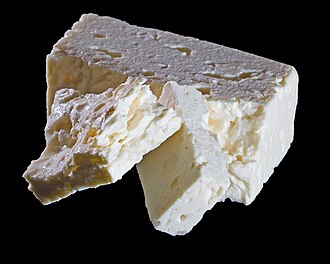
Photo: Wikipedia
Feta is a brined white cheese with a crumbly, moist texture and a tangy, salty flavor that can range from mild to sharp depending on age. It's a staple of Mediterranean cuisine, traditionally made from sheep's milk or a blend of sheep and goat milk. Nutritionally, it's a good source of protein and calcium, but is also high in sodium and saturated fat.
💚 Why it's loved
People adore feta for its distinctive salty tang and versatile crumble, which can elevate everything from salads to pastries. Its deep cultural roots in Greek and Mediterranean cuisine make it a beloved, authentic ingredient.
⚠️ Watch-outs & how to enjoy it better
The high sodium content can be problematic for those monitoring blood pressure or fluid retention. Its crumbly texture can also make it a common allergen for those sensitive to sheep or goat milk proteins. To counteract the salt, rinse feta briefly under cold water before use, or pair it with potassium-rich foods like tomatoes or leafy greens to help balance electrolytes.
Key benefits
- Excellent source of protein for muscle maintenance.
- Rich in calcium for bone health.
- Contains probiotics from traditional brining.
- Lower in lactose than many fresh cheeses.
- Provides conjugated linoleic acid (CLA).
🍽️ Popular dishes
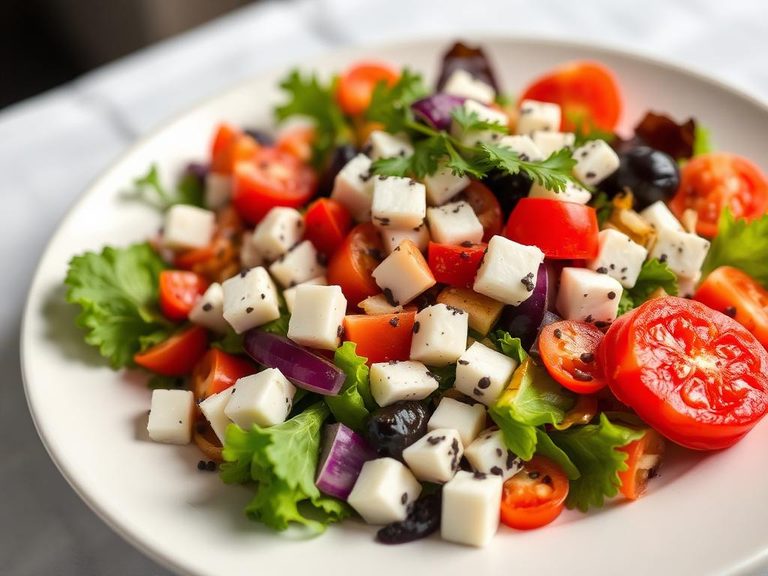
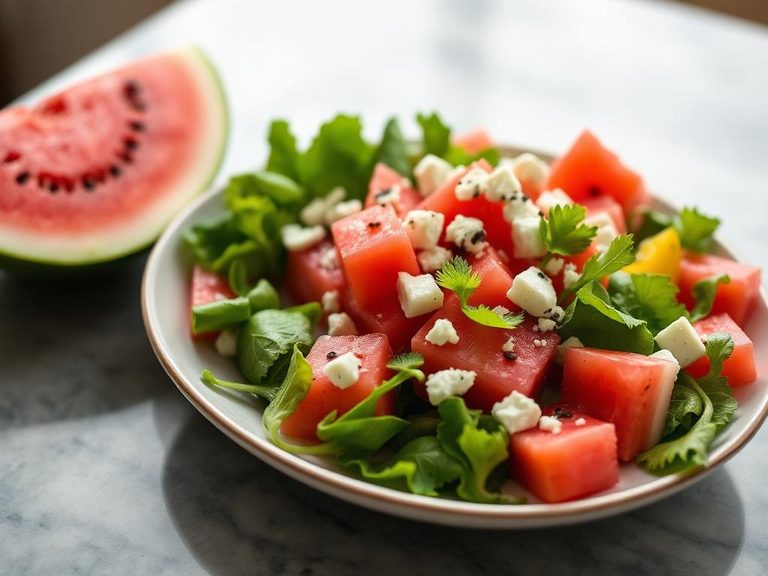
🌍 Where it's eaten
💡 Did you know?
Authentic PDO (Protected Designation of Origin) Feta must be produced in specific regions of Greece and can only be made with at least 70% sheep's milk from local breeds.
Full nutrition (scales with serving)
| Water | 51.9 g |
| Energy | 273 kcal |
| Protein | 19.7 g |
| Total lipid (fat) | 19.1 g |
| Carbohydrate, by difference | 5.6 g |
| Fiber, total dietary | 0.00 g |
| Total Sugars | 1.6 g |
| Calcium, Ca | 371 mg |
| Iron, Fe | 0.07 mg |
| Magnesium, Mg | 18.0 mg |
| Phosphorus, P | 328 mg |
| Potassium, K | 105 mg |
| Sodium, Na | 1034 mg |
| Zinc, Zn | 2.4 mg |
| Copper, Cu | 0.03 mg |
| Selenium, Se | 15.0 ug |
| Vitamin C, total ascorbic acid | 0.00 mg |
| Thiamin | 0.06 mg |
| Riboflavin | 0.44 mg |
| Niacin | 0.26 mg |
| Vitamin B-6 | 0.04 mg |
| Folate, total | 32.0 ug |
| Folic acid | 0.00 ug |
| Folate, food | 32.0 ug |
| Folate, DFE | 32.0 ug |
| Choline, total | 15.4 mg |
| Vitamin B-12 | 1.7 ug |
| Vitamin B-12, added | 0.00 ug |
| Vitamin A, RAE | 147 ug |
| Retinol | 147 ug |
| Carotene, beta | 0.00 ug |
| Carotene, alpha | 0.00 ug |
| Cryptoxanthin, beta | 0.00 ug |
| Lycopene | 0.00 ug |
| Lutein + zeaxanthin | 0.00 ug |
| Vitamin E (alpha-tocopherol) | 0.18 mg |
| Vitamin E, added | 0.00 mg |
| Vitamin D (D2 + D3) | 0.00 ug |
| Vitamin K (phylloquinone) | 1.8 ug |
| Fatty acids, total saturated | 11.2 g |
| SFA 4:0 | 0.40 g |
| SFA 6:0 | 0.33 g |
| SFA 8:0 | 0.50 g |
| SFA 10:0 | 0.48 g |
| SFA 12:0 | 0.55 g |
| SFA 14:0 | 1.8 g |
| SFA 16:0 | 5.3 g |
| SFA 18:0 | 1.7 g |
| Fatty acids, total monounsaturated | 4.2 g |
| MUFA 16:1 | 0.28 g |
| MUFA 18:1 | 3.7 g |
| MUFA 20:1 | 0.00 g |
| MUFA 22:1 | 0.00 g |
| Fatty acids, total polyunsaturated | 0.59 g |
| PUFA 18:2 | 0.42 g |
| PUFA 18:3 | 0.27 g |
| PUFA 18:4 | 0.00 g |
| PUFA 20:4 | 0.00 g |
| PUFA 20:5 n-3 (EPA) | 0.00 g |
| PUFA 22:5 n-3 (DPA) | 0.00 g |
| PUFA 22:6 n-3 (DHA) | 0.00 g |
| Cholesterol | 58.0 mg |
| Alcohol, ethyl | 0.00 g |
| Caffeine | 0.00 mg |
| Theobromine | 0.00 mg |
FAQ
Is feta cheese pasteurized?
It can be either. Traditional, artisanal feta is often made with raw milk, while most commercial feta sold in supermarkets is made with pasteurized milk for safety and consistency.
Can I freeze feta cheese?
Yes, but the texture will become more crumbly and dry. It's best used for cooked dishes after freezing, not for fresh applications like salads. Store it in its brine or an airtight container.
What's the difference between Greek feta and other white cheeses?
Greek feta has a PDO status, mandating specific milk types (sheep/goat) and production methods. Other white cheeses like Bulgarian 'Sirene' or Danish 'white cheese' are similar but may use cow's milk and have different textures and flavors.