Cheese, Cheddar
Common food

Photo: Wikipedia
Cheddar is a hard, aged cow's milk cheese with a dense, crumbly texture and a flavor that ranges from mild and creamy when young to sharp, nutty, and complex when mature. Its signature pale yellow hue comes from natural beta-carotene in the milk. Nutritionally, it is a calorie-dense powerhouse, delivering a substantial 23.3g of protein per 100g alongside a high fat content.
💚 Why it's loved
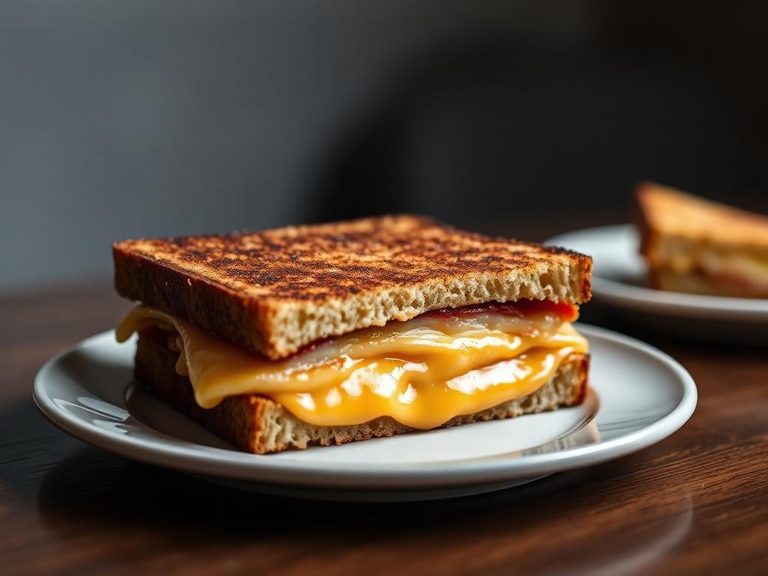
People adore cheddar for its incredible versatility and its ability to deliver a profound, satisfying umami punch that enhances everything from a simple cracker to a gourmet burger. Its cultural ubiquity, from the classic ploughman's lunch to the quintessential grilled cheese, makes it a comforting and reliable staple.
⚠️ Watch-outs & how to enjoy it better
Due to its high saturated fat and sodium content, it should be consumed in moderation by those monitoring heart health or blood pressure. It is also a common dairy allergen and contains lactose, though often in trace amounts due to aging. To counteract this, pair it with fiber-rich vegetables or whole-grain bread, and practice strict portion control.
Key benefits
- Excellent source of high-quality, complete protein
- Rich in calcium for bone and dental health
- Provides conjugated linoleic acid (CLA), a type of beneficial fat
- Contains vitamin K2, important for calcium metabolism
- Low in carbohydrates, making it suitable for low-carb diets
🍽️ Popular dishes





🌍 Where it's eaten
💡 Did you know?
The original 'Cheddar' cheese was produced in the village of Cheddar in Somerset, England, where the unique caves provided the perfect constant temperature and humidity for aging the cheese.
Full nutrition (scales with serving)
| Water | 36.6 g |
| Energy | 409 kcal |
| Protein | 23.3 g |
| Total lipid (fat) | 34.0 g |
| Carbohydrate, by difference | 2.4 g |
| Fiber, total dietary | 0.00 g |
| Total Sugars | 0.33 g |
| Calcium, Ca | 707 mg |
| Iron, Fe | 0.16 mg |
| Magnesium, Mg | 27.0 mg |
| Phosphorus, P | 458 mg |
| Potassium, K | 77.0 mg |
| Sodium, Na | 654 mg |
| Zinc, Zn | 3.7 mg |
| Copper, Cu | 0.03 mg |
| Selenium, Se | 28.3 ug |
| Vitamin C, total ascorbic acid | 0.00 mg |
| Thiamin | 0.03 mg |
| Riboflavin | 0.44 mg |
| Niacin | 0.05 mg |
| Vitamin B-6 | 0.07 mg |
| Folate, total | 21.0 ug |
| Folic acid | 0.00 ug |
| Folate, food | 21.0 ug |
| Folate, DFE | 21.0 ug |
| Choline, total | 16.5 mg |
| Vitamin B-12 | 1.1 ug |
| Vitamin B-12, added | 0.00 ug |
| Vitamin A, RAE | 316 ug |
| Retinol | 316 ug |
| Carotene, beta | 0.00 ug |
| Carotene, alpha | 0.00 ug |
| Cryptoxanthin, beta | 0.00 ug |
| Lycopene | 0.00 ug |
| Lutein + zeaxanthin | 0.00 ug |
| Vitamin E (alpha-tocopherol) | 0.75 mg |
| Vitamin E, added | 0.00 mg |
| Vitamin D (D2 + D3) | 0.60 ug |
| Vitamin K (phylloquinone) | 2.4 ug |
| Fatty acids, total saturated | 19.2 g |
| SFA 4:0 | 0.65 g |
| SFA 6:0 | 0.54 g |
| SFA 8:0 | 0.35 g |
| SFA 10:0 | 0.84 g |
| SFA 12:0 | 0.96 g |
| SFA 14:0 | 3.1 g |
| SFA 16:0 | 8.8 g |
| SFA 18:0 | 3.4 g |
| Fatty acids, total monounsaturated | 7.4 g |
| MUFA 16:1 | 0.52 g |
| MUFA 18:1 | 7.4 g |
| MUFA 20:1 | 0.06 g |
| MUFA 22:1 | 0.00 g |
| Fatty acids, total polyunsaturated | 1.2 g |
| PUFA 18:2 | 1.2 g |
| PUFA 18:3 | 0.12 g |
| PUFA 18:4 | 0.00 g |
| PUFA 20:4 | 0.05 g |
| PUFA 20:5 n-3 (EPA) | 0.01 g |
| PUFA 22:5 n-3 (DPA) | 0.02 g |
| PUFA 22:6 n-3 (DHA) | 0.00 g |
| Cholesterol | 100 mg |
| Alcohol, ethyl | 0.00 g |
| Caffeine | 0.00 mg |
| Theobromine | 0.00 mg |
FAQ
What's the difference between mild, sharp, and extra-sharp cheddar?
The difference is primarily aging time. Mild cheddar is aged for 2-3 months, sharp for 6-12 months, and extra-sharp for over a year. Longer aging develops a crumblier texture and a more intense, complex, and often slightly tangy or nutty flavor.
Is cheddar cheese gluten-free?
Pure cheddar cheese is naturally gluten-free, as it is made from milk, cultures, and rennet. However, some flavored or processed cheddar products may contain additives or anti-caking agents that could contain gluten, so always check the label for certified gluten-free status.
How should I store cheddar cheese to keep it fresh?
Wrap it in cheese paper or wax paper, then place it in a loose plastic bag or a sealed container in the refrigerator's vegetable drawer. This allows it to breathe while preventing it from drying out. Avoid wrapping it tightly in plastic wrap, as it can trap moisture and cause off-flavors.