

Channa Saag
Common food

Photo: Wikipedia
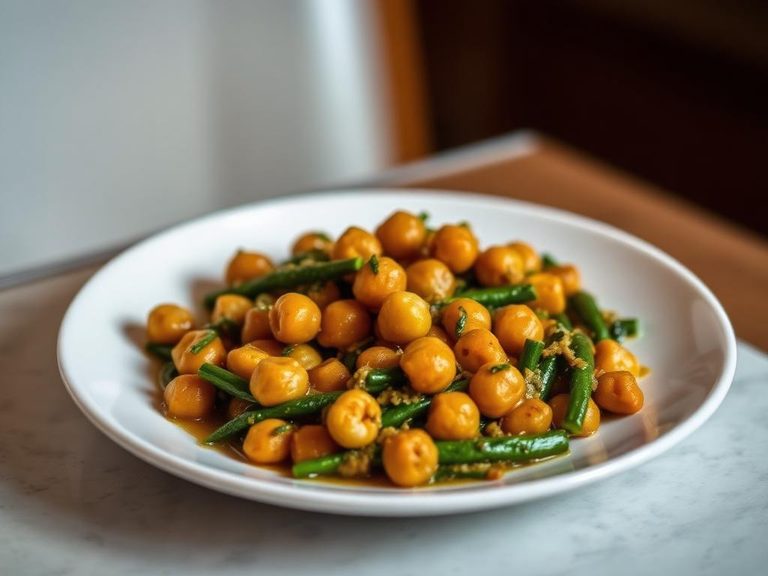
Channa Saag is a hearty, rustic North Indian curry where tender chickpeas (channa) are simmered in a thick, spiced spinach (saag) gravy. It has a comforting, earthy flavor profile with a creamy, slightly coarse texture from the puréed greens. Nutritionally, it's a standout for its high fiber and plant-based protein content relative to its calories.
Calorie split: 18% protein · 39% carbs · 43% fat
↓ Full nutrition💚 Why it's loved
People love it for its deeply satisfying, savory flavor that balances the earthiness of spinach with the nuttiness of chickpeas. It's a versatile, one-pot comfort food that's both nourishing and packed with authentic spice.
⚠️ Watch-outs & how to enjoy it better
The high fiber and oligosaccharides in chickpeas can cause bloating or gas in some individuals, especially those not accustomed to legumes. Spinach contains oxalates, which can contribute to kidney stones in susceptible people. To counteract, start with smaller portions, ensure chickpeas are well-cooked (or soaked overnight), and pair the dish with a source of vitamin C (like a squeeze of lemon) to aid iron absorption and mitigate oxalate effects.
Key benefits
- Excellent source of dietary fiber for digestive health.
- Provides substantial plant-based protein from chickpeas.
- Rich in iron and folate from the spinach component.
- Low in sugar and a good source of complex carbohydrates.
- Offers a complete amino acid profile when paired with grains like rice or roti.
🍽️ Popular dishes
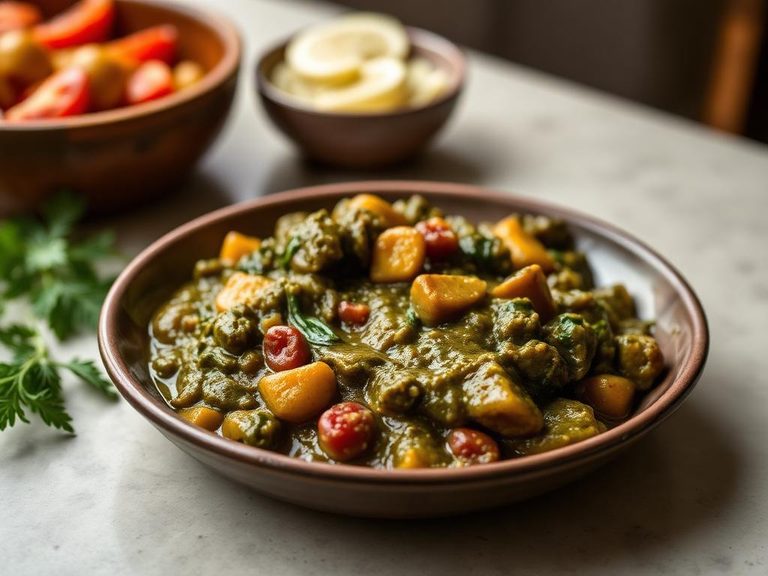
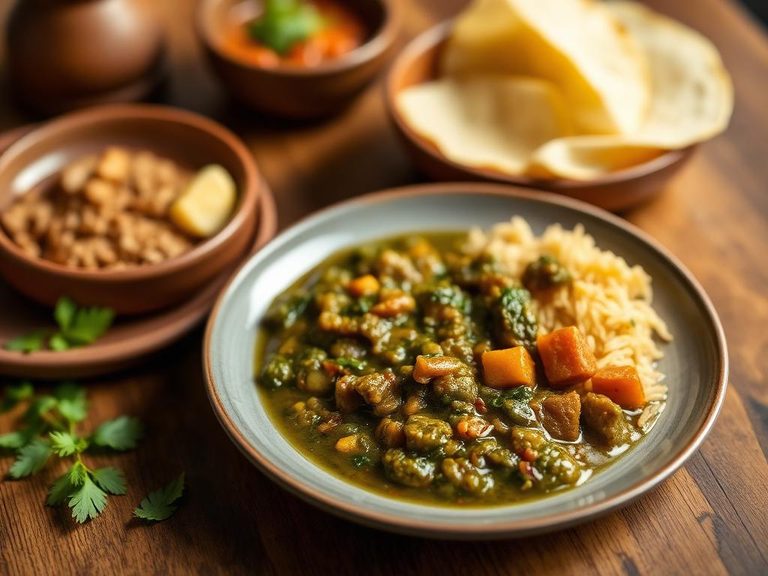
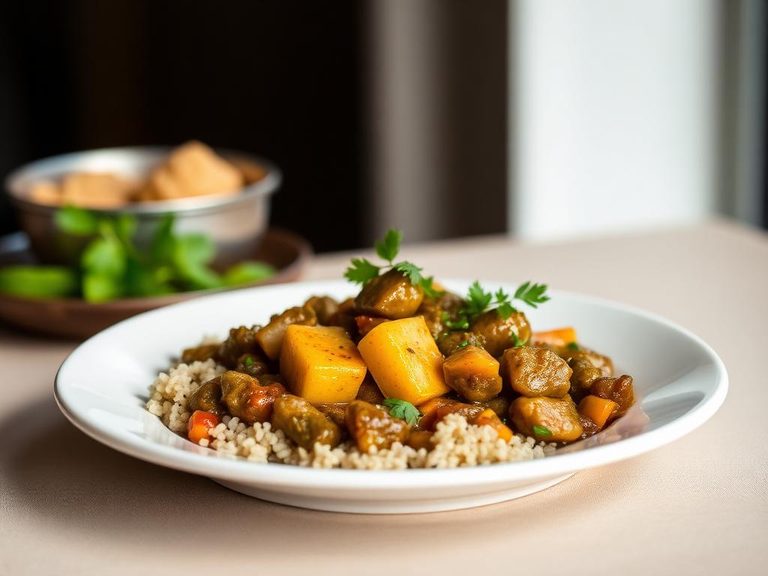
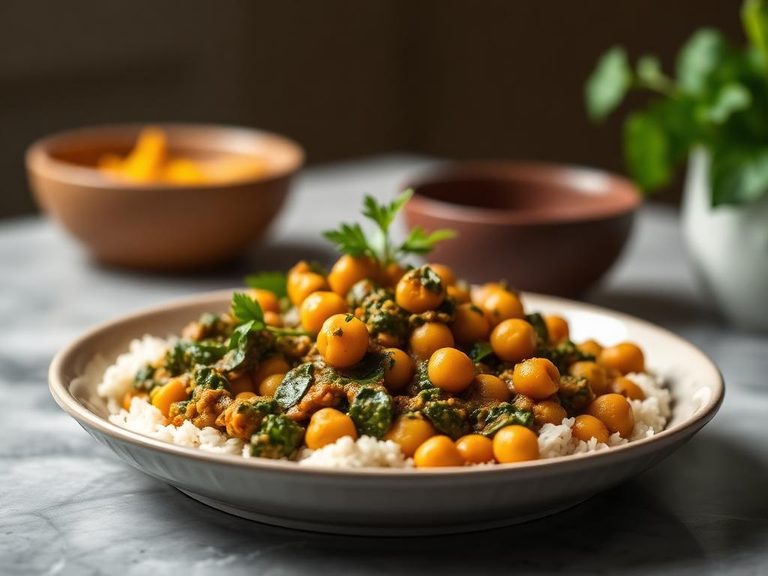
🌍 Where it's eaten
💡 Did you know?
The term 'saag' refers to a broad category of cooked leafy greens in South Asian cuisine, not just spinach, and can include mustard greens, collard greens, or bathua.
Full nutrition (USDA data · scales with serving)
| Water | 81.0 g |
| Energy | 89.0 kcal |
| Protein | 4.1 g |
| Total lipid (fat) | 4.3 g |
| Carbohydrate, by difference | 8.8 g |
| Fiber, total dietary | 3.0 g |
| Total Sugars | 1.8 g |
| Calcium, Ca | 66.0 mg |
| Iron, Fe | 1.6 mg |
| Magnesium, Mg | 81.0 mg |
| Phosphorus, P | 69.0 mg |
| Potassium, K | 429 mg |
| Sodium, Na | 270 mg |
| Zinc, Zn | 0.66 mg |
| Copper, Cu | 0.14 mg |
| Selenium, Se | 0.90 ug |
| Vitamin C, total ascorbic acid | 16.0 mg |
| Thiamin | 0.08 mg |
| Riboflavin | 0.15 mg |
| Niacin | 0.51 mg |
| Vitamin B-6 | 0.20 mg |
| Folate, total | 92.0 ug |
| Folic acid | 0.00 ug |
| Folate, food | 92.0 ug |
| Folate, DFE | 92.0 ug |
| Choline, total | 23.7 mg |
| Vitamin B-12 | 0.00 ug |
| Vitamin B-12, added | 0.00 ug |
| Vitamin A, RAE | 221 ug |
| Retinol | 0.00 ug |
| Carotene, beta | 2640 ug |
| Carotene, alpha | 6.0 ug |
| Cryptoxanthin, beta | 17.0 ug |
| Lycopene | 0.00 ug |
| Lutein + zeaxanthin | 5595 ug |
| Vitamin E (alpha-tocopherol) | 2.3 mg |
| Vitamin E, added | 0.00 mg |
| Vitamin D (D2 + D3) | 0.00 ug |
| Vitamin K (phylloquinone) | 364 ug |
| Alcohol, ethyl | 0.00 g |
| Caffeine | 0.00 mg |
| Theobromine | 0.00 mg |
Fat & fatty acid profile (per 100g)
| Fatty acids, total saturated | 0.55 g |
| SFA 4:0 | 0.00 g |
| SFA 6:0 | 0.00 g |
| SFA 8:0 | 0.00 g |
| SFA 10:0 | 0.00 g |
| SFA 12:0 | 0.00 g |
| SFA 14:0 | 0.01 g |
| SFA 16:0 | 0.41 g |
| SFA 18:0 | 0.11 g |
| Fatty acids, total monounsaturated | 1.6 g |
| MUFA 16:1 | 0.02 g |
| MUFA 18:1 | 1.5 g |
| MUFA 20:1 | 0.02 g |
| MUFA 22:1 | 0.00 g |
| Fatty acids, total polyunsaturated | 1.6 g |
| PUFA 18:2 | 1.4 g |
| PUFA 18:3 | 0.26 g |
| PUFA 18:4 | 0.00 g |
| PUFA 20:4 | 0.00 g |
| PUFA 20:5 n-3 (EPA) | 0.00 g |
| PUFA 22:5 n-3 (DPA) | 0.00 g |
| PUFA 22:6 n-3 (DHA) | 0.00 g |
| Cholesterol | 0.00 mg |
FAQ
Is Channa Saag vegan?
Yes, traditional Channa Saag is vegan, made with chickpeas, spinach, onions, tomatoes, and spices. However, some restaurant versions may use cream or ghee, so it's best to confirm if you have strict dietary requirements.
How can I make it less bitter?
The bitterness can come from spinach or certain spices. To reduce it, blanch the spinach first and discard the water, use mature spinach leaves, or add a pinch of sugar or a dollop of yogurt to balance the flavors during cooking.
What is the best way to store leftovers?
Store in an airtight container in the refrigerator for up to 3-4 days. The flavors often deepen overnight. It can also be frozen for up to 3 months; reheat thoroughly on the stovetop, adding a splash of water if needed.
Nutrient density (calculated · NRF9.3)
Nutrient Rich Foods index: beneficial nutrients (protein, fiber, vitamins, minerals) minus saturated fat, added sugar & sodium, per 100 kcal.
NRF9.3 index — Fulgoni, Keast & Drewnowski, 2009. Computed from USDA nutrients.
Weight-loss friendliness (composite index)
Energy density 0.89 kcal/g · 18% calories from protein · 3.0 g fiber · 1.8 g sugar per 100 g.
Composite of energy density (Rolls et al., 1999), protein & fiber satiety, minus sugar. A calculated heuristic — ranks satiety-per-calorie, not a clinical measure.
Dietary load (calculated from USDA values)
Potential renal acid load. Positive = acid-forming, negative = alkaline-forming.
Sodium-to-potassium ratio: 0.63 (lower is better — aim for ≤ 1)
Sodium:potassium per WHO potassium guidance. Computed from USDA nutrients.