

Cake or cupcake, German chocolate
Common food

Photo: Wikipedia
German chocolate cake is a rich, layered dessert featuring a tender chocolate sponge and its signature gooey, coconut-pecan frosting. The frosting provides a delightful textural contrast with chewy coconut and crunchy pecans, while the cake itself is moist and deeply chocolatey. Despite its indulgent profile, it offers a modest amount of fiber from the nuts and coconut.
Calorie split: 4% protein · 54% carbs · 42% fat
↓ Full nutrition💚 Why it's loved
People adore the unique, caramelized flavor of the coconut-pecan frosting, which sets it apart from other chocolate cakes. Its association with special occasions and the comforting combination of chocolate, coconut, and nuts make it a nostalgic favorite.
⚠️ Watch-outs & how to enjoy it better
Its high sugar and refined carbohydrate content can lead to rapid blood-sugar spikes, making it unsuitable for those managing diabetes or insulin resistance. The calorie density and common allergens like eggs, wheat, dairy, and tree nuts (pecans) are also considerations. To mitigate, enjoy a small slice alongside a source of protein or healthy fat (like a handful of nuts or Greek yogurt) to slow sugar absorption, and ensure it's consumed as an occasional treat within a balanced diet.
Key benefits
- Source of quick energy from carbohydrates
- Contains some dietary fiber from coconut and pecans
- Provides plant-based minerals like manganese and copper from pecans
- Offers a satisfying treat for celebrations and social gatherings
🍽️ Popular dishes
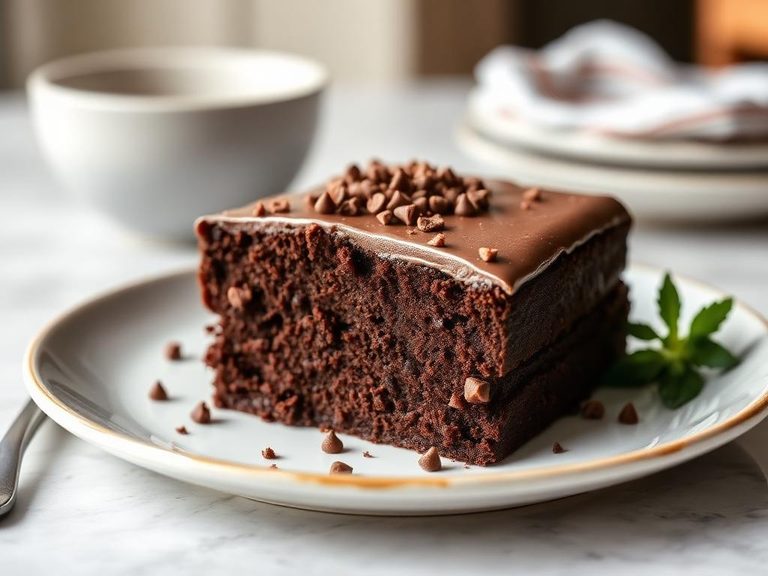
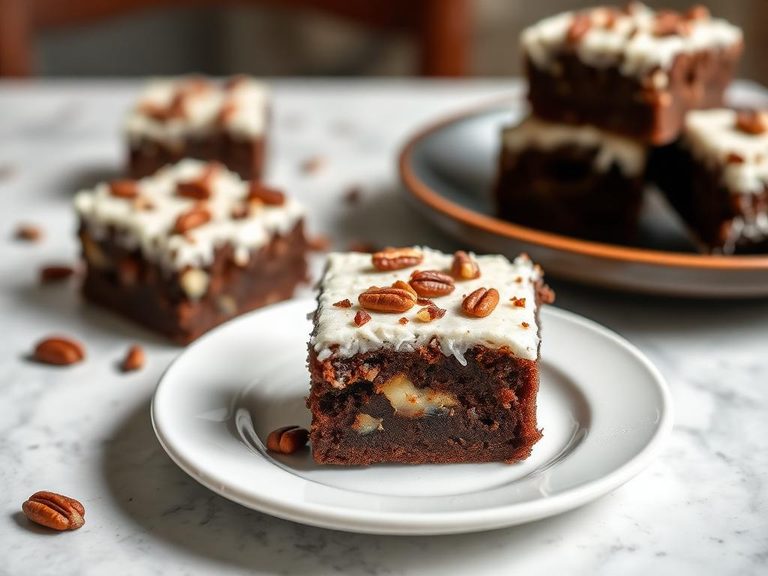


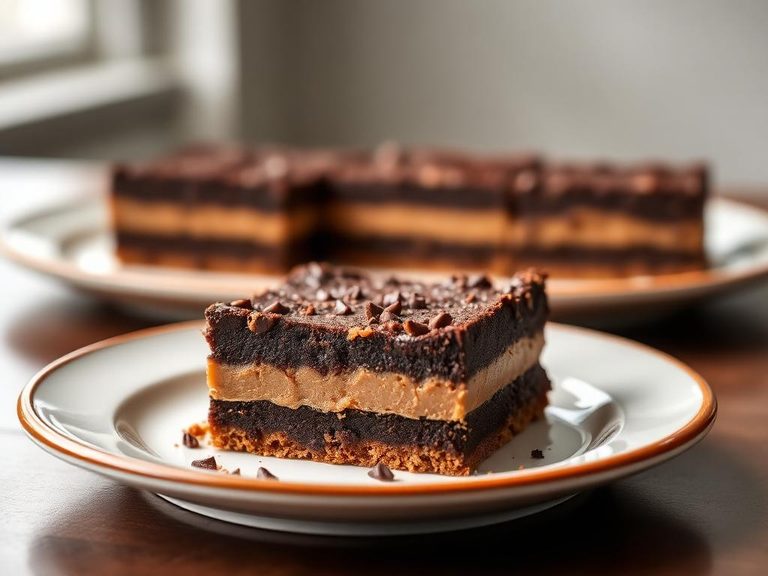
🌍 Where it's eaten
💡 Did you know?
The cake is named after an American baker, Samuel German, who developed a type of dark baking chocolate for the Baker's Chocolate Company in 1852, not because it originated in Germany.
Full nutrition (USDA data · scales with serving)
| Water | 27.0 g |
| Energy | 360 kcal |
| Protein | 3.7 g |
| Total lipid (fat) | 17.6 g |
| Carbohydrate, by difference | 49.9 g |
| Fiber, total dietary | 2.4 g |
| Total Sugars | 34.7 g |
| Calcium, Ca | 71.0 mg |
| Iron, Fe | 1.8 mg |
| Magnesium, Mg | 30.0 mg |
| Phosphorus, P | 164 mg |
| Potassium, K | 169 mg |
| Sodium, Na | 297 mg |
| Zinc, Zn | 0.64 mg |
| Copper, Cu | 0.23 mg |
| Selenium, Se | 6.0 ug |
| Vitamin C, total ascorbic acid | 0.00 mg |
| Thiamin | 0.08 mg |
| Riboflavin | 0.12 mg |
| Niacin | 0.74 mg |
| Vitamin B-6 | 0.04 mg |
| Folate, total | 21.0 ug |
| Folic acid | 11.0 ug |
| Folate, food | 10.0 ug |
| Folate, DFE | 28.0 ug |
| Choline, total | 34.7 mg |
| Vitamin B-12 | 0.11 ug |
| Vitamin B-12, added | 0.00 ug |
| Vitamin A, RAE | 19.0 ug |
| Retinol | 19.0 ug |
| Carotene, beta | 1.0 ug |
| Carotene, alpha | 0.00 ug |
| Cryptoxanthin, beta | 2.0 ug |
| Lycopene | 0.00 ug |
| Lutein + zeaxanthin | 55.0 ug |
| Vitamin E (alpha-tocopherol) | 1.9 mg |
| Vitamin E, added | 0.00 mg |
| Vitamin D (D2 + D3) | 0.30 ug |
| Vitamin K (phylloquinone) | 6.0 ug |
| Alcohol, ethyl | 0.00 g |
| Caffeine | 6.0 mg |
| Theobromine | 78.0 mg |
Fat & fatty acid profile (per 100g)
| Fatty acids, total saturated | 5.6 g |
| SFA 4:0 | 0.00 g |
| SFA 6:0 | 0.01 g |
| SFA 8:0 | 0.17 g |
| SFA 10:0 | 0.13 g |
| SFA 12:0 | 0.96 g |
| SFA 14:0 | 0.41 g |
| SFA 16:0 | 2.3 g |
| SFA 18:0 | 1.6 g |
| Fatty acids, total monounsaturated | 7.2 g |
| MUFA 16:1 | 0.04 g |
| MUFA 18:1 | 7.2 g |
| MUFA 20:1 | 0.04 g |
| MUFA 22:1 | 0.00 g |
| Fatty acids, total polyunsaturated | 3.6 g |
| PUFA 18:2 | 3.3 g |
| PUFA 18:3 | 0.28 g |
| PUFA 18:4 | 0.00 g |
| PUFA 20:4 | 0.00 g |
| PUFA 20:5 n-3 (EPA) | 0.00 g |
| PUFA 22:5 n-3 (DPA) | 0.00 g |
| PUFA 22:6 n-3 (DHA) | 0.00 g |
| Cholesterol | 43.0 mg |
FAQ
What makes German chocolate cake different from regular chocolate cake?
The defining feature is its signature frosting: a cooked, gooey mixture of evaporated milk, sugar, egg yolks, butter, shredded coconut, and chopped pecans, which is layered between and on top of the chocolate cake layers, rather than a traditional buttercream or ganache.
Is German chocolate cake actually from Germany?
No, it is an American invention. The name 'German' refers to Samuel German, the inventor of the specific dark baking chocolate used in the original recipe, not the country of origin.
Can I make a lighter version of this cake?
Yes, you can reduce sugar in the frosting, use whole-wheat pastry flour for the cake, or substitute some of the butter with applesauce. For a gluten-free version, use a gluten-free flour blend. The key is maintaining the balance of flavors and textures.
Nutrient density (calculated · NRF9.3)
Nutrient Rich Foods index: beneficial nutrients (protein, fiber, vitamins, minerals) minus saturated fat, added sugar & sodium, per 100 kcal.
NRF9.3 index — Fulgoni, Keast & Drewnowski, 2009. Computed from USDA nutrients.
Weight-loss friendliness (composite index)
Energy density 3.60 kcal/g · 4% calories from protein · 2.4 g fiber · 34.7 g sugar per 100 g.
Composite of energy density (Rolls et al., 1999), protein & fiber satiety, minus sugar. A calculated heuristic — ranks satiety-per-calorie, not a clinical measure.
Dietary load (calculated from USDA values)
Potential renal acid load. Positive = acid-forming, negative = alkaline-forming.
Sodium-to-potassium ratio: 1.76 (lower is better — aim for ≤ 1)
Sodium:potassium per WHO potassium guidance. Computed from USDA nutrients.