

Cake or cupcake, chocolate with chocolate icing, bakery
Common food

Photo: Wikipedia
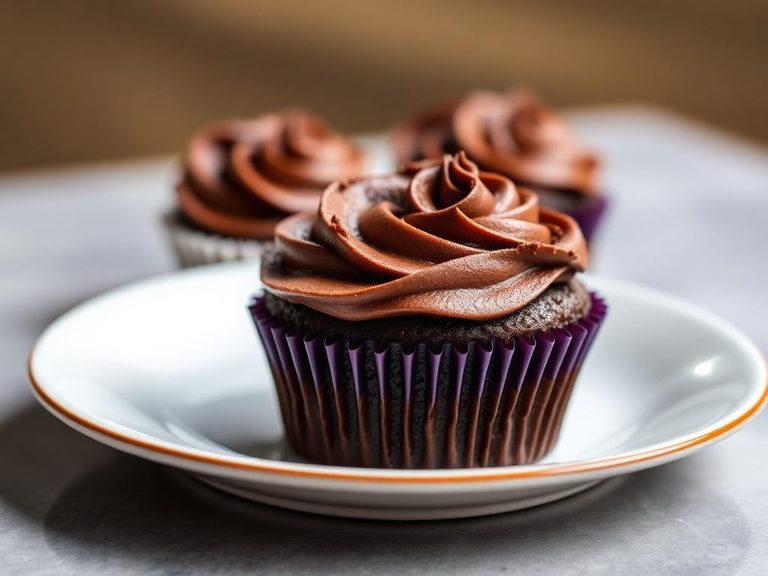
A single-serving chocolate cupcake crowned with a rich, glossy chocolate icing, offering a moist, tender crumb and a decadent, sweet finish. Nutritionally, it is a dense source of quick energy, with over 50g of carbohydrates and nearly 38g of sugar per 100g, making it a true indulgence.
Calorie split: 4% protein · 58% carbs · 38% fat
↓ Full nutrition💚 Why it's loved
People love the classic, comforting combination of moist chocolate cake and creamy frosting, which delivers an intense, sweet chocolate flavor. It's a versatile treat for birthdays, office parties, or a personal reward, deeply embedded in celebratory culture.
⚠️ Watch-outs & how to enjoy it better
The high sugar and refined carb content can lead to blood sugar spikes and subsequent crashes. Those monitoring blood sugar, managing weight, or with gluten or dairy allergies should be cautious. Tip: Pair with a source of protein or fat (like a handful of nuts or Greek yogurt) to slow sugar absorption and increase satiety.
Key benefits
- Provides a quick source of energy from carbohydrates.
- Contains small amounts of protein and fat for satiety.
- Can serve as a mood-boosting treat or celebration food.
- Convenient single-serving portion for portion control.
🍽️ Popular dishes


🌍 Where it's eaten
💡 Did you know?
The world's largest cupcake ever baked weighed over 1,200 pounds (544 kg) and contained 2 million calories.
Full nutrition (USDA data · scales with serving)
| Water | 27.5 g |
| Energy | 345 kcal |
| Protein | 3.3 g |
| Total lipid (fat) | 15.2 g |
| Carbohydrate, by difference | 52.3 g |
| Fiber, total dietary | 1.6 g |
| Total Sugars | 37.8 g |
| Calcium, Ca | 70.0 mg |
| Iron, Fe | 1.7 mg |
| Magnesium, Mg | 26.0 mg |
| Phosphorus, P | 157 mg |
| Potassium, K | 153 mg |
| Sodium, Na | 295 mg |
| Zinc, Zn | 0.50 mg |
| Copper, Cu | 0.20 mg |
| Selenium, Se | 4.8 ug |
| Vitamin C, total ascorbic acid | 0.00 mg |
| Thiamin | 0.07 mg |
| Riboflavin | 0.11 mg |
| Niacin | 0.67 mg |
| Vitamin B-6 | 0.03 mg |
| Folate, total | 20.0 ug |
| Folic acid | 11.0 ug |
| Folate, food | 9.0 ug |
| Folate, DFE | 27.0 ug |
| Choline, total | 32.8 mg |
| Vitamin B-12 | 0.11 ug |
| Vitamin B-12, added | 0.00 ug |
| Vitamin A, RAE | 19.0 ug |
| Retinol | 19.0 ug |
| Carotene, beta | 0.00 ug |
| Carotene, alpha | 0.00 ug |
| Cryptoxanthin, beta | 1.0 ug |
| Lycopene | 0.00 ug |
| Lutein + zeaxanthin | 54.0 ug |
| Vitamin E (alpha-tocopherol) | 2.0 mg |
| Vitamin E, added | 0.00 mg |
| Vitamin D (D2 + D3) | 0.30 ug |
| Vitamin K (phylloquinone) | 5.8 ug |
| Alcohol, ethyl | 0.00 g |
| Caffeine | 7.0 mg |
| Theobromine | 86.0 mg |
Fat & fatty acid profile (per 100g)
| Fatty acids, total saturated | 4.1 g |
| SFA 4:0 | 0.00 g |
| SFA 6:0 | 0.00 g |
| SFA 8:0 | 0.00 g |
| SFA 10:0 | 0.00 g |
| SFA 12:0 | 0.00 g |
| SFA 14:0 | 0.06 g |
| SFA 16:0 | 2.2 g |
| SFA 18:0 | 1.8 g |
| Fatty acids, total monounsaturated | 6.8 g |
| MUFA 16:1 | 0.04 g |
| MUFA 18:1 | 6.8 g |
| MUFA 20:1 | 0.03 g |
| MUFA 22:1 | 0.00 g |
| Fatty acids, total polyunsaturated | 3.2 g |
| PUFA 18:2 | 2.9 g |
| PUFA 18:3 | 0.26 g |
| PUFA 18:4 | 0.00 g |
| PUFA 20:4 | 0.00 g |
| PUFA 20:5 n-3 (EPA) | 0.00 g |
| PUFA 22:5 n-3 (DPA) | 0.00 g |
| PUFA 22:6 n-3 (DHA) | 0.00 g |
| Cholesterol | 43.0 mg |
FAQ
How does a chocolate cupcake differ from a slice of chocolate cake?
A cupcake is a small, individual-sized cake baked in a cup-shaped mold, often frosted. The primary difference is portion size and presentation, though the batter and frosting recipes can be identical.
Why is the icing so high in sugar?
Traditional buttercream or fudge icing is primarily made from powdered sugar and fat (butter or shortening), with flavorings. The sugar provides structure, sweetness, and the smooth, spreadable texture.
Can I make a chocolate cupcake healthier?
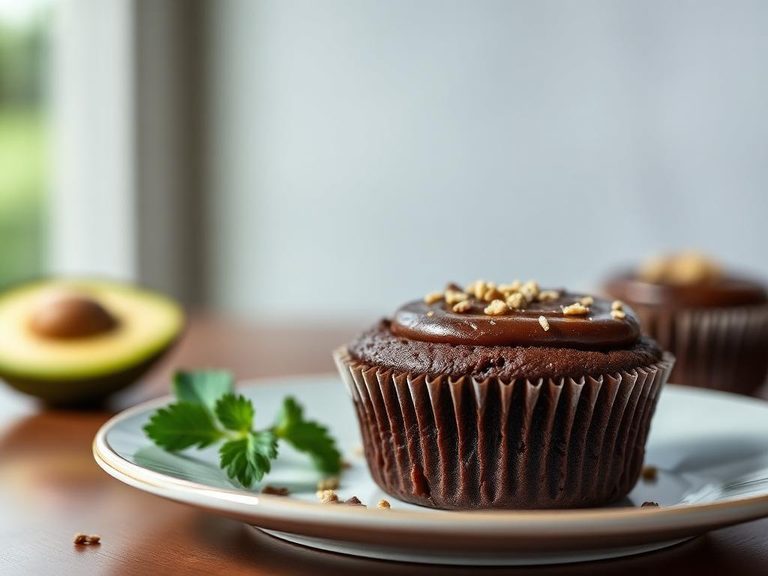
You can modify recipes by using whole wheat flour, reducing sugar, adding pureed fruits or vegetables for moisture, or using alternative frostings like avocado-based chocolate mousse or Greek yogurt frosting.
Nutrient density (calculated · NRF9.3)
Nutrient Rich Foods index: beneficial nutrients (protein, fiber, vitamins, minerals) minus saturated fat, added sugar & sodium, per 100 kcal.
NRF9.3 index — Fulgoni, Keast & Drewnowski, 2009. Computed from USDA nutrients.
Weight-loss friendliness (composite index)
Energy density 3.45 kcal/g · 4% calories from protein · 1.6 g fiber · 37.8 g sugar per 100 g.
Composite of energy density (Rolls et al., 1999), protein & fiber satiety, minus sugar. A calculated heuristic — ranks satiety-per-calorie, not a clinical measure.
Dietary load (calculated from USDA values)
Potential renal acid load. Positive = acid-forming, negative = alkaline-forming.
Sodium-to-potassium ratio: 1.93 (lower is better — aim for ≤ 1)
Sodium:potassium per WHO potassium guidance. Computed from USDA nutrients.