

Cake or cupcake, chocolate with chocolate icing, from mix
Common food

Photo: Wikipedia
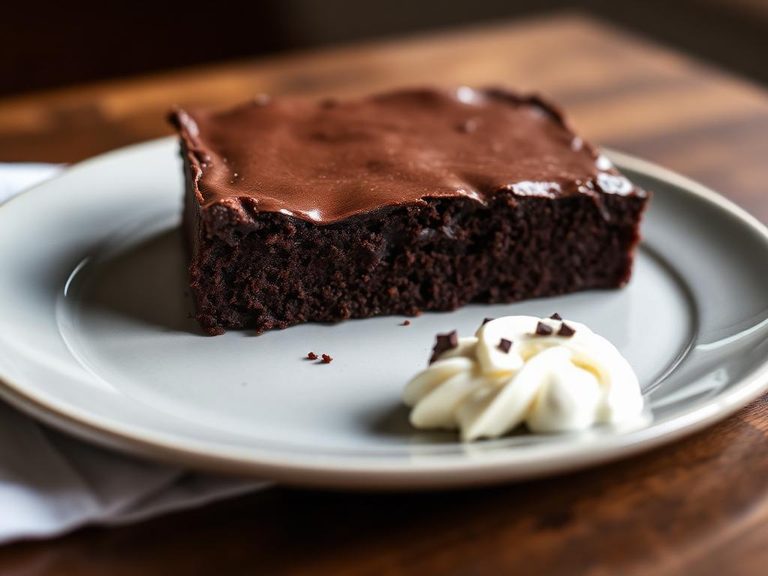
A moist, deeply chocolatey confection born from a convenient mix, delivering a dense crumb and rich, sweet chocolate icing. It is a classic comfort food that balances indulgent flavor with a significant calorie and sugar load per serving.
Calorie split: 4% protein · 58% carbs · 38% fat
↓ Full nutrition💚 Why it's loved
People adore it for its nostalgic, uncomplicated sweetness and the satisfying contrast between the soft cake and creamy icing. It's a versatile treat for celebrations, quick snacks, or a simple dessert that requires no special occasion.
⚠️ Watch-outs & how to enjoy it better
The high sugar content can cause rapid blood-sugar spikes, making it a poor choice for those managing diabetes or insulin resistance. To mitigate, pair a small portion with protein (like Greek yogurt) or healthy fat (like nuts) to slow sugar absorption, and consider it an occasional treat rather than a daily staple.
Key benefits
- Quick and convenient to prepare from a mix
- Provides a rapid source of energy from carbohydrates
- Offers a small amount of protein from flour and eggs
- A familiar, mood-boosting comfort food
🍽️ Popular dishes


🌍 Where it's eaten
💡 Did you know?
The first known chocolate cake recipe was published in 1785 in a French cookbook, but it was the invention of baking powder in the 1840s that made the modern, fluffy chocolate cake accessible to home bakers.
Full nutrition (USDA data · scales with serving)
| Water | 28.5 g |
| Energy | 341 kcal |
| Protein | 3.5 g |
| Total lipid (fat) | 15.0 g |
| Carbohydrate, by difference | 51.3 g |
| Fiber, total dietary | 1.7 g |
| Total Sugars | 36.0 g |
| Calcium, Ca | 75.0 mg |
| Iron, Fe | 1.8 mg |
| Magnesium, Mg | 26.0 mg |
| Phosphorus, P | 164 mg |
| Potassium, K | 149 mg |
| Sodium, Na | 305 mg |
| Zinc, Zn | 0.52 mg |
| Copper, Cu | 0.20 mg |
| Selenium, Se | 5.2 ug |
| Vitamin C, total ascorbic acid | 0.00 mg |
| Thiamin | 0.07 mg |
| Riboflavin | 0.12 mg |
| Niacin | 0.72 mg |
| Vitamin B-6 | 0.03 mg |
| Folate, total | 21.0 ug |
| Folic acid | 12.0 ug |
| Folate, food | 10.0 ug |
| Folate, DFE | 30.0 ug |
| Choline, total | 35.2 mg |
| Vitamin B-12 | 0.12 ug |
| Vitamin B-12, added | 0.00 ug |
| Vitamin A, RAE | 21.0 ug |
| Retinol | 21.0 ug |
| Carotene, beta | 0.00 ug |
| Carotene, alpha | 0.00 ug |
| Cryptoxanthin, beta | 1.0 ug |
| Lycopene | 0.00 ug |
| Lutein + zeaxanthin | 59.0 ug |
| Vitamin E (alpha-tocopherol) | 2.0 mg |
| Vitamin E, added | 0.00 mg |
| Vitamin D (D2 + D3) | 0.30 ug |
| Vitamin K (phylloquinone) | 6.4 ug |
| Alcohol, ethyl | 0.00 g |
| Caffeine | 7.0 mg |
| Theobromine | 87.0 mg |
Fat & fatty acid profile (per 100g)
| Fatty acids, total saturated | 4.0 g |
| SFA 4:0 | 0.00 g |
| SFA 6:0 | 0.00 g |
| SFA 8:0 | 0.00 g |
| SFA 10:0 | 0.00 g |
| SFA 12:0 | 0.00 g |
| SFA 14:0 | 0.06 g |
| SFA 16:0 | 2.2 g |
| SFA 18:0 | 1.7 g |
| Fatty acids, total monounsaturated | 6.6 g |
| MUFA 16:1 | 0.05 g |
| MUFA 18:1 | 6.5 g |
| MUFA 20:1 | 0.04 g |
| MUFA 22:1 | 0.00 g |
| Fatty acids, total polyunsaturated | 3.3 g |
| PUFA 18:2 | 2.9 g |
| PUFA 18:3 | 0.28 g |
| PUFA 18:4 | 0.00 g |
| PUFA 20:4 | 0.00 g |
| PUFA 20:5 n-3 (EPA) | 0.00 g |
| PUFA 22:5 n-3 (DPA) | 0.00 g |
| PUFA 22:6 n-3 (DHA) | 0.00 g |
| Cholesterol | 47.0 mg |
FAQ
How does the nutrition compare to a homemade chocolate cake?
A mix-based cake often has similar calories and sugar to homemade versions, but may contain more preservatives, artificial flavors, and sodium. Homemade allows for better control over sugar and fat content.
Is this food suitable for a gluten-free diet?
Standard cake mixes contain wheat flour and are not gluten-free. However, gluten-free cake mixes are widely available as an alternative.
What is the primary source of fat in this cake?
The fat primarily comes from vegetable oil or butter added to the mix, along with eggs and any dairy in the icing, contributing significantly to its calorie density.
Nutrient density (calculated · NRF9.3)
Nutrient Rich Foods index: beneficial nutrients (protein, fiber, vitamins, minerals) minus saturated fat, added sugar & sodium, per 100 kcal.
NRF9.3 index — Fulgoni, Keast & Drewnowski, 2009. Computed from USDA nutrients.
Weight-loss friendliness (composite index)
Energy density 3.41 kcal/g · 4% calories from protein · 1.7 g fiber · 36.0 g sugar per 100 g.
Composite of energy density (Rolls et al., 1999), protein & fiber satiety, minus sugar. A calculated heuristic — ranks satiety-per-calorie, not a clinical measure.
Dietary load (calculated from USDA values)
Potential renal acid load. Positive = acid-forming, negative = alkaline-forming.
Sodium-to-potassium ratio: 2.05 (lower is better — aim for ≤ 1)
Sodium:potassium per WHO potassium guidance. Computed from USDA nutrients.