

Barbecue sandwich, NFS
Common food
Photo: Wikipedia
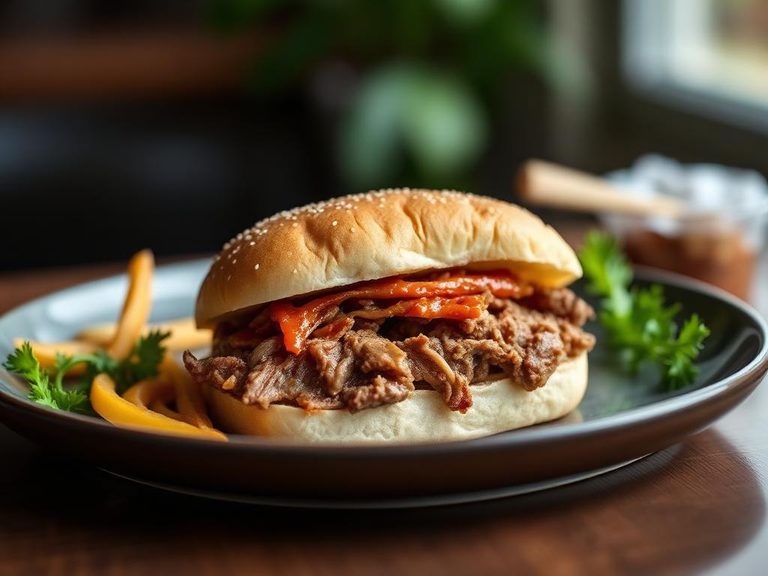
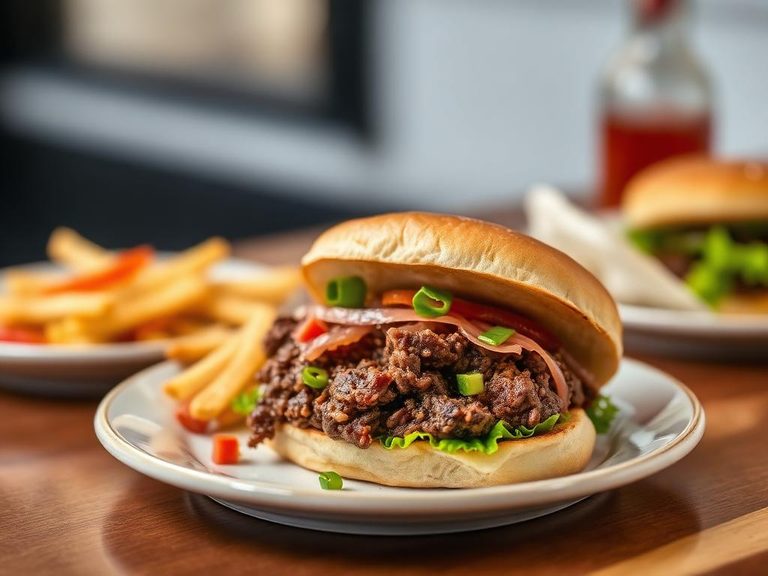
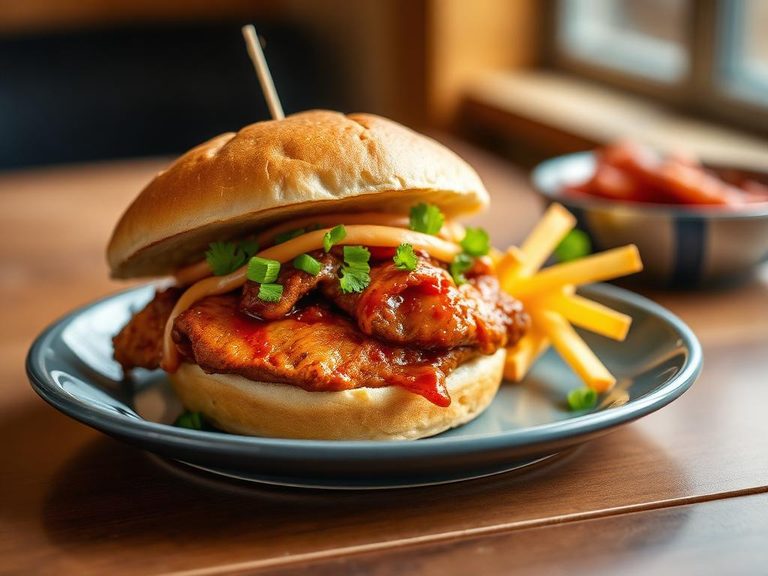
A barbecue sandwich is a hearty, smoky-sweet handheld meal, typically featuring slow-cooked, shredded or sliced meat (most often pork or beef) tossed in a tangy, tomato-based barbecue sauce and served on a soft bun. Its texture is a satisfying contrast between the tender, pull-apart meat and the pillowy bread, with a flavor profile that balances savory, sweet, and acidic notes. Nutritionally, it provides a solid protein boost but is notably dense in carbohydrates and sugars from the sauce and bun.
Calorie split: 26% protein · 43% carbs · 31% fat
↓ Full nutrition💚 Why it's loved
People love it for the deep, complex flavors of slow-smoked meat melded with a rich, often slightly sweet sauce, creating a comforting and indulgent taste experience. It's also incredibly versatile, adaptable to regional sauces (from vinegar-based to molasses-rich) and various meats, making it a beloved canvas for culinary tradition and personal preference.
⚠️ Watch-outs & how to enjoy it better
The high sugar content in many barbecue sauces can cause rapid blood-sugar spikes, and the meal is often high in sodium and saturated fat. Those monitoring blood sugar, sodium intake, or heart health should be cautious. To counteract, opt for a sauce with less added sugar, choose a whole-grain bun for added fiber, and pair the sandwich with a large, non-starchy vegetable side like coleslaw (made with vinegar dressing) or a green salad to slow digestion and add volume.
Key benefits
- Excellent source of complete protein for muscle maintenance.
- Provides quick energy from carbohydrates.
- Contains iron and B vitamins from the meat component.
- Offers a convenient, calorie-dense meal option.
- Cultural staple for communal gatherings and comfort food.
🍽️ Popular dishes


🌍 Where it's eaten
💡 Did you know?
The 'NFS' in the database entry stands for 'Not Further Specified,' meaning the nutritional values are an average composite for a generic barbecue sandwich, masking huge variations—a vinegar-based pulled pork sandwich in North Carolina can have significantly less sugar than a molasses-heavy beef brisket sandwich from Kansas City.
Full nutrition (USDA data · scales with serving)
| Water | 49.5 g |
| Energy | 238 kcal |
| Protein | 15.3 g |
| Total lipid (fat) | 8.1 g |
| Carbohydrate, by difference | 24.9 g |
| Fiber, total dietary | 0.80 g |
| Total Sugars | 9.1 g |
| Calcium, Ca | 63.0 mg |
| Iron, Fe | 1.9 mg |
| Magnesium, Mg | 21.0 mg |
| Phosphorus, P | 141 mg |
| Potassium, K | 233 mg |
| Sodium, Na | 561 mg |
| Zinc, Zn | 2.2 mg |
| Copper, Cu | 0.10 mg |
| Selenium, Se | 24.5 ug |
| Vitamin C, total ascorbic acid | 0.60 mg |
| Thiamin | 0.35 mg |
| Riboflavin | 0.25 mg |
| Niacin | 3.8 mg |
| Vitamin B-6 | 0.20 mg |
| Folate, total | 34.0 ug |
| Folic acid | 18.0 ug |
| Folate, food | 16.0 ug |
| Folate, DFE | 46.0 ug |
| Choline, total | 51.0 mg |
| Vitamin B-12 | 0.56 ug |
| Vitamin B-12, added | 0.00 ug |
| Vitamin A, RAE | 4.0 ug |
| Retinol | 2.0 ug |
| Carotene, beta | 27.0 ug |
| Carotene, alpha | 0.00 ug |
| Cryptoxanthin, beta | 0.00 ug |
| Lycopene | 910 ug |
| Lutein + zeaxanthin | 20.0 ug |
| Vitamin E (alpha-tocopherol) | 0.35 mg |
| Vitamin E, added | 0.00 mg |
| Vitamin D (D2 + D3) | 0.40 ug |
| Vitamin K (phylloquinone) | 2.1 ug |
| Alcohol, ethyl | 0.00 g |
| Caffeine | 0.00 mg |
| Theobromine | 0.00 mg |
Fat & fatty acid profile (per 100g)
| Fatty acids, total saturated | 2.7 g |
| SFA 4:0 | 0.00 g |
| SFA 6:0 | 0.00 g |
| SFA 8:0 | 0.00 g |
| SFA 10:0 | 0.01 g |
| SFA 12:0 | 0.01 g |
| SFA 14:0 | 0.10 g |
| SFA 16:0 | 1.6 g |
| SFA 18:0 | 0.86 g |
| Fatty acids, total monounsaturated | 3.2 g |
| MUFA 16:1 | 0.19 g |
| MUFA 18:1 | 3.0 g |
| MUFA 20:1 | 0.05 g |
| MUFA 22:1 | 0.01 g |
| Fatty acids, total polyunsaturated | 1.5 g |
| PUFA 18:2 | 1.3 g |
| PUFA 18:3 | 0.10 g |
| PUFA 18:4 | 0.00 g |
| PUFA 20:4 | 0.04 g |
| PUFA 20:5 n-3 (EPA) | 0.00 g |
| PUFA 22:5 n-3 (DPA) | 0.00 g |
| PUFA 22:6 n-3 (DHA) | 0.00 g |
| Cholesterol | 44.0 mg |
FAQ
What meat is most commonly used in a barbecue sandwich?
Pork (especially shoulder/butt for pulled pork) is the most traditional and widespread, but beef brisket, chopped beef, and chicken are also extremely popular depending on the region.
Is a barbecue sandwich considered healthy?
It's a calorie-dense comfort food. While it provides good protein, it can be high in sugar, sodium, and fat. Healthier versions can be made with leaner meats, less sugary sauce, and whole-grain buns.
How do the regional styles differ?
Major differences lie in the sauce and meat. Carolina styles often use vinegar or tomato-vinegar sauces on pork. Memphis is known for dry-rubbed pork with a sweet tomato sauce on the side. Texas focuses on beef brisket with a simple, peppery rub and minimal sauce. Kansas City uses a thick, sweet, tomato-molasses sauce on various meats.
Nutrient density (calculated · NRF9.3)
Nutrient Rich Foods index: beneficial nutrients (protein, fiber, vitamins, minerals) minus saturated fat, added sugar & sodium, per 100 kcal.
NRF9.3 index — Fulgoni, Keast & Drewnowski, 2009. Computed from USDA nutrients.
Weight-loss friendliness (composite index)
Energy density 2.38 kcal/g · 26% calories from protein · 0.8 g fiber · 9.1 g sugar per 100 g.
Composite of energy density (Rolls et al., 1999), protein & fiber satiety, minus sugar. A calculated heuristic — ranks satiety-per-calorie, not a clinical measure.
Dietary load (calculated from USDA values)
Potential renal acid load. Positive = acid-forming, negative = alkaline-forming.
Sodium-to-potassium ratio: 2.41 (lower is better — aim for ≤ 1)
Sodium:potassium per WHO potassium guidance. Computed from USDA nutrients.