

Barbecue meat, NFS
Common food
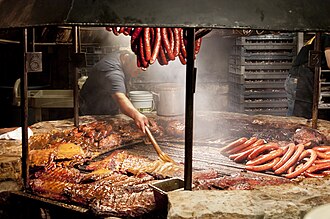
Photo: Wikipedia
Barbecue meat, NFS (Not Further Specified), is a catch-all term for various cuts of meat cooked low and slow over smoldering wood or charcoal, resulting in a tender, smoky, and often caramelized exterior. The nutrition profile is balanced, offering a solid protein punch (18g per 100g) alongside moderate fat and carbohydrates, largely from the sweet, sticky glazes or sauces typical of the style.
Calorie split: 33% protein · 22% carbs · 45% fat
↓ Full nutrition💚 Why it's loved
People love barbecue for its deep, complex flavors—a symphony of smoke, spice, sweetness, and savory umami that's hard to replicate. It's a versatile centerpiece for gatherings, from casual backyard cookouts to competitive festivals, deeply woven into the cultural fabric of many regions.
⚠️ Watch-outs & how to enjoy it better
The high sodium content in many commercial rubs and sauces can be a concern for blood pressure, and the sugar in glazes may cause blood-sugar spikes. To counteract this, opt for dry rubs with less salt, use vinegar-based or mustard-based sauces, and pair the meat with fiber-rich sides like coleslaw or roasted vegetables to slow sugar absorption.
Key benefits
- Excellent source of complete protein for muscle maintenance.
- Provides essential minerals like iron and zinc from red meat.
- Cooking method can render some fat, potentially reducing overall calorie density compared to frying.
- The social, communal aspect of barbecue promotes psychological well-being.
🍽️ Popular dishes
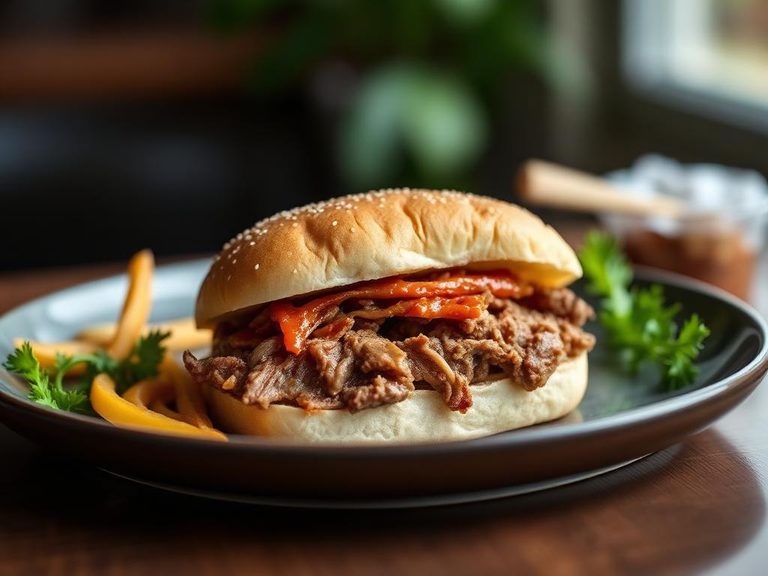
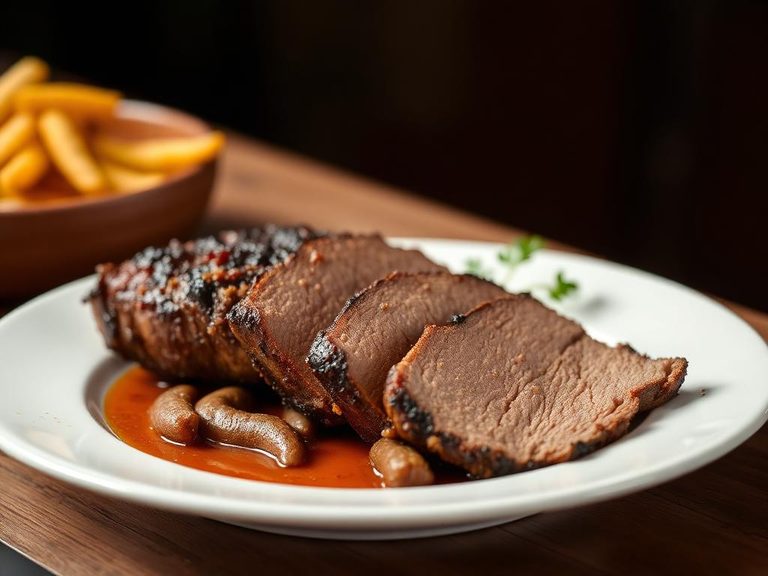

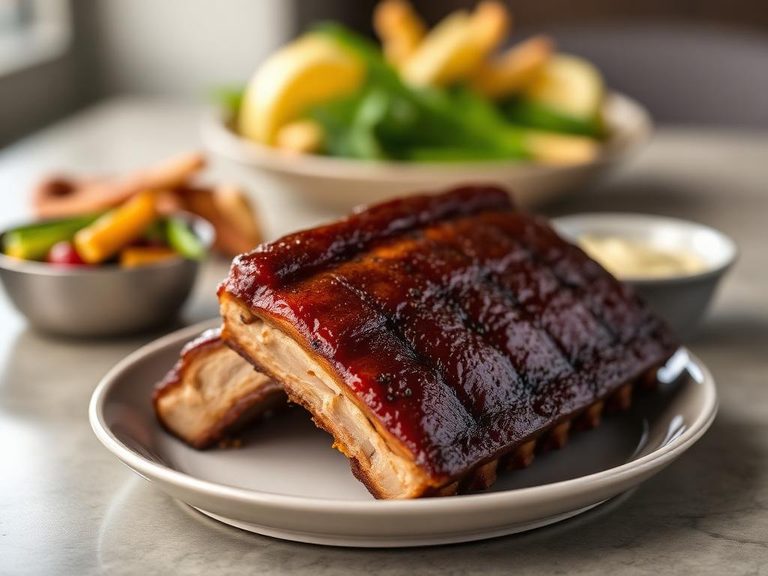

🌍 Where it's eaten
💡 Did you know?
The word 'barbecue' likely derives from the Taíno people's word 'barbacoa,' which referred to a framework of sticks used to smoke meat over a fire.
Full nutrition (USDA data · scales with serving)
| Water | 55.9 g |
| Energy | 226 kcal |
| Protein | 18.1 g |
| Total lipid (fat) | 11.2 g |
| Carbohydrate, by difference | 12.2 g |
| Fiber, total dietary | 0.30 g |
| Total Sugars | 10.0 g |
| Calcium, Ca | 23.0 mg |
| Iron, Fe | 1.4 mg |
| Magnesium, Mg | 19.0 mg |
| Phosphorus, P | 158 mg |
| Potassium, K | 289 mg |
| Sodium, Na | 601 mg |
| Zinc, Zn | 3.5 mg |
| Copper, Cu | 0.10 mg |
| Selenium, Se | 23.9 ug |
| Vitamin C, total ascorbic acid | 0.20 mg |
| Thiamin | 0.26 mg |
| Riboflavin | 0.23 mg |
| Niacin | 3.2 mg |
| Vitamin B-6 | 0.28 mg |
| Folate, total | 3.0 ug |
| Folic acid | 0.00 ug |
| Folate, food | 3.0 ug |
| Folate, DFE | 3.0 ug |
| Choline, total | 72.7 mg |
| Vitamin B-12 | 0.92 ug |
| Vitamin B-12, added | 0.00 ug |
| Vitamin A, RAE | 6.0 ug |
| Retinol | 2.0 ug |
| Carotene, beta | 40.0 ug |
| Carotene, alpha | 0.00 ug |
| Cryptoxanthin, beta | 1.0 ug |
| Lycopene | 1365 ug |
| Lutein + zeaxanthin | 26.0 ug |
| Vitamin E (alpha-tocopherol) | 0.36 mg |
| Vitamin E, added | 0.00 mg |
| Vitamin D (D2 + D3) | 0.60 ug |
| Vitamin K (phylloquinone) | 0.80 ug |
| Alcohol, ethyl | 0.00 g |
| Caffeine | 0.00 mg |
| Theobromine | 0.00 mg |
Fat & fatty acid profile (per 100g)
| Fatty acids, total saturated | 4.0 g |
| SFA 4:0 | 0.00 g |
| SFA 6:0 | 0.00 g |
| SFA 8:0 | 0.00 g |
| SFA 10:0 | 0.01 g |
| SFA 12:0 | 0.01 g |
| SFA 14:0 | 0.18 g |
| SFA 16:0 | 2.4 g |
| SFA 18:0 | 1.3 g |
| Fatty acids, total monounsaturated | 4.9 g |
| MUFA 16:1 | 0.28 g |
| MUFA 18:1 | 4.6 g |
| MUFA 20:1 | 0.07 g |
| MUFA 22:1 | 0.01 g |
| Fatty acids, total polyunsaturated | 1.4 g |
| PUFA 18:2 | 1.2 g |
| PUFA 18:3 | 0.06 g |
| PUFA 18:4 | 0.00 g |
| PUFA 20:4 | 0.06 g |
| PUFA 20:5 n-3 (EPA) | 0.00 g |
| PUFA 22:5 n-3 (DPA) | 0.01 g |
| PUFA 22:6 n-3 (DHA) | 0.00 g |
| Cholesterol | 65.0 mg |
FAQ
What does 'NFS' mean on a nutrition label for barbecue meat?
NFS stands for 'Not Further Specified.' It indicates the data is an average for a general category (like 'barbecue meat') without specifying the exact cut of meat, sauce, or preparation method.
Is the sugar content in barbecue meat from the meat itself?
No, the 9.97g of sugar per 100g is almost entirely from added sugars in barbecue sauces, glazes, or sweet rubs. The meat itself contains negligible sugar.
How can I reduce the fat content when eating barbecue?
Choose leaner cuts like chicken breast or pork loin, trim visible fat before cooking, and avoid meats that have been heavily basted with fatty sauces. Opting for smoked over fried preparations also helps.
Nutrient density (calculated · NRF9.3)
Nutrient Rich Foods index: beneficial nutrients (protein, fiber, vitamins, minerals) minus saturated fat, added sugar & sodium, per 100 kcal.
NRF9.3 index — Fulgoni, Keast & Drewnowski, 2009. Computed from USDA nutrients.
Weight-loss friendliness (composite index)
Energy density 2.26 kcal/g · 32% calories from protein · 0.3 g fiber · 10.0 g sugar per 100 g.
Composite of energy density (Rolls et al., 1999), protein & fiber satiety, minus sugar. A calculated heuristic — ranks satiety-per-calorie, not a clinical measure.
Dietary load (calculated from USDA values)
Potential renal acid load. Positive = acid-forming, negative = alkaline-forming.
Sodium-to-potassium ratio: 2.08 (lower is better — aim for ≤ 1)
Sodium:potassium per WHO potassium guidance. Computed from USDA nutrients.