

Bao bun, no meat
Common food

Photo: Wikipedia
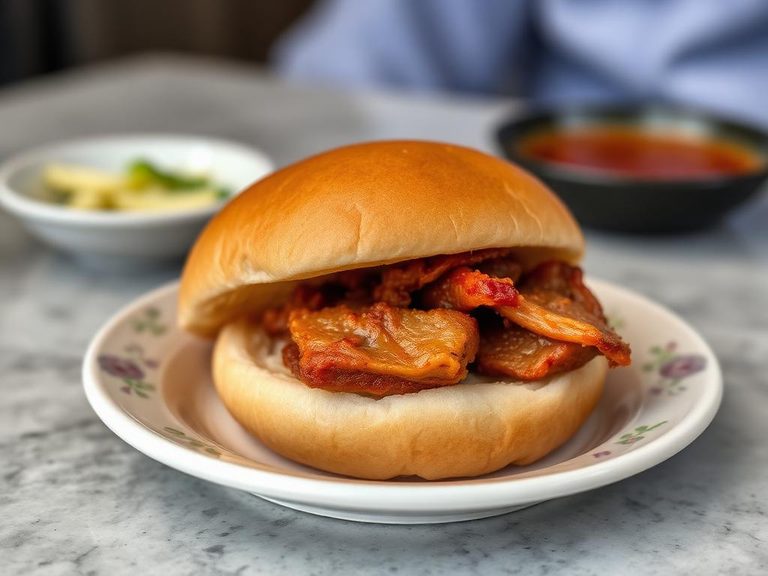
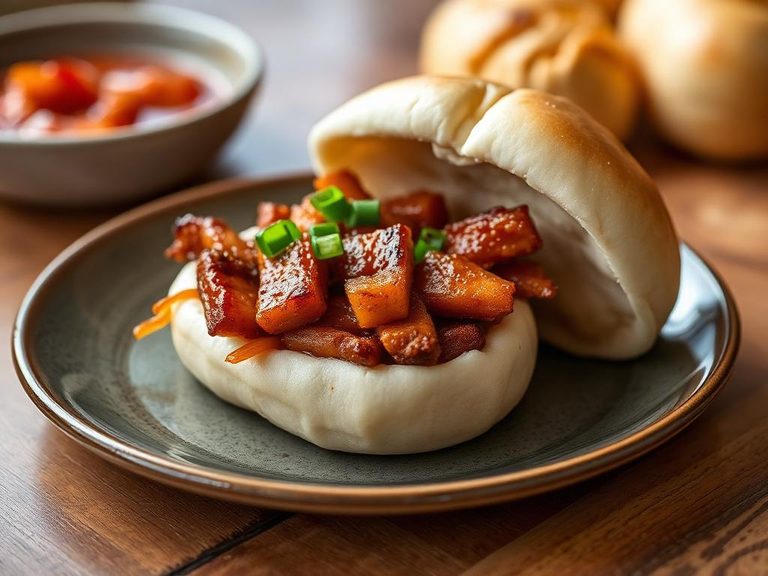
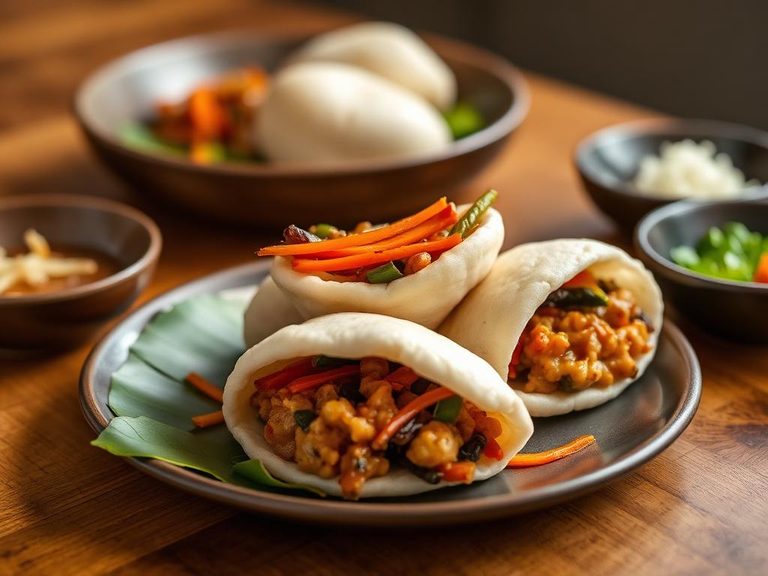
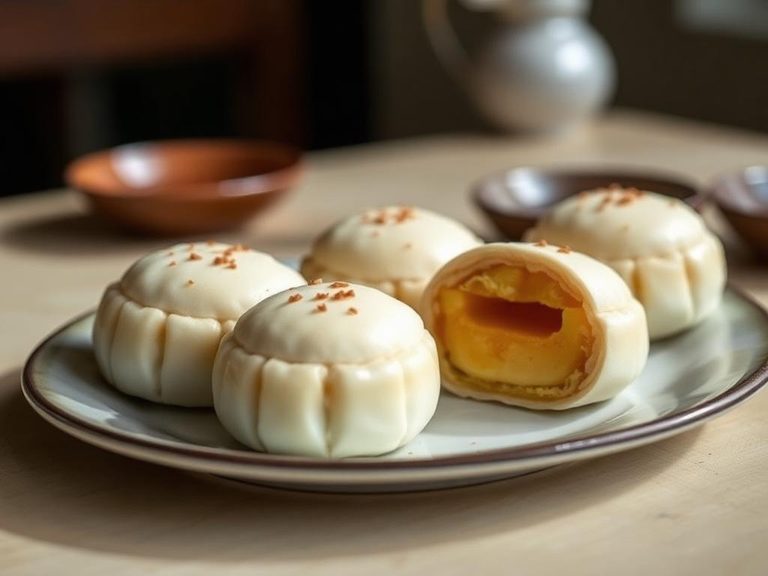
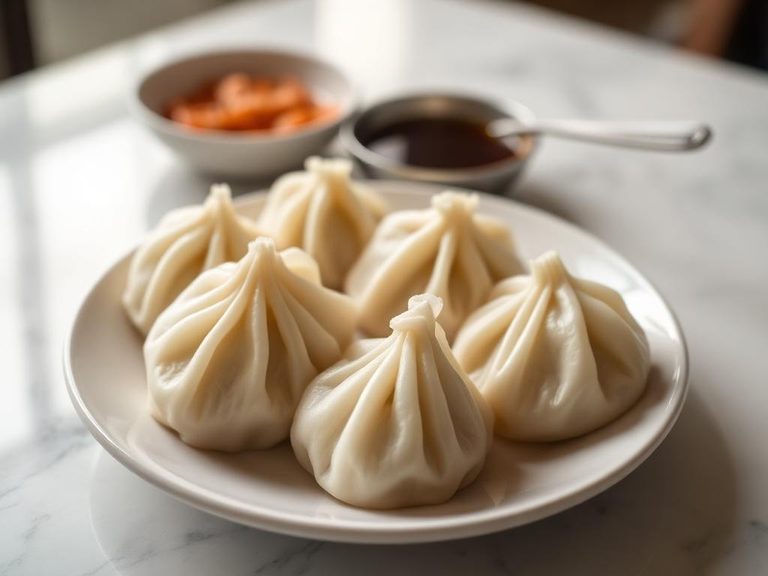
A Bao bun, no meat, is a soft, pillowy steamed wheat-flour dough pocket, often folded over a savory filling of vegetables, tofu, or egg. Its texture is uniquely fluffy and slightly chewy, with a mild, subtly sweet wheat flavor that acts as a perfect canvas for bold sauces and fillings. Nutritionally, it's a high-carbohydrate energy source with minimal fat.
Calorie split: 10% protein · 80% carbs · 10% fat
↓ Full nutrition💚 Why it's loved
People adore bao for its comforting, cloud-like texture and its incredible versatility—it can be a sweet or savory snack, a breakfast item, or a full meal. It's deeply embedded in East and Southeast Asian culinary traditions, evoking a sense of home and street-food joy.
⚠️ Watch-outs & how to enjoy it better
The high refined carbohydrate content can cause rapid blood sugar spikes, especially when eaten alone. Those monitoring blood glucose or managing diabetes should be cautious. Tip: Pair it with a protein-rich filling (like eggs, tofu, or lean meat) and fiber (vegetables) to slow digestion. Also, be mindful of sodium in accompanying sauces or fillings.
Key benefits
- Excellent source of quick energy from complex carbs.
- Low in fat, making it a lighter steamed option.
- Versatile vessel for vegetable and protein fillings.
- Steaming preserves nutrients without added fats.
- A comforting, culturally significant staple food.
🍽️ Popular dishes
🌍 Where it's eaten
💡 Did you know?
The 'lotus leaf' shape of a folded gua bao is said to symbolize prosperity and is a traditional vessel for celebratory foods during festivals.
Full nutrition (USDA data · scales with serving)
| Water | 34.2 g |
| Energy | 268 kcal |
| Protein | 6.7 g |
| Total lipid (fat) | 2.9 g |
| Carbohydrate, by difference | 54.3 g |
| Fiber, total dietary | 3.4 g |
| Total Sugars | 22.3 g |
| Calcium, Ca | 107 mg |
| Iron, Fe | 2.6 mg |
| Magnesium, Mg | 23.0 mg |
| Phosphorus, P | 118 mg |
| Potassium, K | 174 mg |
| Sodium, Na | 268 mg |
| Zinc, Zn | 0.58 mg |
| Copper, Cu | 0.11 mg |
| Selenium, Se | 5.2 ug |
| Vitamin C, total ascorbic acid | 0.30 mg |
| Thiamin | 0.26 mg |
| Riboflavin | 0.14 mg |
| Niacin | 1.9 mg |
| Vitamin B-6 | 0.05 mg |
| Folate, total | 65.0 ug |
| Folic acid | 28.0 ug |
| Folate, food | 37.0 ug |
| Folate, DFE | 84.0 ug |
| Choline, total | 16.5 mg |
| Vitamin B-12 | 0.00 ug |
| Vitamin B-12, added | 0.00 ug |
| Vitamin A, RAE | 0.00 ug |
| Retinol | 0.00 ug |
| Carotene, beta | 0.00 ug |
| Carotene, alpha | 0.00 ug |
| Cryptoxanthin, beta | 0.00 ug |
| Lycopene | 0.00 ug |
| Lutein + zeaxanthin | 5.0 ug |
| Vitamin E (alpha-tocopherol) | 0.04 mg |
| Vitamin E, added | 0.00 mg |
| Vitamin D (D2 + D3) | 0.10 ug |
| Vitamin K (phylloquinone) | 3.5 ug |
| Alcohol, ethyl | 0.00 g |
| Caffeine | 0.00 mg |
| Theobromine | 0.00 mg |
Fat & fatty acid profile (per 100g)
| Fatty acids, total saturated | 0.95 g |
| SFA 4:0 | 0.00 g |
| SFA 6:0 | 0.00 g |
| SFA 8:0 | 0.00 g |
| SFA 10:0 | 0.00 g |
| SFA 12:0 | 0.00 g |
| SFA 14:0 | 0.03 g |
| SFA 16:0 | 0.60 g |
| SFA 18:0 | 0.31 g |
| Fatty acids, total monounsaturated | 1.0 g |
| MUFA 16:1 | 0.06 g |
| MUFA 18:1 | 0.96 g |
| MUFA 20:1 | 0.02 g |
| MUFA 22:1 | 0.00 g |
| Fatty acids, total polyunsaturated | 0.48 g |
| PUFA 18:2 | 0.39 g |
| PUFA 18:3 | 0.10 g |
| PUFA 18:4 | 0.00 g |
| PUFA 20:4 | 0.00 g |
| PUFA 20:5 n-3 (EPA) | 0.00 g |
| PUFA 22:5 n-3 (DPA) | 0.00 g |
| PUFA 22:6 n-3 (DHA) | 0.00 g |
| Cholesterol | 2.0 mg |
FAQ
Is a bao bun the same as a dumpling?
Not exactly. Bao are leavened (yeast-risen) dough, making them fluffy and bread-like. Most dumplings use unleavened dough, resulting in a thinner, chewier wrapper.
Can I freeze leftover bao?
Yes. Wrap them individually in plastic wrap, then place in a freezer bag. Reheat by steaming directly from frozen for 8-10 minutes until hot and soft.
What's the difference between steamed and baked bao?
Steamed bao is soft and pillowy. Baked bao (like pineapple buns) has a crispy, cookie-like topping and a denser, breadier texture inside.
Nutrient density (calculated · NRF9.3)
Nutrient Rich Foods index: beneficial nutrients (protein, fiber, vitamins, minerals) minus saturated fat, added sugar & sodium, per 100 kcal.
NRF9.3 index — Fulgoni, Keast & Drewnowski, 2009. Computed from USDA nutrients.
Weight-loss friendliness (composite index)
Energy density 2.68 kcal/g · 10% calories from protein · 3.4 g fiber · 22.3 g sugar per 100 g.
Composite of energy density (Rolls et al., 1999), protein & fiber satiety, minus sugar. A calculated heuristic — ranks satiety-per-calorie, not a clinical measure.
Dietary load (calculated from USDA values)
Potential renal acid load. Positive = acid-forming, negative = alkaline-forming.
Sodium-to-potassium ratio: 1.54 (lower is better — aim for ≤ 1)
Sodium:potassium per WHO potassium guidance. Computed from USDA nutrients.