

Arepa Dominicana
Common food

Photo: Wikipedia
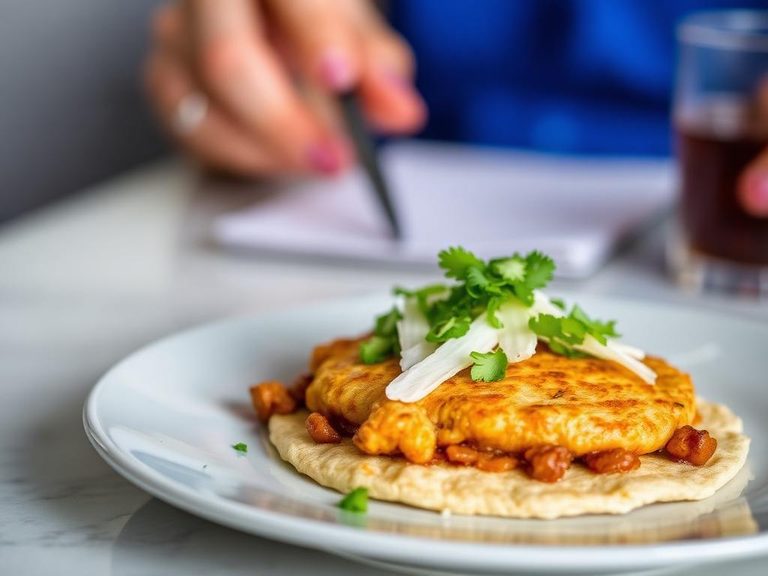
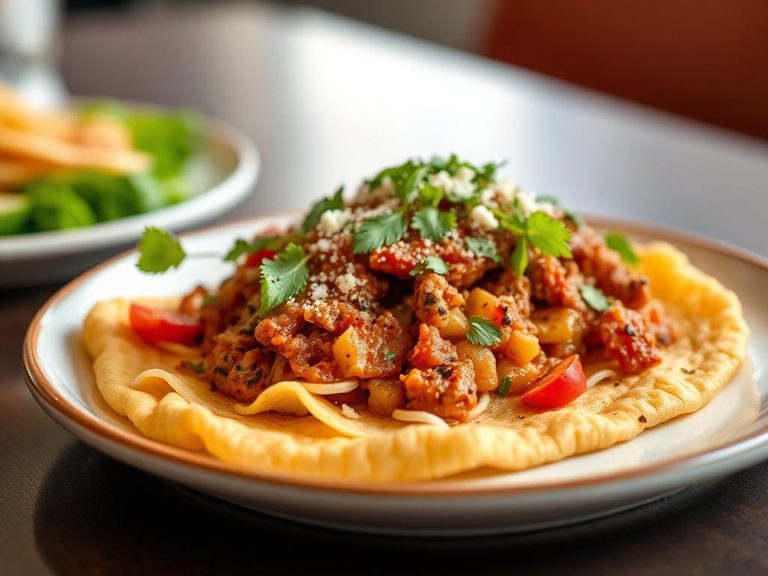
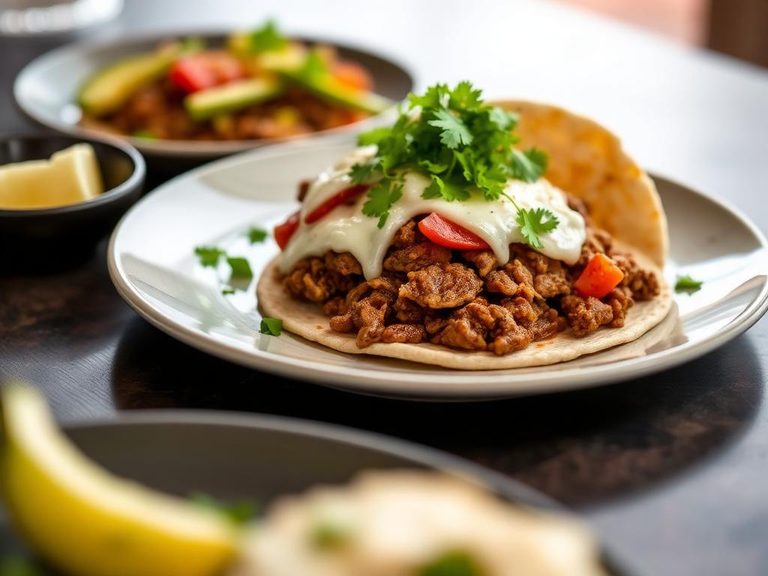
A golden, crispy cornmeal pocket from the Dominican Republic, stuffed with savory fillings. Its texture is a delightful contrast: a crunchy, fried exterior giving way to a soft, slightly chewy interior. Nutritionally, it's a balanced carb source with a moderate amount of protein and fat, making it a satisfying, energy-dense staple.
Calorie split: 8% protein · 45% carbs · 47% fat
↓ Full nutrition💚 Why it's loved
People adore it for its perfect textural contrast and its role as a beloved, customizable street food. It's a cornerstone of Dominican comfort cuisine, evoking nostalgia and pride.
⚠️ Watch-outs & how to enjoy it better
As a fried food, it can be high in calories and fats; those monitoring fat intake or with digestive sensitivities should be mindful. To counteract, opt for baking or air-frying instead of deep-frying, and fill it with lean proteins and abundant vegetables to boost its nutritional profile.
Key benefits
- Provides sustained energy from complex carbohydrates.
- Offers plant-based protein for muscle maintenance.
- Contains dietary fiber for digestive health.
- A versatile vehicle for nutrient-rich fillings.
- A culturally significant comfort food.
🍽️ Popular dishes


🌍 Where it's eaten
💡 Did you know?
Unlike the Venezuelan or Colombian arepa, which is typically split and filled, the Dominican arepa is often sealed and fried, creating a pocket that perfectly contains its savory filling.
Full nutrition (USDA data · scales with serving)
| Water | 47.9 g |
| Energy | 267 kcal |
| Protein | 5.7 g |
| Total lipid (fat) | 14.0 g |
| Carbohydrate, by difference | 30.5 g |
| Fiber, total dietary | 2.4 g |
| Total Sugars | 3.3 g |
| Calcium, Ca | 82.0 mg |
| Iron, Fe | 2.3 mg |
| Magnesium, Mg | 28.0 mg |
| Phosphorus, P | 132 mg |
| Potassium, K | 202 mg |
| Sodium, Na | 399 mg |
| Zinc, Zn | 0.74 mg |
| Copper, Cu | 0.12 mg |
| Selenium, Se | 10.1 ug |
| Vitamin C, total ascorbic acid | 0.80 mg |
| Thiamin | 0.18 mg |
| Riboflavin | 0.20 mg |
| Niacin | 1.8 mg |
| Vitamin B-6 | 0.09 mg |
| Folate, total | 60.0 ug |
| Folic acid | 42.0 ug |
| Folate, food | 18.0 ug |
| Folate, DFE | 89.0 ug |
| Choline, total | 42.5 mg |
| Vitamin B-12 | 0.19 ug |
| Vitamin B-12, added | 0.00 ug |
| Vitamin A, RAE | 62.0 ug |
| Retinol | 57.0 ug |
| Carotene, beta | 52.0 ug |
| Carotene, alpha | 19.0 ug |
| Cryptoxanthin, beta | 2.0 ug |
| Lycopene | 0.00 ug |
| Lutein + zeaxanthin | 549 ug |
| Vitamin E (alpha-tocopherol) | 0.54 mg |
| Vitamin E, added | 0.00 mg |
| Vitamin D (D2 + D3) | 0.80 ug |
| Vitamin K (phylloquinone) | 3.3 ug |
| Alcohol, ethyl | 0.00 g |
| Caffeine | 0.00 mg |
| Theobromine | 0.00 mg |
Fat & fatty acid profile (per 100g)
| Fatty acids, total saturated | 9.1 g |
| SFA 4:0 | 0.02 g |
| SFA 6:0 | 0.07 g |
| SFA 8:0 | 0.61 g |
| SFA 10:0 | 0.50 g |
| SFA 12:0 | 3.8 g |
| SFA 14:0 | 1.6 g |
| SFA 16:0 | 1.6 g |
| SFA 18:0 | 0.85 g |
| Fatty acids, total monounsaturated | 2.5 g |
| MUFA 16:1 | 0.04 g |
| MUFA 18:1 | 2.4 g |
| MUFA 20:1 | 0.01 g |
| MUFA 22:1 | 0.00 g |
| Fatty acids, total polyunsaturated | 1.4 g |
| PUFA 18:2 | 1.3 g |
| PUFA 18:3 | 0.08 g |
| PUFA 18:4 | 0.00 g |
| PUFA 20:4 | 0.00 g |
| PUFA 20:5 n-3 (EPA) | 0.00 g |
| PUFA 22:5 n-3 (DPA) | 0.00 g |
| PUFA 22:6 n-3 (DHA) | 0.00 g |
| Cholesterol | 53.0 mg |
FAQ
How is it different from other arepas?
The Dominican arepa is typically made from a cornmeal dough that is often filled, sealed, and then fried, resulting in a pocket. Other arepas are usually thicker, grilled or baked, and split open to be filled like a sandwich.
Is it gluten-free?
Traditionally, yes. It's made from cornmeal (masarepa), which is naturally gluten-free. However, always check for cross-contamination if prepared in a shared kitchen.
What's the most classic filling?
A very classic and simple filling is just melted cheese (queso de freír). Another iconic version is the Arepa de Huevo, where an egg is encased in the corn dough before frying.
Nutrient density (calculated · NRF9.3)
Nutrient Rich Foods index: beneficial nutrients (protein, fiber, vitamins, minerals) minus saturated fat, added sugar & sodium, per 100 kcal.
NRF9.3 index — Fulgoni, Keast & Drewnowski, 2009. Computed from USDA nutrients.
Weight-loss friendliness (composite index)
Energy density 2.67 kcal/g · 8% calories from protein · 2.4 g fiber · 3.3 g sugar per 100 g.
Composite of energy density (Rolls et al., 1999), protein & fiber satiety, minus sugar. A calculated heuristic — ranks satiety-per-calorie, not a clinical measure.
Dietary load (calculated from USDA values)
Potential renal acid load. Positive = acid-forming, negative = alkaline-forming.
Sodium-to-potassium ratio: 1.98 (lower is better — aim for ≤ 1)
Sodium:potassium per WHO potassium guidance. Computed from USDA nutrients.