

Vodka and energy drink
Common food
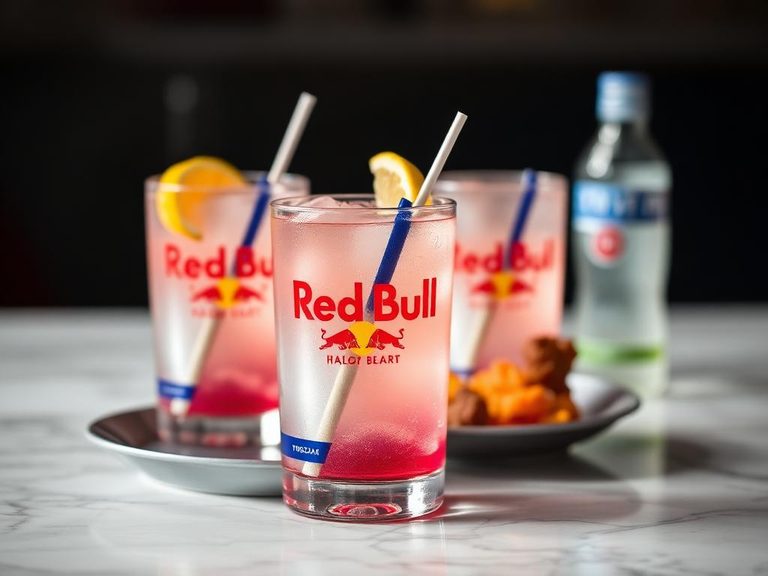
A high-energy, effervescent cocktail that combines the clean, sharp bite of vodka with the sweet, often citrusy or berry-flavored fizz of an energy drink. The result is a deceptively smooth, cold beverage that delivers a significant caffeine and sugar rush alongside its alcoholic kick. Nutritionally, it's a source of quick-release carbohydrates and calories with negligible protein, fat, or fiber.
Calorie split: 4% protein · 96% carbs · 0% fat
↓ Full nutrition💚 Why it's loved
People love it for its potent, synergistic kick that combines stimulation and relaxation, making it a staple for late nights and parties. Its sweet, fruity flavors effectively mask the taste of alcohol, offering a highly palatable and versatile platform for numerous brand and flavor combinations.
⚠️ Watch-outs & how to enjoy it better
The high sugar content can lead to a sharp blood-sugar spike followed by a crash, potentially worsening dehydration and next-day hangovers. The combination of stimulants and depressants can mask the feeling of intoxication, leading to overconsumption. To counteract this, alternate every cocktail with a glass of water, choose a sugar-free energy drink variant, and consume a balanced meal with protein and fat beforehand to slow alcohol and sugar absorption.
Key benefits
- Provides a quick source of energy from simple sugars and caffeine.
- Low in fat and contains no cholesterol.
- Serves as a simple, ready-to-mix party cocktail.
- The carbonation can enhance the perception of a lighter, more refreshing drink.
🍽️ Popular dishes




🌍 Where it's eaten
💡 Did you know?
The original Vodka Red Bull combination is said to have been invented in an Austrian ski resort in the late 1980s, a decade after Red Bull itself was created in Thailand.
Full nutrition (USDA data · scales with serving)
| Water | 83.6 g |
| Energy | 90.0 kcal |
| Protein | 0.35 g |
| Total lipid (fat) | 0.00 g |
| Carbohydrate, by difference | 7.7 g |
| Fiber, total dietary | 0.00 g |
| Total Sugars | 7.7 g |
| Calcium, Ca | 5.0 mg |
| Iron, Fe | 0.06 mg |
| Magnesium, Mg | 14.0 mg |
| Phosphorus, P | 1.0 mg |
| Potassium, K | 3.0 mg |
| Sodium, Na | 30.0 mg |
| Zinc, Zn | 0.02 mg |
| Copper, Cu | 0.01 mg |
| Selenium, Se | 0.20 ug |
| Vitamin C, total ascorbic acid | 0.00 mg |
| Thiamin | 0.03 mg |
| Riboflavin | 0.08 mg |
| Niacin | 7.4 mg |
| Vitamin B-6 | 1.6 mg |
| Folate, total | 0.00 ug |
| Folic acid | 0.00 ug |
| Folate, food | 0.00 ug |
| Folate, DFE | 0.00 ug |
| Choline, total | 0.20 mg |
| Vitamin B-12 | 1.5 ug |
| Vitamin B-12, added | 1.5 ug |
| Vitamin A, RAE | 0.00 ug |
| Retinol | 0.00 ug |
| Carotene, beta | 0.00 ug |
| Carotene, alpha | 0.00 ug |
| Cryptoxanthin, beta | 0.00 ug |
| Lycopene | 0.00 ug |
| Lutein + zeaxanthin | 0.00 ug |
| Vitamin E (alpha-tocopherol) | 0.00 mg |
| Vitamin E, added | 0.00 mg |
| Vitamin D (D2 + D3) | 0.00 ug |
| Vitamin K (phylloquinone) | 0.00 ug |
| Alcohol, ethyl | 8.3 g |
| Caffeine | 22.0 mg |
| Theobromine | 0.00 mg |
Fat & fatty acid profile (per 100g)
| Fatty acids, total saturated | 0.00 g |
| SFA 4:0 | 0.00 g |
| SFA 6:0 | 0.00 g |
| SFA 8:0 | 0.00 g |
| SFA 10:0 | 0.00 g |
| SFA 12:0 | 0.00 g |
| SFA 14:0 | 0.00 g |
| SFA 16:0 | 0.00 g |
| SFA 18:0 | 0.00 g |
| Fatty acids, total monounsaturated | 0.00 g |
| MUFA 16:1 | 0.00 g |
| MUFA 18:1 | 0.00 g |
| MUFA 20:1 | 0.00 g |
| MUFA 22:1 | 0.00 g |
| Fatty acids, total polyunsaturated | 0.00 g |
| PUFA 18:2 | 0.00 g |
| PUFA 18:3 | 0.00 g |
| PUFA 18:4 | 0.00 g |
| PUFA 20:4 | 0.00 g |
| PUFA 20:5 n-3 (EPA) | 0.00 g |
| PUFA 22:5 n-3 (DPA) | 0.00 g |
| PUFA 22:6 n-3 (DHA) | 0.00 g |
| Cholesterol | 0.00 mg |
FAQ
Is a vodka and energy drink more caloric than wine or beer?
Generally, yes. A standard 250ml serving (e.g., one can of energy drink + a shot of vodka) contains roughly 225 kcal, which is comparable to a large glass of wine or a pint of regular beer, but with a much higher sugar content and no nutritional benefits like antioxidants.
Why is this combination considered risky?
The caffeine and other stimulants in the energy drink can mask the sedative effects of alcohol, making you feel more alert and less intoxicated than you actually are. This can lead to drinking more than intended and increases the risk of alcohol-related harm.
Are there lower-calorie versions?
Yes. Using a sugar-free, zero-calorie energy drink significantly reduces the calorie and sugar content of the cocktail, bringing it down to roughly 65-70 kcal per serving, with most calories coming solely from the vodka.
Nutrient density (calculated · NRF9.3)
Nutrient Rich Foods index: beneficial nutrients (protein, fiber, vitamins, minerals) minus saturated fat, added sugar & sodium, per 100 kcal.
NRF9.3 index — Fulgoni, Keast & Drewnowski, 2009. Computed from USDA nutrients.
Weight-loss friendliness (composite index)
Energy density 0.90 kcal/g · 2% calories from protein · 0.0 g fiber · 7.7 g sugar per 100 g.
Composite of energy density (Rolls et al., 1999), protein & fiber satiety, minus sugar. A calculated heuristic — ranks satiety-per-calorie, not a clinical measure.
Dietary load (calculated from USDA values)
Potential renal acid load. Positive = acid-forming, negative = alkaline-forming.
Sodium-to-potassium ratio: 10.00 (lower is better — aim for ≤ 1)
Sodium:potassium per WHO potassium guidance. Computed from USDA nutrients.