

Veal, variety meats and by-products, brain, raw
Whole food · Lamb, Veal, and Game Products

Photo: Wikipedia
Veal brain is a delicate, creamy organ meat with a soft, custard-like texture when cooked. It has a mild, subtly sweet flavor that readily absorbs seasonings and sauces. Nutritionally, it's a lean source of protein and provides essential nutrients like vitamin B12 and choline.
Calorie split: 36% protein · 0% carbs · 64% fat
↓ Full nutrition💚 Why it's loved
People love it for its uniquely smooth, luxurious texture and its ability to be a blank canvas for bold flavors like lemon, capers, and brown butter. In many cultures, it's a cherished delicacy celebrated in classic, comforting dishes.
⚠️ Watch-outs & how to enjoy it better
The primary caution is its high dietary cholesterol content, which may concern individuals managing blood lipid levels. To counteract this, practice strict portion control and balance the meal with fiber-rich vegetables. Always source from reputable suppliers to ensure safety and quality.
Key benefits
- Excellent source of vitamin B12 for nerve function.
- Rich in choline, important for brain health.
- Provides high-quality protein with very low carbohydrates.
- Contains healthy fats, including omega-3 fatty acids.
- A traditional nose-to-tail ingredient reducing food waste.
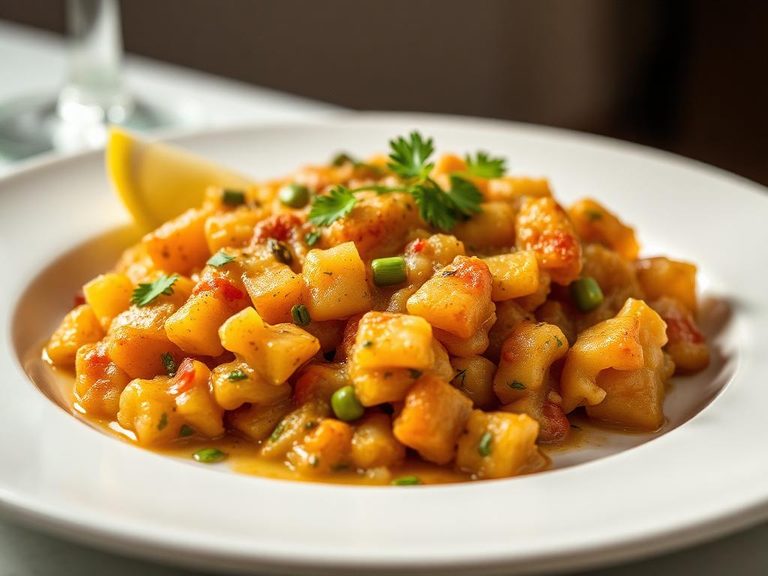
🍽️ Popular dishes
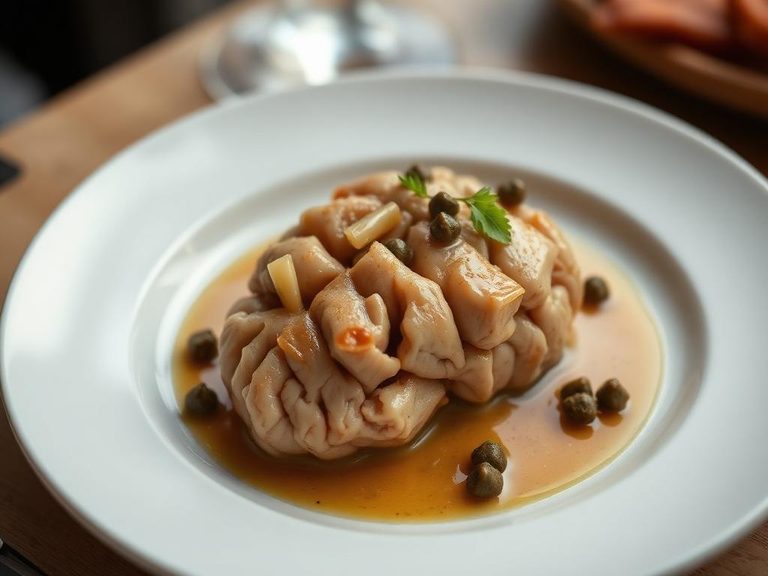
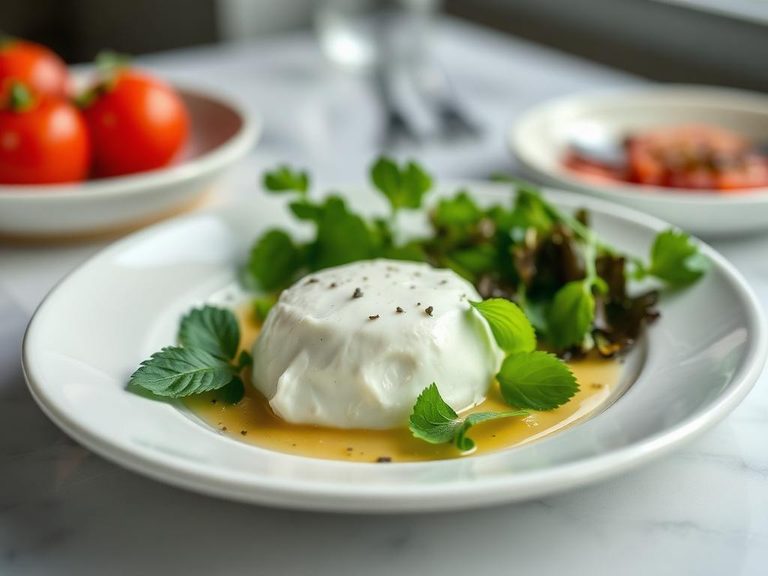
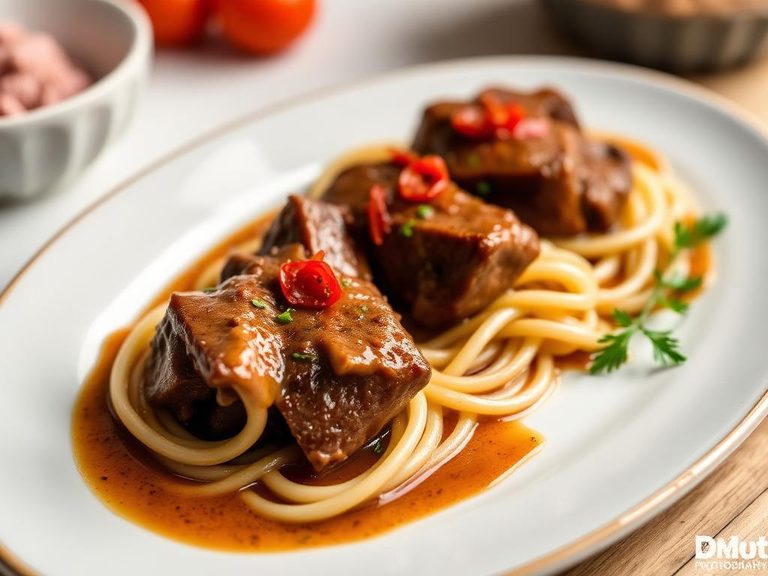
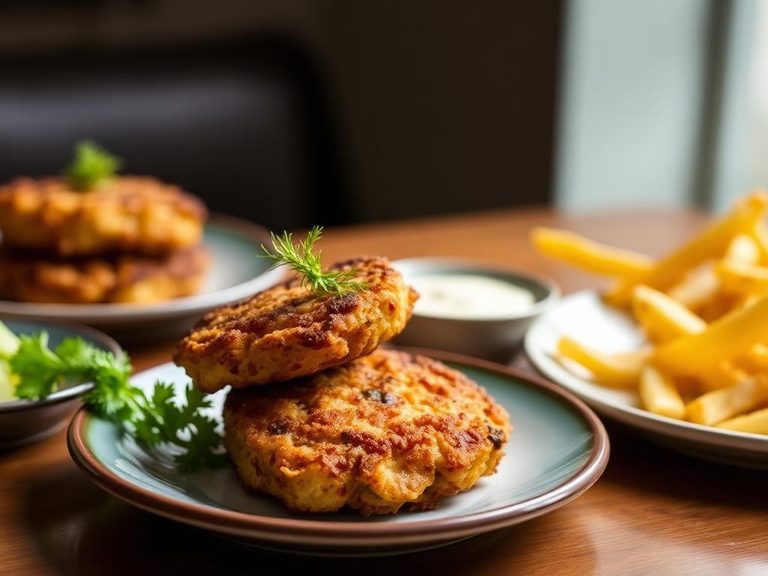
🌍 Where it's eaten
💡 Did you know?
A single serving of veal brain can provide over 100% of your daily recommended intake of vitamin B12, a nutrient crucial for forming red blood cells and maintaining your nervous system.
Full nutrition (USDA data · scales with serving)
| Water | 79.8 g |
| Energy | 118 kcal |
| Energy | 494 kj |
| Protein | 10.3 g |
| Total lipid (fat) | 8.2 g |
| Ash | 1.4 g |
| Carbohydrate, by difference | 0.00 g |
| Fiber, total dietary | 0.00 g |
| Calcium, Ca | 10.0 mg |
| Iron, Fe | 2.1 mg |
| Magnesium, Mg | 14.0 mg |
| Phosphorus, P | 274 mg |
| Potassium, K | 315 mg |
| Sodium, Na | 127 mg |
| Zinc, Zn | 1.1 mg |
| Copper, Cu | 0.22 mg |
| Manganese, Mn | 0.04 mg |
| Selenium, Se | 10.0 ug |
| Vitamin C, total ascorbic acid | 14.0 mg |
| Thiamin | 0.13 mg |
| Riboflavin | 0.26 mg |
| Niacin | 4.3 mg |
| Pantothenic acid | 2.7 mg |
| Vitamin B-6 | 0.28 mg |
| Folate, total | 3.0 ug |
| Folic acid | 0.00 ug |
| Folate, food | 3.0 ug |
| Folate, DFE | 3.0 ug |
| Vitamin B-12 | 12.2 ug |
| Vitamin A, RAE | 0.00 ug |
| Retinol | 0.00 ug |
| Vitamin A, IU | 0.00 iu |
Fat & fatty acid profile (per 100g)
| Fatty acids, total saturated | 1.9 g |
| Fatty acids, total monounsaturated | 1.6 g |
| MUFA 18:1 | 1.3 g |
| Fatty acids, total polyunsaturated | 0.95 g |
| PUFA 18:2 | 0.02 g |
| Cholesterol | 1590 mg |
Amino acid profile (per 100g)
| Tryptophan | 0.10 g |
| Threonine | 0.51 g |
| Isoleucine | 0.42 g |
| Leucine | 0.80 g |
| Lysine | 0.64 g |
| Methionine | 0.23 g |
| Cystine | 0.11 g |
| Phenylalanine | 0.54 g |
| Tyrosine | 0.40 g |
| Valine | 0.49 g |
| Arginine | 0.57 g |
| Histidine | 0.26 g |
| Alanine | 0.53 g |
| Aspartic acid | 0.88 g |
| Glutamic acid | 1.2 g |
| Glycine | 0.45 g |
| Proline | 0.43 g |
| Serine | 0.53 g |
FAQ
How is veal brain typically prepared?
It is most often soaked in milk or water to remove blood vessels, then poached, sautéed, or fried. It cooks very quickly and is often finished with a sauce.
Is eating brain safe?
When sourced from young, healthy animals and properly handled, it is safe. However, due to its nature, it's crucial to buy from trusted butchers and cook it thoroughly.
What does it taste like?
The flavor is mild and slightly sweet, often compared to a very delicate, fatty fish or a rich custard. The texture is the standout feature—soft, smooth, and creamy.
Nutrient density (calculated · NRF9.3)
Nutrient Rich Foods index: beneficial nutrients (protein, fiber, vitamins, minerals) minus saturated fat, added sugar & sodium, per 100 kcal.
NRF9.3 index — Fulgoni, Keast & Drewnowski, 2009. Computed from USDA nutrients.
Weight-loss friendliness (composite index)
Energy density 1.18 kcal/g · 35% calories from protein · 0.0 g fiber · 0.0 g sugar per 100 g.
Composite of energy density (Rolls et al., 1999), protein & fiber satiety, minus sugar. A calculated heuristic — ranks satiety-per-calorie, not a clinical measure.
Dietary load (calculated from USDA values)
Potential renal acid load. Positive = acid-forming, negative = alkaline-forming.
Sodium-to-potassium ratio: 0.40 (lower is better — aim for ≤ 1)
Sodium:potassium per WHO potassium guidance. Computed from USDA nutrients.