

Veal, variety meats and by-products, brain, cooked, braised
Whole food · Lamb, Veal, and Game Products

Photo: Wikipedia
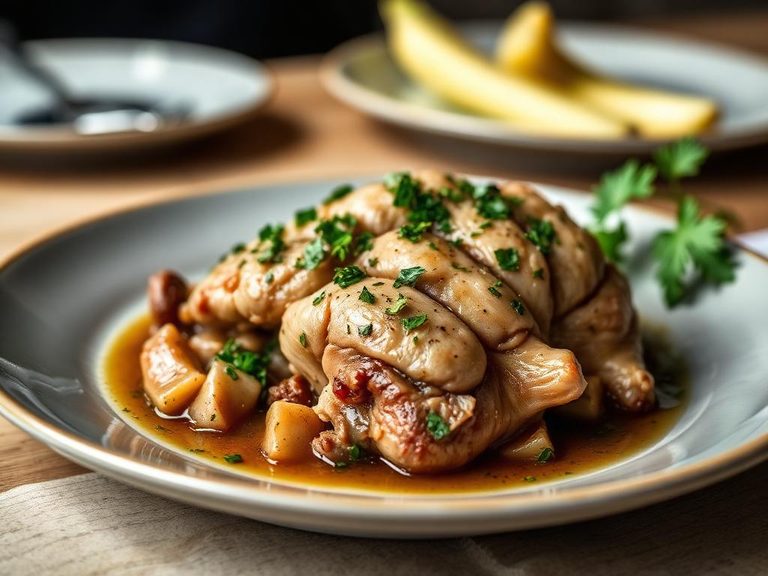
Braised veal brain is a delicacy prized for its uniquely soft, custard-like texture and a rich, mild, slightly mineral flavor that absorbs braising liquids beautifully. Nutritionally, it's a dense source of high-quality protein and healthy fats, while being virtually carb-free. Its preparation often involves gentle simmering in a flavorful broth to enhance its delicate nature.
Calorie split: 35% protein · 0% carbs · 65% fat
↓ Full nutrition💚 Why it's loved
People love it for its luxurious, melt-in-the-mouth texture and its ability to act as a sponge for savory sauces and spices. It's also cherished in many culinary traditions as a classic, nose-to-tail comfort food.
⚠️ Watch-outs & how to enjoy it better
The primary caution is its high cholesterol content, so those monitoring blood lipids should practice strict portion control. To counteract this, pair it with fiber-rich vegetables like steamed broccoli or a leafy salad, and limit consumption to an occasional treat. Always source from reputable, inspected suppliers.
Key benefits
- Excellent source of complete, high-quality protein
- Provides essential fatty acids, including DHA
- Rich in key nutrients like vitamin B12 and selenium
- Very low in carbohydrates, suitable for ketogenic diets
- Contains choline, important for brain and liver health
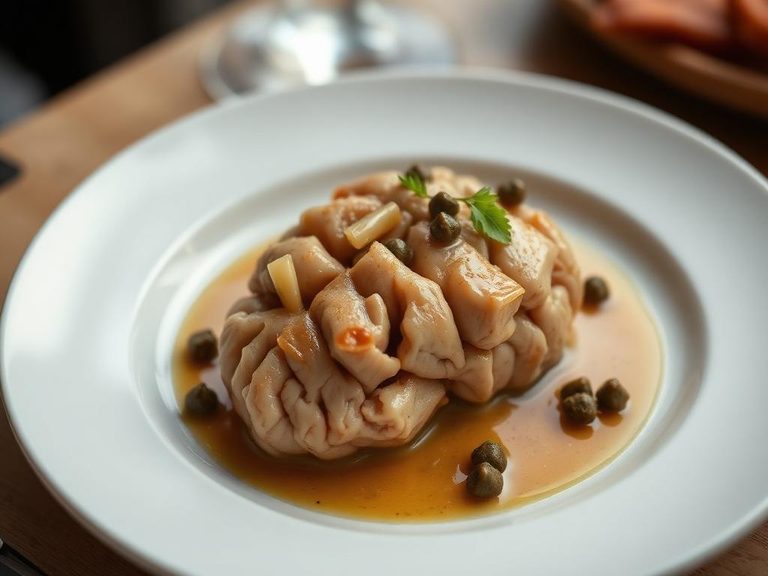
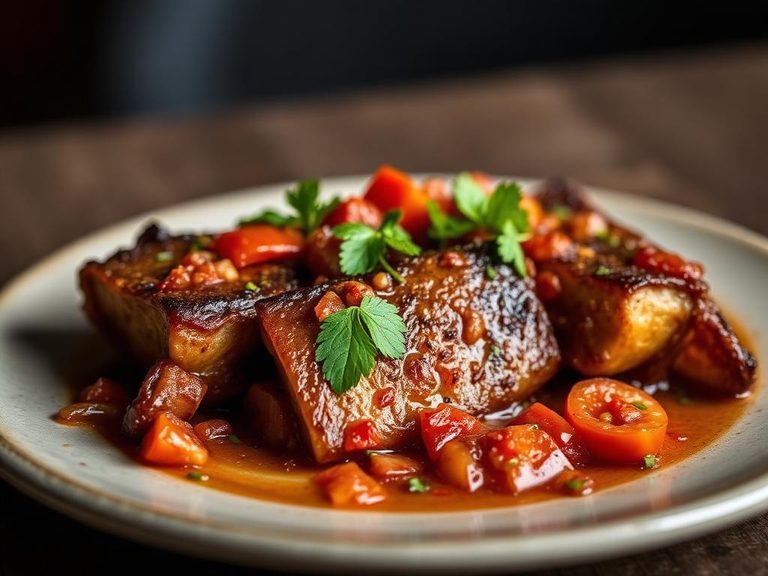
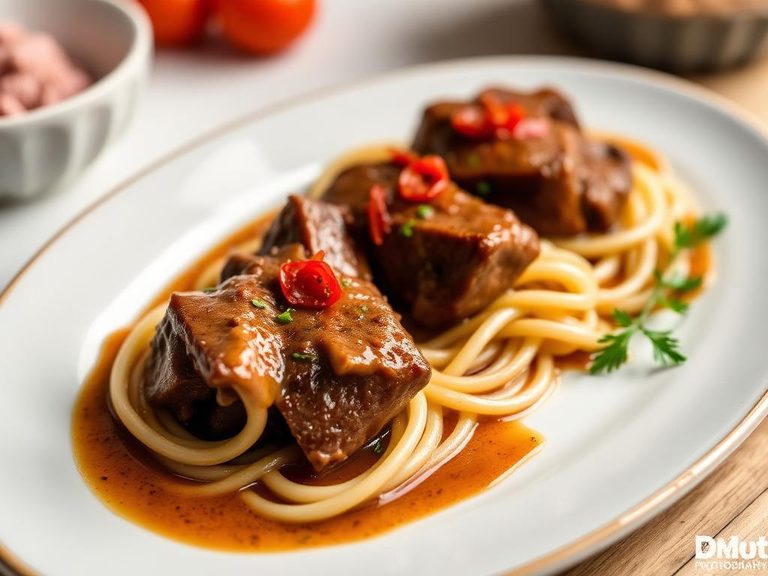
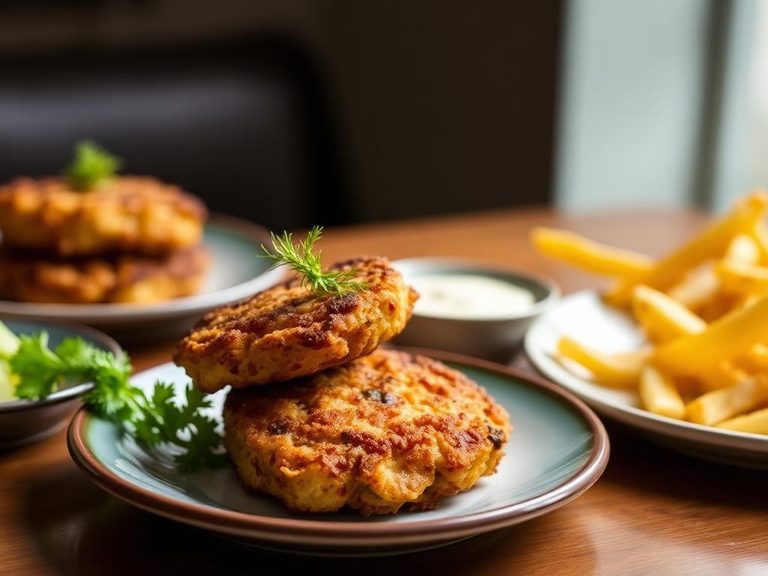
🍽️ Popular dishes
🌍 Where it's eaten
💡 Did you know?
A single serving of veal brain can provide over 100% of the daily recommended intake for vitamin B12, a nutrient crucial for nerve function and DNA production.
Full nutrition (USDA data · scales with serving)
| Water | 76.9 g |
| Energy | 136 kcal |
| Energy | 569 kj |
| Protein | 11.5 g |
| Total lipid (fat) | 9.6 g |
| Ash | 1.4 g |
| Carbohydrate, by difference | 0.00 g |
| Fiber, total dietary | 0.00 g |
| Calcium, Ca | 16.0 mg |
| Iron, Fe | 1.7 mg |
| Magnesium, Mg | 16.0 mg |
| Phosphorus, P | 385 mg |
| Potassium, K | 214 mg |
| Sodium, Na | 156 mg |
| Zinc, Zn | 1.6 mg |
| Copper, Cu | 0.26 mg |
| Manganese, Mn | 0.04 mg |
| Selenium, Se | 11.0 ug |
| Vitamin C, total ascorbic acid | 13.0 mg |
| Thiamin | 0.08 mg |
| Riboflavin | 0.20 mg |
| Niacin | 2.4 mg |
| Pantothenic acid | 1.0 mg |
| Vitamin B-6 | 0.17 mg |
| Folate, total | 3.0 ug |
| Folic acid | 0.00 ug |
| Folate, food | 3.0 ug |
| Folate, DFE | 3.0 ug |
| Vitamin B-12 | 9.7 ug |
| Vitamin A, RAE | 0.00 ug |
| Retinol | 0.00 ug |
| Vitamin A, IU | 0.00 iu |
Fat & fatty acid profile (per 100g)
| Fatty acids, total saturated | 2.2 g |
| Fatty acids, total monounsaturated | 1.7 g |
| MUFA 18:1 | 1.1 g |
| Fatty acids, total polyunsaturated | 1.5 g |
| PUFA 18:2 | 0.09 g |
| Cholesterol | 3100 mg |
Amino acid profile (per 100g)
| Tryptophan | 0.12 g |
| Threonine | 0.57 g |
| Isoleucine | 0.47 g |
| Leucine | 0.89 g |
| Lysine | 0.71 g |
| Methionine | 0.25 g |
| Cystine | 0.12 g |
| Phenylalanine | 0.60 g |
| Tyrosine | 0.45 g |
| Valine | 0.55 g |
| Arginine | 0.63 g |
| Histidine | 0.29 g |
| Alanine | 0.59 g |
| Aspartic acid | 0.97 g |
| Glutamic acid | 1.4 g |
| Glycine | 0.50 g |
| Proline | 0.47 g |
| Serine | 0.59 g |
FAQ
What does veal brain taste like?
It has a very mild, delicate flavor, often described as subtly sweet or mineral-like, with a rich, creamy mouthfeel similar to a very soft custard or firm tofu.
How is it prepared to remove membranes?
The brain is typically soaked in cold water or milk for several hours, which helps firm it up and makes the thin, outer membranes easier to peel off before cooking.
Is it safe to eat?
When sourced from young, healthy animals from reputable suppliers and cooked thoroughly, it is safe. However, due to the nature of the organ, sourcing and proper handling are critical.
Nutrient density (calculated · NRF9.3)
Nutrient Rich Foods index: beneficial nutrients (protein, fiber, vitamins, minerals) minus saturated fat, added sugar & sodium, per 100 kcal.
NRF9.3 index — Fulgoni, Keast & Drewnowski, 2009. Computed from USDA nutrients.
Weight-loss friendliness (composite index)
Energy density 1.36 kcal/g · 34% calories from protein · 0.0 g fiber · 0.0 g sugar per 100 g.
Composite of energy density (Rolls et al., 1999), protein & fiber satiety, minus sugar. A calculated heuristic — ranks satiety-per-calorie, not a clinical measure.
Dietary load (calculated from USDA values)
Potential renal acid load. Positive = acid-forming, negative = alkaline-forming.
Sodium-to-potassium ratio: 0.73 (lower is better — aim for ≤ 1)
Sodium:potassium per WHO potassium guidance. Computed from USDA nutrients.