

Upma
Common food

Photo: Wikipedia
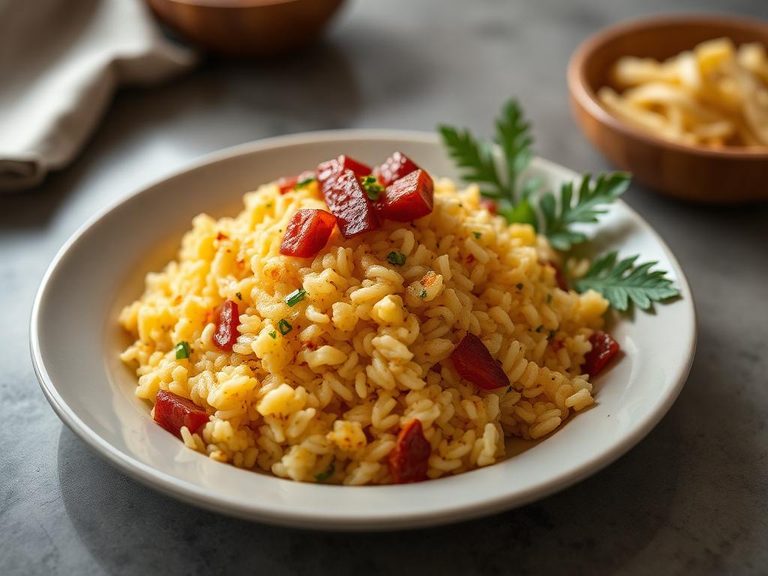
Upma is a savory, fluffy South Indian breakfast made from roasted semolina (rava) tempered with spices, mustard seeds, and curry leaves. Its texture is light yet slightly grainy, with a warm, nutty aroma from ghee or oil. Nutritionally, it's a low-calorie, moderate-carb option that provides quick energy without heavy fats.
Calorie split: 9% protein · 64% carbs · 27% fat
↓ Full nutrition💚 Why it's loved
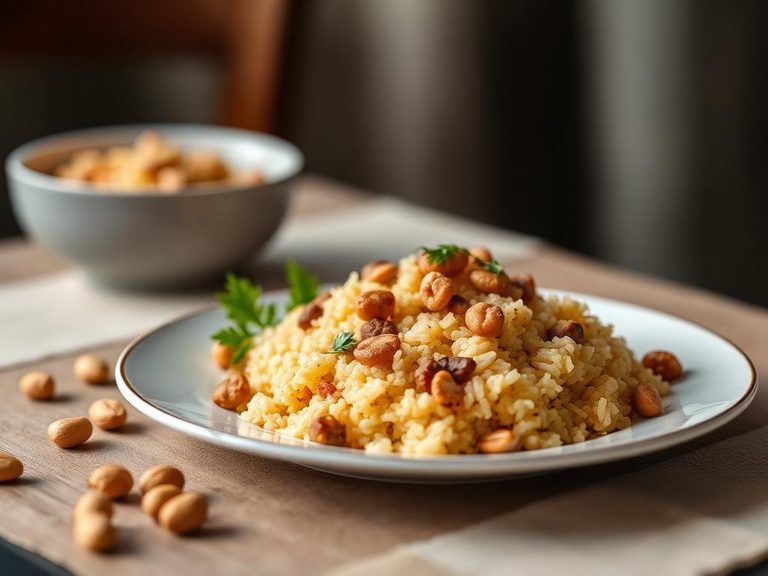
People love upma for its comforting, home-cooked flavor and the way it absorbs spices like mustard seeds, curry leaves, and ginger. It's a staple in South Indian households, often served as a quick breakfast or snack, and its versatility allows for endless variations with veggies, nuts, or lentils.
⚠️ Watch-outs & how to enjoy it better
Upma's high glycemic index from refined semolina can cause blood-sugar spikes, especially for diabetics. To counteract, pair it with protein-rich sides like boiled eggs or a handful of nuts, and add fiber-rich vegetables like peas or carrots to slow digestion. Also, watch for added salt in pre-made mixes—opt for homemade versions to control sodium.
Key benefits
- Quick energy source from complex carbs
- Low in fat and calories per serving
- Contains dietary fiber for digestion
- Easy to digest and gentle on the stomach
- Versatile base for adding vegetables and protein
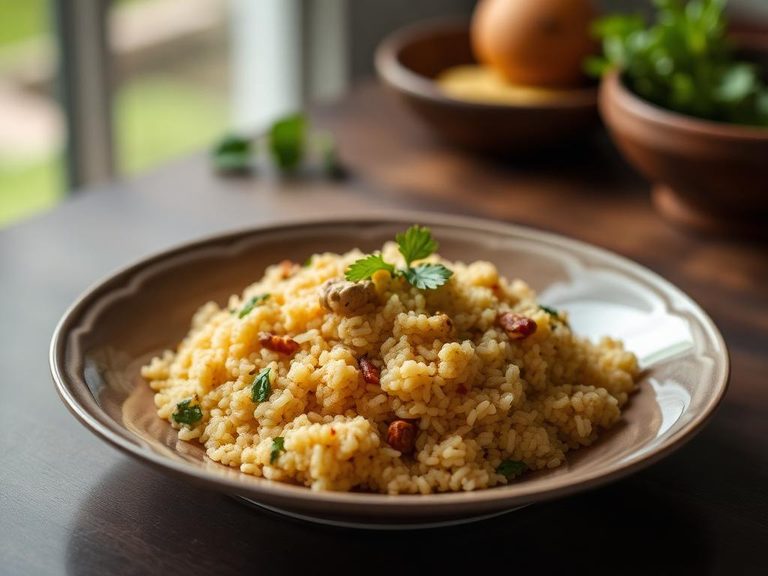
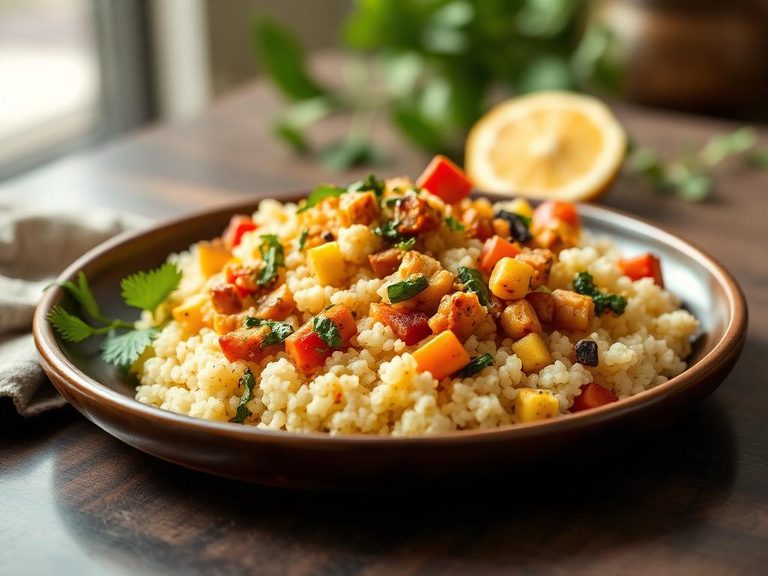
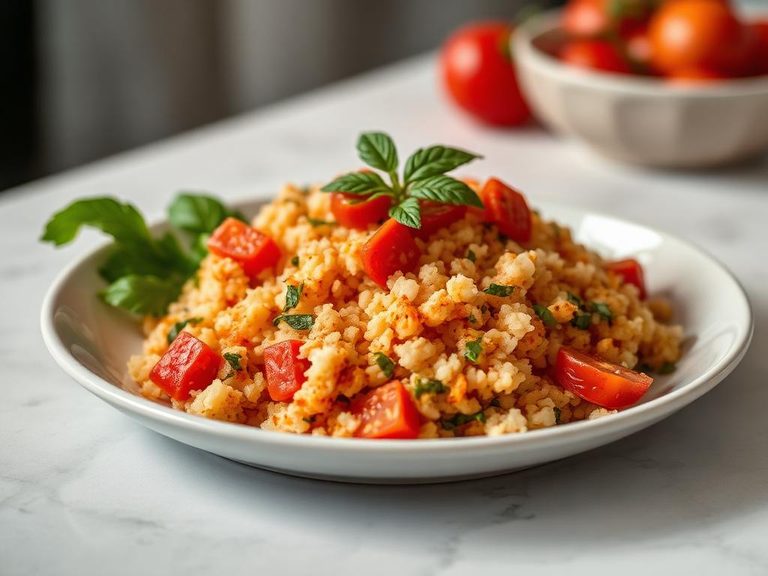
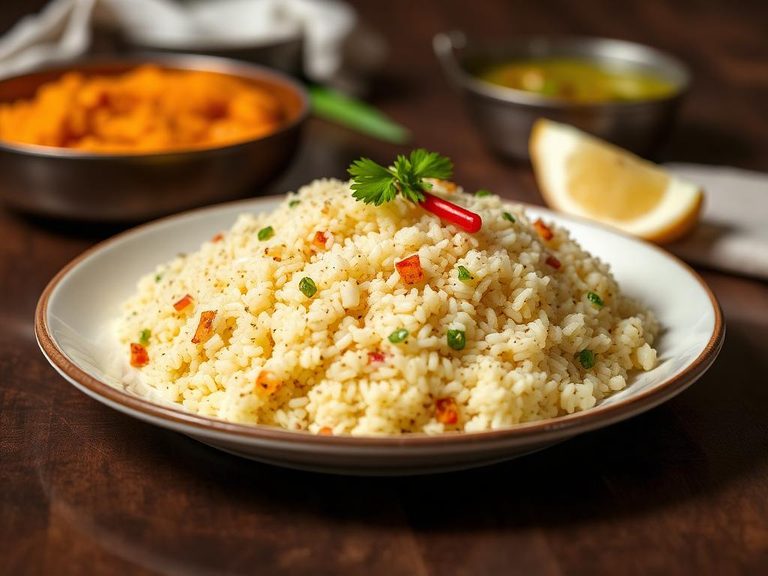
🍽️ Popular dishes
🌍 Where it's eaten
💡 Did you know?
Upma's name comes from the Tamil word 'uppumavu,' meaning 'salted porridge,' and it was originally a simple, humble dish made by grinding rice into a coarse powder before semolina became the standard ingredient.
Full nutrition (USDA data · scales with serving)
| Water | 81.0 g |
| Energy | 87.0 kcal |
| Protein | 2.0 g |
| Total lipid (fat) | 2.6 g |
| Carbohydrate, by difference | 13.8 g |
| Fiber, total dietary | 1.3 g |
| Total Sugars | 1.6 g |
| Calcium, Ca | 96.0 mg |
| Iron, Fe | 4.1 mg |
| Magnesium, Mg | 10.0 mg |
| Phosphorus, P | 29.0 mg |
| Potassium, K | 111 mg |
| Sodium, Na | 98.0 mg |
| Zinc, Zn | 0.22 mg |
| Copper, Cu | 0.06 mg |
| Selenium, Se | 3.2 ug |
| Vitamin C, total ascorbic acid | 11.0 mg |
| Thiamin | 0.07 mg |
| Riboflavin | 0.04 mg |
| Niacin | 0.77 mg |
| Vitamin B-6 | 0.08 mg |
| Folate, total | 19.0 ug |
| Folic acid | 9.0 ug |
| Folate, food | 10.0 ug |
| Folate, DFE | 25.0 ug |
| Choline, total | 6.2 mg |
| Vitamin B-12 | 0.00 ug |
| Vitamin B-12, added | 0.00 ug |
| Vitamin A, RAE | 11.0 ug |
| Retinol | 0.00 ug |
| Carotene, beta | 118 ug |
| Carotene, alpha | 22.0 ug |
| Cryptoxanthin, beta | 7.0 ug |
| Lycopene | 459 ug |
| Lutein + zeaxanthin | 82.0 ug |
| Vitamin E (alpha-tocopherol) | 0.83 mg |
| Vitamin E, added | 0.00 mg |
| Vitamin D (D2 + D3) | 0.00 ug |
| Vitamin K (phylloquinone) | 5.3 ug |
| Alcohol, ethyl | 0.00 g |
| Caffeine | 0.00 mg |
| Theobromine | 0.00 mg |
Fat & fatty acid profile (per 100g)
| Fatty acids, total saturated | 0.36 g |
| SFA 4:0 | 0.00 g |
| SFA 6:0 | 0.00 g |
| SFA 8:0 | 0.00 g |
| SFA 10:0 | 0.00 g |
| SFA 12:0 | 0.00 g |
| SFA 14:0 | 0.00 g |
| SFA 16:0 | 0.27 g |
| SFA 18:0 | 0.07 g |
| Fatty acids, total monounsaturated | 1.0 g |
| MUFA 16:1 | 0.01 g |
| MUFA 18:1 | 1.0 g |
| MUFA 20:1 | 0.02 g |
| MUFA 22:1 | 0.01 g |
| Fatty acids, total polyunsaturated | 1.0 g |
| PUFA 18:2 | 0.91 g |
| PUFA 18:3 | 0.12 g |
| PUFA 18:4 | 0.00 g |
| PUFA 20:4 | 0.00 g |
| PUFA 20:5 n-3 (EPA) | 0.00 g |
| PUFA 22:5 n-3 (DPA) | 0.00 g |
| PUFA 22:6 n-3 (DHA) | 0.00 g |
| Cholesterol | 0.00 mg |
FAQ
Is upma healthy for weight loss?
Upma is low in calories and fat, making it a good option for weight loss when portion-controlled. However, it's high in carbs, so pairing it with protein or fiber can help balance blood sugar and keep you full longer.
Can upma be made gluten-free?
Traditional upma uses semolina (rava), which contains gluten. To make it gluten-free, substitute with gluten-free grains like quinoa, millet, or rice flour, and ensure all spices and additives are gluten-free.
How can I make upma more nutritious?
Add vegetables like carrots, peas, or spinach for extra fiber and vitamins. Include nuts like cashews or almonds for healthy fats, and use ghee or coconut oil for flavor. You can also add a boiled egg or paneer for protein.
Nutrient density (calculated · NRF9.3)
Nutrient Rich Foods index: beneficial nutrients (protein, fiber, vitamins, minerals) minus saturated fat, added sugar & sodium, per 100 kcal.
NRF9.3 index — Fulgoni, Keast & Drewnowski, 2009. Computed from USDA nutrients.
Weight-loss friendliness (composite index)
Energy density 0.87 kcal/g · 9% calories from protein · 1.3 g fiber · 1.6 g sugar per 100 g.
Composite of energy density (Rolls et al., 1999), protein & fiber satiety, minus sugar. A calculated heuristic — ranks satiety-per-calorie, not a clinical measure.
Dietary load (calculated from USDA values)
Potential renal acid load. Positive = acid-forming, negative = alkaline-forming.
Sodium-to-potassium ratio: 0.88 (lower is better — aim for ≤ 1)
Sodium:potassium per WHO potassium guidance. Computed from USDA nutrients.