

Soy nut butter
Common food
Soy nut butter is a creamy, savory spread made from roasted soybeans, offering a rich, nutty flavor with a texture similar to peanut butter but slightly grainier. It boasts an impressive protein content of 23g per 100g, making it a powerhouse for plant-based nutrition. With a balanced profile of healthy fats and fiber, it's a versatile staple for both sweet and savory applications.
Calorie split: 15% protein · 15% carbs · 71% fat
↓ Full nutrition💚 Why it's loved
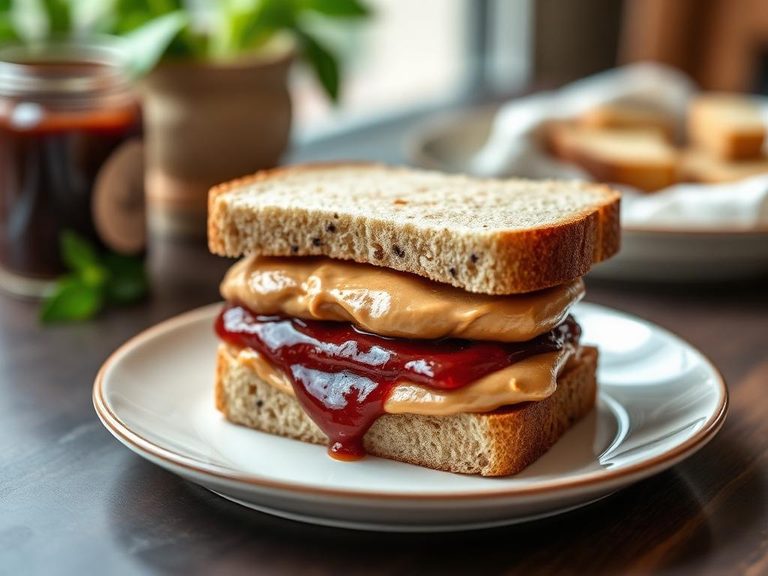
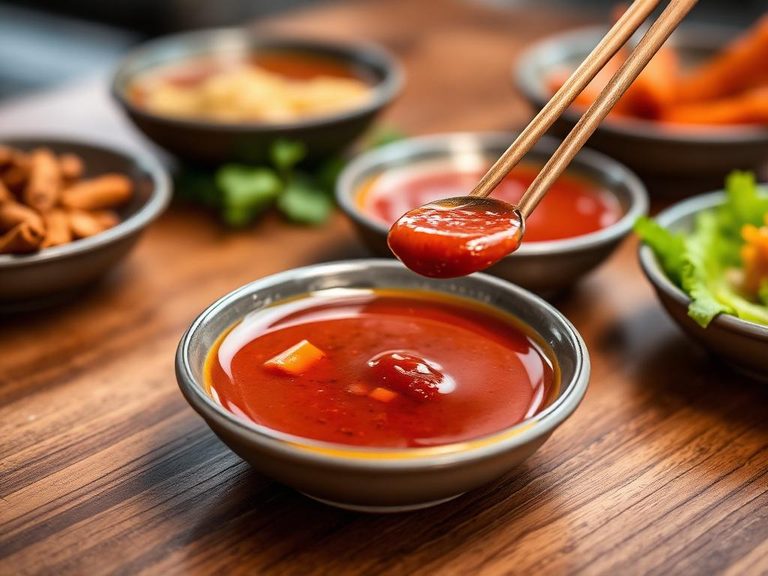
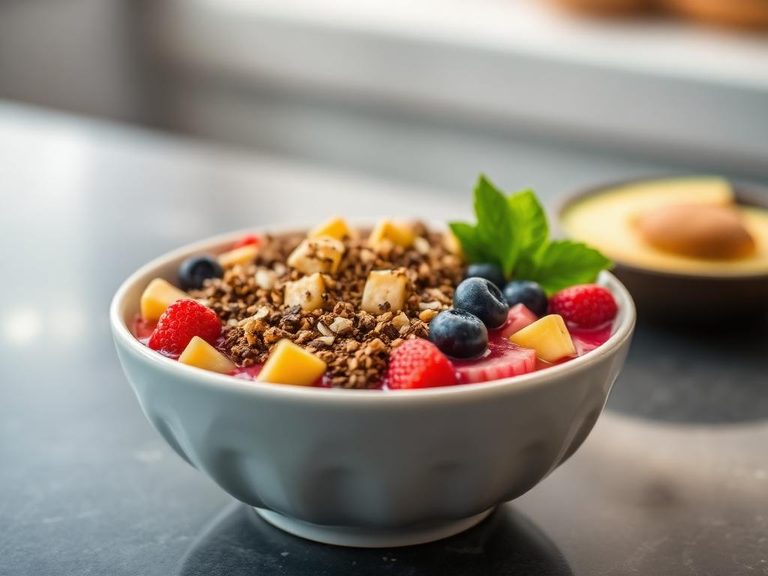
People love soy nut butter for its deep, roasted flavor and satisfying texture, which makes it a fantastic alternative to peanut butter in sandwiches and sauces. Its versatility in both sweet and savory dishes, from smoothies to stir-fries, has made it a favorite in many plant-based and health-conscious kitchens.
⚠️ Watch-outs & how to enjoy it better
Some may find the taste slightly beany or less sweet than peanut butter, and it can be high in fat and calories, requiring portion control for those monitoring intake. To counteract potential digestive issues, pair it with fiber-rich foods like whole grains and ensure adequate hydration, and always check labels for added sugars or sodium.
Key benefits
- High in plant-based protein (23g per 100g)
- Rich in fiber (10.6g per 100g) for digestive health
- Contains healthy unsaturated fats
- Good source of iron and magnesium
- Low in sugar (7.47g per 100g)
🍽️ Popular dishes
🌍 Where it's eaten
💡 Did you know?
Soy nut butter is often used as a peanut butter substitute in schools and workplaces due to its lower allergen risk, though it's still a legume and can cause reactions in some individuals.
Full nutrition (USDA data · scales with serving)
| Water | 1.2 g |
| Energy | 613 kcal |
| Protein | 23.0 g |
| Total lipid (fat) | 50.0 g |
| Carbohydrate, by difference | 23.0 g |
| Fiber, total dietary | 10.6 g |
| Total Sugars | 7.5 g |
| Calcium, Ca | 83.0 mg |
| Iron, Fe | 2.4 mg |
| Magnesium, Mg | 87.0 mg |
| Phosphorus, P | 217 mg |
| Potassium, K | 878 mg |
| Sodium, Na | 290 mg |
| Zinc, Zn | 1.9 mg |
| Copper, Cu | 0.49 mg |
| Selenium, Se | 11.4 ug |
| Vitamin C, total ascorbic acid | 1.3 mg |
| Thiamin | 0.06 mg |
| Riboflavin | 0.09 mg |
| Niacin | 0.84 mg |
| Vitamin B-6 | 0.12 mg |
| Folate, total | 126 ug |
| Folic acid | 0.00 ug |
| Folate, food | 126 ug |
| Folate, DFE | 126 ug |
| Choline, total | 74.3 mg |
| Vitamin B-12 | 0.00 ug |
| Vitamin B-12, added | 0.00 ug |
| Vitamin A, RAE | 6.0 ug |
| Retinol | 0.00 ug |
| Carotene, beta | 72.0 ug |
| Carotene, alpha | 0.00 ug |
| Cryptoxanthin, beta | 0.00 ug |
| Lycopene | 0.00 ug |
| Lutein + zeaxanthin | 0.00 ug |
| Vitamin E (alpha-tocopherol) | 4.8 mg |
| Vitamin E, added | 0.00 mg |
| Vitamin D (D2 + D3) | 0.00 ug |
| Vitamin K (phylloquinone) | 94.1 ug |
| Alcohol, ethyl | 0.00 g |
| Caffeine | 0.00 mg |
| Theobromine | 0.00 mg |
Fat & fatty acid profile (per 100g)
| Fatty acids, total saturated | 7.4 g |
| SFA 4:0 | 0.00 g |
| SFA 6:0 | 0.00 g |
| SFA 8:0 | 0.00 g |
| SFA 10:0 | 0.00 g |
| SFA 12:0 | 0.00 g |
| SFA 14:0 | 0.07 g |
| SFA 16:0 | 5.2 g |
| SFA 18:0 | 1.8 g |
| Fatty acids, total monounsaturated | 11.0 g |
| MUFA 16:1 | 0.07 g |
| MUFA 18:1 | 10.8 g |
| MUFA 20:1 | 0.21 g |
| MUFA 22:1 | 0.00 g |
| Fatty acids, total polyunsaturated | 28.6 g |
| PUFA 18:2 | 25.3 g |
| PUFA 18:3 | 3.3 g |
| PUFA 18:4 | 0.00 g |
| PUFA 20:4 | 0.00 g |
| PUFA 20:5 n-3 (EPA) | 0.00 g |
| PUFA 22:5 n-3 (DPA) | 0.00 g |
| PUFA 22:6 n-3 (DHA) | 0.00 g |
| Cholesterol | 0.00 mg |
FAQ
Is soy nut butter healthier than peanut butter?
Soy nut butter has a similar calorie and fat content but offers more protein and fiber per serving, making it a slightly more nutrient-dense option for those seeking plant-based protein.
Can soy nut butter be used in baking?
Yes, it can replace peanut butter in many recipes, though its slightly grainier texture may affect the final product's consistency.
Is soy nut butter safe for people with soy allergies?
No, soy nut butter is made from soybeans and is not safe for individuals with soy allergies. Always check labels for cross-contamination warnings.
Nutrient density (calculated · NRF9.3)
Nutrient Rich Foods index: beneficial nutrients (protein, fiber, vitamins, minerals) minus saturated fat, added sugar & sodium, per 100 kcal.
NRF9.3 index — Fulgoni, Keast & Drewnowski, 2009. Computed from USDA nutrients.
Weight-loss friendliness (composite index)
Energy density 6.13 kcal/g · 15% calories from protein · 10.6 g fiber · 7.5 g sugar per 100 g.
Composite of energy density (Rolls et al., 1999), protein & fiber satiety, minus sugar. A calculated heuristic — ranks satiety-per-calorie, not a clinical measure.
Dietary load (calculated from USDA values)
Potential renal acid load. Positive = acid-forming, negative = alkaline-forming.
Sodium-to-potassium ratio: 0.33 (lower is better — aim for ≤ 1)
Sodium:potassium per WHO potassium guidance. Computed from USDA nutrients.