

Soup, tomato bisque, canned, prepared with equal volume water
Whole food · Soups, Sauces, and Gravies

Photo: Wikipedia
This is a smooth, velvety, and mildly sweet tomato soup made from a concentrated canned base diluted with water. Its texture is light yet creamy, with a comforting, familiar tomato flavor that's less intense than a fresh-made version. Nutritionally, it's a very low-calorie option, providing a quick source of carbohydrates with minimal fat.
Calorie split: 7% protein · 75% carbs · 18% fat
↓ Full nutrition💚 Why it's loved
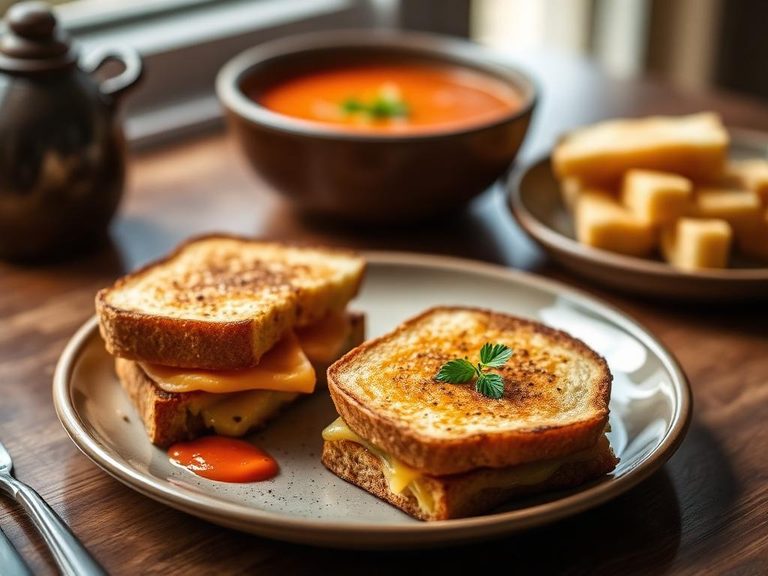
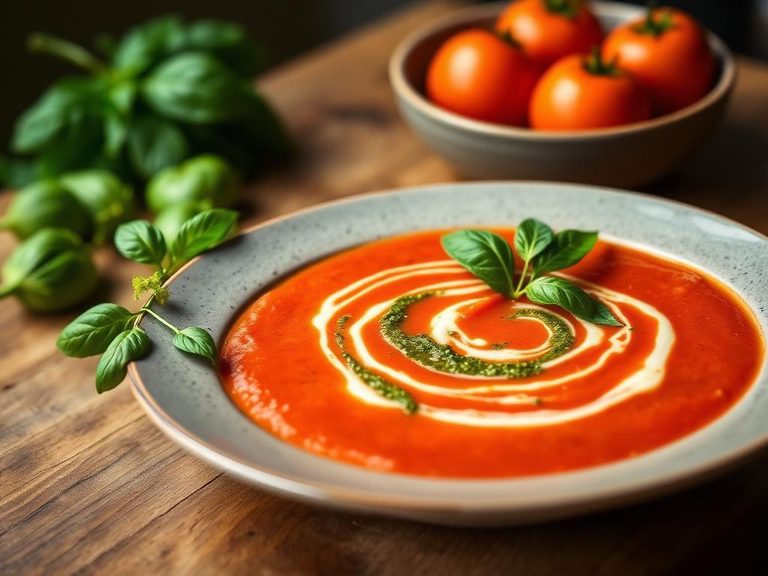
People love it for its nostalgic, comforting flavor and incredible convenience—a warm bowl can be ready in minutes. It's a versatile base that pairs perfectly with grilled cheese sandwiches or can be dressed up with cream and herbs.
⚠️ Watch-outs & how to enjoy it better
Canned versions can be high in sodium, which may concern those monitoring salt intake, and the added water can make it less nutrient-dense than a homemade soup. To counteract this, choose a low-sodium variety, and boost the protein and fiber by stirring in a dollop of Greek yogurt or white beans and serving with a side salad.
Key benefits
- Very low in calories (50 kcal per 100g)
- Provides quick, easily digestible carbohydrates
- Contains small amounts of potassium and vitamin C from tomatoes
- A convenient, shelf-stable pantry staple
- Low in fat and contains no cholesterol
🍽️ Popular dishes

🌍 Where it's eaten
💡 Did you know?
The 'bisque' in its name originally referred to a smooth, creamy soup made from crustaceans like lobster or crab, but in modern American usage, it's often applied to any rich, creamy vegetable soup, like this tomato version.
Full nutrition (USDA data · scales with serving)
| Water | 87.2 g |
| Energy | 50.0 kcal |
| Energy | 209 kj |
| Protein | 0.92 g |
| Total lipid (fat) | 1.0 g |
| Ash | 1.3 g |
| Carbohydrate, by difference | 9.6 g |
| Fiber, total dietary | 0.20 g |
| Calcium, Ca | 16.0 mg |
| Iron, Fe | 0.33 mg |
| Magnesium, Mg | 4.0 mg |
| Phosphorus, P | 24.0 mg |
| Potassium, K | 169 mg |
| Sodium, Na | 424 mg |
| Zinc, Zn | 0.24 mg |
| Copper, Cu | 0.05 mg |
| Manganese, Mn | 0.10 mg |
| Vitamin C, total ascorbic acid | 2.4 mg |
| Thiamin | 0.03 mg |
| Riboflavin | 0.03 mg |
| Niacin | 0.47 mg |
| Pantothenic acid | 0.05 mg |
| Vitamin B-6 | 0.04 mg |
| Folate, total | 6.0 ug |
| Folic acid | 0.00 ug |
| Folate, food | 6.0 ug |
| Folate, DFE | 6.0 ug |
| Vitamin B-12 | 0.00 ug |
| Vitamin A, RAE | 18.0 ug |
| Retinol | 4.0 ug |
| Vitamin A, IU | 292 iu |
Fat & fatty acid profile (per 100g)
| Fatty acids, total saturated | 0.22 g |
| SFA 14:0 | 0.01 g |
| SFA 16:0 | 0.12 g |
| SFA 18:0 | 0.04 g |
| Fatty acids, total monounsaturated | 0.28 g |
| MUFA 16:1 | 0.01 g |
| MUFA 18:1 | 0.27 g |
| Fatty acids, total polyunsaturated | 0.45 g |
| PUFA 18:2 | 0.39 g |
| PUFA 18:3 | 0.06 g |
| Cholesterol | 2.0 mg |
Amino acid profile (per 100g)
| Tryptophan | 0.01 g |
| Threonine | 0.03 g |
| Isoleucine | 0.03 g |
| Leucine | 0.05 g |
| Lysine | 0.04 g |
| Methionine | 0.01 g |
| Cystine | 0.01 g |
| Phenylalanine | 0.03 g |
| Tyrosine | 0.02 g |
| Valine | 0.04 g |
| Arginine | 0.03 g |
| Histidine | 0.02 g |
| Alanine | 0.03 g |
| Aspartic acid | 0.08 g |
| Glutamic acid | 0.32 g |
| Glycine | 0.02 g |
| Proline | 0.06 g |
| Serine | 0.04 g |
FAQ
Is this soup healthy?
It's a low-calorie, low-fat food, making it a light option. However, its nutritional value is modest, and it can be high in sodium. It's best viewed as a comforting base to build upon with nutrient-rich additions.
How can I make it taste more homemade?
Sauté some garlic and onion, add the prepared soup, and let it simmer. Stir in fresh basil, a splash of cream or coconut milk, and a pinch of sugar to balance acidity. For texture, blend in a handful of soaked cashews or a spoonful of tomato paste.
What's the difference between tomato soup and tomato bisque?
Traditionally, a bisque is a smooth, creamy soup made from crustaceans. In common usage, 'bisque' implies a richer, creamier texture than standard tomato soup, often achieved with added cream, butter, or pureed vegetables.
Nutrient density (calculated · NRF9.3)
Nutrient Rich Foods index: beneficial nutrients (protein, fiber, vitamins, minerals) minus saturated fat, added sugar & sodium, per 100 kcal.
NRF9.3 index — Fulgoni, Keast & Drewnowski, 2009. Computed from USDA nutrients.
Weight-loss friendliness (composite index)
Energy density 0.50 kcal/g · 7% calories from protein · 0.2 g fiber · 0.0 g sugar per 100 g.
Composite of energy density (Rolls et al., 1999), protein & fiber satiety, minus sugar. A calculated heuristic — ranks satiety-per-calorie, not a clinical measure.
Dietary load (calculated from USDA values)
Potential renal acid load. Positive = acid-forming, negative = alkaline-forming.
Sodium-to-potassium ratio: 2.51 (lower is better — aim for ≤ 1)
Sodium:potassium per WHO potassium guidance. Computed from USDA nutrients.