

Soup, beef broth, bouillon, consomme, prepared with equal volume water
Whole food · Soups, Sauces, and Gravies

Photo: Wikipedia
This is a clear, savory liquid extracted from simmered beef bones and meat, diluted with water to create a light, golden-brown broth. It has a clean, deep umami flavor with a thin, watery texture that coats the mouth lightly. Nutritionally, it's extremely low in calories while providing a modest amount of high-quality protein.
Calorie split: 75% protein · 25% carbs · 0% fat
↓ Full nutrition💚 Why it's loved
People love it as a foundational flavor builder that adds immense depth to dishes without heaviness. It's also cherished as a comforting, warming drink on its own, often tied to cultural traditions of healing and nourishment.
⚠️ Watch-outs & how to enjoy it better
The primary concern is its very high sodium content, which can be problematic for those monitoring blood pressure or fluid retention. To counteract this, look for low-sodium versions, use it as a flavoring agent rather than a primary beverage, and pair it with potassium-rich foods like leafy greens or potatoes to help balance electrolytes.
Key benefits
- Very low calorie base for soups and sauces
- Provides collagen-derived amino acids like glycine
- Hydrating and electrolyte-rich (especially sodium)
- Adds deep savory flavor without fat
- Gentle on the digestive system
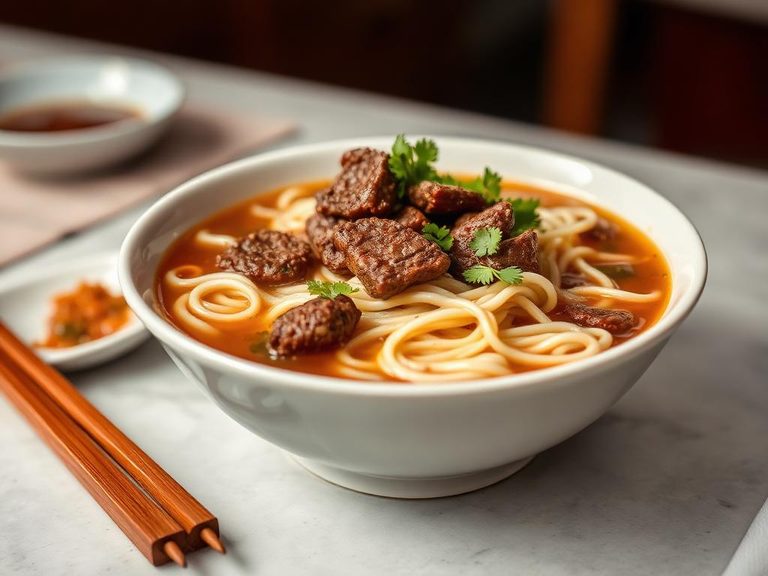
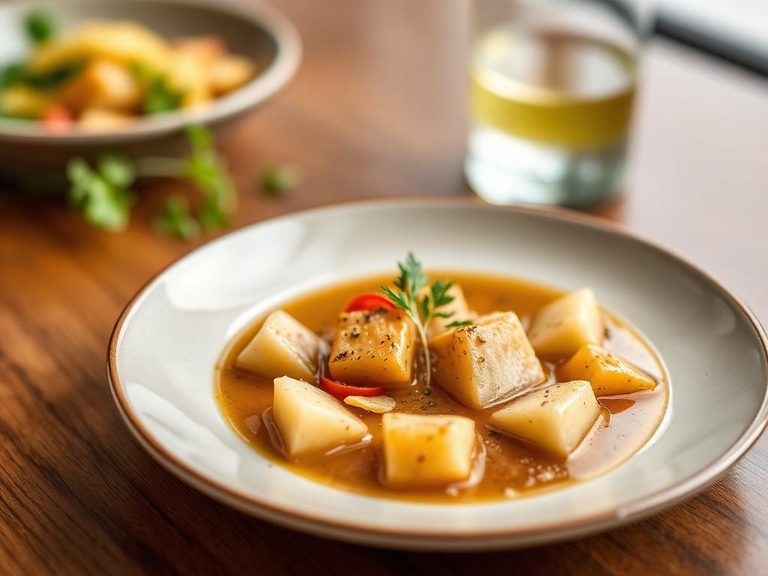
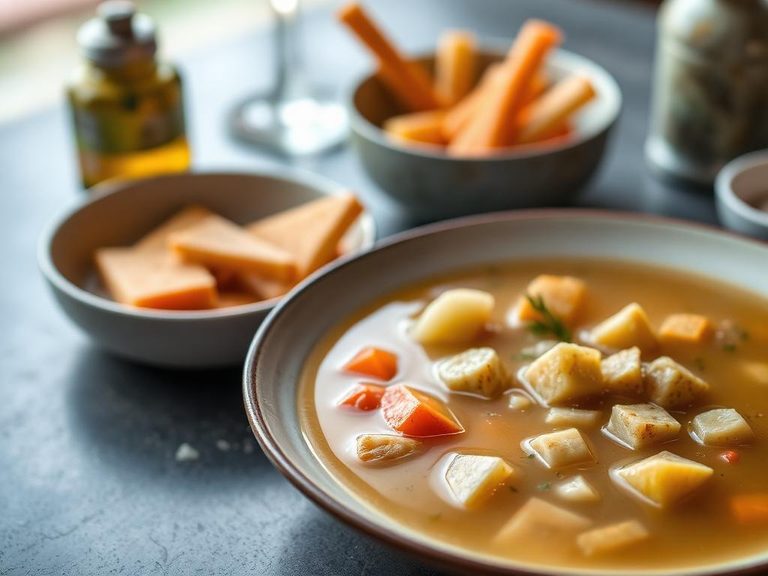
🍽️ Popular dishes


🌍 Where it's eaten
💡 Did you know?
A true, classic consommé is clarified using a 'raft' of ground meat, egg whites, and mirepoix, resulting in a perfectly transparent, jewel-like broth that is a benchmark of culinary skill.
Full nutrition (USDA data · scales with serving)
| Water | 96.2 g |
| Energy | 12.0 kcal |
| Energy | 50.0 kj |
| Protein | 2.2 g |
| Total lipid (fat) | 0.00 g |
| Ash | 0.81 g |
| Carbohydrate, by difference | 0.73 g |
| Fiber, total dietary | 0.00 g |
| Calcium, Ca | 4.0 mg |
| Iron, Fe | 0.22 mg |
| Magnesium, Mg | 0.00 mg |
| Phosphorus, P | 13.0 mg |
| Potassium, K | 64.0 mg |
| Sodium, Na | 264 mg |
| Zinc, Zn | 0.15 mg |
| Copper, Cu | 0.10 mg |
| Manganese, Mn | 0.15 mg |
| Vitamin C, total ascorbic acid | 0.40 mg |
| Thiamin | 0.01 mg |
| Riboflavin | 0.01 mg |
| Niacin | 0.29 mg |
| Pantothenic acid | 0.02 mg |
| Vitamin B-6 | 0.01 mg |
| Folate, total | 1.0 ug |
| Folic acid | 0.00 ug |
| Folate, food | 1.0 ug |
| Folate, DFE | 1.0 ug |
| Vitamin B-12 | 0.00 ug |
| Vitamin A, RAE | 0.00 ug |
| Retinol | 0.00 ug |
| Vitamin A, IU | 0.00 iu |
Fat & fatty acid profile (per 100g)
| Fatty acids, total saturated | 0.00 g |
| SFA 14:0 | 0.00 g |
| SFA 16:0 | 0.00 g |
| SFA 18:0 | 0.00 g |
| Fatty acids, total monounsaturated | 0.00 g |
| MUFA 18:1 | 0.00 g |
| Fatty acids, total polyunsaturated | 0.00 g |
| PUFA 18:2 | 0.00 g |
| Cholesterol | 0.00 mg |
Amino acid profile (per 100g)
Estimated from Soup, bean with pork, canned, condensed — USDA does not publish this profile for Soup.
| Tryptophan | 0.06 g |
| Threonine | 0.24 g |
| Isoleucine | 0.29 g |
| Leucine | 0.48 g |
| Lysine | 0.40 g |
| Methionine | 0.07 g |
| Cystine | 0.07 g |
| Phenylalanine | 0.33 g |
| Tyrosine | 0.18 g |
| Valine | 0.32 g |
| Arginine | 0.31 g |
| Histidine | 0.15 g |
| Alanine | 0.29 g |
| Aspartic acid | 0.66 g |
| Glutamic acid | 1.1 g |
| Glycine | 0.28 g |
| Proline | 0.27 g |
| Serine | 0.29 g |
FAQ
What's the difference between beef broth and beef consommé?
Broth is the flavorful liquid from simmering meat and bones. Consommé is a clarified, refined broth made by simmering it with a protein raft to remove all impurities, resulting in a perfectly clear, intensely flavored liquid.
Is this a good source of protein?
It provides a small amount of high-quality, easily digestible protein (about 2.2g per 100g), but it's not a significant source on its own. It's best viewed as a flavor base that contributes some amino acids.
Can I drink it straight?
Yes, it's often consumed as a warm, savory beverage. However, be mindful of the sodium content if drinking large quantities. A low-sodium version is preferable for this purpose.
Nutrient density (calculated · NRF9.3)
Nutrient Rich Foods index: beneficial nutrients (protein, fiber, vitamins, minerals) minus saturated fat, added sugar & sodium, per 100 kcal.
NRF9.3 index — Fulgoni, Keast & Drewnowski, 2009. Computed from USDA nutrients.
Weight-loss friendliness (composite index)
Energy density 0.12 kcal/g · 74% calories from protein · 0.0 g fiber · 0.0 g sugar per 100 g.
Composite of energy density (Rolls et al., 1999), protein & fiber satiety, minus sugar. A calculated heuristic — ranks satiety-per-calorie, not a clinical measure.
Dietary load (calculated from USDA values)
Potential renal acid load. Positive = acid-forming, negative = alkaline-forming.
Sodium-to-potassium ratio: 4.13 (lower is better — aim for ≤ 1)
Sodium:potassium per WHO potassium guidance. Computed from USDA nutrients.