

Soft drink, root beer
Common food

Photo: Wikipedia
Root beer is a sweet, carbonated soft drink with a distinctive, complex flavor profile often described as a blend of wintergreen, vanilla, anise, and sassafras. Its deep brown color and creamy, foamy head are iconic, creating a nostalgic, dessert-like sipping experience. Nutritionally, it's essentially liquid sugar, providing 10.6g of carbohydrates per 100ml, all from sugar, with negligible protein, fat, or fiber.
Calorie split: 0% protein · 100% carbs · 0% fat
↓ Full nutrition💚 Why it's loved
People love root beer for its unique, nostalgic flavor that's both creamy and spicy, often evoking memories of soda fountains and classic American diners. Its versatility makes it a beloved standalone drink, a base for floats, and a surprising ingredient in savory and sweet recipes.
⚠️ Watch-outs & how to enjoy it better
Its primary downside is the high sugar content (10.6g per 100ml), which can contribute to blood sugar spikes and empty calories. To counteract this, practice strict portion control, choose a mini can, or pair it with a source of protein or fat (like nuts or cheese) to slow sugar absorption. Individuals monitoring sugar intake or managing diabetes should be particularly cautious.
Key benefits
- Provides a quick source of energy from carbohydrates.
- Serves as a popular non-alcoholic, caffeine-free beverage option.
- Often used as a flavorful ingredient in desserts and sauces.
- Can be a comforting, nostalgic treat for many consumers.
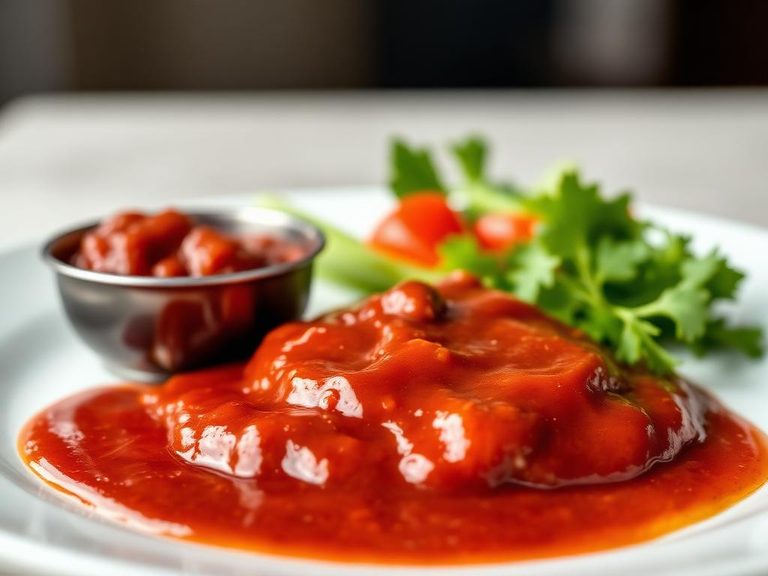
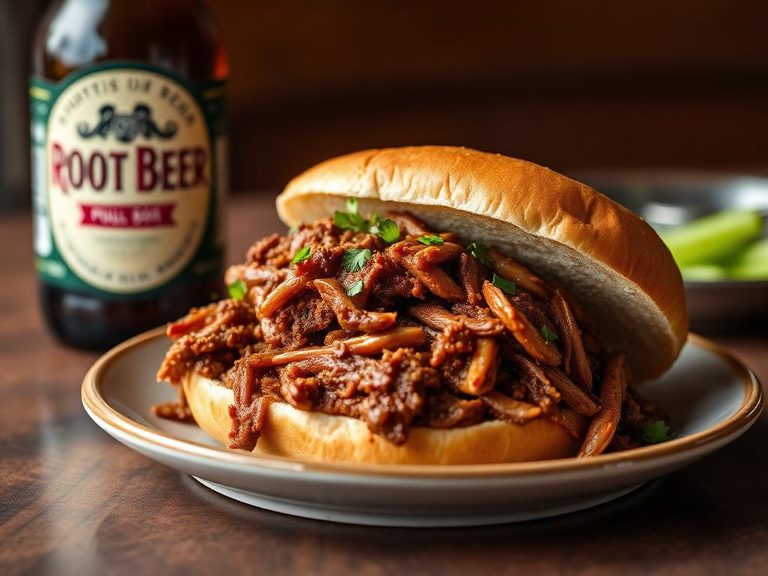
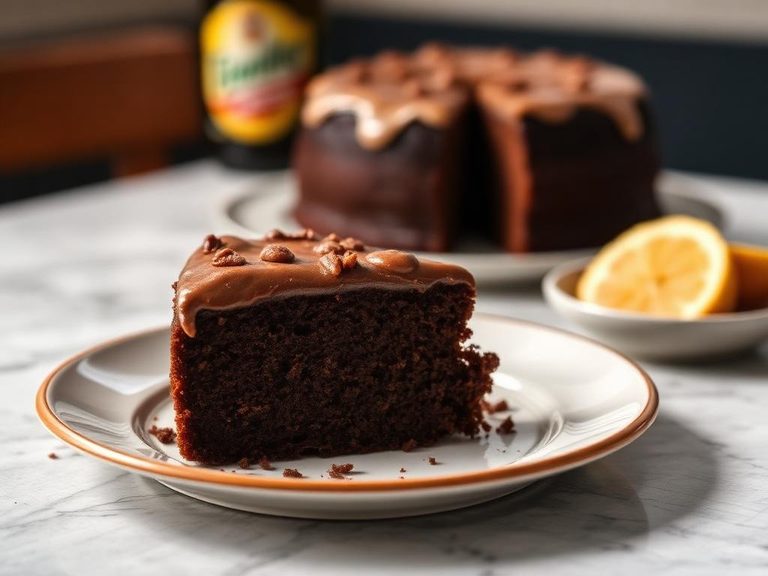
🍽️ Popular dishes

🌍 Where it's eaten
💡 Did you know?
Traditional root beer was originally a low-alcohol 'small beer' brewed from the root bark of the sassafras tree and the vine of the sarsaparilla plant, which were believed to have medicinal properties.
Full nutrition (USDA data · scales with serving)
| Water | 89.3 g |
| Energy | 41.0 kcal |
| Protein | 0.00 g |
| Total lipid (fat) | 0.00 g |
| Carbohydrate, by difference | 10.6 g |
| Fiber, total dietary | 0.00 g |
| Total Sugars | 10.6 g |
| Calcium, Ca | 5.0 mg |
| Iron, Fe | 0.05 mg |
| Magnesium, Mg | 1.0 mg |
| Phosphorus, P | 0.00 mg |
| Potassium, K | 1.0 mg |
| Sodium, Na | 13.0 mg |
| Zinc, Zn | 0.07 mg |
| Copper, Cu | 0.01 mg |
| Selenium, Se | 0.10 ug |
| Vitamin C, total ascorbic acid | 0.00 mg |
| Thiamin | 0.00 mg |
| Riboflavin | 0.00 mg |
| Niacin | 0.00 mg |
| Vitamin B-6 | 0.00 mg |
| Folate, total | 0.00 ug |
| Folic acid | 0.00 ug |
| Folate, food | 0.00 ug |
| Folate, DFE | 0.00 ug |
| Choline, total | 0.30 mg |
| Vitamin B-12 | 0.00 ug |
| Vitamin B-12, added | 0.00 ug |
| Vitamin A, RAE | 0.00 ug |
| Retinol | 0.00 ug |
| Carotene, beta | 0.00 ug |
| Carotene, alpha | 0.00 ug |
| Cryptoxanthin, beta | 0.00 ug |
| Lycopene | 0.00 ug |
| Lutein + zeaxanthin | 0.00 ug |
| Vitamin E (alpha-tocopherol) | 0.00 mg |
| Vitamin E, added | 0.00 mg |
| Vitamin D (D2 + D3) | 0.00 ug |
| Vitamin K (phylloquinone) | 0.00 ug |
| Alcohol, ethyl | 0.00 g |
| Caffeine | 0.00 mg |
| Theobromine | 0.00 mg |
Fat & fatty acid profile (per 100g)
| Fatty acids, total saturated | 0.00 g |
| SFA 4:0 | 0.00 g |
| SFA 6:0 | 0.00 g |
| SFA 8:0 | 0.00 g |
| SFA 10:0 | 0.00 g |
| SFA 12:0 | 0.00 g |
| SFA 14:0 | 0.00 g |
| SFA 16:0 | 0.00 g |
| SFA 18:0 | 0.00 g |
| Fatty acids, total monounsaturated | 0.00 g |
| MUFA 16:1 | 0.00 g |
| MUFA 18:1 | 0.00 g |
| MUFA 20:1 | 0.00 g |
| MUFA 22:1 | 0.00 g |
| Fatty acids, total polyunsaturated | 0.00 g |
| PUFA 18:2 | 0.00 g |
| PUFA 18:3 | 0.00 g |
| PUFA 18:4 | 0.00 g |
| PUFA 20:4 | 0.00 g |
| PUFA 20:5 n-3 (EPA) | 0.00 g |
| PUFA 22:5 n-3 (DPA) | 0.00 g |
| PUFA 22:6 n-3 (DHA) | 0.00 g |
| Cholesterol | 0.00 mg |
FAQ
Is root beer the same as sarsaparilla?
Not exactly. Traditional sarsaparilla is made from the *Smilax ornata* plant and is often more medicinal-tasting. Modern root beer is a commercial soft drink, typically flavored with artificial sassafras, wintergreen, and other extracts, and is much sweeter.
Why is root beer usually caffeine-free?
Root beer's traditional recipe does not include tea leaves (like black tea used for cola). Its flavor profile comes from roots, barks, and herbs, making it naturally caffeine-free, which is a key part of its identity.
Can I use root beer in cooking?
Yes, it's a popular ingredient! Its sugar and complex flavors caramelize well, making it great for glazing ribs or brisket, reducing into a syrup for desserts, or adding depth to barbecue sauces.
Nutrient density (calculated · NRF9.3)
Nutrient Rich Foods index: beneficial nutrients (protein, fiber, vitamins, minerals) minus saturated fat, added sugar & sodium, per 100 kcal.
NRF9.3 index — Fulgoni, Keast & Drewnowski, 2009. Computed from USDA nutrients.
Weight-loss friendliness (composite index)
Energy density 0.41 kcal/g · 0% calories from protein · 0.0 g fiber · 10.6 g sugar per 100 g.
Composite of energy density (Rolls et al., 1999), protein & fiber satiety, minus sugar. A calculated heuristic — ranks satiety-per-calorie, not a clinical measure.
Dietary load (calculated from USDA values)
Potential renal acid load. Positive = acid-forming, negative = alkaline-forming.
Sodium-to-potassium ratio: 13.00 (lower is better — aim for ≤ 1)
Sodium:potassium per WHO potassium guidance. Computed from USDA nutrients.