

Soft drink, fruit flavored, caffeine free
Common food

Photo: Wikipedia
This is a light, effervescent beverage that delivers a burst of sweet, artificial fruit flavor without the jolt of caffeine. Its crystal-clear or brightly colored liquid is thin and refreshing, offering a purely sweet taste profile with no fat or protein. Nutritionally, it's essentially a vehicle for simple carbohydrates, providing about 9 grams of sugar per standard serving.
Calorie split: 0% protein · 99% carbs · 0% fat
↓ Full nutrition💚 Why it's loved
People love it for the immediate, nostalgic hit of a specific fruit flavor—like cherry, orange, or lemon-lime—delivered in a familiar, fizzy form. It's a go-to treat for a quick sweet craving and a staple at parties, barbecues, and movie theaters.
⚠️ Watch-outs & how to enjoy it better
The high sugar content (nearly 9g per 100ml) can cause rapid blood-sugar spikes and offers no nutritional benefit, making it a poor choice for diabetics or those managing weight. To mitigate, limit consumption to small portions (e.g., a 200ml mini-can) and pair it with a source of protein or healthy fat, like a handful of nuts, to slow sugar absorption.
Key benefits
- Provides quick energy from simple carbohydrates
- Caffeine-free option for all ages and times of day
- Low in sodium and contains no fat or cholesterol
- Offers hydration with a flavorful alternative to water
- Consistent taste and availability year-round
🍽️ Popular dishes


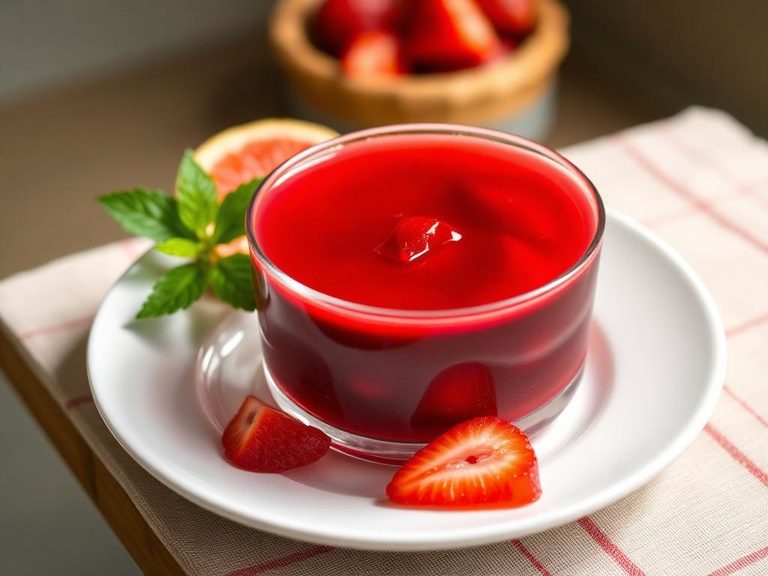
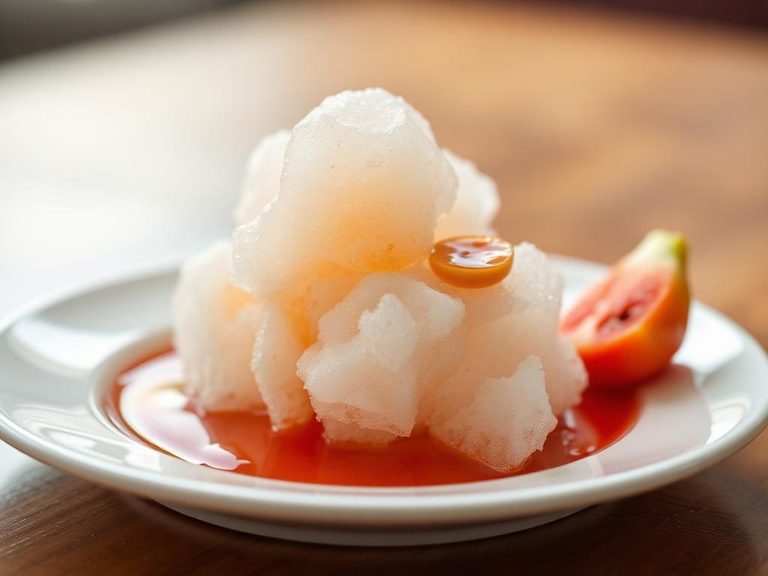
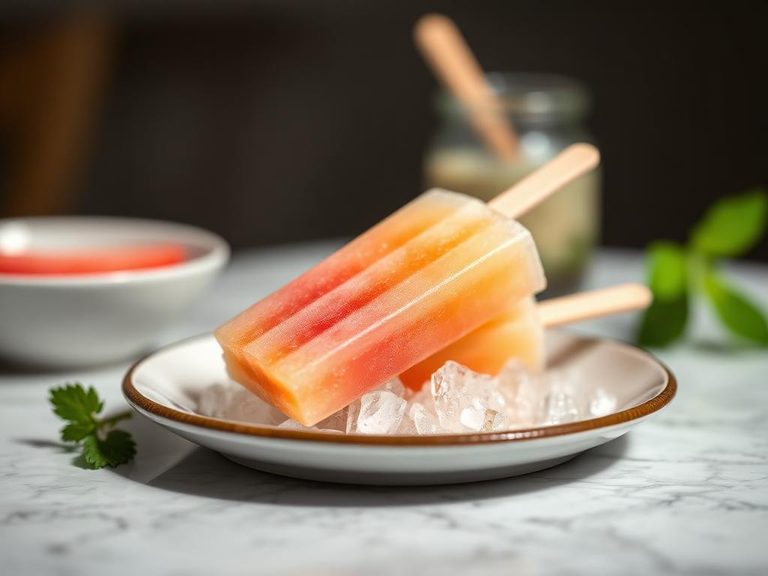
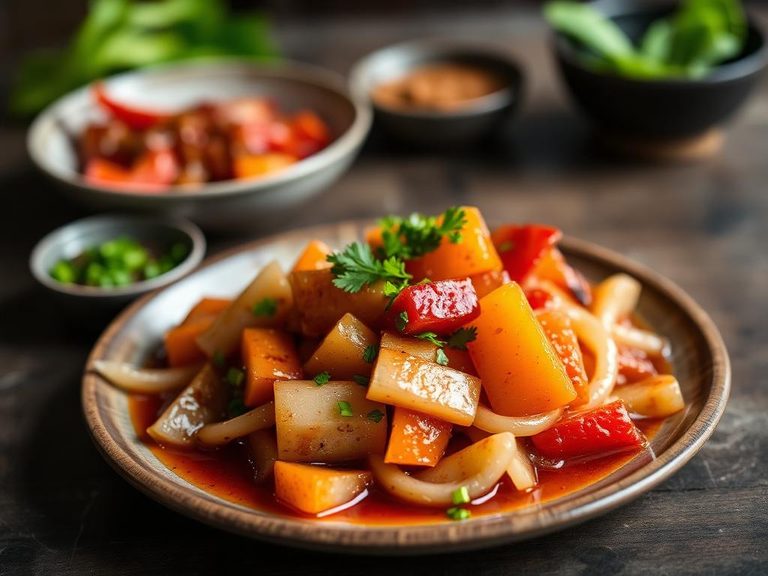
🌍 Where it's eaten
💡 Did you know?
The first fruit-flavored soft drink, a lemon soda, was invented in 1833, but the category exploded after the development of artificial flavors in the early 20th century, allowing for consistent 'cherry' or 'grape' tastes independent of actual fruit harvests.
Full nutrition (USDA data · scales with serving)
| Water | 89.8 g |
| Energy | 40.0 kcal |
| Protein | 0.05 g |
| Total lipid (fat) | 0.02 g |
| Carbohydrate, by difference | 10.1 g |
| Fiber, total dietary | 0.00 g |
| Total Sugars | 9.0 g |
| Calcium, Ca | 2.0 mg |
| Iron, Fe | 0.11 mg |
| Magnesium, Mg | 1.0 mg |
| Phosphorus, P | 0.00 mg |
| Potassium, K | 1.0 mg |
| Sodium, Na | 9.0 mg |
| Zinc, Zn | 0.04 mg |
| Copper, Cu | 0.00 mg |
| Selenium, Se | 0.00 ug |
| Vitamin C, total ascorbic acid | 0.00 mg |
| Thiamin | 0.00 mg |
| Riboflavin | 0.00 mg |
| Niacin | 0.01 mg |
| Vitamin B-6 | 0.00 mg |
| Folate, total | 0.00 ug |
| Folic acid | 0.00 ug |
| Folate, food | 0.00 ug |
| Folate, DFE | 0.00 ug |
| Choline, total | 0.40 mg |
| Vitamin B-12 | 0.00 ug |
| Vitamin B-12, added | 0.00 ug |
| Vitamin A, RAE | 0.00 ug |
| Retinol | 0.00 ug |
| Carotene, beta | 0.00 ug |
| Carotene, alpha | 0.00 ug |
| Cryptoxanthin, beta | 0.00 ug |
| Lycopene | 0.00 ug |
| Lutein + zeaxanthin | 0.00 ug |
| Vitamin E (alpha-tocopherol) | 0.00 mg |
| Vitamin E, added | 0.00 mg |
| Vitamin D (D2 + D3) | 0.00 ug |
| Vitamin K (phylloquinone) | 0.00 ug |
| Alcohol, ethyl | 0.00 g |
| Caffeine | 0.00 mg |
| Theobromine | 0.00 mg |
Fat & fatty acid profile (per 100g)
| Fatty acids, total saturated | 0.00 g |
| SFA 4:0 | 0.00 g |
| SFA 6:0 | 0.00 g |
| SFA 8:0 | 0.00 g |
| SFA 10:0 | 0.00 g |
| SFA 12:0 | 0.00 g |
| SFA 14:0 | 0.00 g |
| SFA 16:0 | 0.00 g |
| SFA 18:0 | 0.00 g |
| Fatty acids, total monounsaturated | 0.00 g |
| MUFA 16:1 | 0.00 g |
| MUFA 18:1 | 0.00 g |
| MUFA 20:1 | 0.00 g |
| MUFA 22:1 | 0.00 g |
| Fatty acids, total polyunsaturated | 0.00 g |
| PUFA 18:2 | 0.00 g |
| PUFA 18:3 | 0.00 g |
| PUFA 18:4 | 0.00 g |
| PUFA 20:4 | 0.00 g |
| PUFA 20:5 n-3 (EPA) | 0.00 g |
| PUFA 22:5 n-3 (DPA) | 0.00 g |
| PUFA 22:6 n-3 (DHA) | 0.00 g |
| Cholesterol | 0.00 mg |
FAQ
Does 'fruit flavored' mean it contains real fruit juice?
No. The flavor comes from a combination of natural and artificial flavorings, sweeteners, and acids. The ingredient list will typically show fruit juice concentrate only if it's a significant component, often less than 1%.
Why is it caffeine-free?
The caffeine is intentionally omitted during production. This makes it a suitable choice for children, individuals sensitive to stimulants, or anyone avoiding caffeine for health or religious reasons.
How does its sugar content compare to milk?
Per 100g, this drink has about 9g of sugar (all added), while whole milk has about 5g of sugar (naturally occurring lactose). The key difference is that milk also provides protein, fat, and nutrients, whereas the soda provides only empty calories.
Nutrient density (calculated · NRF9.3)
Nutrient Rich Foods index: beneficial nutrients (protein, fiber, vitamins, minerals) minus saturated fat, added sugar & sodium, per 100 kcal.
NRF9.3 index — Fulgoni, Keast & Drewnowski, 2009. Computed from USDA nutrients.
Weight-loss friendliness (composite index)
Energy density 0.40 kcal/g · 1% calories from protein · 0.0 g fiber · 9.0 g sugar per 100 g.
Composite of energy density (Rolls et al., 1999), protein & fiber satiety, minus sugar. A calculated heuristic — ranks satiety-per-calorie, not a clinical measure.
Dietary load (calculated from USDA values)
Potential renal acid load. Positive = acid-forming, negative = alkaline-forming.
Sodium-to-potassium ratio: 9.00 (lower is better — aim for ≤ 1)
Sodium:potassium per WHO potassium guidance. Computed from USDA nutrients.