

Samosa
Common food

Photo: Wikipedia
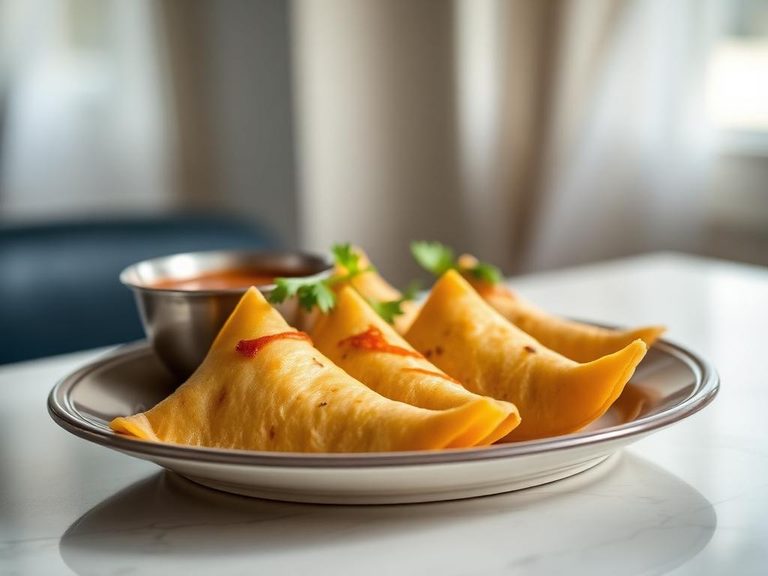
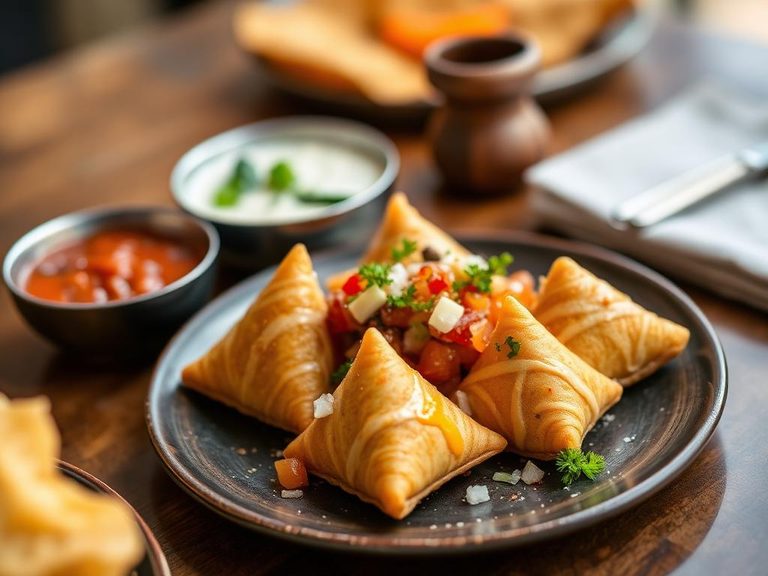
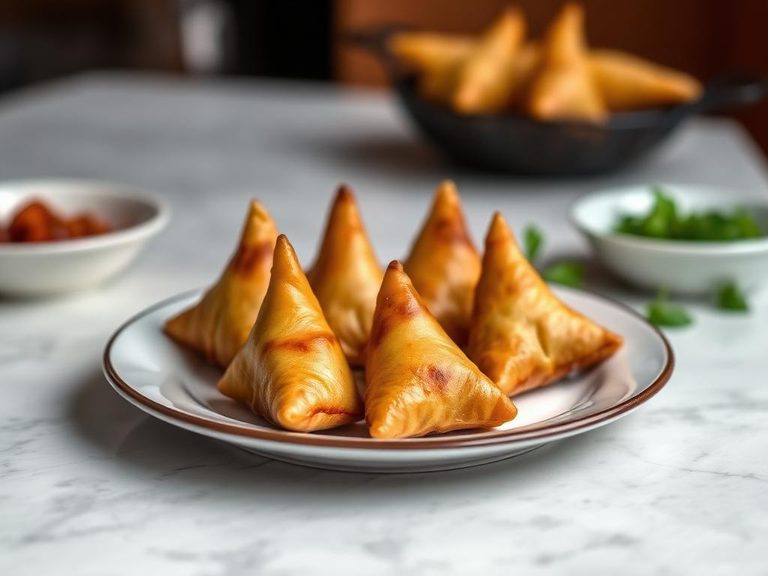
A samosa is a crispy, deep-fried pastry pocket, traditionally filled with a savory mix of spiced potatoes, peas, and onions. Its golden shell shatters to reveal a soft, aromatic interior, delivering a satisfying contrast of textures. While delicious, it's a calorie-dense treat, with a single piece packing significant fat and carbohydrates.
Calorie split: 7% protein · 43% carbs · 51% fat
↓ Full nutrition💚 Why it's loved
People adore samosas for the irresistible combination of a flaky, shattering crust and a warmly spiced, savory filling. They are a beloved cultural staple across South Asia and the Middle East, often enjoyed during festivals, as street food, or with afternoon tea.
⚠️ Watch-outs & how to enjoy it better
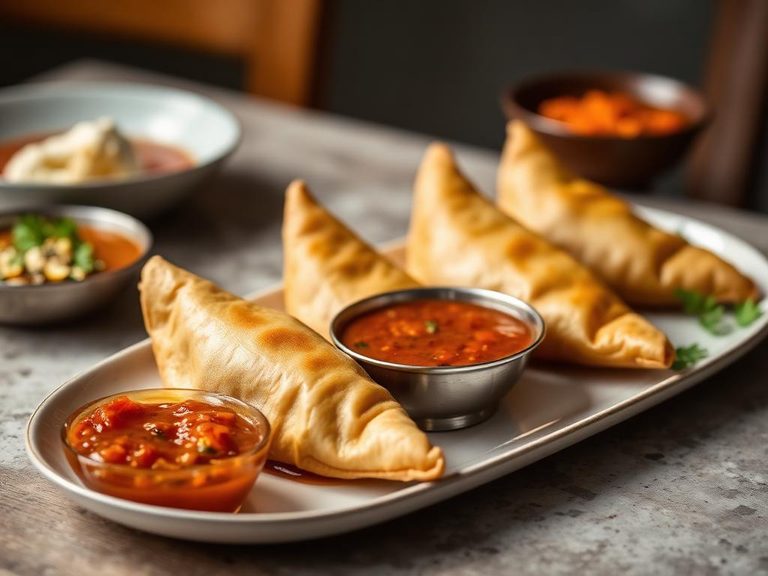
The deep-frying process makes them high in fat and calories, which can contribute to weight gain if eaten frequently. The refined flour crust can cause blood-sugar spikes, and they are often high in sodium. To counteract this, opt for a baked version, pair a single samosa with a protein-rich dip like yogurt raita, and enjoy it as an occasional treat rather than a regular meal.
Key benefits
- Provides quick energy from carbohydrates
- Contains plant-based protein from lentils or peas in some fillings
- Spices like turmeric and cumin may have anti-inflammatory properties
- A versatile snack that can be baked for a lighter version
🍽️ Popular dishes
🌍 Where it's eaten
💡 Did you know?
The modern triangular samosa is believed to have evolved from the Central Asian 'sambosa', which was originally a meat-filled pastry introduced to the Indian subcontinent by traders in the 13th or 14th century.
Full nutrition (USDA data · scales with serving)
| Water | 42.7 g |
| Energy | 310 kcal |
| Protein | 5.1 g |
| Total lipid (fat) | 17.5 g |
| Carbohydrate, by difference | 33.2 g |
| Fiber, total dietary | 1.8 g |
| Total Sugars | 1.3 g |
| Calcium, Ca | 33.0 mg |
| Iron, Fe | 2.2 mg |
| Magnesium, Mg | 16.0 mg |
| Phosphorus, P | 73.0 mg |
| Potassium, K | 166 mg |
| Sodium, Na | 388 mg |
| Zinc, Zn | 0.43 mg |
| Copper, Cu | 0.06 mg |
| Selenium, Se | 6.1 ug |
| Vitamin C, total ascorbic acid | 0.40 mg |
| Thiamin | 0.31 mg |
| Riboflavin | 0.20 mg |
| Niacin | 2.6 mg |
| Vitamin B-6 | 0.07 mg |
| Folate, total | 44.0 ug |
| Folic acid | 34.0 ug |
| Folate, food | 10.0 ug |
| Folate, DFE | 68.0 ug |
| Choline, total | 11.8 mg |
| Vitamin B-12 | 0.10 ug |
| Vitamin B-12, added | 0.00 ug |
| Vitamin A, RAE | 54.0 ug |
| Retinol | 49.0 ug |
| Carotene, beta | 57.0 ug |
| Carotene, alpha | 1.0 ug |
| Cryptoxanthin, beta | 0.00 ug |
| Lycopene | 0.00 ug |
| Lutein + zeaxanthin | 91.0 ug |
| Vitamin E (alpha-tocopherol) | 2.4 mg |
| Vitamin E, added | 0.00 mg |
| Vitamin D (D2 + D3) | 0.10 ug |
| Vitamin K (phylloquinone) | 14.0 ug |
| Alcohol, ethyl | 0.00 g |
| Caffeine | 0.00 mg |
| Theobromine | 0.00 mg |
Fat & fatty acid profile (per 100g)
| Fatty acids, total saturated | 4.4 g |
| SFA 4:0 | 0.11 g |
| SFA 6:0 | 0.08 g |
| SFA 8:0 | 0.05 g |
| SFA 10:0 | 0.12 g |
| SFA 12:0 | 0.13 g |
| SFA 14:0 | 0.44 g |
| SFA 16:0 | 2.5 g |
| SFA 18:0 | 0.81 g |
| Fatty acids, total monounsaturated | 6.2 g |
| MUFA 16:1 | 0.11 g |
| MUFA 18:1 | 5.9 g |
| MUFA 20:1 | 0.09 g |
| MUFA 22:1 | 0.00 g |
| Fatty acids, total polyunsaturated | 5.0 g |
| PUFA 18:2 | 4.5 g |
| PUFA 18:3 | 0.57 g |
| PUFA 18:4 | 0.00 g |
| PUFA 20:4 | 0.01 g |
| PUFA 20:5 n-3 (EPA) | 0.00 g |
| PUFA 22:5 n-3 (DPA) | 0.00 g |
| PUFA 22:6 n-3 (DHA) | 0.00 g |
| Cholesterol | 14.0 mg |
FAQ
Are samosas always vegetarian?
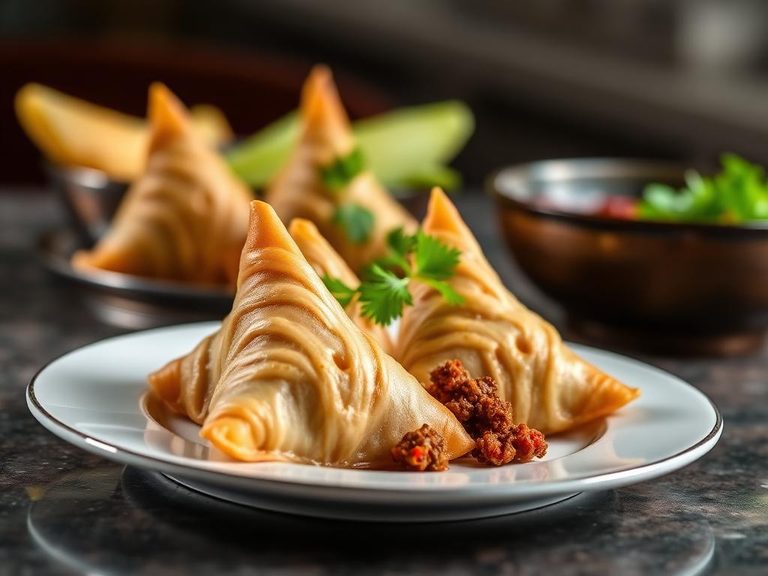
No. While the most common filling is spiced potato (aloo), samosas are widely made with minced meat (keema), such as lamb, chicken, or beef, especially in South Asian and Middle Eastern cuisines.
Can samosas be made healthier?
Yes. Baking instead of deep-frying significantly reduces fat content. Using whole-wheat flour for the dough adds fiber, and fillings can be loaded with more vegetables and lean protein.
What is the best way to reheat a samosa?
For crispiness, reheat in an oven or air fryer at 180°C (350°F) for 5-10 minutes. Microwaving will make the pastry soggy but will heat it through quickly.
Nutrient density (calculated · NRF9.3)
Nutrient Rich Foods index: beneficial nutrients (protein, fiber, vitamins, minerals) minus saturated fat, added sugar & sodium, per 100 kcal.
NRF9.3 index — Fulgoni, Keast & Drewnowski, 2009. Computed from USDA nutrients.
Weight-loss friendliness (composite index)
Energy density 3.10 kcal/g · 7% calories from protein · 1.8 g fiber · 1.3 g sugar per 100 g.
Composite of energy density (Rolls et al., 1999), protein & fiber satiety, minus sugar. A calculated heuristic — ranks satiety-per-calorie, not a clinical measure.
Dietary load (calculated from USDA values)
Potential renal acid load. Positive = acid-forming, negative = alkaline-forming.
Sodium-to-potassium ratio: 2.34 (lower is better — aim for ≤ 1)
Sodium:potassium per WHO potassium guidance. Computed from USDA nutrients.