

Ratatouille
Common food

Photo: Wikipedia
Ratatouille is a vibrant, rustic French vegetable stew, traditionally from Provence, featuring a medley of summer vegetables like eggplant, zucchini, bell peppers, tomatoes, and onions, slow-cooked until tender yet distinct. Its taste is a harmonious blend of sweet, earthy, and subtly tangy flavors, with a soft, melt-in-the-mouth texture. Nutritionally, it's a low-calorie, high-fiber dish packed with vitamins and antioxidants, making it a light yet satisfying meal.
Calorie split: 6% protein · 33% carbs · 61% fat
↓ Full nutrition💚 Why it's loved
People adore ratatouille for its comforting, home-cooked warmth and the way it celebrates the pure, sweet flavors of fresh summer produce. It's also incredibly versatile—served hot, cold, as a side, a main, or even in pastries—making it a beloved staple in Mediterranean cuisine.
⚠️ Watch-outs & how to enjoy it better
Some may find it too soft or mushy in texture if overcooked, and its high fiber content can cause digestive discomfort for those not accustomed to it. To counteract, cook vegetables until just tender to retain some bite, and introduce it gradually into your diet while drinking plenty of water.
Key benefits
- Rich in dietary fiber for digestive health
- Packed with antioxidants like lycopene and beta-carotene
- Naturally low in calories and fat
- Provides essential vitamins A, C, and K
- Supports heart health with potassium and magnesium
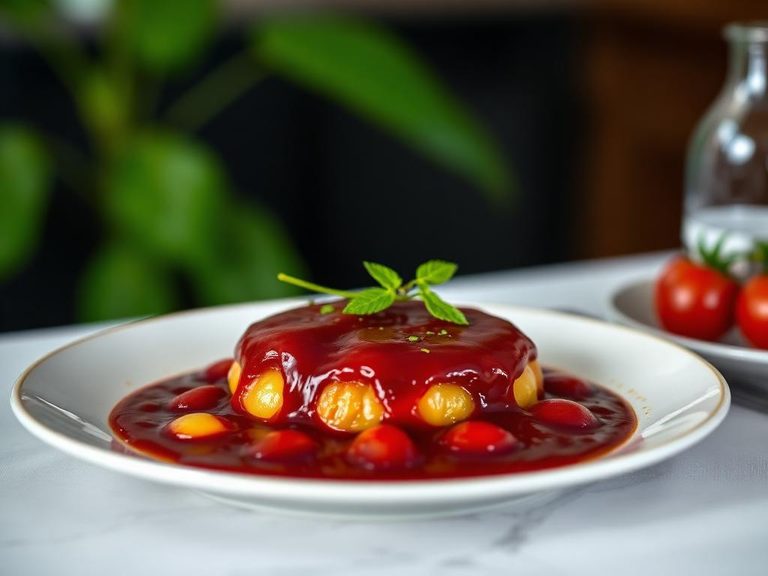
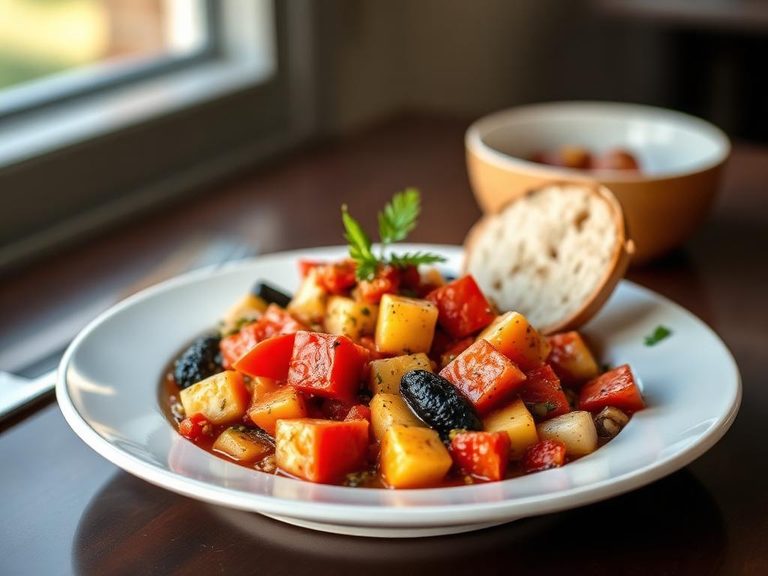
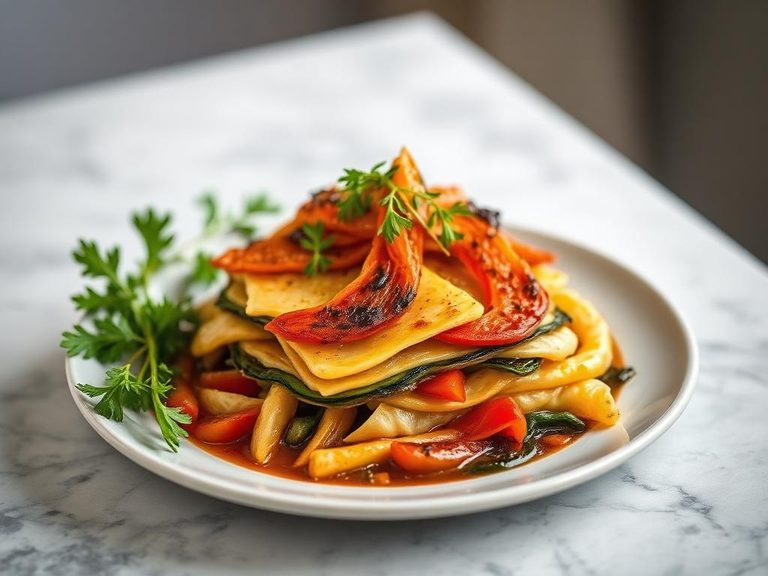
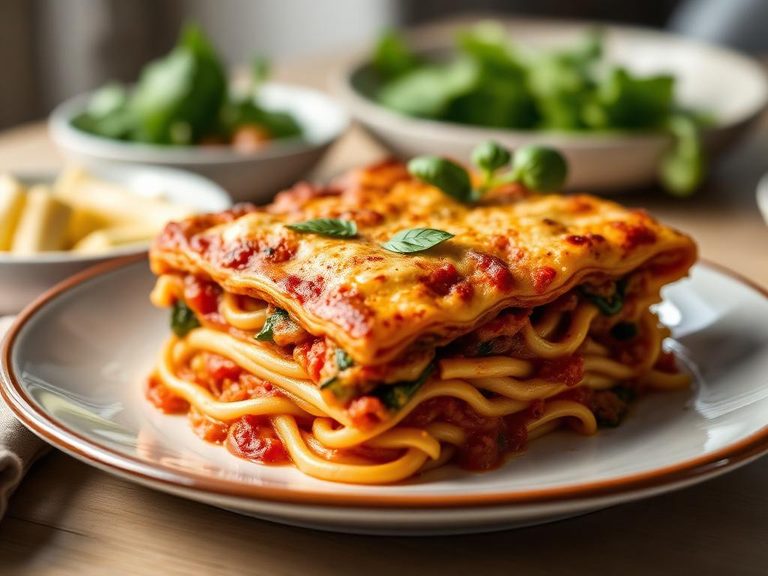
🍽️ Popular dishes
🌍 Where it's eaten
💡 Did you know?
The name 'ratatouille' comes from the Occitan word 'ratatolha' meaning 'to stir up,' and it was originally a humble, peasant dish made to use up an abundance of summer vegetables.
Full nutrition (USDA data · scales with serving)
| Water | 87.5 g |
| Energy | 67.0 kcal |
| Protein | 1.1 g |
| Total lipid (fat) | 4.7 g |
| Carbohydrate, by difference | 5.8 g |
| Fiber, total dietary | 1.9 g |
| Total Sugars | 3.4 g |
| Calcium, Ca | 21.0 mg |
| Iron, Fe | 0.44 mg |
| Magnesium, Mg | 14.0 mg |
| Phosphorus, P | 29.0 mg |
| Potassium, K | 219 mg |
| Sodium, Na | 151 mg |
| Zinc, Zn | 0.22 mg |
| Copper, Cu | 0.07 mg |
| Selenium, Se | 0.40 ug |
| Vitamin C, total ascorbic acid | 18.7 mg |
| Thiamin | 0.16 mg |
| Riboflavin | 0.06 mg |
| Niacin | 0.55 mg |
| Vitamin B-6 | 0.13 mg |
| Folate, total | 18.0 ug |
| Folic acid | 0.00 ug |
| Folate, food | 18.0 ug |
| Folate, DFE | 18.0 ug |
| Choline, total | 7.2 mg |
| Vitamin B-12 | 0.00 ug |
| Vitamin B-12, added | 0.00 ug |
| Vitamin A, RAE | 20.0 ug |
| Retinol | 0.00 ug |
| Carotene, beta | 217 ug |
| Carotene, alpha | 2.0 ug |
| Cryptoxanthin, beta | 39.0 ug |
| Lycopene | 539 ug |
| Lutein + zeaxanthin | 364 ug |
| Vitamin E (alpha-tocopherol) | 1.3 mg |
| Vitamin E, added | 0.00 mg |
| Vitamin D (D2 + D3) | 0.00 ug |
| Vitamin K (phylloquinone) | 5.1 ug |
| Alcohol, ethyl | 0.00 g |
| Caffeine | 0.00 mg |
| Theobromine | 0.00 mg |
Fat & fatty acid profile (per 100g)
| Fatty acids, total saturated | 0.75 g |
| SFA 4:0 | 0.00 g |
| SFA 6:0 | 0.00 g |
| SFA 8:0 | 0.00 g |
| SFA 10:0 | 0.00 g |
| SFA 12:0 | 0.00 g |
| SFA 14:0 | 0.00 g |
| SFA 16:0 | 0.59 g |
| SFA 18:0 | 0.13 g |
| Fatty acids, total monounsaturated | 3.1 g |
| MUFA 16:1 | 0.05 g |
| MUFA 18:1 | 3.0 g |
| MUFA 20:1 | 0.01 g |
| MUFA 22:1 | 0.00 g |
| Fatty acids, total polyunsaturated | 0.52 g |
| PUFA 18:2 | 0.47 g |
| PUFA 18:3 | 0.05 g |
| PUFA 18:4 | 0.00 g |
| PUFA 20:4 | 0.00 g |
| PUFA 20:5 n-3 (EPA) | 0.00 g |
| PUFA 22:5 n-3 (DPA) | 0.00 g |
| PUFA 22:6 n-3 (DHA) | 0.00 g |
| Cholesterol | 0.00 mg |
FAQ
Is ratatouille vegan and gluten-free?
Yes, traditional ratatouille is naturally vegan and gluten-free, as it's made solely from vegetables, herbs, and olive oil. Always check recipes for any added ingredients.
Can I make ratatouille ahead of time?
Absolutely! Ratatouille often tastes even better the next day as the flavors meld. It keeps well in the refrigerator for 3-4 days and freezes beautifully for up to 3 months.
What's the best way to serve ratatouille?
It's wonderfully versatile: serve it warm as a main with crusty bread, over rice or polenta, as a side dish with grilled meats or fish, or even cold as a salad or spread.
Nutrient density (calculated · NRF9.3)
Nutrient Rich Foods index: beneficial nutrients (protein, fiber, vitamins, minerals) minus saturated fat, added sugar & sodium, per 100 kcal.
NRF9.3 index — Fulgoni, Keast & Drewnowski, 2009. Computed from USDA nutrients.
Weight-loss friendliness (composite index)
Energy density 0.67 kcal/g · 7% calories from protein · 1.9 g fiber · 3.4 g sugar per 100 g.
Composite of energy density (Rolls et al., 1999), protein & fiber satiety, minus sugar. A calculated heuristic — ranks satiety-per-calorie, not a clinical measure.
Dietary load (calculated from USDA values)
Potential renal acid load. Positive = acid-forming, negative = alkaline-forming.
Sodium-to-potassium ratio: 0.69 (lower is better — aim for ≤ 1)
Sodium:potassium per WHO potassium guidance. Computed from USDA nutrients.