

Puddings, banana, dry mix, regular, with added oil
Whole food · Sweets

Photo: Wikipedia
This is a shelf-stable, powdered mix designed to create a quick banana-flavored pudding when combined with milk and chilled. It delivers a smooth, creamy texture and a sweet, artificial banana aroma reminiscent of classic lunchbox desserts. Nutritionally, it is a high-carbohydrate, low-protein, low-fat treat with minimal fiber.
Calorie split: 0% protein · 89% carbs · 11% fat
↓ Full nutrition💚 Why it's loved
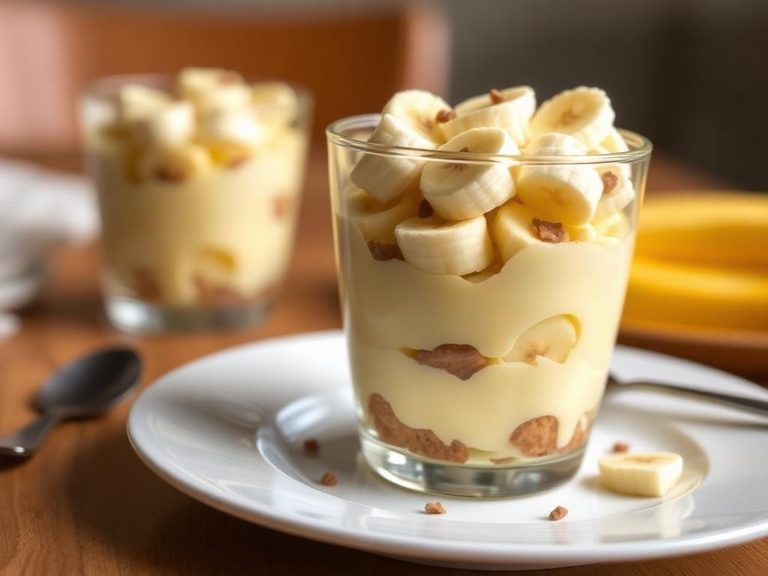
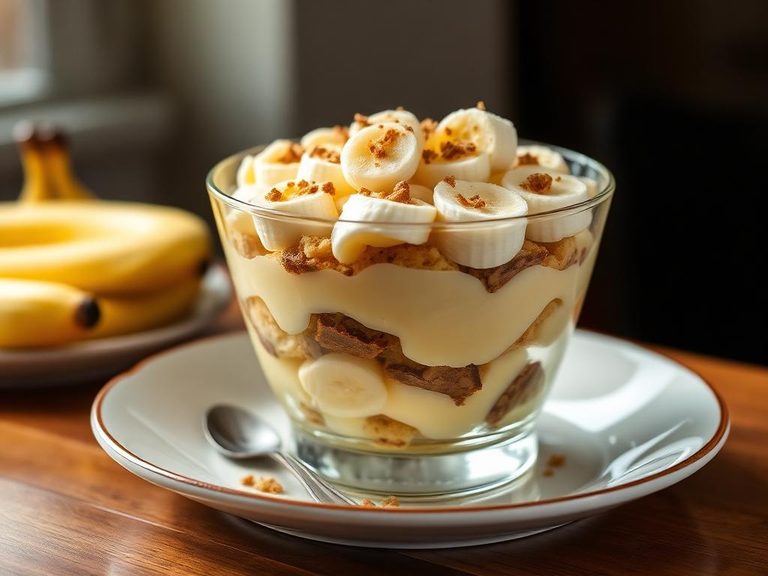
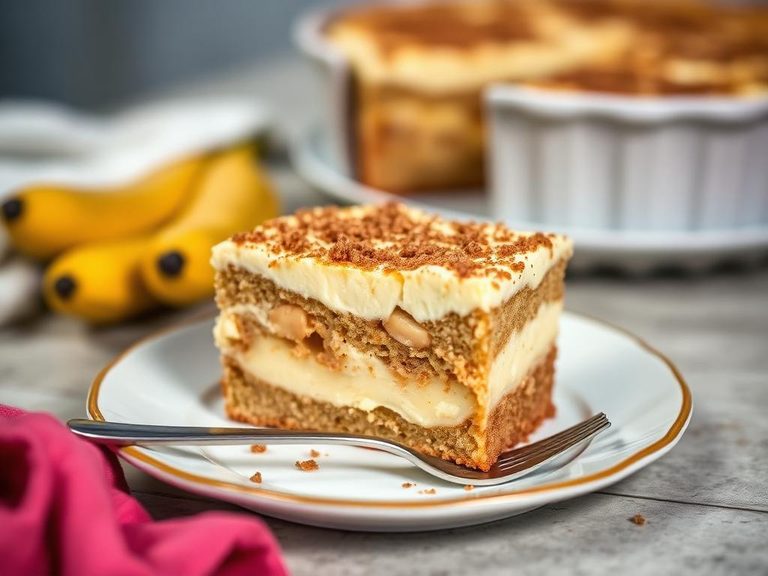
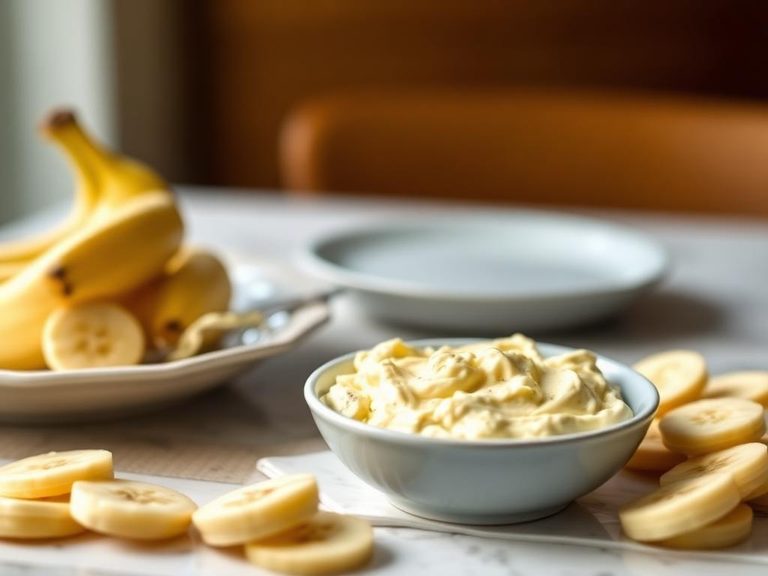
People love it for its nostalgic, comforting sweetness and the ease of making a creamy dessert in minutes. Its versatility allows it to be used as a dip, a pie filling, or a layer in trifles.
⚠️ Watch-outs & how to enjoy it better
The high carbohydrate content, primarily from refined sources, can lead to rapid blood-sugar spikes, making it a poor choice for those managing diabetes or seeking sustained energy. It also lacks significant protein, fiber, or micronutrients. To counteract this, pair a small portion with a source of protein (like nuts or Greek yogurt) and fiber (like fresh fruit) to slow digestion and add nutritional value.
Key benefits
- Provides a quick source of energy from carbohydrates.
- Extremely convenient and requires no cooking.
- Has a long shelf life for pantry storage.
- Offers a consistent, familiar flavor profile.
- Low in fat per serving.
🍽️ Popular dishes

🌍 Where it's eaten
💡 Did you know?
The primary flavoring agent in most commercial banana pudding mixes is isoamyl acetate, an ester that was first used to mimic banana flavor because it resembled the now-extinct Gros Michel banana, not the modern Cavendish.
Full nutrition (USDA data · scales with serving)
| Water | 4.1 g |
| Energy | 387 kcal |
| Energy | 1619 kj |
| Protein | 0.00 g |
| Total lipid (fat) | 5.0 g |
| Ash | 2.5 g |
| Carbohydrate, by difference | 88.4 g |
| Fiber, total dietary | 0.30 g |
| Calcium, Ca | 20.0 mg |
| Iron, Fe | 0.05 mg |
| Magnesium, Mg | 8.0 mg |
| Phosphorus, P | 5.0 mg |
| Potassium, K | 17.0 mg |
| Sodium, Na | 788 mg |
| Zinc, Zn | 0.09 mg |
| Copper, Cu | 0.02 mg |
| Manganese, Mn | 0.01 mg |
| Selenium, Se | 0.90 ug |
| Vitamin C, total ascorbic acid | 0.00 mg |
| Thiamin | 0.00 mg |
| Riboflavin | 0.00 mg |
| Niacin | 0.00 mg |
| Pantothenic acid | 0.00 mg |
| Vitamin B-6 | 0.00 mg |
| Folate, total | 0.00 ug |
| Folic acid | 0.00 ug |
| Folate, food | 0.00 ug |
| Folate, DFE | 0.00 ug |
| Vitamin B-12 | 0.00 ug |
| Vitamin A, RAE | 0.00 ug |
| Retinol | 0.00 ug |
| Vitamin A, IU | 0.00 iu |
| Caffeine | 0.00 mg |
| Theobromine | 0.00 mg |
Fat & fatty acid profile (per 100g)
| Fatty acids, total saturated | 0.90 g |
| SFA 16:0 | 0.70 g |
| SFA 18:0 | 0.18 g |
| Fatty acids, total monounsaturated | 1.5 g |
| MUFA 18:1 | 1.5 g |
| Fatty acids, total polyunsaturated | 2.4 g |
| PUFA 18:2 | 2.3 g |
| PUFA 18:3 | 0.14 g |
| Cholesterol | 0.00 mg |
Amino acid profile (per 100g)
| Tryptophan | 0.00 g |
| Threonine | 0.00 g |
| Isoleucine | 0.00 g |
| Leucine | 0.01 g |
| Lysine | 0.00 g |
| Methionine | 0.00 g |
| Cystine | 0.00 g |
| Phenylalanine | 0.00 g |
| Tyrosine | 0.00 g |
| Valine | 0.00 g |
| Arginine | 0.00 g |
| Histidine | 0.00 g |
| Alanine | 0.00 g |
| Aspartic acid | 0.00 g |
| Glutamic acid | 0.01 g |
| Glycine | 0.00 g |
| Proline | 0.00 g |
| Serine | 0.00 g |
FAQ
Is this the same as making pudding from scratch with real bananas?
No. This is a pre-made, flavored dry mix. Scratch-made banana pudding typically uses a cooked custard base and fresh banana slices, offering a more complex flavor and different texture.
Why does the nutrition show 0g sugar?
This is likely due to labeling regulations. The mix contains significant carbohydrates (88.4g per 100g) from sugars and starches, but the 'sugars' line may refer to added sugars, which could be listed separately or the product may use sweeteners classified differently.
Can I use this mix for anything other than pudding?
Yes. It's often used as a flavoring for milkshakes, a dry ingredient in cake batters, or mixed with whipped cream to create a quick fruit dip.
Nutrient density (calculated · NRF9.3)
Nutrient Rich Foods index: beneficial nutrients (protein, fiber, vitamins, minerals) minus saturated fat, added sugar & sodium, per 100 kcal.
NRF9.3 index — Fulgoni, Keast & Drewnowski, 2009. Computed from USDA nutrients.
Weight-loss friendliness (composite index)
Energy density 3.87 kcal/g · 0% calories from protein · 0.3 g fiber · 0.0 g sugar per 100 g.
Composite of energy density (Rolls et al., 1999), protein & fiber satiety, minus sugar. A calculated heuristic — ranks satiety-per-calorie, not a clinical measure.
Dietary load (calculated from USDA values)
Potential renal acid load. Positive = acid-forming, negative = alkaline-forming.
Sodium-to-potassium ratio: 46.35 (lower is better — aim for ≤ 1)
Sodium:potassium per WHO potassium guidance. Computed from USDA nutrients.