Pork sausage
Common food
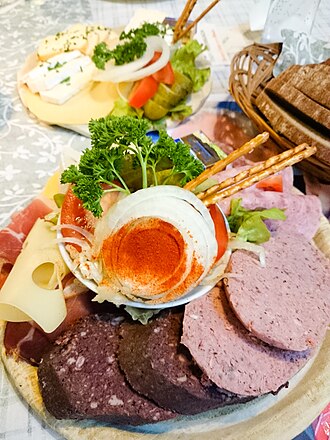
Photo: Wikipedia
Pork sausage is a savory, seasoned ground pork product, often encased in natural or synthetic skin. It delivers a rich, fatty mouthfeel with a satisfying snap when cooked, and its flavor profile ranges from mild and herbal to spicy and smoky. Nutritionally, it is a dense source of protein and fat, providing significant energy with minimal carbohydrates.
💚 Why it's loved
People love pork sausage for its deeply savory, umami-rich flavor and satisfying, juicy texture that anchors a meal. Its incredible versatility makes it a beloved staple in breakfasts, pastas, soups, and street foods across countless cultures.
⚠️ Watch-outs & how to enjoy it better
Pork sausage is high in saturated fat and sodium, which can be a concern for heart health and blood pressure management. To mitigate this, choose leaner varieties, practice strict portion control (e.g., 1-2 links), and balance your plate with fiber-rich vegetables or whole grains to slow digestion. Those monitoring blood sugar should note it contains minimal carbs but is often served with high-carb sides.
Key benefits
- High-quality complete protein source
- Provides essential B vitamins like B12 and niacin
- Rich in minerals such as zinc and selenium
- High energy density for active individuals
- Versatile base for countless dishes
🍽️ Popular dishes
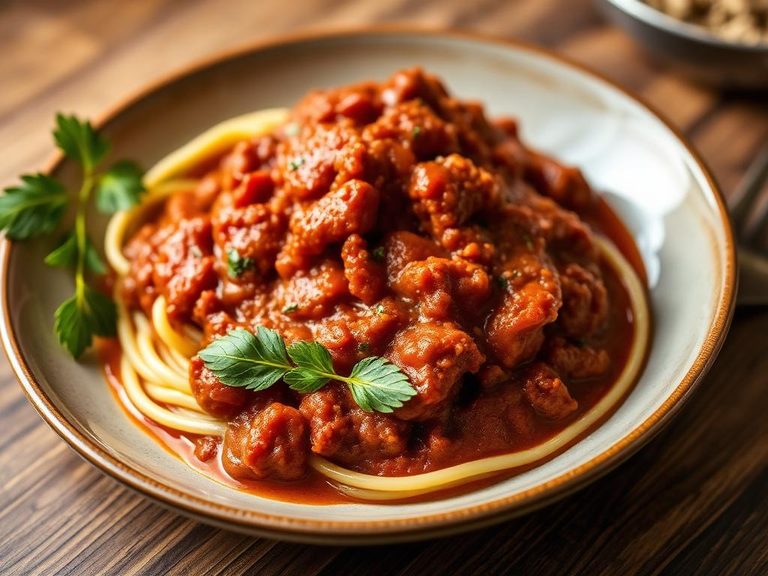
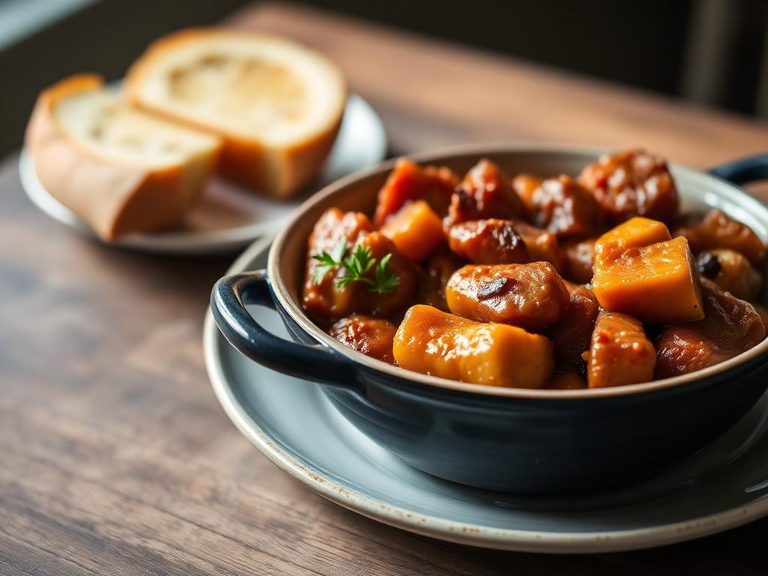
🌍 Where it's eaten
💡 Did you know?
The practice of stuffing ground meat into casings dates back to ancient Mesopotamia, making sausage one of the oldest forms of processed meat in human history.
Full nutrition (scales with serving)
| Water | 49.9 g |
| Energy | 325 kcal |
| Protein | 18.5 g |
| Total lipid (fat) | 27.3 g |
| Carbohydrate, by difference | 1.4 g |
| Fiber, total dietary | 0.00 g |
| Total Sugars | 1.1 g |
| Calcium, Ca | 9.0 mg |
| Iron, Fe | 1.2 mg |
| Magnesium, Mg | 16.0 mg |
| Phosphorus, P | 149 mg |
| Potassium, K | 342 mg |
| Sodium, Na | 814 mg |
| Zinc, Zn | 2.5 mg |
| Copper, Cu | 0.07 mg |
| Selenium, Se | 20.7 ug |
| Vitamin C, total ascorbic acid | 0.00 mg |
| Thiamin | 0.26 mg |
| Riboflavin | 0.18 mg |
| Niacin | 6.1 mg |
| Vitamin B-6 | 0.20 mg |
| Folate, total | 1.0 ug |
| Folic acid | 0.00 ug |
| Folate, food | 1.0 ug |
| Folate, DFE | 1.0 ug |
| Choline, total | 62.3 mg |
| Vitamin B-12 | 0.98 ug |
| Vitamin B-12, added | 0.00 ug |
| Vitamin A, RAE | 28.0 ug |
| Retinol | 28.0 ug |
| Carotene, beta | 0.00 ug |
| Carotene, alpha | 0.00 ug |
| Cryptoxanthin, beta | 0.00 ug |
| Lycopene | 0.00 ug |
| Lutein + zeaxanthin | 0.00 ug |
| Vitamin E (alpha-tocopherol) | 0.90 mg |
| Vitamin E, added | 0.00 mg |
| Vitamin D (D2 + D3) | 1.4 ug |
| Vitamin K (phylloquinone) | 0.00 ug |
| Fatty acids, total saturated | 8.8 g |
| SFA 4:0 | 0.00 g |
| SFA 6:0 | 0.00 g |
| SFA 8:0 | 0.00 g |
| SFA 10:0 | 0.02 g |
| SFA 12:0 | 0.02 g |
| SFA 14:0 | 0.32 g |
| SFA 16:0 | 5.5 g |
| SFA 18:0 | 2.7 g |
| Fatty acids, total monounsaturated | 11.5 g |
| MUFA 16:1 | 0.56 g |
| MUFA 18:1 | 10.6 g |
| MUFA 20:1 | 0.33 g |
| MUFA 22:1 | 0.01 g |
| Fatty acids, total polyunsaturated | 5.1 g |
| PUFA 18:2 | 4.4 g |
| PUFA 18:3 | 0.15 g |
| PUFA 18:4 | 0.00 g |
| PUFA 20:4 | 0.12 g |
| PUFA 20:5 n-3 (EPA) | 0.00 g |
| PUFA 22:5 n-3 (DPA) | 0.03 g |
| PUFA 22:6 n-3 (DHA) | 0.00 g |
| Cholesterol | 86.0 mg |
| Alcohol, ethyl | 0.00 g |
| Caffeine | 0.00 mg |
| Theobromine | 0.00 mg |
FAQ
What's the difference between fresh and smoked sausage?
Fresh sausage is raw and must be cooked thoroughly before eating. Smoked sausage has been cured and smoked, giving it a distinct flavor and often a firmer texture, though it is typically still cooked before serving.
How can I tell when pork sausage is fully cooked?
The safest method is using a meat thermometer; the internal temperature should reach 160°F (71°C). The sausage should be firm to the touch, with no pink meat remaining and clear juices.
Is pork sausage gluten-free?
It varies. Some sausages use breadcrumbs or flour as a filler, which contain gluten. Always check the ingredient list or look for a certified gluten-free label if you have celiac disease or sensitivity.