

Pizza rolls
Common food
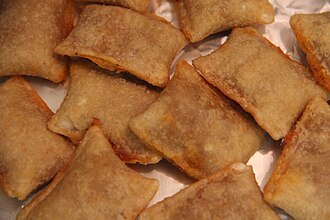
Photo: Wikipedia
Pizza rolls are bite-sized, pillow-shaped pockets of baked or fried dough, typically filled with a savory mix of tomato sauce, melted cheese, and seasoned meats like pepperoni. They offer a satisfying crunch giving way to a hot, gooey, and intensely savory center. Nutritionally, they are a calorie-dense snack, delivering a quick energy boost primarily from refined carbohydrates.
Calorie split: 11% protein · 62% carbs · 27% fat
↓ Full nutrition💚 Why it's loved
People adore pizza rolls for their perfect, mess-free delivery of classic pizza flavors in a fun, poppable form that's ideal for sharing at parties or enjoying as a nostalgic comfort food. Their versatility allows them to be paired with a wide array of dipping sauces, from marinara to ranch.
⚠️ Watch-outs & how to enjoy it better
The high sodium and refined carb content can lead to blood-sugar spikes and increased thirst. To counteract this, pair them with a side salad or raw veggies to add fiber, choose a lower-sodium dipping sauce, and practice portion control by sticking to a single serving size.
Key benefits
- Provides a quick source of energy from carbohydrates.
- Offers a convenient, portable, and portion-controlled snack format.
- Contains a moderate amount of protein from the cheese and meat filling.
- Satisfies savory and salty cravings effectively.
🍽️ Popular dishes
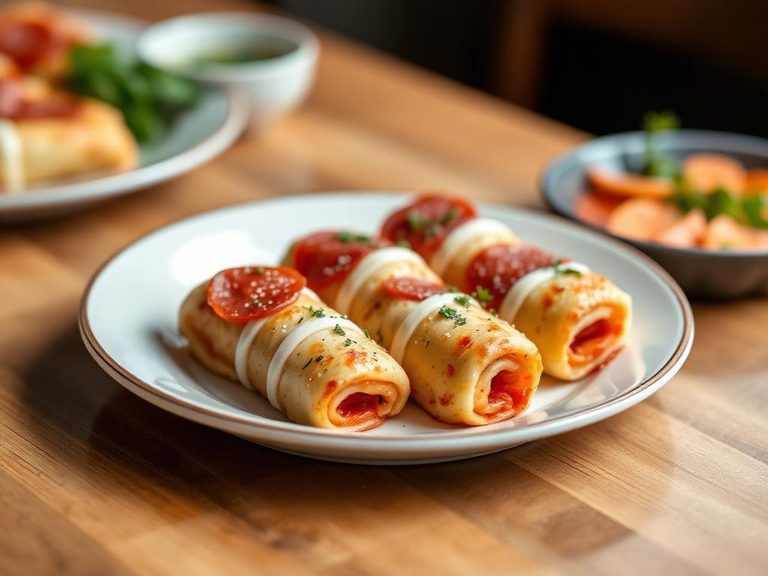
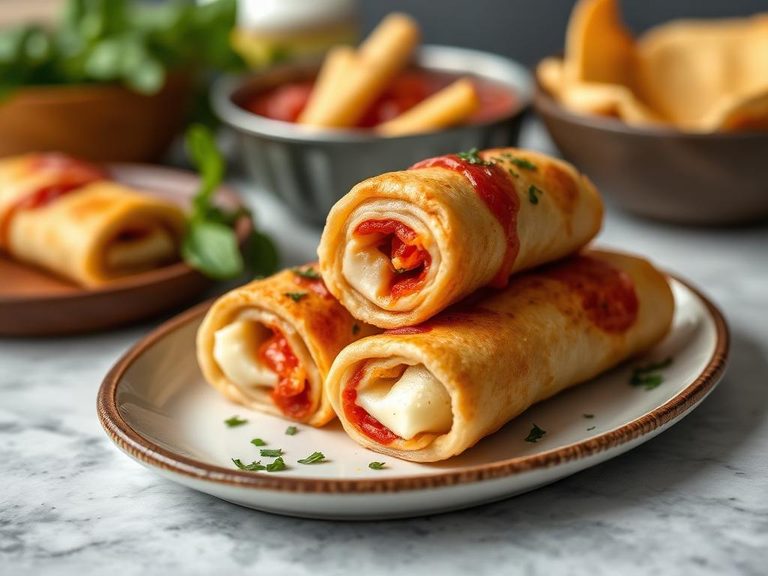
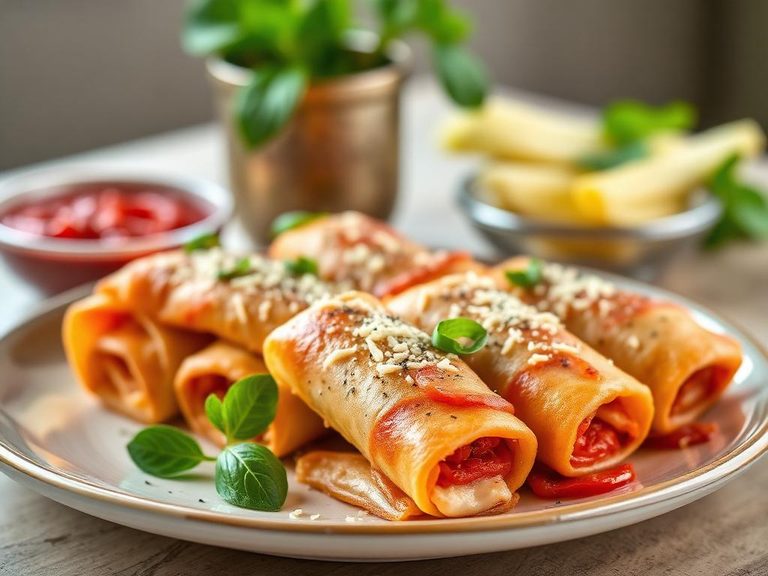
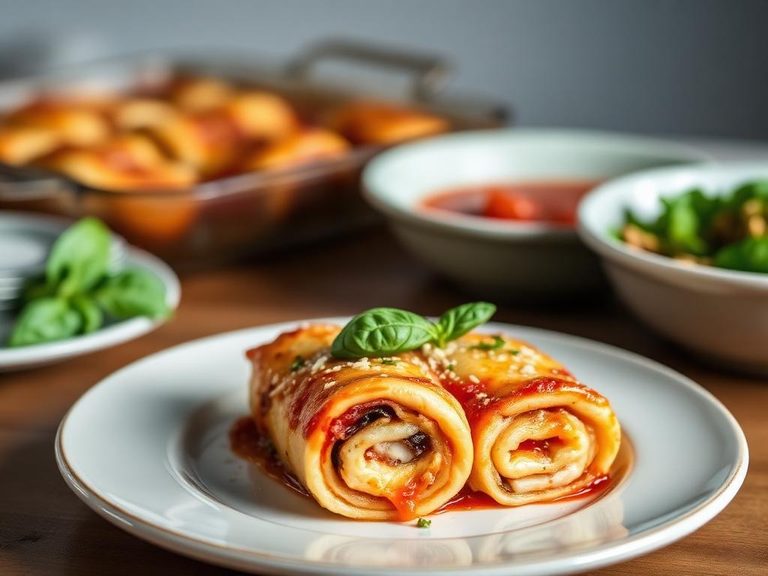
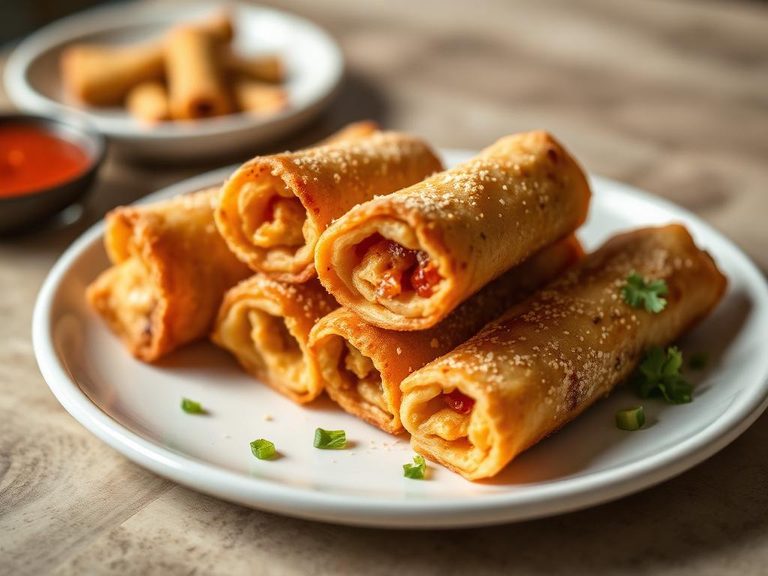
🌍 Where it's eaten
💡 Did you know?
The most popular brand, Totino's, was invented by Rose and Jim Totino, who started with a pizzeria in Minneapolis in the 1950s before pioneering the frozen pizza roll in 1968.
Full nutrition (USDA data · scales with serving)
| Water | 24.1 g |
| Energy | 345 kcal |
| Protein | 9.2 g |
| Total lipid (fat) | 10.5 g |
| Carbohydrate, by difference | 53.4 g |
| Fiber, total dietary | 1.3 g |
| Total Sugars | 3.9 g |
| Calcium, Ca | 132 mg |
| Iron, Fe | 1.9 mg |
| Magnesium, Mg | 21.0 mg |
| Phosphorus, P | 144 mg |
| Potassium, K | 317 mg |
| Sodium, Na | 631 mg |
| Zinc, Zn | 0.77 mg |
| Copper, Cu | 0.14 mg |
| Selenium, Se | 12.7 ug |
| Vitamin C, total ascorbic acid | 0.00 mg |
| Thiamin | 0.17 mg |
| Riboflavin | 0.20 mg |
| Niacin | 2.0 mg |
| Vitamin B-6 | 0.07 mg |
| Folate, total | 34.0 ug |
| Folic acid | 26.0 ug |
| Folate, food | 8.0 ug |
| Folate, DFE | 52.0 ug |
| Choline, total | 13.5 mg |
| Vitamin B-12 | 0.27 ug |
| Vitamin B-12, added | 0.00 ug |
| Vitamin A, RAE | 63.0 ug |
| Retinol | 47.0 ug |
| Carotene, beta | 198 ug |
| Carotene, alpha | 7.0 ug |
| Cryptoxanthin, beta | 0.00 ug |
| Lycopene | 6186 ug |
| Lutein + zeaxanthin | 4.0 ug |
| Vitamin E (alpha-tocopherol) | 1.7 mg |
| Vitamin E, added | 0.00 mg |
| Vitamin D (D2 + D3) | 0.00 ug |
| Vitamin K (phylloquinone) | 4.8 ug |
| Alcohol, ethyl | 0.00 g |
| Caffeine | 0.00 mg |
| Theobromine | 0.00 mg |
Fat & fatty acid profile (per 100g)
| Fatty acids, total saturated | 2.6 g |
| SFA 4:0 | 0.05 g |
| SFA 6:0 | 0.01 g |
| SFA 8:0 | 0.01 g |
| SFA 10:0 | 0.03 g |
| SFA 12:0 | 0.02 g |
| SFA 14:0 | 0.18 g |
| SFA 16:0 | 1.6 g |
| SFA 18:0 | 0.71 g |
| Fatty acids, total monounsaturated | 4.1 g |
| MUFA 16:1 | 0.07 g |
| MUFA 18:1 | 4.0 g |
| MUFA 20:1 | 0.00 g |
| MUFA 22:1 | 0.00 g |
| Fatty acids, total polyunsaturated | 3.0 g |
| PUFA 18:2 | 2.8 g |
| PUFA 18:3 | 0.21 g |
| PUFA 18:4 | 0.00 g |
| PUFA 20:4 | 0.00 g |
| PUFA 20:5 n-3 (EPA) | 0.00 g |
| PUFA 22:5 n-3 (DPA) | 0.00 g |
| PUFA 22:6 n-3 (DHA) | 0.00 g |
| Cholesterol | 6.0 mg |
FAQ
Are pizza rolls baked or fried?
They can be prepared either way. Traditionally, they are baked in an oven or toaster oven to achieve a crispy exterior. Many are also designed to be deep-fried for an extra-crispy texture, or cooked in an air fryer for a quicker, less oily result.
What are pizza rolls typically made of?
The outer shell is a thin, unleavened dough made from flour, water, and oil. The filling is a mixture of tomato sauce, mozzarella cheese, and various meats like pepperoni or sausage, all seasoned with Italian herbs.
How do you prevent the filling from exploding out?
Overcooking is the main culprit. Follow package directions carefully, and if using an oven, consider placing them on a baking sheet with a lip to catch any leaks. Puncturing the top with a toothpick before baking can also help steam escape.
Nutrient density (calculated · NRF9.3)
Nutrient Rich Foods index: beneficial nutrients (protein, fiber, vitamins, minerals) minus saturated fat, added sugar & sodium, per 100 kcal.
NRF9.3 index — Fulgoni, Keast & Drewnowski, 2009. Computed from USDA nutrients.
Weight-loss friendliness (composite index)
Energy density 3.45 kcal/g · 11% calories from protein · 1.3 g fiber · 3.9 g sugar per 100 g.
Composite of energy density (Rolls et al., 1999), protein & fiber satiety, minus sugar. A calculated heuristic — ranks satiety-per-calorie, not a clinical measure.
Dietary load (calculated from USDA values)
Potential renal acid load. Positive = acid-forming, negative = alkaline-forming.
Sodium-to-potassium ratio: 1.99 (lower is better — aim for ≤ 1)
Sodium:potassium per WHO potassium guidance. Computed from USDA nutrients.