Pizza, cheese, from school lunch, thin crust
Common food
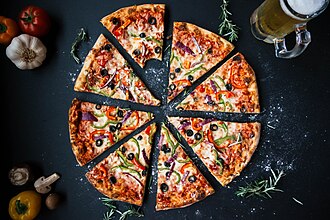
Photo: Wikipedia
This is a classic, no-frills school-lunch staple: a single square or triangle of thin-crust pizza topped with a simple layer of melted cheese, likely mozzarella or a blend, over a tangy tomato sauce. The crust is typically crisp yet pliable, offering a satisfying chew without being doughy, while the cheese provides a mild, salty, and creamy contrast. Nutritionally, it's a surprisingly balanced bite for its size, delivering a solid protein punch (12.72g per 100g) alongside its carbohydrate base.
💚 Why it's loved
People love it for its comforting, familiar flavor profile—the savory interplay of cheese, tomato, and baked dough is universally appealing. Its thin, crispy texture makes it easy to eat without feeling overly heavy, perfect for a quick lunch.
⚠️ Watch-outs & how to enjoy it better
The thin crust and refined flour can lead to rapid blood-sugar spikes, and school-lunch versions are often high in sodium. It may also contain common allergens like wheat (gluten) and dairy. To counteract this, pair it with a side salad or vegetables to add fiber and slow digestion, and be mindful of portion size if you're sensitive to sodium or carbs.
Key benefits
- Good source of protein for muscle maintenance.
- Provides calcium from the cheese for bone health.
- Contains some dietary fiber from the crust and sauce.
- Convenient, portable, and portion-controlled for a quick meal.
- Offers a mix of macronutrients (carbs, protein, fat) for energy.
🍽️ Popular dishes
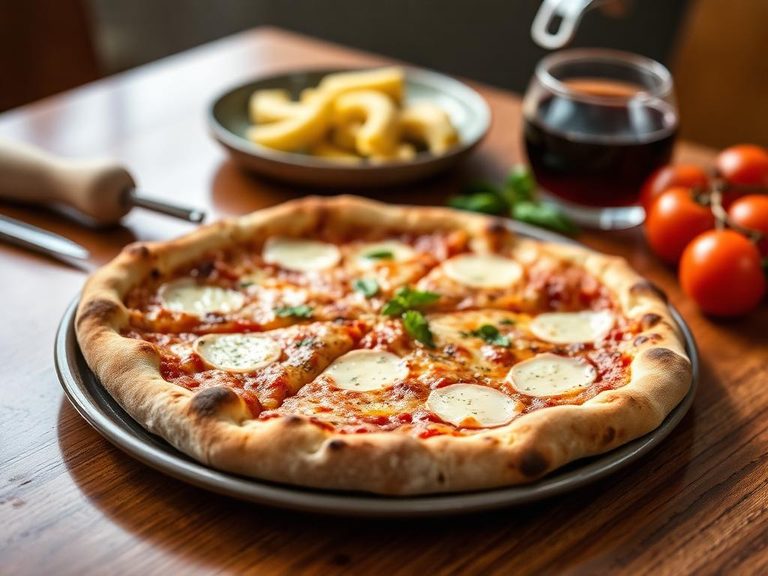
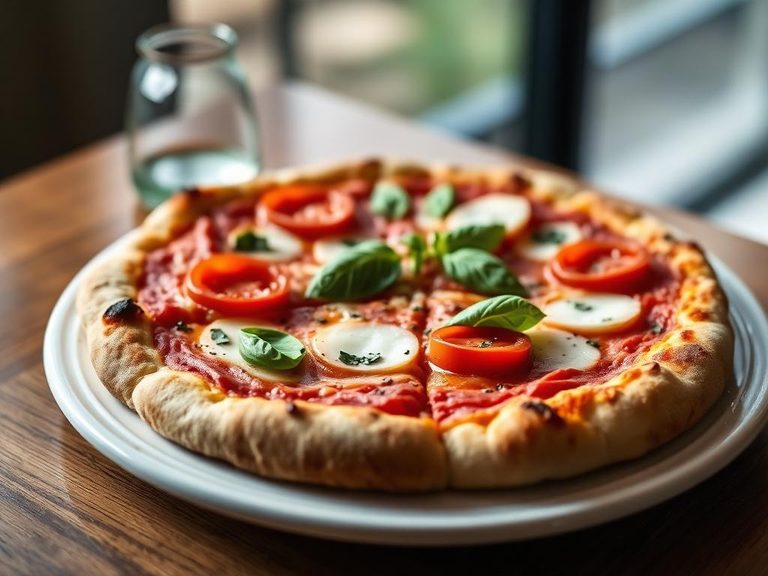
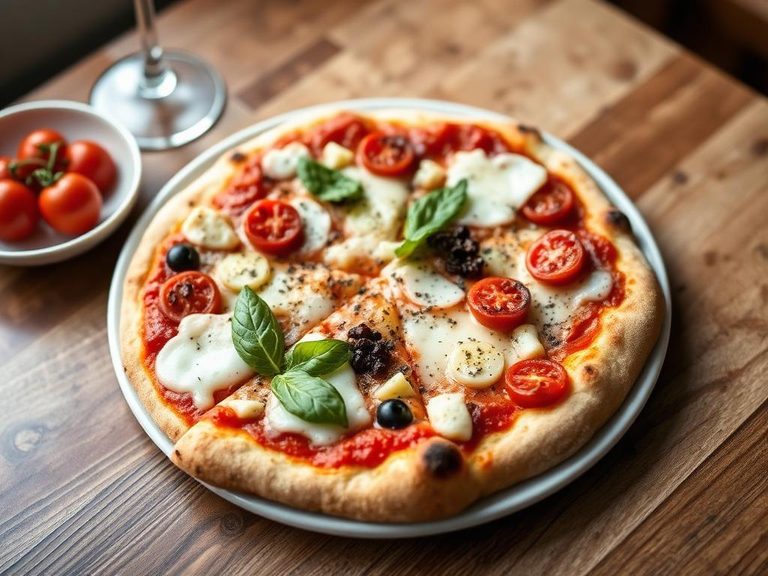
🌍 Where it's eaten
💡 Did you know?
The school lunch pizza slice is a descendant of the Neapolitan 'pizza al taglio' (pizza by the slice), which was a practical street food sold by weight in Italy long before it became a global cafeteria icon.
Full nutrition (scales with serving)
| Water | 45.6 g |
| Energy | 247 kcal |
| Protein | 12.7 g |
| Total lipid (fat) | 7.9 g |
| Carbohydrate, by difference | 31.3 g |
| Fiber, total dietary | 4.0 g |
| Total Sugars | 7.1 g |
| Calcium, Ca | 218 mg |
| Iron, Fe | 2.5 mg |
| Magnesium, Mg | 51.0 mg |
| Phosphorus, P | 316 mg |
| Potassium, K | 348 mg |
| Sodium, Na | 421 mg |
| Zinc, Zn | 2.0 mg |
| Copper, Cu | 0.10 mg |
| Selenium, Se | 22.7 ug |
| Vitamin C, total ascorbic acid | 0.00 mg |
| Thiamin | 0.28 mg |
| Riboflavin | 0.35 mg |
| Niacin | 3.0 mg |
| Vitamin B-6 | 0.16 mg |
| Folate, total | 54.0 ug |
| Folic acid | 34.0 ug |
| Folate, food | 19.0 ug |
| Folate, DFE | 78.0 ug |
| Choline, total | 19.0 mg |
| Vitamin B-12 | 1.5 ug |
| Vitamin B-12, added | 0.00 ug |
| Vitamin A, RAE | 66.0 ug |
| Retinol | 59.0 ug |
| Carotene, beta | 87.0 ug |
| Carotene, alpha | 0.00 ug |
| Cryptoxanthin, beta | 0.00 ug |
| Lycopene | 2027 ug |
| Lutein + zeaxanthin | 31.0 ug |
| Vitamin E (alpha-tocopherol) | 0.75 mg |
| Vitamin E, added | 0.00 mg |
| Vitamin D (D2 + D3) | 0.00 ug |
| Vitamin K (phylloquinone) | 4.2 ug |
| Fatty acids, total saturated | 4.0 g |
| SFA 4:0 | 0.14 g |
| SFA 6:0 | 0.12 g |
| SFA 8:0 | 0.07 g |
| SFA 10:0 | 0.17 g |
| SFA 12:0 | 0.20 g |
| SFA 14:0 | 0.64 g |
| SFA 16:0 | 1.9 g |
| SFA 18:0 | 0.74 g |
| Fatty acids, total monounsaturated | 1.8 g |
| MUFA 16:1 | 0.10 g |
| MUFA 18:1 | 1.7 g |
| MUFA 20:1 | 0.01 g |
| MUFA 22:1 | 0.00 g |
| Fatty acids, total polyunsaturated | 0.74 g |
| PUFA 18:2 | 0.66 g |
| PUFA 18:3 | 0.07 g |
| PUFA 18:4 | 0.00 g |
| PUFA 20:4 | 0.01 g |
| PUFA 20:5 n-3 (EPA) | 0.00 g |
| PUFA 22:5 n-3 (DPA) | 0.00 g |
| PUFA 22:6 n-3 (DHA) | 0.00 g |
| Cholesterol | 12.0 mg |
| Alcohol, ethyl | 0.00 g |
| Caffeine | 0.00 mg |
| Theobromine | 0.00 mg |
FAQ
Is school lunch pizza healthier than regular pizza?
It can be, due to thinner crusts and standardized portion sizes, but it often contains more sodium and preservatives for shelf stability. Homemade versions with whole-grain crust and fresh toppings are generally the healthiest option.
Why is the protein content relatively high for a cheese pizza?
The combination of cheese (a concentrated dairy protein) and the gluten in the wheat crust contributes to a higher protein count per gram than you might expect from a simple carb-heavy food.
Can I eat this if I'm lactose intolerant?
Traditional cheese pizza contains dairy. However, many school-lunch or commercial pizzas use low-lactose cheeses like aged mozzarella, and lactase enzyme supplements can help. Always check ingredients for hidden dairy.