Pears, raw, bartlett (Includes foods for USDA's Food Distribution Program)
Whole food · Fruits and Fruit Juices
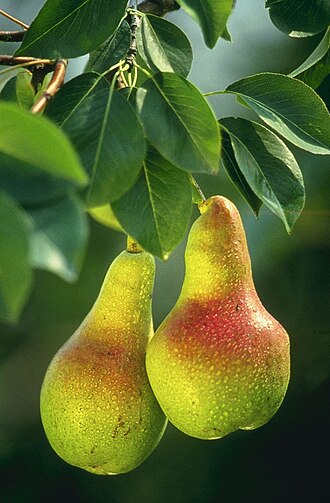
Photo: Wikipedia
The Bartlett pear is the classic American pear, with a smooth, buttery texture that yields to a juicy, aromatic bite when ripe. Its skin ranges from green to a vibrant yellow-red blush, and its flesh is creamy white with a sweet, floral flavor. Nutritionally, it's a low-calorie fruit packed with dietary fiber, offering over 12% of your daily needs in just one medium pear.
💚 Why it's loved
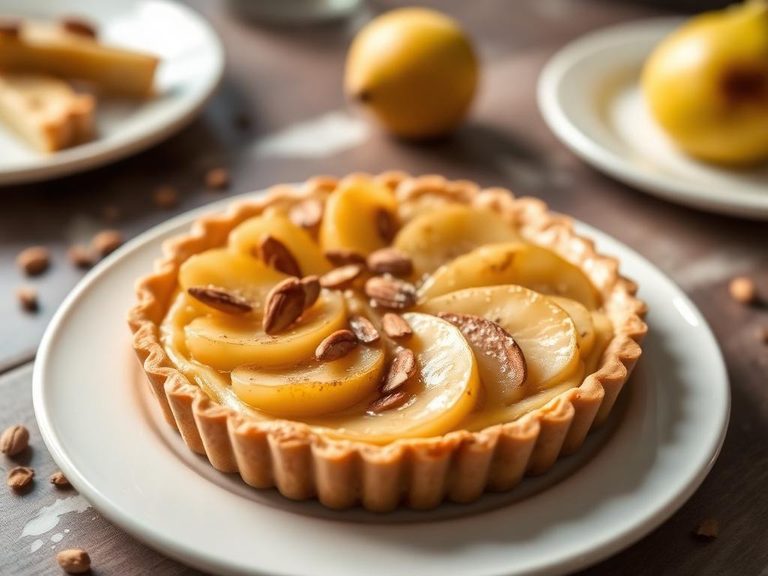
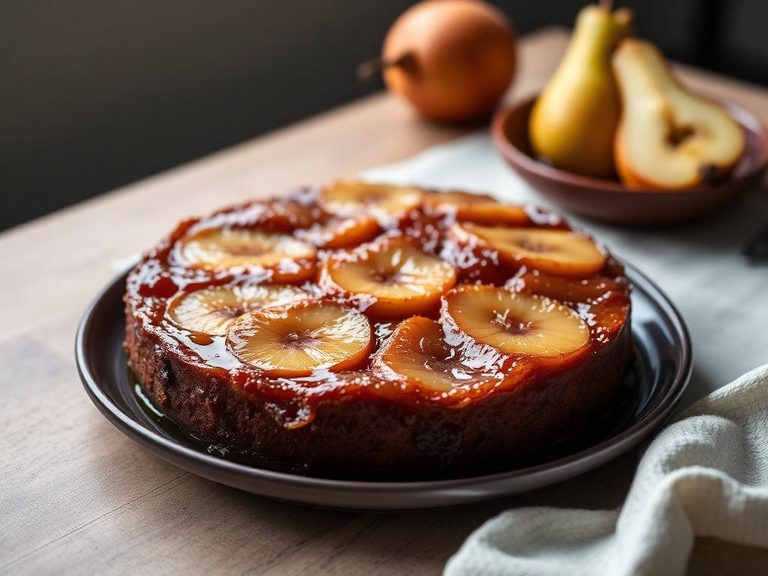
People adore the Bartlett for its reliably sweet, aromatic flavor and melt-in-your-mouth texture when perfectly ripe. It's incredibly versatile, shining in everything from fresh fruit salads to warm, spiced desserts.
⚠️ Watch-outs & how to enjoy it better
The pear's natural sugars can cause a quicker blood sugar rise compared to some fruits. To mitigate this, pair it with a source of protein or healthy fat, like a handful of nuts or a slice of cheese, to slow digestion. Also, be mindful of portion size if managing blood sugar.
Key benefits
- Excellent source of dietary fiber for digestive health
- Very low in fat and a good source of vitamin C
- Provides potassium, which supports heart function
- Naturally cholesterol-free and low in sodium
- Contains antioxidants like quercetin in the skin
🍽️ Popular dishes
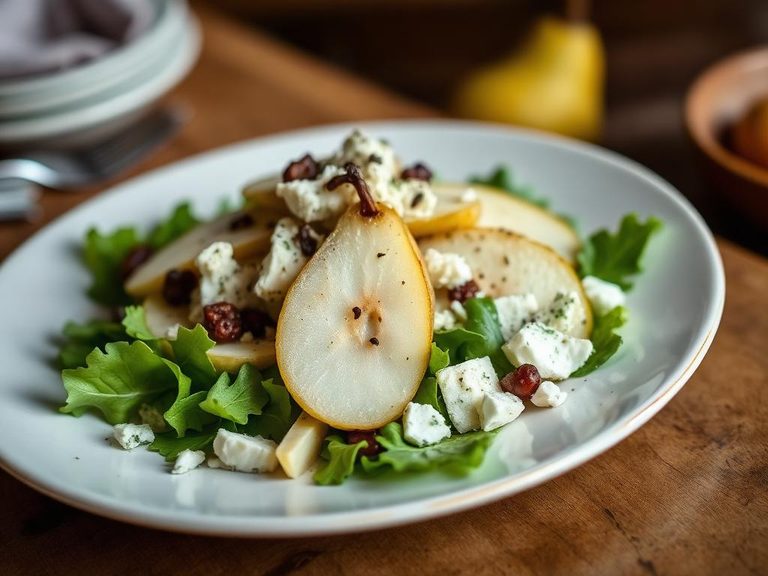
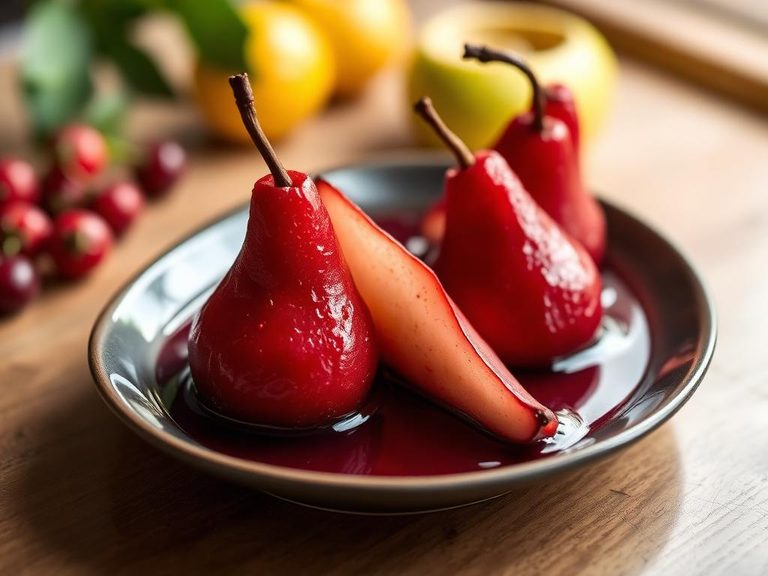
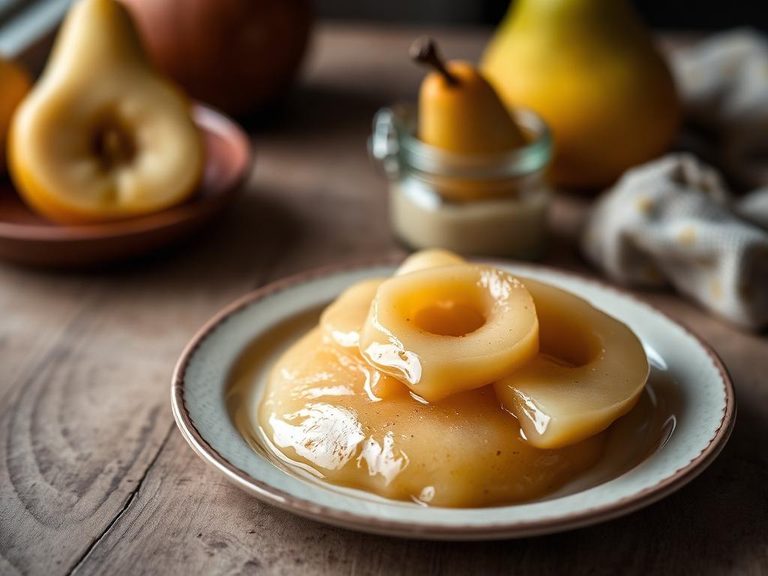
🌍 Where it's eaten
💡 Did you know?
Unlike many fruits, Bartlett pears are picked before they are ripe and must be left to soften at room temperature to develop their signature flavor and texture.
Full nutrition (scales with serving)
| Water | 84.1 g |
| Energy | 57.0 kcal |
| Energy | 238 kj |
| Nitrogen | 0.06 g |
| Protein | 0.38 g |
| Total lipid (fat) | 0.16 g |
| Ash | 0.30 g |
| Carbohydrate, by difference | 15.1 g |
| Fiber, total dietary | 3.1 g |
| Fiber, soluble | 0.30 g |
| Fiber, insoluble | 2.8 g |
| Sugars, Total | 9.7 g |
| Sucrose | 0.43 g |
| Glucose | 2.5 g |
| Fructose | 6.8 g |
| Lactose | 0.00 g |
| Maltose | 0.00 g |
| Galactose | 0.00 g |
| Calcium, Ca | 8.0 mg |
| Iron, Fe | 0.17 mg |
| Magnesium, Mg | 5.7 mg |
| Phosphorus, P | 10.0 mg |
| Potassium, K | 87.0 mg |
| Sodium, Na | 7.0 mg |
| Zinc, Zn | 0.07 mg |
| Copper, Cu | 0.07 mg |
| Manganese, Mn | 0.03 mg |
| Selenium, Se | 0.20 ug |
| Vitamin C, total ascorbic acid | 4.4 mg |
| Thiamin | 0.01 mg |
| Riboflavin | 0.03 mg |
| Niacin | 0.16 mg |
| Pantothenic acid | 0.04 mg |
| Vitamin B-6 | 0.03 mg |
| Folate, total | 6.0 ug |
| Vitamin A, RAE | 1.0 ug |
| Carotene, beta | 8.0 ug |
| Carotene, alpha | 0.00 ug |
| Cryptoxanthin, beta | 3.0 ug |
| Lycopene | 0.00 ug |
| Lutein + zeaxanthin | 48.0 ug |
| Vitamin K (phylloquinone) | 3.8 ug |
| Vitamin K (Dihydrophylloquinone) | 0.00 ug |
| Tryptophan | 0.00 g |
| Threonine | 0.01 g |
| Isoleucine | 0.01 g |
| Leucine | 0.02 g |
| Lysine | 0.02 g |
| Methionine | 0.00 g |
| Cystine | 0.00 g |
| Phenylalanine | 0.01 g |
| Tyrosine | 0.00 g |
| Valine | 0.02 g |
| Arginine | 0.01 g |
| Histidine | 0.00 g |
| Alanine | 0.02 g |
| Aspartic acid | 0.10 g |
| Glutamic acid | 0.04 g |
| Glycine | 0.01 g |
| Proline | 0.02 g |
| Serine | 0.02 g |
FAQ
How do I know when a Bartlett pear is perfectly ripe?
Check the neck: gently press the area near the stem. If it yields slightly to pressure, it's ripe and ready to eat. The skin color will also shift from green to yellow.
Why is my pear hard and gritty?
It's likely underripe. Pears are climacteric fruits, meaning they ripen after being picked. Leave it at room temperature for a few days. Do not refrigerate until ripe, as cold stops the ripening process.
Can I eat the skin of a Bartlett pear?
Yes, the skin is edible and contains a significant amount of the pear's fiber and antioxidants. Simply wash it well before eating.