

Pannetone
Common food

Photo: Wikipedia
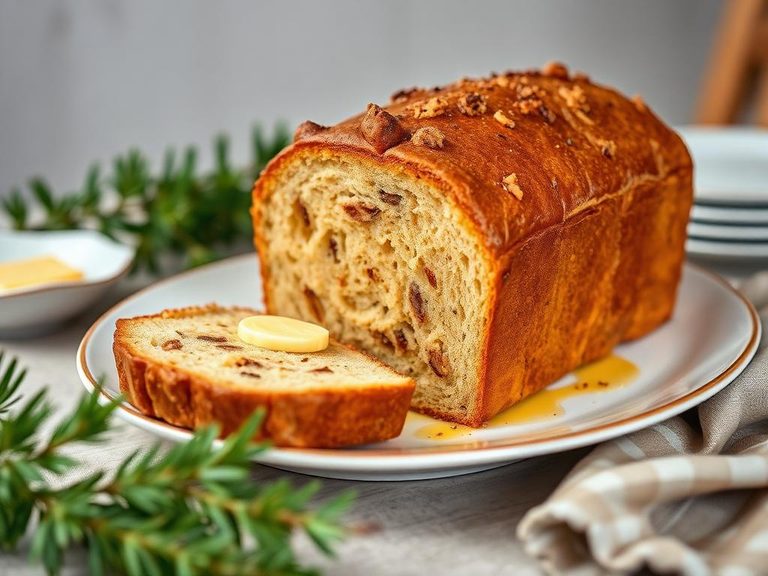
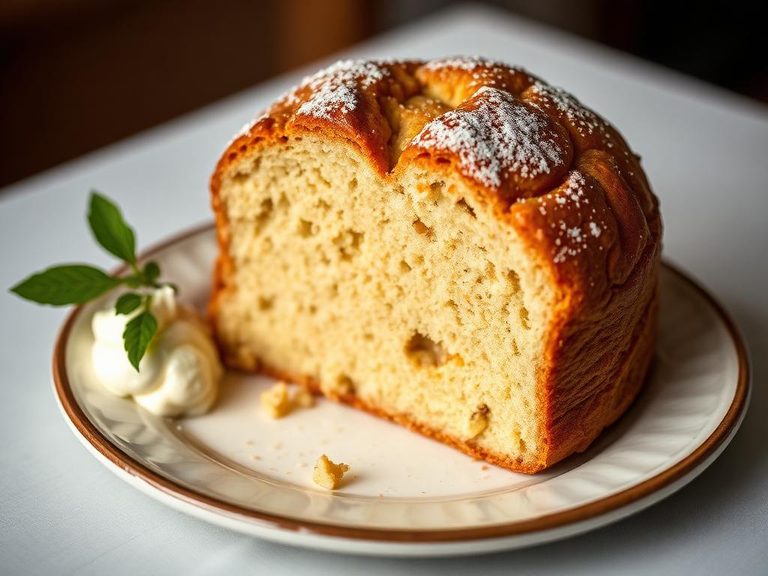
Panettone is a tall, dome-shaped Italian sweet bread, traditionally studded with candied orange, citron, and raisins. Its texture is uniquely light and airy, with a tender, buttery crumb that pulls apart in soft strands. Nutritionally, it's a calorie-dense treat, primarily from carbohydrates and sugar.
Calorie split: 12% protein · 65% carbs · 23% fat
↓ Full nutrition💚 Why it's loved
People adore panettone for its festive, aromatic flavor—a perfect balance of sweet, buttery dough and bright, candied citrus. It's a centerpiece of Italian Christmas and New Year celebrations, symbolizing celebration and shared joy.
⚠️ Watch-outs & how to enjoy it better
Its high sugar and refined carbohydrate content can cause blood sugar spikes, making it less suitable for those managing diabetes. It's also a common source of gluten, eggs, and dairy, posing allergen risks. To counteract, enjoy a small slice (about 100g) alongside a source of protein or healthy fat like a handful of nuts or a piece of cheese, which can help slow sugar absorption.
Key benefits
- Provides quick energy from carbohydrates
- Contains some protein from wheat flour and eggs
- Source of dietary fiber, especially when made with whole wheat or filled with fruit
- Cultural staple for holiday celebrations
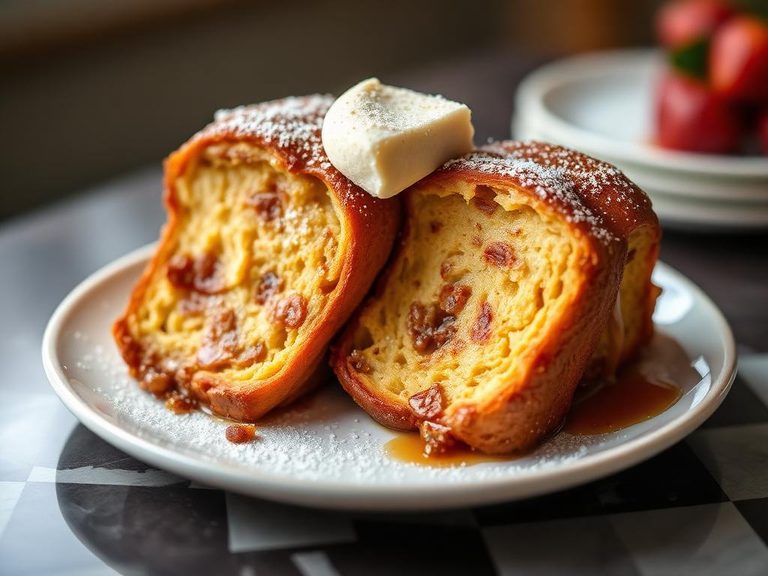
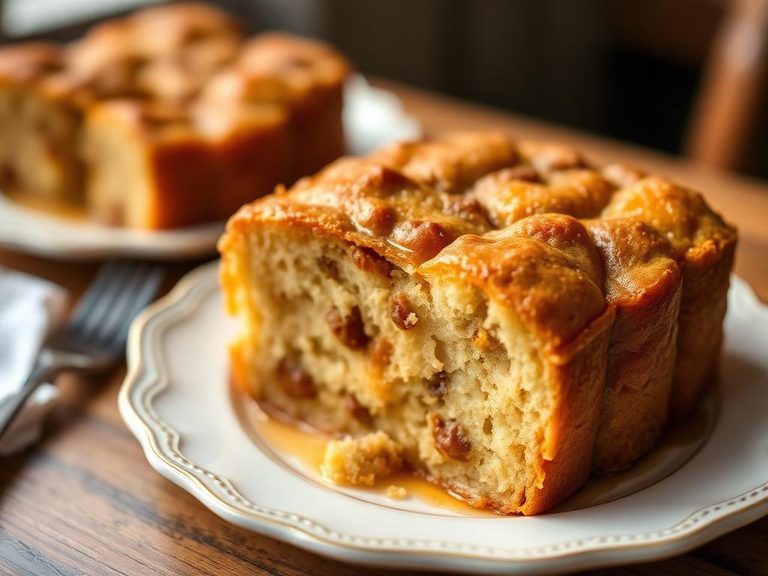
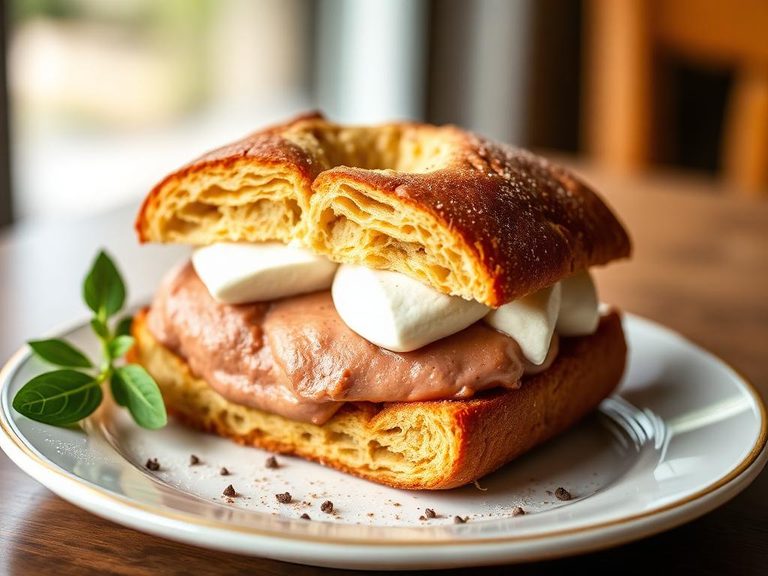
- Can be enjoyed in various creative ways beyond slicing
🍽️ Popular dishes

🌍 Where it's eaten
💡 Did you know?
The traditional, slow natural leavening process for authentic panettone can take up to 72 hours, using a 'lievito madre' (sourdough starter) that is carefully nurtured.
Full nutrition (USDA data · scales with serving)
| Water | 26.5 g |
| Energy | 325 kcal |
| Protein | 9.8 g |
| Total lipid (fat) | 8.4 g |
| Carbohydrate, by difference | 53.8 g |
| Fiber, total dietary | 2.3 g |
| Total Sugars | 17.8 g |
| Calcium, Ca | 55.0 mg |
| Iron, Fe | 2.9 mg |
| Magnesium, Mg | 24.0 mg |
| Phosphorus, P | 127 mg |
| Potassium, K | 165 mg |
| Sodium, Na | 325 mg |
| Zinc, Zn | 0.98 mg |
| Copper, Cu | 0.12 mg |
| Selenium, Se | 18.7 ug |
| Vitamin C, total ascorbic acid | 0.70 mg |
| Thiamin | 0.74 mg |
| Riboflavin | 0.38 mg |
| Niacin | 4.1 mg |
| Vitamin B-6 | 0.12 mg |
| Folate, total | 128 ug |
| Folic acid | 37.0 ug |
| Folate, food | 91.0 ug |
| Folate, DFE | 154 ug |
| Choline, total | 37.4 mg |
| Vitamin B-12 | 0.18 ug |
| Vitamin B-12, added | 0.00 ug |
| Vitamin A, RAE | 73.0 ug |
| Retinol | 71.0 ug |
| Carotene, beta | 17.0 ug |
| Carotene, alpha | 2.0 ug |
| Cryptoxanthin, beta | 2.0 ug |
| Lycopene | 0.00 ug |
| Lutein + zeaxanthin | 77.0 ug |
| Vitamin E (alpha-tocopherol) | 0.43 mg |
| Vitamin E, added | 0.00 mg |
| Vitamin D (D2 + D3) | 0.50 ug |
| Vitamin K (phylloquinone) | 0.90 ug |
| Alcohol, ethyl | 0.00 g |
| Caffeine | 0.00 mg |
| Theobromine | 0.00 mg |
Fat & fatty acid profile (per 100g)
| Fatty acids, total saturated | 4.0 g |
| SFA 4:0 | 0.15 g |
| SFA 6:0 | 0.11 g |
| SFA 8:0 | 0.06 g |
| SFA 10:0 | 0.15 g |
| SFA 12:0 | 0.17 g |
| SFA 14:0 | 0.55 g |
| SFA 16:0 | 2.0 g |
| SFA 18:0 | 0.67 g |
| Fatty acids, total monounsaturated | 1.9 g |
| MUFA 16:1 | 0.19 g |
| MUFA 18:1 | 1.7 g |
| MUFA 20:1 | 0.01 g |
| MUFA 22:1 | 0.00 g |
| Fatty acids, total polyunsaturated | 0.70 g |
| PUFA 18:2 | 0.64 g |
| PUFA 18:3 | 0.05 g |
| PUFA 18:4 | 0.00 g |
| PUFA 20:4 | 0.03 g |
| PUFA 20:5 n-3 (EPA) | 0.00 g |
| PUFA 22:5 n-3 (DPA) | 0.00 g |
| PUFA 22:6 n-3 (DHA) | 0.01 g |
| Cholesterol | 61.0 mg |
FAQ
What is the difference between panettone and pandoro?
Panettone is from Milan and contains candied fruits and raisins, while pandoro is from Verona and is a plain, star-shaped sweet bread, often dusted with powdered sugar.
How should I store leftover panettone?
Wrap it tightly in plastic wrap or store in an airtight container at room temperature for up to a week. For longer storage, freeze slices wrapped individually for up to 3 months.
Can I make panettone at home?
Yes, but it's an advanced baking project due to the long fermentation and specific shaping required. Many bakers use a special paper mold to help it rise tall.
Nutrient density (calculated · NRF9.3)
Nutrient Rich Foods index: beneficial nutrients (protein, fiber, vitamins, minerals) minus saturated fat, added sugar & sodium, per 100 kcal.
NRF9.3 index — Fulgoni, Keast & Drewnowski, 2009. Computed from USDA nutrients.
Weight-loss friendliness (composite index)
Energy density 3.25 kcal/g · 12% calories from protein · 2.3 g fiber · 17.8 g sugar per 100 g.
Composite of energy density (Rolls et al., 1999), protein & fiber satiety, minus sugar. A calculated heuristic — ranks satiety-per-calorie, not a clinical measure.
Dietary load (calculated from USDA values)
Potential renal acid load. Positive = acid-forming, negative = alkaline-forming.
Sodium-to-potassium ratio: 1.97 (lower is better — aim for ≤ 1)
Sodium:potassium per WHO potassium guidance. Computed from USDA nutrients.