

Pakora
Common food

Photo: Wikipedia
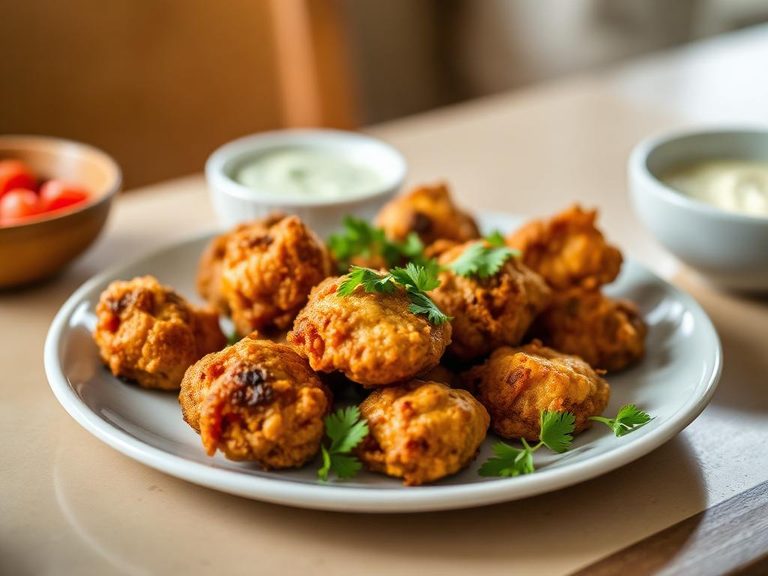
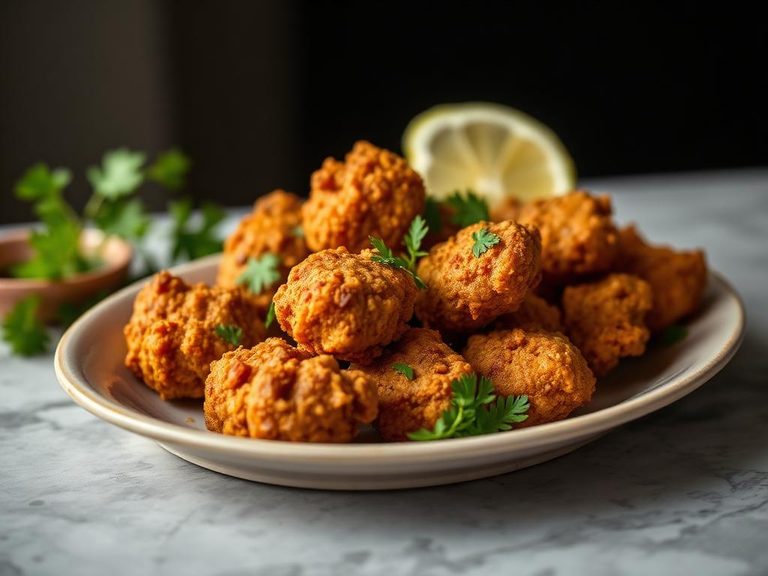
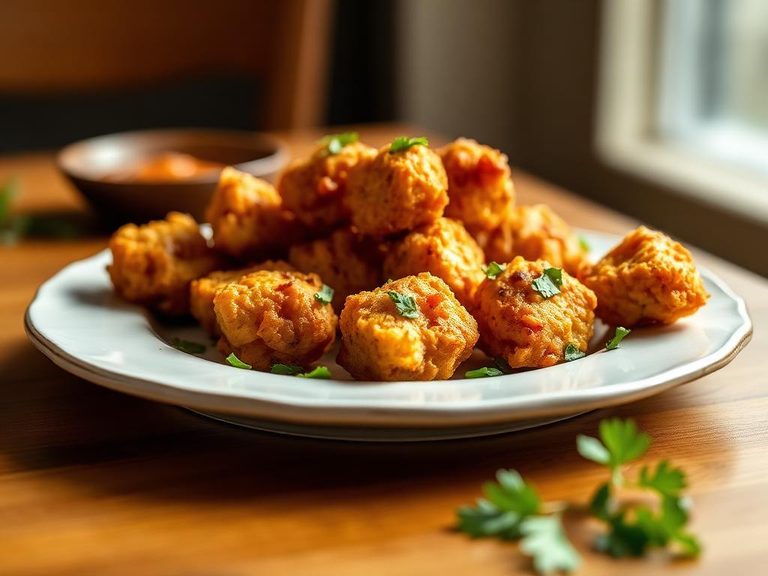
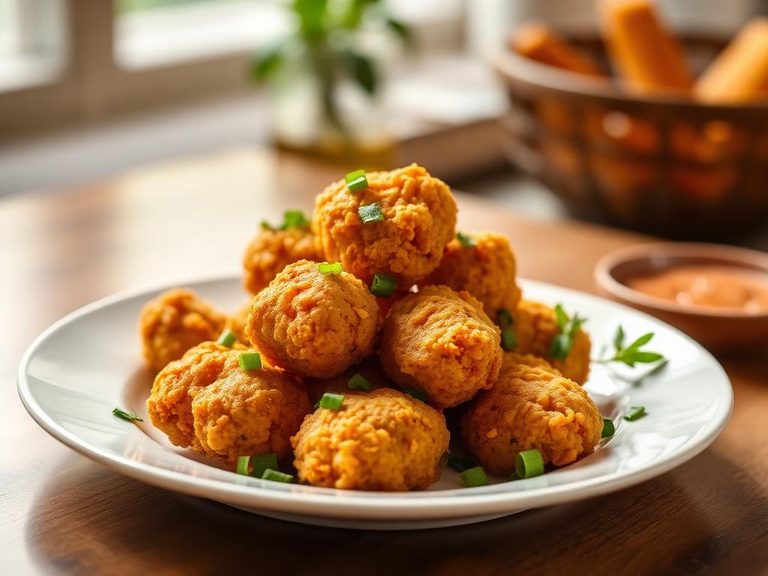
Pakora is a golden, crispy fritter made by dipping vegetables or other ingredients in a spiced chickpea flour batter and deep-frying them to a satisfying crunch. The exterior shatters to reveal a tender, steamy interior, with flavors that are savory, earthy, and warmly spiced. Despite its indulgent texture, it offers a decent source of plant-based protein and dietary fiber from its core ingredient, besan (chickpea flour).
Calorie split: 15% protein · 51% carbs · 34% fat
↓ Full nutrition💚 Why it's loved
People love pakora for its irresistible contrast of a shatteringly crisp, spiced shell and a soft, savory center, making it the ultimate comfort snack. It's a beloved staple of South Asian cuisine, deeply tied to monsoon rains, street food culture, and festive gatherings.
⚠️ Watch-outs & how to enjoy it better
As a deep-fried food, it is high in calories and fats, which can be a concern for those monitoring intake. The batter can cause rapid blood-sugar spikes, especially when eaten alone. To counteract this, pair pakoras with a protein-rich dip like mint-yogurt (raita) or a fiber-rich salad to slow digestion. Opt for baking or air-frying a portion to reduce oil absorption, and practice mindful portion control.
Key benefits
- Good source of plant-based protein from chickpea flour.
- Provides dietary fiber which aids digestion.
- Naturally gluten-free when made with pure chickpea flour.
- Versatile base for incorporating various vegetables.
- Offers a quick, satisfying source of energy.
🍽️ Popular dishes
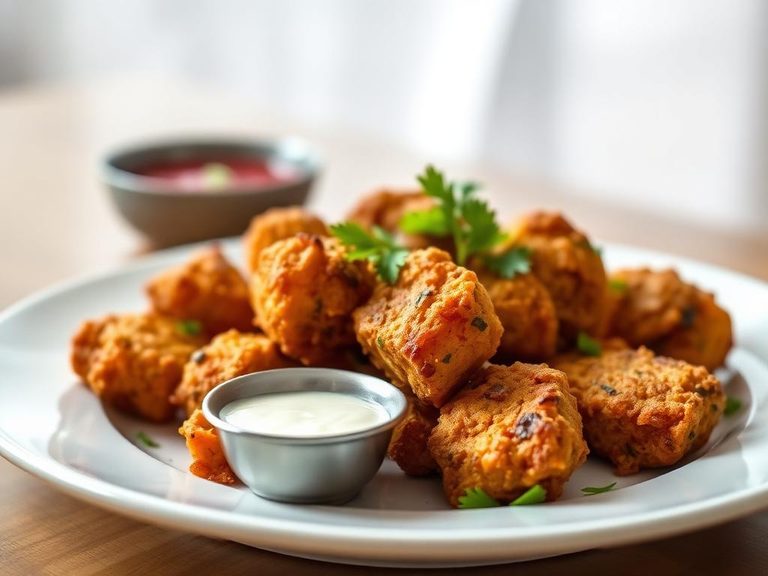
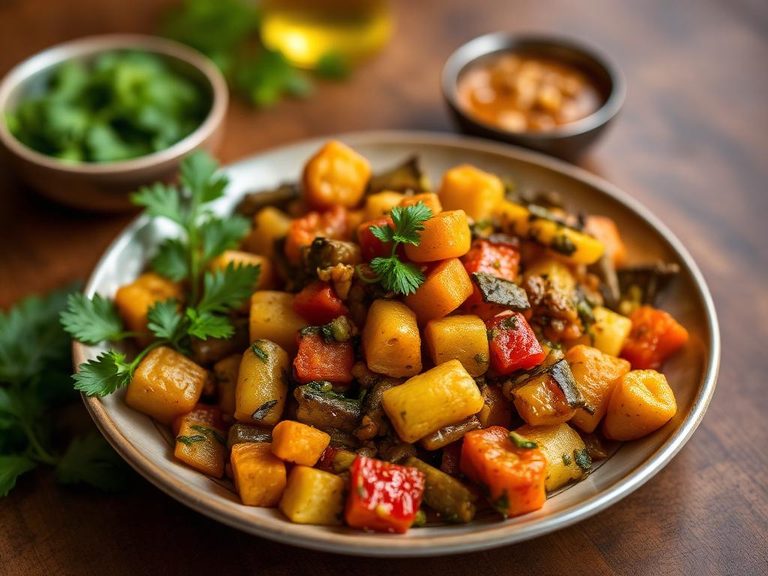
🌍 Where it's eaten
💡 Did you know?
The word 'pakora' is derived from the Sanskrit word 'pakvavata,' meaning a cooked, fried morsel, highlighting its ancient roots in the subcontinent.
Full nutrition (USDA data · scales with serving)
| Water | 72.3 g |
| Energy | 125 kcal |
| Protein | 4.9 g |
| Total lipid (fat) | 4.8 g |
| Carbohydrate, by difference | 16.2 g |
| Fiber, total dietary | 3.2 g |
| Total Sugars | 3.0 g |
| Calcium, Ca | 19.0 mg |
| Iron, Fe | 1.1 mg |
| Magnesium, Mg | 22.0 mg |
| Phosphorus, P | 64.0 mg |
| Potassium, K | 214 mg |
| Sodium, Na | 380 mg |
| Zinc, Zn | 0.67 mg |
| Copper, Cu | 0.17 mg |
| Selenium, Se | 0.10 ug |
| Vitamin C, total ascorbic acid | 3.5 mg |
| Thiamin | 0.12 mg |
| Riboflavin | 0.06 mg |
| Niacin | 0.45 mg |
| Vitamin B-6 | 0.15 mg |
| Folate, total | 129 ug |
| Folic acid | 0.00 ug |
| Folate, food | 129 ug |
| Folate, DFE | 129 ug |
| Choline, total | 25.0 mg |
| Vitamin B-12 | 0.00 ug |
| Vitamin B-12, added | 0.00 ug |
| Vitamin A, RAE | 3.0 ug |
| Retinol | 0.00 ug |
| Carotene, beta | 29.0 ug |
| Carotene, alpha | 3.0 ug |
| Cryptoxanthin, beta | 4.0 ug |
| Lycopene | 0.00 ug |
| Lutein + zeaxanthin | 13.0 ug |
| Vitamin E (alpha-tocopherol) | 0.87 mg |
| Vitamin E, added | 0.00 mg |
| Vitamin D (D2 + D3) | 0.00 ug |
| Vitamin K (phylloquinone) | 7.3 ug |
| Alcohol, ethyl | 0.00 g |
| Caffeine | 0.00 mg |
| Theobromine | 0.00 mg |
Fat & fatty acid profile (per 100g)
| Fatty acids, total saturated | 0.60 g |
| SFA 4:0 | 0.00 g |
| SFA 6:0 | 0.00 g |
| SFA 8:0 | 0.00 g |
| SFA 10:0 | 0.00 g |
| SFA 12:0 | 0.00 g |
| SFA 14:0 | 0.00 g |
| SFA 16:0 | 0.45 g |
| SFA 18:0 | 0.12 g |
| Fatty acids, total monounsaturated | 1.7 g |
| MUFA 16:1 | 0.01 g |
| MUFA 18:1 | 1.7 g |
| MUFA 20:1 | 0.02 g |
| MUFA 22:1 | 0.00 g |
| Fatty acids, total polyunsaturated | 1.9 g |
| PUFA 18:2 | 1.7 g |
| PUFA 18:3 | 0.17 g |
| PUFA 18:4 | 0.00 g |
| PUFA 20:4 | 0.00 g |
| PUFA 20:5 n-3 (EPA) | 0.00 g |
| PUFA 22:5 n-3 (DPA) | 0.00 g |
| PUFA 22:6 n-3 (DHA) | 0.00 g |
| Cholesterol | 0.00 mg |
FAQ
What is the main ingredient in pakora batter?
The primary ingredient is besan, which is finely ground chickpea (gram) flour. It gives pakoras their characteristic nutty flavor, golden color, and crisp texture.
Can pakoras be made healthier?
Yes, you can bake or air-fry them using a light spray of oil to significantly reduce fat content. Using a mix of vegetables and adding ingredients like spinach or grated bottle gourd can boost the nutrient profile.
Why are my pakoras not crispy?
The oil temperature is critical; if it's too low, the pakoras absorb excess oil and become soggy. Ensure the oil is hot (around 180°C/350°F) before frying, and don't overcrowd the pan. A pinch of rice flour in the batter can also enhance crispiness.
Nutrient density (calculated · NRF9.3)
Nutrient Rich Foods index: beneficial nutrients (protein, fiber, vitamins, minerals) minus saturated fat, added sugar & sodium, per 100 kcal.
NRF9.3 index — Fulgoni, Keast & Drewnowski, 2009. Computed from USDA nutrients.
Weight-loss friendliness (composite index)
Energy density 1.25 kcal/g · 16% calories from protein · 3.2 g fiber · 3.0 g sugar per 100 g.
Composite of energy density (Rolls et al., 1999), protein & fiber satiety, minus sugar. A calculated heuristic — ranks satiety-per-calorie, not a clinical measure.
Dietary load (calculated from USDA values)
Potential renal acid load. Positive = acid-forming, negative = alkaline-forming.
Sodium-to-potassium ratio: 1.78 (lower is better — aim for ≤ 1)
Sodium:potassium per WHO potassium guidance. Computed from USDA nutrients.