

Oyster sauce
Common food

Photo: Wikipedia
Oyster sauce is a thick, glossy condiment with a deep brown hue, crafted from oyster extracts, sugar, salt, and thickeners. It delivers a powerful umami punch—a savory, slightly sweet, and briny flavor that clings to ingredients, adding a rich, velvety texture to dishes. Nutritionally, it's a low-calorie, low-fat flavor booster, primarily contributing carbohydrates and sodium.
Calorie split: 11% protein · 85% carbs · 4% fat
↓ Full nutrition💚 Why it's loved
People adore oyster sauce for its transformative ability to turn simple stir-fries into deeply savory, restaurant-quality dishes with a single spoonful. It's a cornerstone of Cantonese cooking, valued for its convenience in building complex flavor quickly.
⚠️ Watch-outs & how to enjoy it better
Its high sodium content can contribute to fluid retention and blood pressure concerns. The added sugar, while minimal per serving, can add up in large quantities. Those with shellfish allergies must avoid it entirely. To counteract sodium, use it sparingly as a finishing sauce rather than a cooking base, and pair it with potassium-rich vegetables like broccoli or bok choy to help balance electrolytes.
Key benefits
- Provides intense umami depth, reducing need for added salt or MSG.
- Low in fat and calories, making it a lean flavor enhancer.
- Contains trace minerals like zinc and iron from oyster extracts.
- Versatile across stir-fries, marinades, and dipping sauces.
- Adds complex savory-sweet notes with minimal added sugar.
🍽️ Popular dishes
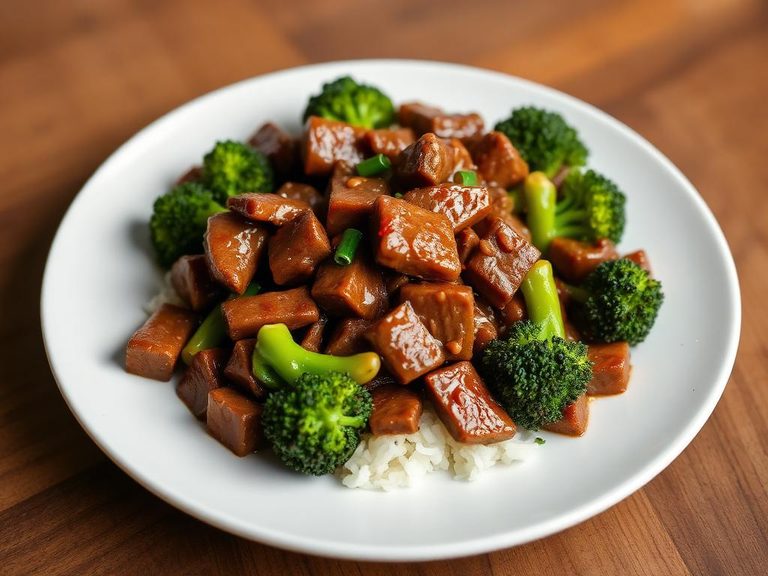
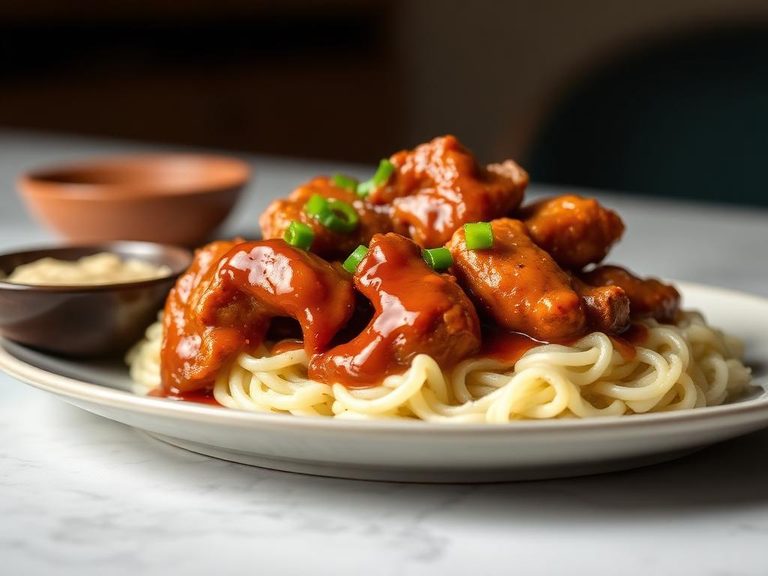
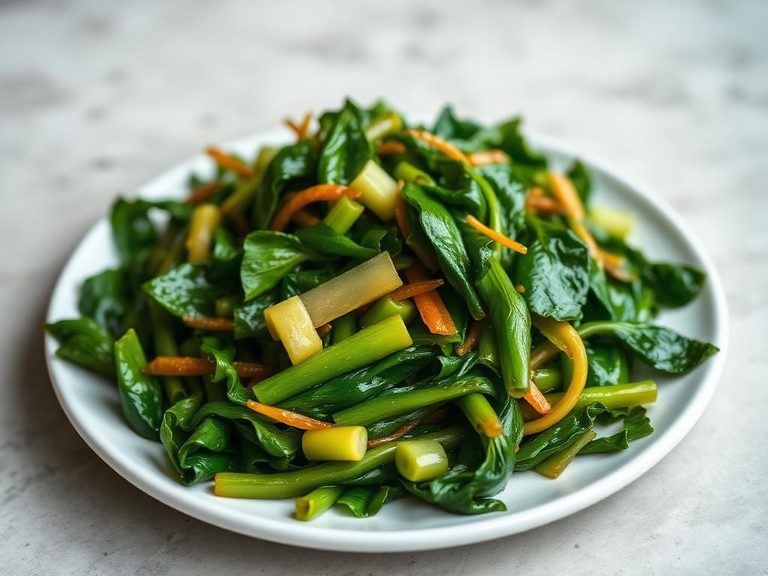
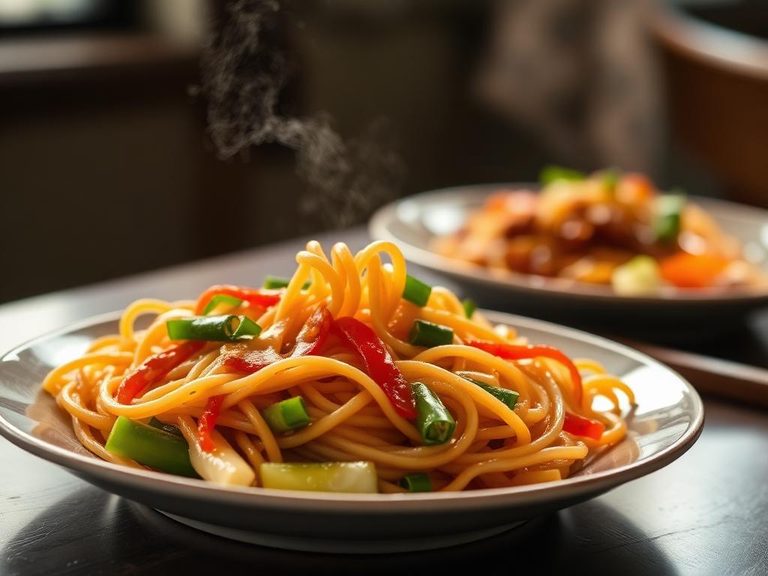
🌍 Where it's eaten
💡 Did you know?
Oyster sauce was reportedly invented by accident in 1888 by Lee Kum Sheung in Guangdong, China, when he left oyster soup simmering for too long and discovered the resulting thick, caramelized paste.
Full nutrition (USDA data · scales with serving)
| Water | 80.0 g |
| Energy | 51.0 kcal |
| Protein | 1.4 g |
| Total lipid (fat) | 0.25 g |
| Carbohydrate, by difference | 10.9 g |
| Fiber, total dietary | 0.30 g |
| Total Sugars | 0.00 g |
| Calcium, Ca | 32.0 mg |
| Iron, Fe | 0.18 mg |
| Magnesium, Mg | 4.0 mg |
| Phosphorus, P | 22.0 mg |
| Potassium, K | 54.0 mg |
| Sodium, Na | 2733 mg |
| Zinc, Zn | 0.09 mg |
| Copper, Cu | 0.15 mg |
| Selenium, Se | 4.4 ug |
| Vitamin C, total ascorbic acid | 0.10 mg |
| Thiamin | 0.01 mg |
| Riboflavin | 0.12 mg |
| Niacin | 1.5 mg |
| Vitamin B-6 | 0.02 mg |
| Folate, total | 15.0 ug |
| Folic acid | 0.00 ug |
| Folate, food | 15.0 ug |
| Folate, DFE | 15.0 ug |
| Choline, total | 3.5 mg |
| Vitamin B-12 | 0.41 ug |
| Vitamin B-12, added | 0.00 ug |
| Vitamin A, RAE | 0.00 ug |
| Retinol | 0.00 ug |
| Carotene, beta | 0.00 ug |
| Carotene, alpha | 0.00 ug |
| Cryptoxanthin, beta | 0.00 ug |
| Lycopene | 0.00 ug |
| Lutein + zeaxanthin | 0.00 ug |
| Vitamin E (alpha-tocopherol) | 0.00 mg |
| Vitamin E, added | 0.00 mg |
| Vitamin D (D2 + D3) | 0.00 ug |
| Vitamin K (phylloquinone) | 0.00 ug |
| Alcohol, ethyl | 0.00 g |
| Caffeine | 0.00 mg |
| Theobromine | 0.00 mg |
Fat & fatty acid profile (per 100g)
| Fatty acids, total saturated | 0.04 g |
| SFA 4:0 | 0.00 g |
| SFA 6:0 | 0.00 g |
| SFA 8:0 | 0.00 g |
| SFA 10:0 | 0.00 g |
| SFA 12:0 | 0.00 g |
| SFA 14:0 | 0.00 g |
| SFA 16:0 | 0.03 g |
| SFA 18:0 | 0.01 g |
| Fatty acids, total monounsaturated | 0.07 g |
| MUFA 16:1 | 0.01 g |
| MUFA 18:1 | 0.07 g |
| MUFA 20:1 | 0.00 g |
| MUFA 22:1 | 0.00 g |
| Fatty acids, total polyunsaturated | 0.07 g |
| PUFA 18:2 | 0.06 g |
| PUFA 18:3 | 0.00 g |
| PUFA 18:4 | 0.00 g |
| PUFA 20:4 | 0.00 g |
| PUFA 20:5 n-3 (EPA) | 0.00 g |
| PUFA 22:5 n-3 (DPA) | 0.00 g |
| PUFA 22:6 n-3 (DHA) | 0.00 g |
| Cholesterol | 0.00 mg |
FAQ
What's the difference between oyster sauce and fish sauce?
Oyster sauce is thick, sweet, and savory, made from oyster extracts. Fish sauce is thin, pungent, and intensely salty, made from fermented fish. They are not interchangeable.
Is oyster sauce vegan?
Traditional oyster sauce is not vegan as it contains oyster extracts. However, vegetarian 'oyster sauce' made from mushrooms (like shiitake) is widely available.
How should I store it after opening?
Once opened, oyster sauce should be tightly sealed and stored in the refrigerator, where it will maintain best quality for up to a year.
Nutrient density (calculated · NRF9.3)
Nutrient Rich Foods index: beneficial nutrients (protein, fiber, vitamins, minerals) minus saturated fat, added sugar & sodium, per 100 kcal.
NRF9.3 index — Fulgoni, Keast & Drewnowski, 2009. Computed from USDA nutrients.
Weight-loss friendliness (composite index)
Energy density 0.51 kcal/g · 11% calories from protein · 0.3 g fiber · 0.0 g sugar per 100 g.
Composite of energy density (Rolls et al., 1999), protein & fiber satiety, minus sugar. A calculated heuristic — ranks satiety-per-calorie, not a clinical measure.
Dietary load (calculated from USDA values)
Potential renal acid load. Positive = acid-forming, negative = alkaline-forming.
Sodium-to-potassium ratio: 50.61 (lower is better — aim for ≤ 1)
Sodium:potassium per WHO potassium guidance. Computed from USDA nutrients.