

Nutritional drink or shake, ready-to-drink (Boost)
Common food

Photo: Wikipedia
Boost is a smooth, creamy, ready-to-drink nutritional shake, typically vanilla or chocolate flavored, designed for convenient calorie and nutrient supplementation. Its mild, sweet taste and milkshake-like texture make it easy to consume. Nutritionally, it's a compact source of calories and protein, often fortified with a wide array of vitamins and minerals.
Calorie split: 17% protein · 68% carbs · 15% fat
↓ Full nutrition💚 Why it's loved
People love Boost for its reliable, mild flavor and the convenience of having a balanced nutritional supplement ready to grab. It's a trusted staple in hospitals, eldercare, and for busy individuals needing a quick, nourishing boost.
⚠️ Watch-outs & how to enjoy it better
The high sugar content (8.44g per 100g) can cause blood sugar spikes, making it a cautious choice for diabetics. To counteract this, pair it with a source of healthy fat or fiber (like a handful of nuts) to slow absorption, or choose a lower-sugar variant if available.
Key benefits
- Provides convenient, calorie-dense nutrition
- Good source of high-quality protein for muscle maintenance
- Fortified with essential vitamins and minerals
- Easy to digest for those with poor appetite
- Supports weight management goals when used as a supplement
🍽️ Popular dishes
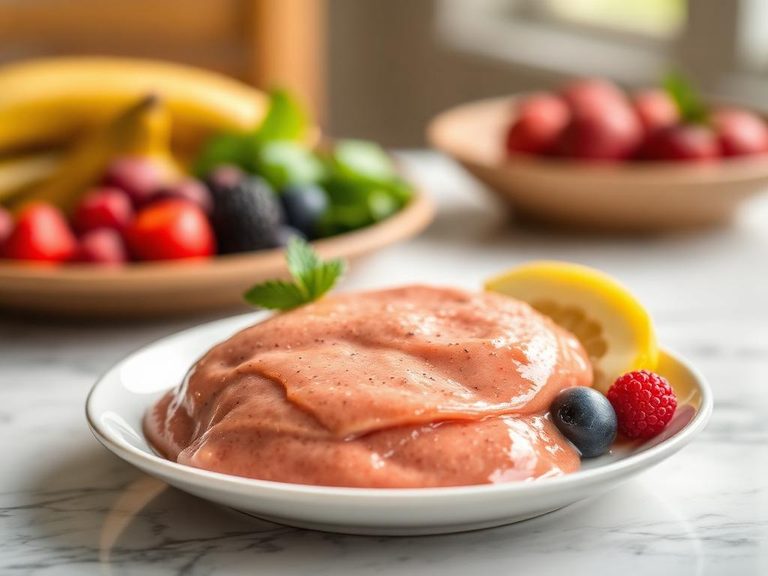
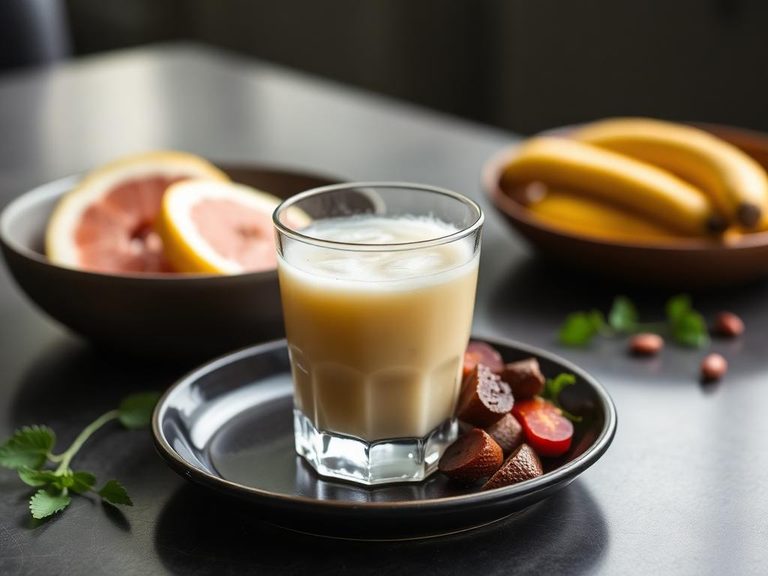

🌍 Where it's eaten
💡 Did you know?
The original Boost formula was developed in the 1980s specifically for patients who needed supplemental nutrition but couldn't tolerate solid food.
Full nutrition (USDA data · scales with serving)
| Water | 75.8 g |
| Energy | 101 kcal |
| Protein | 4.2 g |
| Total lipid (fat) | 1.7 g |
| Carbohydrate, by difference | 17.3 g |
| Fiber, total dietary | 1.3 g |
| Total Sugars | 8.4 g |
| Calcium, Ca | 127 mg |
| Iron, Fe | 1.9 mg |
| Magnesium, Mg | 42.0 mg |
| Phosphorus, P | 127 mg |
| Potassium, K | 245 mg |
| Sodium, Na | 63.0 mg |
| Zinc, Zn | 1.9 mg |
| Copper, Cu | 0.21 mg |
| Selenium, Se | 7.4 ug |
| Vitamin C, total ascorbic acid | 25.3 mg |
| Thiamin | 0.16 mg |
| Riboflavin | 0.18 mg |
| Niacin | 1.7 mg |
| Vitamin B-6 | 0.29 mg |
| Folate, total | 42.0 ug |
| Folic acid | 42.0 ug |
| Folate, food | 0.00 ug |
| Folate, DFE | 72.0 ug |
| Choline, total | 1.6 mg |
| Vitamin B-12 | 0.89 ug |
| Vitamin B-12, added | 0.89 ug |
| Vitamin A, RAE | 158 ug |
| Retinol | 158 ug |
| Carotene, beta | 1.0 ug |
| Carotene, alpha | 0.00 ug |
| Cryptoxanthin, beta | 0.00 ug |
| Lycopene | 0.00 ug |
| Lutein + zeaxanthin | 0.00 ug |
| Vitamin E (alpha-tocopherol) | 5.7 mg |
| Vitamin E, added | 5.2 mg |
| Vitamin D (D2 + D3) | 2.5 ug |
| Vitamin K (phylloquinone) | 16.9 ug |
| Alcohol, ethyl | 0.00 g |
| Caffeine | 0.00 mg |
| Theobromine | 13.0 mg |
Fat & fatty acid profile (per 100g)
| Fatty acids, total saturated | 0.42 g |
| SFA 4:0 | 0.01 g |
| SFA 6:0 | 0.00 g |
| SFA 8:0 | 0.00 g |
| SFA 10:0 | 0.01 g |
| SFA 12:0 | 0.01 g |
| SFA 14:0 | 0.04 g |
| SFA 16:0 | 0.18 g |
| SFA 18:0 | 0.13 g |
| Fatty acids, total monounsaturated | 1.2 g |
| MUFA 16:1 | 0.02 g |
| MUFA 18:1 | 1.1 g |
| MUFA 20:1 | 0.01 g |
| MUFA 22:1 | 0.00 g |
| Fatty acids, total polyunsaturated | 0.06 g |
| PUFA 18:2 | 0.05 g |
| PUFA 18:3 | 0.01 g |
| PUFA 18:4 | 0.00 g |
| PUFA 20:4 | 0.00 g |
| PUFA 20:5 n-3 (EPA) | 0.00 g |
| PUFA 22:5 n-3 (DPA) | 0.00 g |
| PUFA 22:6 n-3 (DHA) | 0.00 g |
| Cholesterol | 4.0 mg |
FAQ
Is Boost a meal replacement?
While it's calorie and nutrient-dense, a standard serving typically doesn't provide enough calories or macronutrients to fully replace a balanced meal. It's best used as a supplement between meals or alongside a smaller meal.
Can I drink Boost if I'm lactose intolerant?
Most Boost products are milk-based and contain lactose. However, some brands offer lactose-free or soy-based versions. Always check the ingredient list for milk derivatives.
How should I store an opened bottle of Boost?
Once opened, any unused portion should be refrigerated immediately and consumed within 24-48 hours for best quality and safety.
Nutrient density (calculated · NRF9.3)
Nutrient Rich Foods index: beneficial nutrients (protein, fiber, vitamins, minerals) minus saturated fat, added sugar & sodium, per 100 kcal.
NRF9.3 index — Fulgoni, Keast & Drewnowski, 2009. Computed from USDA nutrients.
Weight-loss friendliness (composite index)
Energy density 1.01 kcal/g · 17% calories from protein · 1.3 g fiber · 8.4 g sugar per 100 g.
Composite of energy density (Rolls et al., 1999), protein & fiber satiety, minus sugar. A calculated heuristic — ranks satiety-per-calorie, not a clinical measure.
Dietary load (calculated from USDA values)
Potential renal acid load. Positive = acid-forming, negative = alkaline-forming.
Sodium-to-potassium ratio: 0.26 (lower is better — aim for ≤ 1)
Sodium:potassium per WHO potassium guidance. Computed from USDA nutrients.