Miso
Common food

Photo: Wikipedia
Miso is a thick, savory paste made by fermenting soybeans with salt and a fungus called koji. It ranges in color from pale yellow to deep reddish-brown, with a complex, umami-rich flavor that is salty, slightly sweet, and deeply savory. Nutritionally, it's a concentrated source of plant-based protein and provides a notable amount of dietary fiber.
💚 Why it's loved
People love miso for its unparalleled ability to add a deep, savory umami backbone to dishes, transforming simple soups and marinades. Its versatility is celebrated, acting as a flavor base in everything from classic soup to salad dressings and glazes.
⚠️ Watch-outs & how to enjoy it better
Miso is very high in sodium, which can be a concern for those monitoring blood pressure. It is made from soy, a common allergen, and should be avoided by individuals with soy allergies. To counteract sodium, use miso as a finishing flavor rather than a primary salt source, and pair it with potassium-rich foods like vegetables to help balance electrolytes.
Key benefits
- Rich source of plant-based protein
- Contains beneficial probiotics from fermentation
- Provides dietary fiber for digestive health
- Good source of manganese and vitamin K
- Contains bioactive compounds from soy
🍽️ Popular dishes
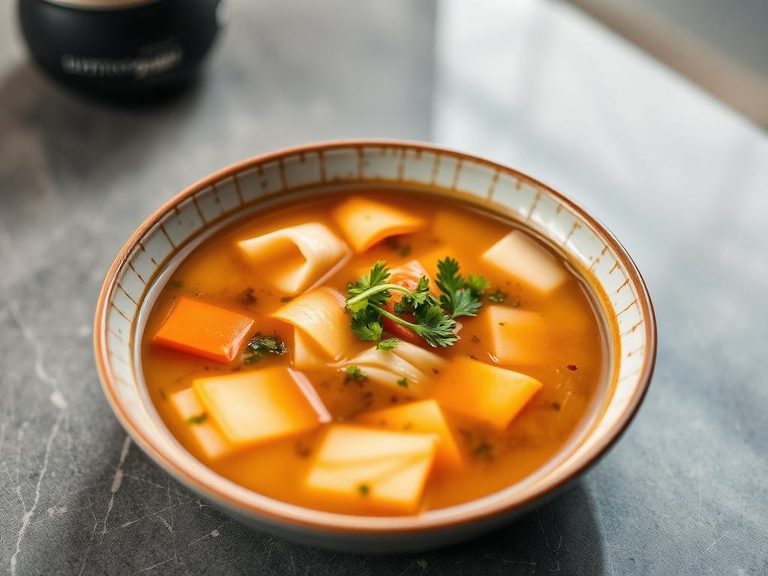
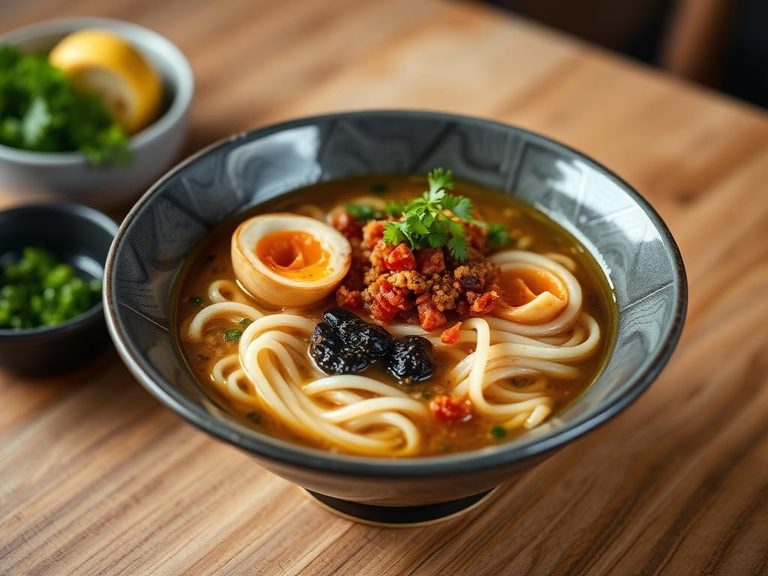
🌍 Where it's eaten
💡 Did you know?
The fermentation process for traditional miso can last from a few months to several years, with longer fermentation typically resulting in a darker color and more complex, intense flavor.
Full nutrition (scales with serving)
| Water | 43.0 g |
| Energy | 198 kcal |
| Protein | 12.8 g |
| Total lipid (fat) | 6.0 g |
| Carbohydrate, by difference | 25.4 g |
| Fiber, total dietary | 5.4 g |
| Total Sugars | 6.2 g |
| Calcium, Ca | 57.0 mg |
| Iron, Fe | 2.5 mg |
| Magnesium, Mg | 48.0 mg |
| Phosphorus, P | 159 mg |
| Potassium, K | 210 mg |
| Sodium, Na | 3728 mg |
| Zinc, Zn | 2.6 mg |
| Copper, Cu | 0.42 mg |
| Selenium, Se | 7.0 ug |
| Vitamin C, total ascorbic acid | 0.00 mg |
| Thiamin | 0.10 mg |
| Riboflavin | 0.23 mg |
| Niacin | 0.91 mg |
| Vitamin B-6 | 0.20 mg |
| Folate, total | 19.0 ug |
| Folic acid | 0.00 ug |
| Folate, food | 19.0 ug |
| Folate, DFE | 19.0 ug |
| Choline, total | 72.2 mg |
| Vitamin B-12 | 0.08 ug |
| Vitamin B-12, added | 0.00 ug |
| Vitamin A, RAE | 4.0 ug |
| Retinol | 0.00 ug |
| Carotene, beta | 52.0 ug |
| Carotene, alpha | 0.00 ug |
| Cryptoxanthin, beta | 0.00 ug |
| Lycopene | 0.00 ug |
| Lutein + zeaxanthin | 0.00 ug |
| Vitamin E (alpha-tocopherol) | 0.01 mg |
| Vitamin E, added | 0.00 mg |
| Vitamin D (D2 + D3) | 0.00 ug |
| Vitamin K (phylloquinone) | 29.3 ug |
| Fatty acids, total saturated | 1.0 g |
| SFA 4:0 | 0.00 g |
| SFA 6:0 | 0.00 g |
| SFA 8:0 | 0.00 g |
| SFA 10:0 | 0.00 g |
| SFA 12:0 | 0.00 g |
| SFA 14:0 | 0.01 g |
| SFA 16:0 | 0.75 g |
| SFA 18:0 | 0.20 g |
| Fatty acids, total monounsaturated | 1.1 g |
| MUFA 16:1 | 0.00 g |
| MUFA 18:1 | 1.0 g |
| MUFA 20:1 | 0.03 g |
| MUFA 22:1 | 0.00 g |
| Fatty acids, total polyunsaturated | 2.9 g |
| PUFA 18:2 | 2.5 g |
| PUFA 18:3 | 0.41 g |
| PUFA 18:4 | 0.00 g |
| PUFA 20:4 | 0.00 g |
| PUFA 20:5 n-3 (EPA) | 0.00 g |
| PUFA 22:5 n-3 (DPA) | 0.00 g |
| PUFA 22:6 n-3 (DHA) | 0.00 g |
| Cholesterol | 0.00 mg |
| Alcohol, ethyl | 0.00 g |
| Caffeine | 0.00 mg |
| Theobromine | 0.00 mg |
FAQ
What's the difference between white and red miso?
White (shiro) miso is fermented for a shorter time, is milder, sweeter, and saltier. Red (aka) miso is fermented longer, resulting in a darker color, stronger, more pungent, and saltier flavor.
Should I boil miso paste?
No. Boiling miso can destroy its delicate probiotics and alter its nuanced flavor. It's best to stir it into hot (not boiling) liquids just before serving to preserve its qualities.
Is miso gluten-free?
Not always. While soybeans are gluten-free, some miso pastes are made with barley (mugi miso) or rice that may be cross-contaminated. Always check the label for certified gluten-free miso if you have celiac disease or gluten sensitivity.