

Kumquat, raw
Common food

Photo: Wikipedia
Kumquats are tiny, oval citrus fruits you eat whole—skin and all. Their thin, sweet-tart peel gives way to a juicy, tangy interior, creating a unique burst of flavor in every bite. Despite their small size, they are a standout source of vitamin C and dietary fiber.
Calorie split: 10% protein · 81% carbs · 10% fat
↓ Full nutrition💚 Why it's loved
People adore kumquats for their explosive, complex flavor—sweet from the peel and tart from the pulp—that makes them a delightful, no-prep snack. They are cherished in many cultures as a symbol of good luck and prosperity, often gifted during Lunar New Year.
⚠️ Watch-outs & how to enjoy it better
The intense tartness of the pulp can be overwhelming for some, and the high fiber content may cause digestive discomfort if eaten in large quantities. To enjoy them, start with one or two to gauge your palate, and consider pairing them with a handful of nuts or cheese to balance the acidity and add protein.
Key benefits
- Excellent source of immune-supporting vitamin C
- High in dietary fiber for digestive health
- Contains antioxidants like flavonoids and carotenoids
- Low in calories, making them a nutrient-dense snack
- Provides minerals like potassium and manganese
🍽️ Popular dishes
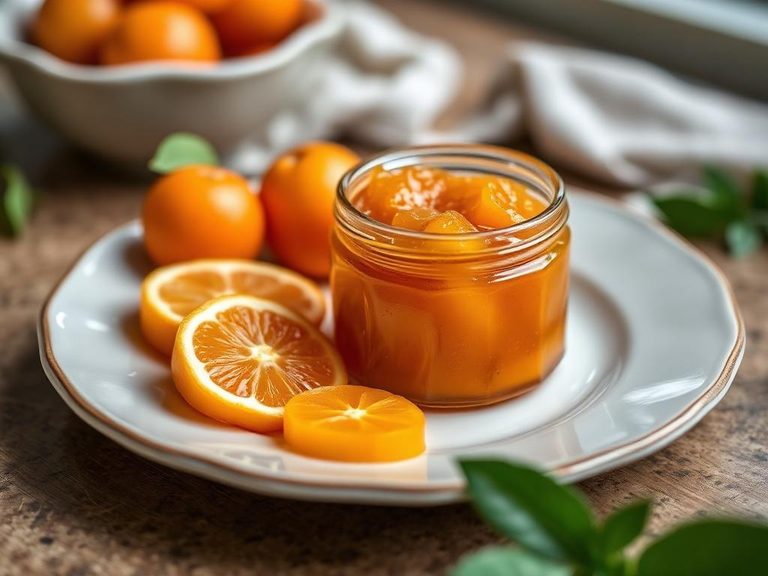
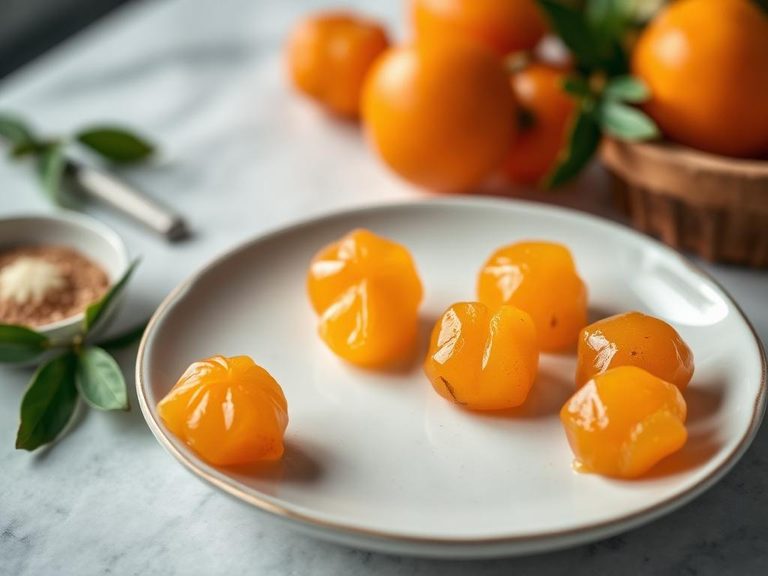
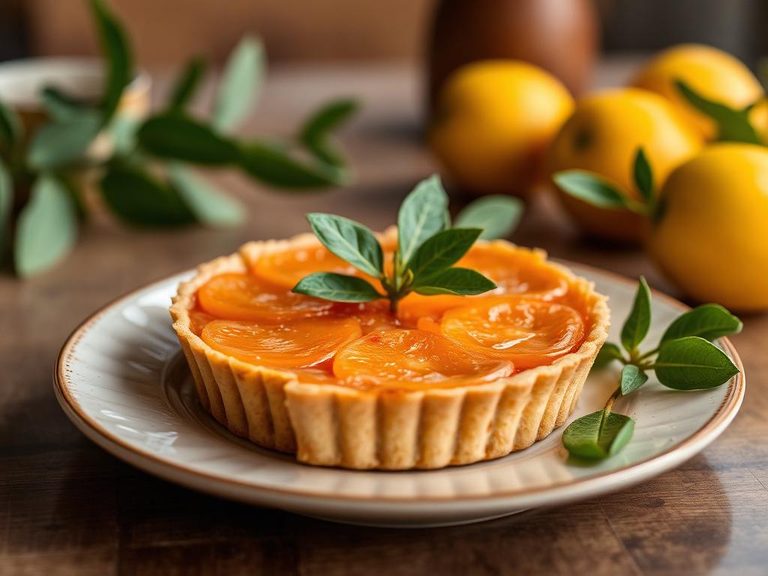
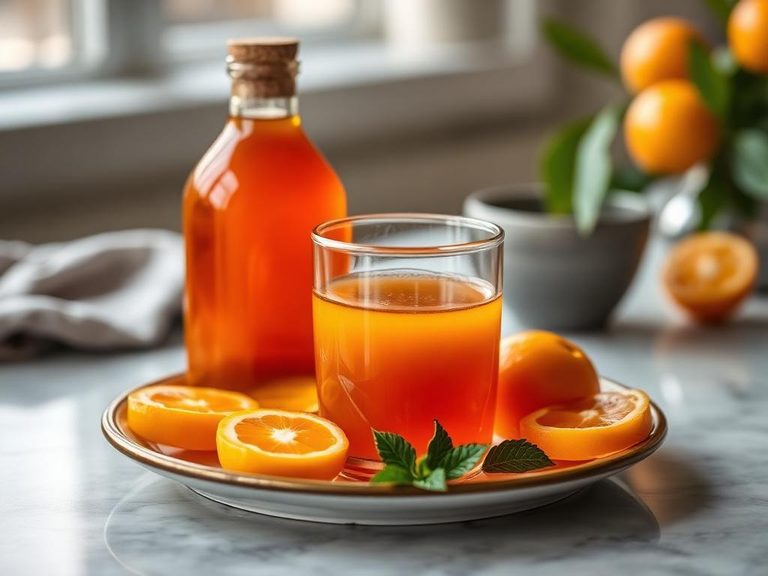
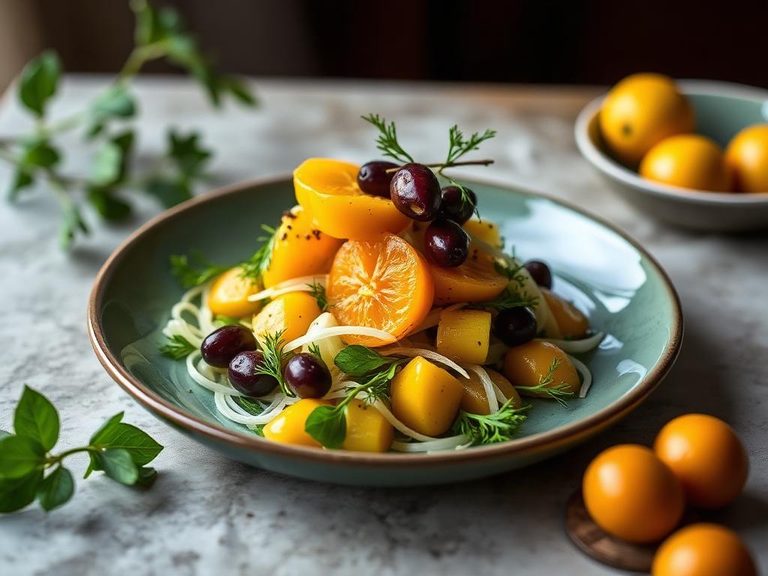
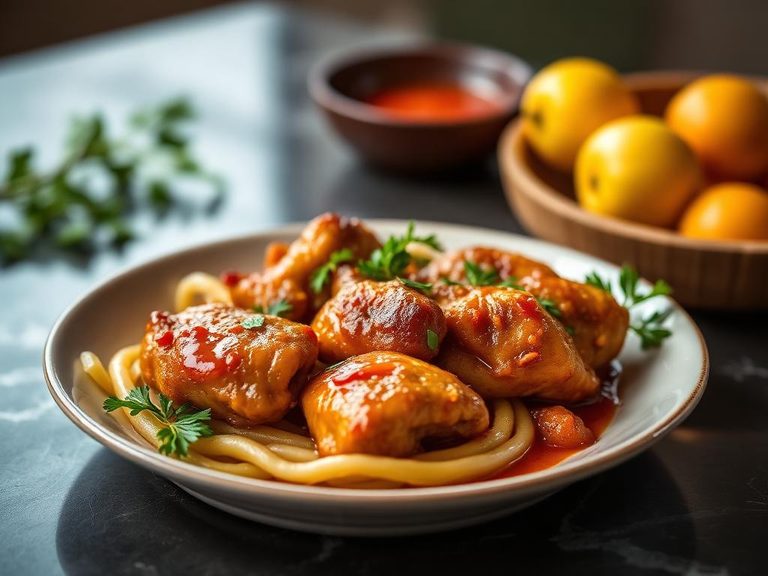
🌍 Where it's eaten
💡 Did you know?
Unlike most citrus, the peel of a kumquat is sweeter than its juice, which is why it's traditionally eaten whole.
Full nutrition (USDA data · scales with serving)
| Water | 80.8 g |
| Energy | 71.0 kcal |
| Protein | 1.9 g |
| Total lipid (fat) | 0.86 g |
| Carbohydrate, by difference | 15.9 g |
| Fiber, total dietary | 6.5 g |
| Total Sugars | 9.4 g |
| Calcium, Ca | 62.0 mg |
| Iron, Fe | 0.86 mg |
| Magnesium, Mg | 20.0 mg |
| Phosphorus, P | 19.0 mg |
| Potassium, K | 186 mg |
| Sodium, Na | 10.0 mg |
| Zinc, Zn | 0.17 mg |
| Copper, Cu | 0.10 mg |
| Selenium, Se | 0.00 ug |
| Vitamin C, total ascorbic acid | 43.9 mg |
| Thiamin | 0.04 mg |
| Riboflavin | 0.09 mg |
| Niacin | 0.43 mg |
| Vitamin B-6 | 0.04 mg |
| Folate, total | 17.0 ug |
| Folic acid | 0.00 ug |
| Folate, food | 17.0 ug |
| Folate, DFE | 17.0 ug |
| Choline, total | 8.4 mg |
| Vitamin B-12 | 0.00 ug |
| Vitamin B-12, added | 0.00 ug |
| Vitamin A, RAE | 15.0 ug |
| Retinol | 0.00 ug |
| Carotene, beta | 0.00 ug |
| Carotene, alpha | 155 ug |
| Cryptoxanthin, beta | 193 ug |
| Lycopene | 0.00 ug |
| Lutein + zeaxanthin | 129 ug |
| Vitamin E (alpha-tocopherol) | 0.15 mg |
| Vitamin E, added | 0.00 mg |
| Vitamin D (D2 + D3) | 0.00 ug |
| Vitamin K (phylloquinone) | 0.00 ug |
| Alcohol, ethyl | 0.00 g |
| Caffeine | 0.00 mg |
| Theobromine | 0.00 mg |
Fat & fatty acid profile (per 100g)
| Fatty acids, total saturated | 0.10 g |
| SFA 4:0 | 0.00 g |
| SFA 6:0 | 0.00 g |
| SFA 8:0 | 0.00 g |
| SFA 10:0 | 0.00 g |
| SFA 12:0 | 0.00 g |
| SFA 14:0 | 0.00 g |
| SFA 16:0 | 0.09 g |
| SFA 18:0 | 0.00 g |
| Fatty acids, total monounsaturated | 0.15 g |
| MUFA 16:1 | 0.02 g |
| MUFA 18:1 | 0.14 g |
| MUFA 20:1 | 0.00 g |
| MUFA 22:1 | 0.00 g |
| Fatty acids, total polyunsaturated | 0.17 g |
| PUFA 18:2 | 0.12 g |
| PUFA 18:3 | 0.05 g |
| PUFA 18:4 | 0.00 g |
| PUFA 20:4 | 0.00 g |
| PUFA 20:5 n-3 (EPA) | 0.00 g |
| PUFA 22:5 n-3 (DPA) | 0.00 g |
| PUFA 22:6 n-3 (DHA) | 0.00 g |
| Cholesterol | 0.00 mg |
FAQ
How do I eat a kumquat?
Simply wash it, roll it between your fingers to soften and release the juices, then pop the whole fruit into your mouth. You can spit out the seeds if you like.
Can I eat the skin of a kumquat?
Yes! The skin is the sweetest part and is meant to be eaten. It's thin, tender, and packed with flavor and nutrients.
How do I store kumquats?
They keep well at room temperature for a few days, but for longer storage (up to 2 weeks), place them in a plastic bag in the refrigerator's crisper drawer.
Nutrient density (calculated · NRF9.3)
Nutrient Rich Foods index: beneficial nutrients (protein, fiber, vitamins, minerals) minus saturated fat, added sugar & sodium, per 100 kcal.
NRF9.3 index — Fulgoni, Keast & Drewnowski, 2009. Computed from USDA nutrients.
Weight-loss friendliness (composite index)
Energy density 0.71 kcal/g · 11% calories from protein · 6.5 g fiber · 9.4 g sugar per 100 g.
Composite of energy density (Rolls et al., 1999), protein & fiber satiety, minus sugar. A calculated heuristic — ranks satiety-per-calorie, not a clinical measure.
Dietary load (calculated from USDA values)
Potential renal acid load. Positive = acid-forming, negative = alkaline-forming.
Sodium-to-potassium ratio: 0.05 (lower is better — aim for ≤ 1)
Sodium:potassium per WHO potassium guidance. Computed from USDA nutrients.