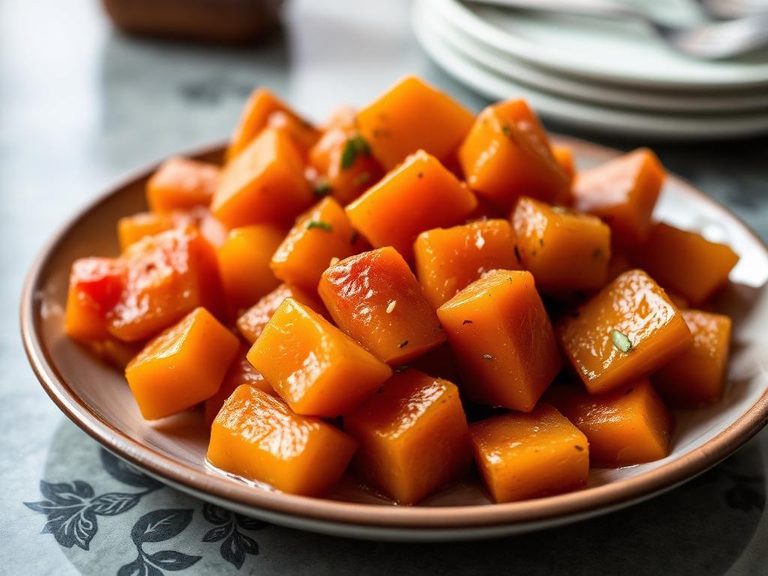
Candied Kumquats
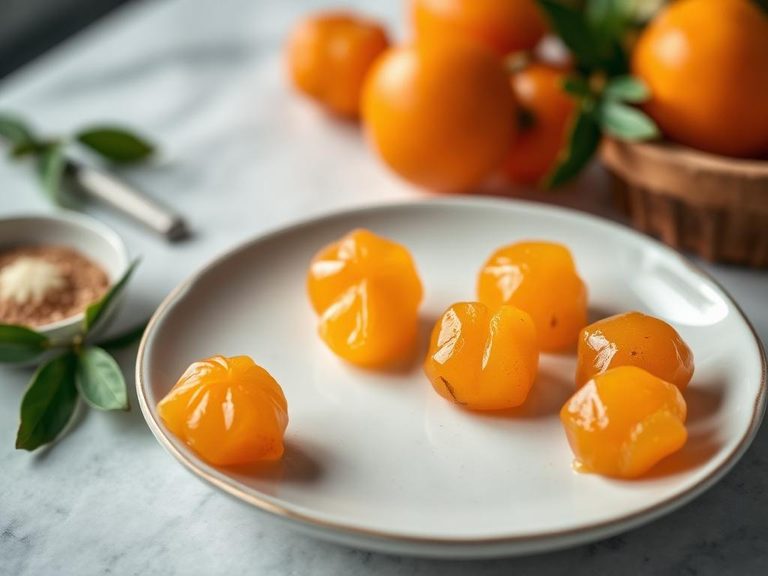
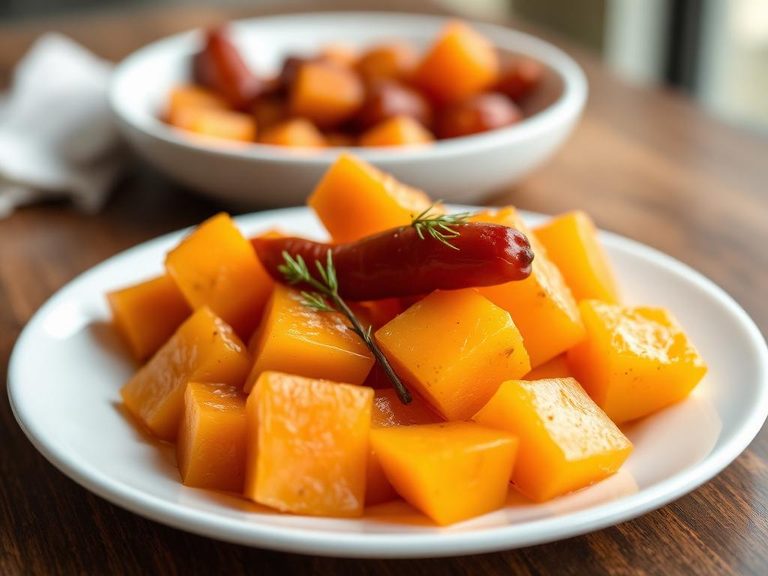
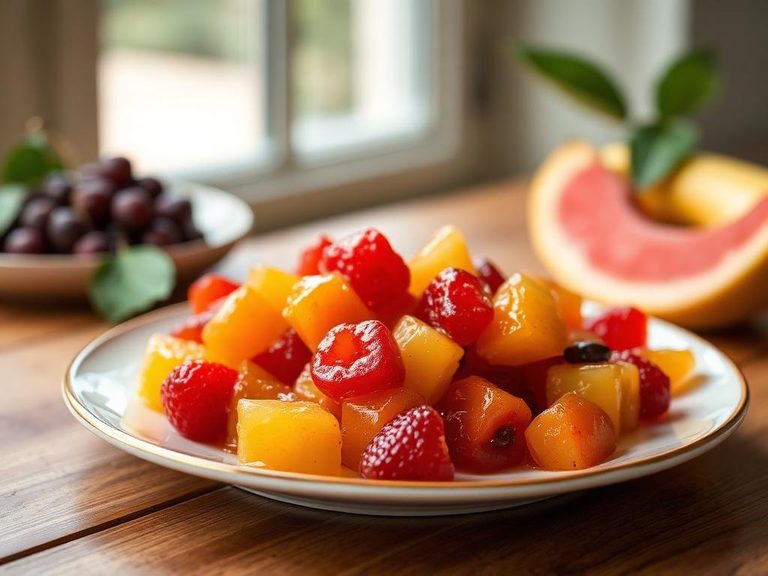
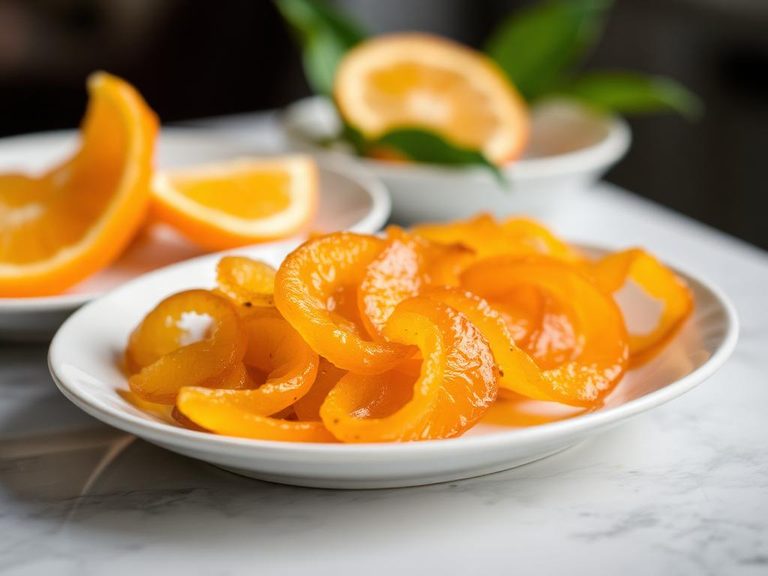
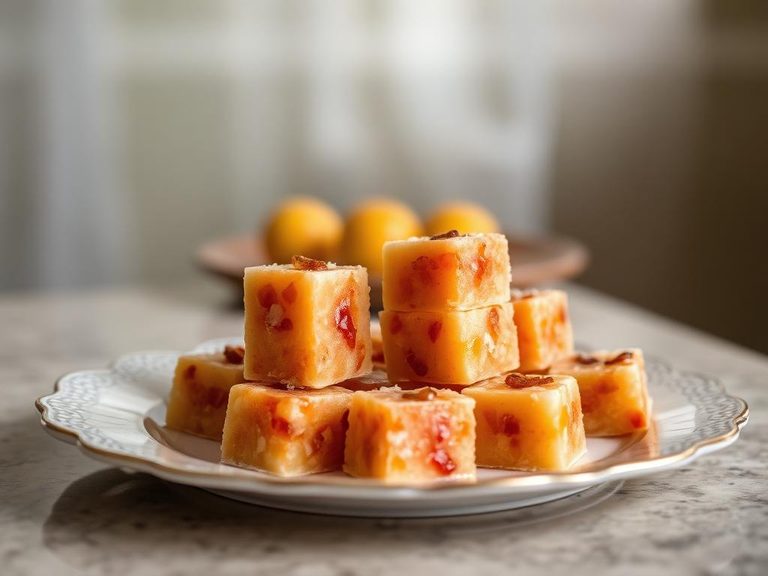
Candied kumquats are small, whole citrus fruits that have been simmered in a sugar syrup until they become translucent, sweet, and slightly chewy. The primary ingredients are fresh kumquats, sugar, and water. This confection is a popular treat and garnish in many East Asian cuisines, particularly in China, where it is often enjoyed during festive seasons like Lunar New Year.
🍽️ Nutrition at a glance
This dish is very high in carbohydrates, primarily from added sugar, and contains negligible fat and protein. It provides a quick energy boost and offers some vitamin C and dietary fiber from the fruit itself, with a typical serving containing roughly 200-250 calories.
Nutrition breakdown
| Calories | 230 kcal |
| Protein | 0.5 g |
| Carbs | 58 g |
| Fat | 0.2 g |
| Fiber | 3 g |
| Sugar | 52 g |
| Sodium | 5 mg |
| Vitamin C | 22 mg |
| Potassium | 180 mg |
| Vitamin A | 120 IU |
| Calcium | 25 mg |
| Iron | 0.3 mg |
| Manganese | 0.1 mg |
| Vitamin B1 (Thiamine) | 0.02 mg |
| Folate | 10 µg |
Per 1 cup (150 g) · estimated, varies by recipe
💡 What's interesting
Culturally, candied kumquats symbolize prosperity and good fortune in Chinese tradition, making them a festive gift. Nutritionally, eating the whole fruit, including the peel, is unique as it preserves the fiber and aromatic oils that are often lost in other preparations.