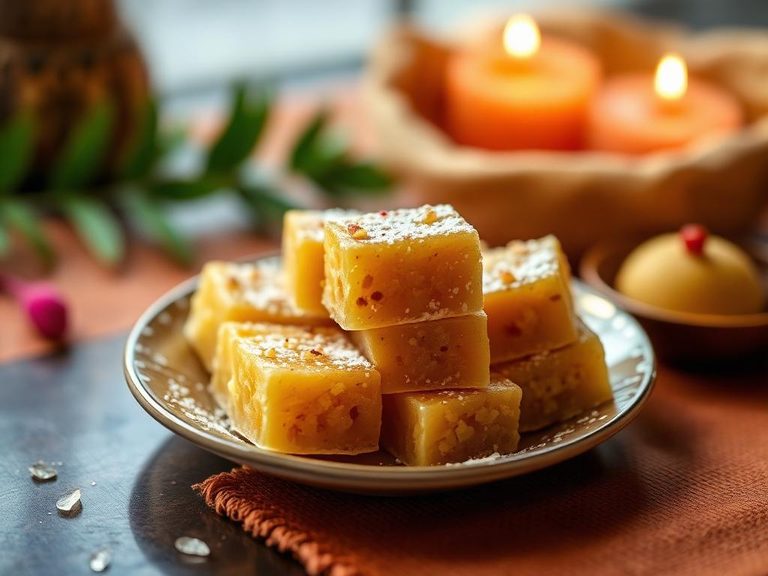
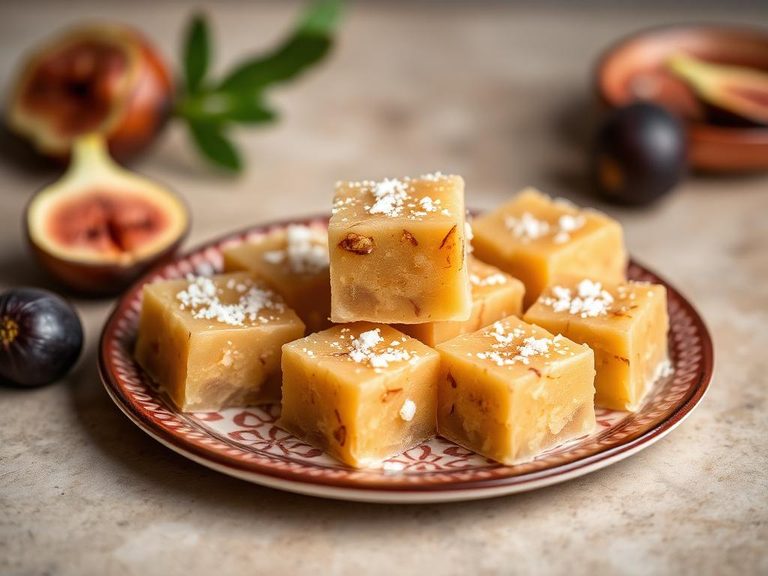
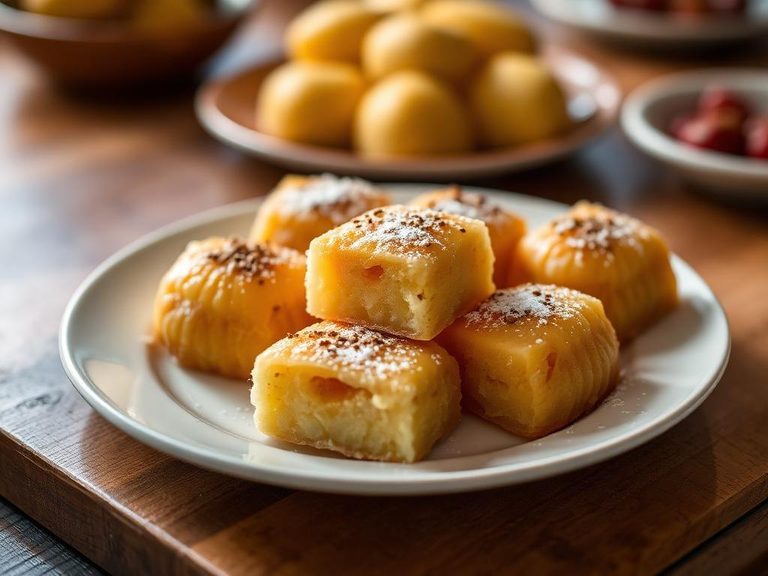
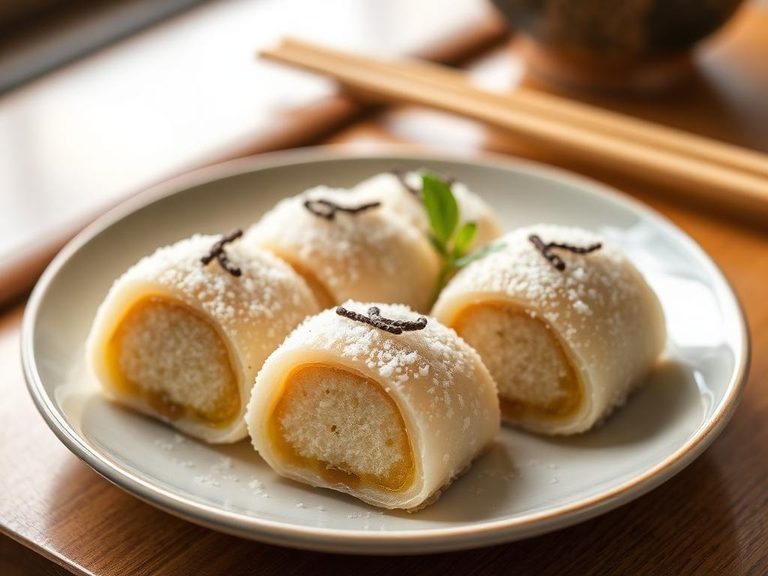
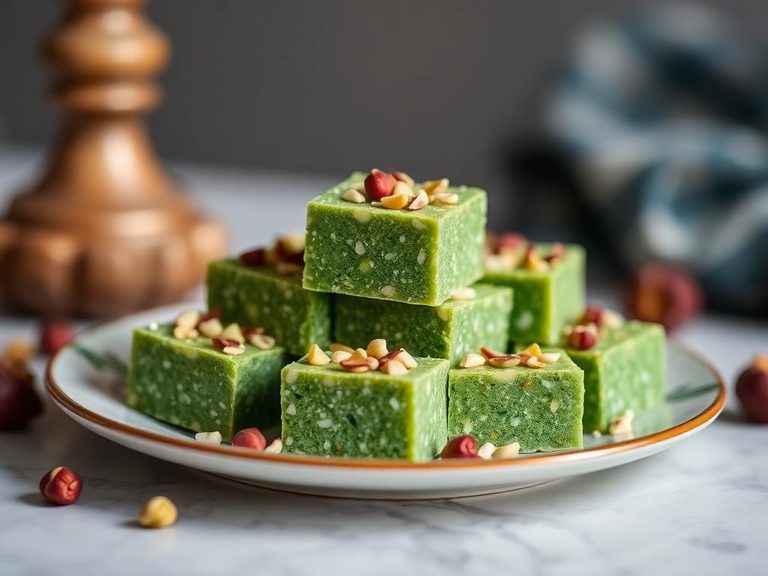
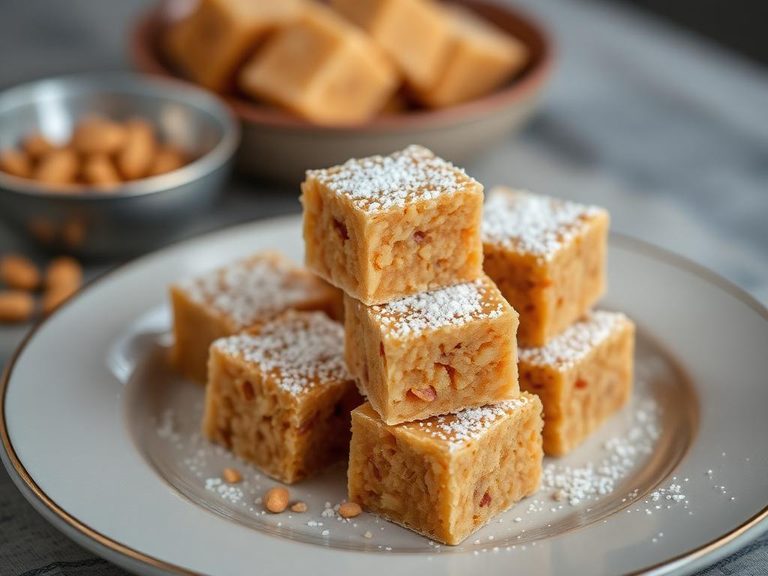
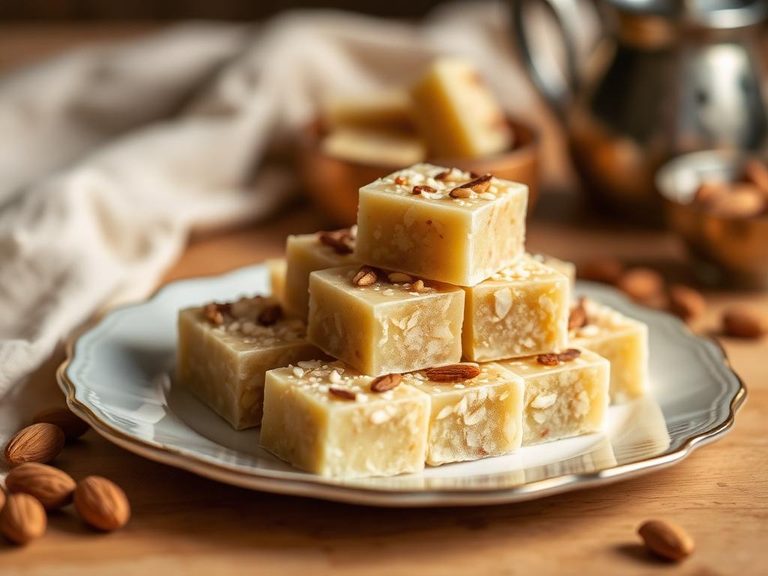
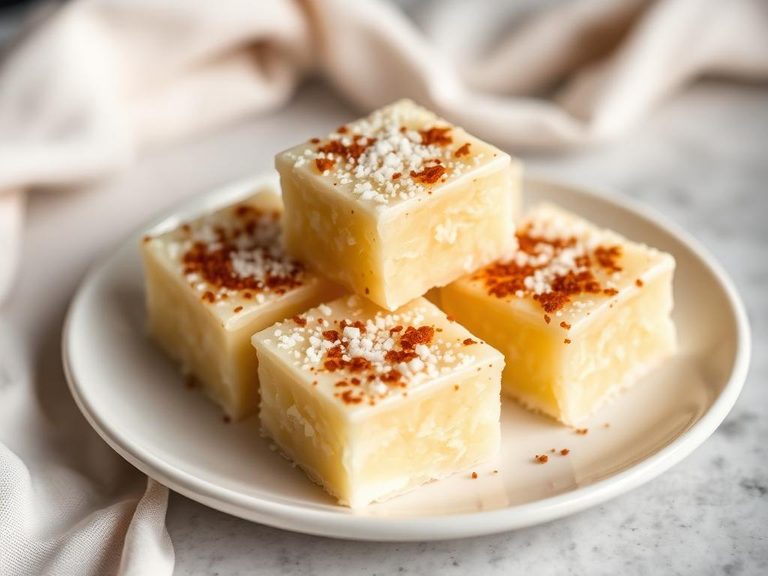
Indian sweets (mithai) like candied fruit barfi
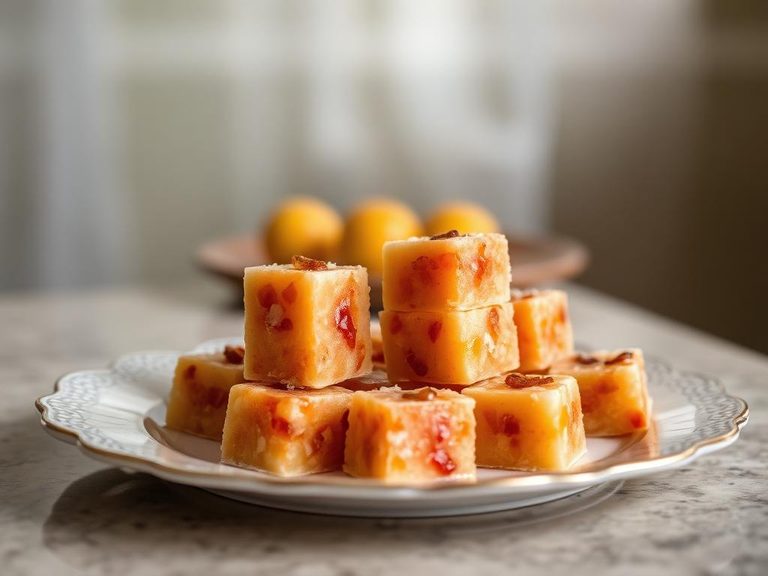
Indian mithai, such as candied fruit barfi, are rich, milk-based confections from the Indian subcontinent. They are typically made by reducing milk to a fudge-like consistency (khoya) and combining it with sugar, ghee, and flavorings like cardamom, saffron, or nuts, with fruit versions incorporating candied or dried fruits. These sweets are integral to celebrations, festivals, and hospitality across South Asia.
🍽️ Nutrition at a glance
Mithai is generally high in carbohydrates from sugar and often high in fat from ghee or nuts, providing quick energy but little protein. A single piece (about 30-50g) can range from 150 to 250 calories, with key nutrients being calcium from milk solids and some vitamins from nuts or fruits.
Nutrition breakdown
| Calories | 180 kcal |
| Protein | 2.5 g |
| Carbs | 30 g |
| Fat | 6 g |
| Fiber | 0.5 g |
| Sugar | 22 g |
| Sodium | 30 mg |
| Calcium | 60 mg |
| Iron | 0.8 mg |
| Magnesium | 15 mg |
| Phosphorus | 50 mg |
| Potassium | 100 mg |
| Vitamin A | 15 µg |
| Vitamin C | 1 mg |
| Vitamin E | 0.3 mg |
Per 1 piece (50 g) · estimated, varies by recipe
💡 What's interesting
Mithai holds deep cultural significance, symbolizing joy and auspiciousness, and is offered during religious ceremonies and festivals like Diwali. Nutritionally, the traditional slow-cooking process (like for barfi) concentrates milk solids, making it a dense source of energy historically valued in agrarian societies.