

Hyacinth beans, mature seeds, cooked, boiled, with salt
Whole food · Legumes and Legume Products

Photo: Wikipedia
Hyacinth beans, also known as lablab or val papdi, are hearty, kidney-shaped legumes with a creamy, starchy texture and a mild, slightly nutty flavor when boiled. Nutritionally, they are a solid source of plant-based protein and complex carbohydrates, offering a satisfying, low-fat foundation for a meal. Their simple, earthy taste makes them a versatile canvas for bold spices and aromatics.
Calorie split: 27% protein · 69% carbs · 4% fat
↓ Full nutrition💚 Why it's loved
People love hyacinth beans for their ability to absorb flavors and their satisfying, hearty texture that holds up well in stews and curries. They are a cultural staple in many cuisines, valued for being a nutritious and economical source of protein.
⚠️ Watch-outs & how to enjoy it better
The listed nutrition profile shows 0g fiber and 0g sugar, which is atypical for whole legumes and suggests this may be a highly processed or canned version; this could lead to quicker blood-sugar spikes compared to whole beans. The 'with salt' preparation means it can be high in sodium, which is a concern for those monitoring blood pressure. To counteract, rinse canned beans thoroughly to reduce sodium, and pair with non-starchy vegetables and a source of healthy fat (like a drizzle of olive oil or a side of yogurt) to slow carbohydrate absorption.
Key benefits
- Excellent source of plant-based protein (8.14g per 100g).
- Provides complex carbohydrates for sustained energy.
- Very low in fat (0.58g per 100g).
- Naturally cholesterol-free and low in sugar.
🍽️ Popular dishes
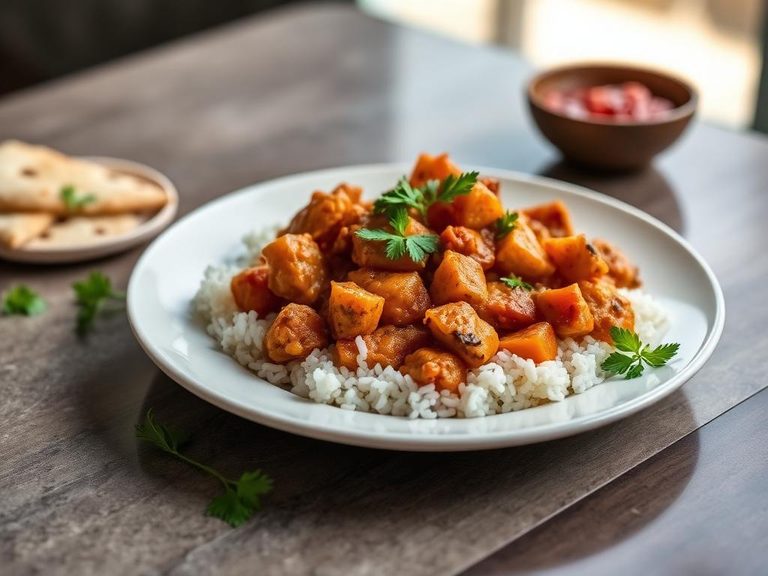 Val Papdi nu Shaak (Indian dry curry)
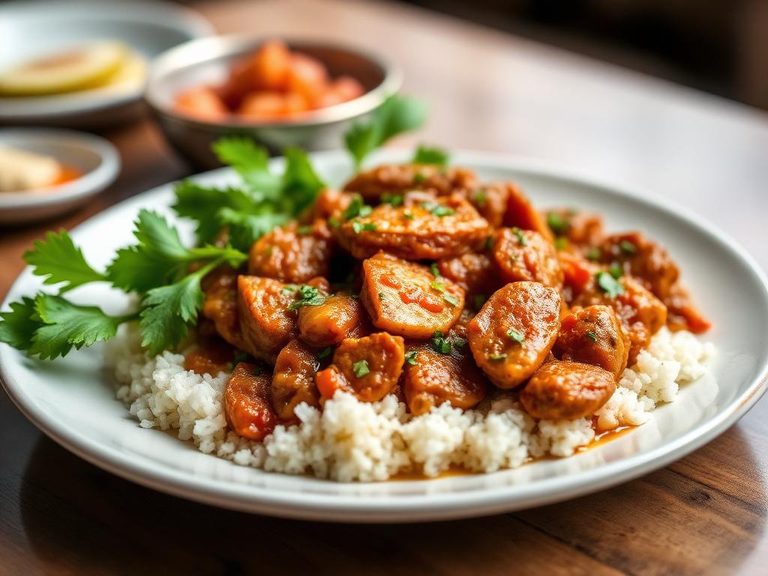 Lobhia Masala (Indian spiced curry)
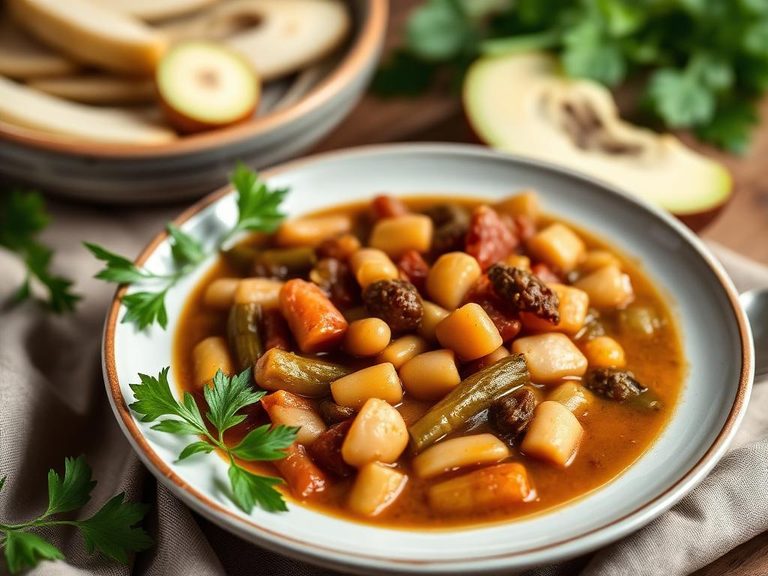 Hyacinth Bean Stew (various regional preparations)
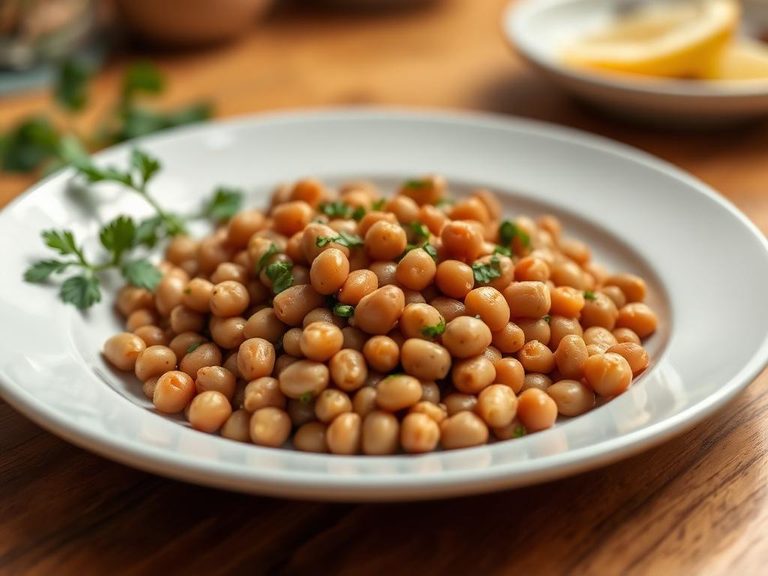 Ful Medames (a variation using hyacinth beans in some Middle Eastern cuisines)
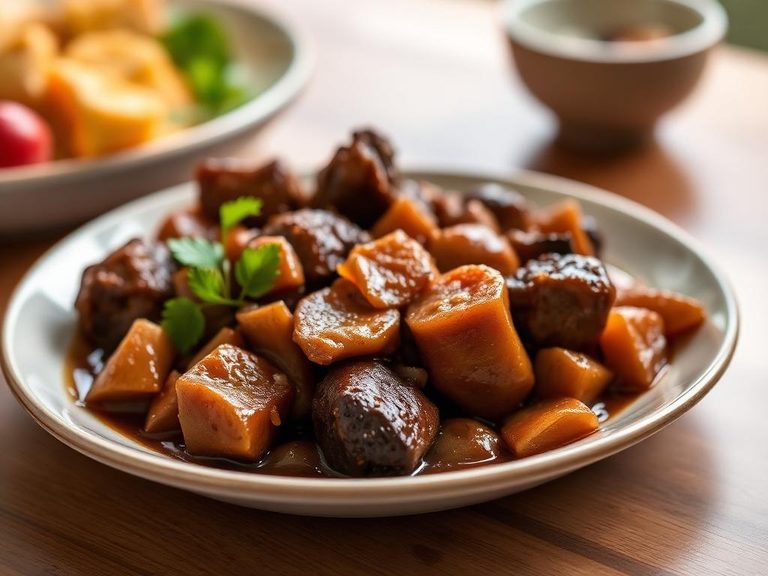 Adobo con Habichuelas (a Filipino bean stew)
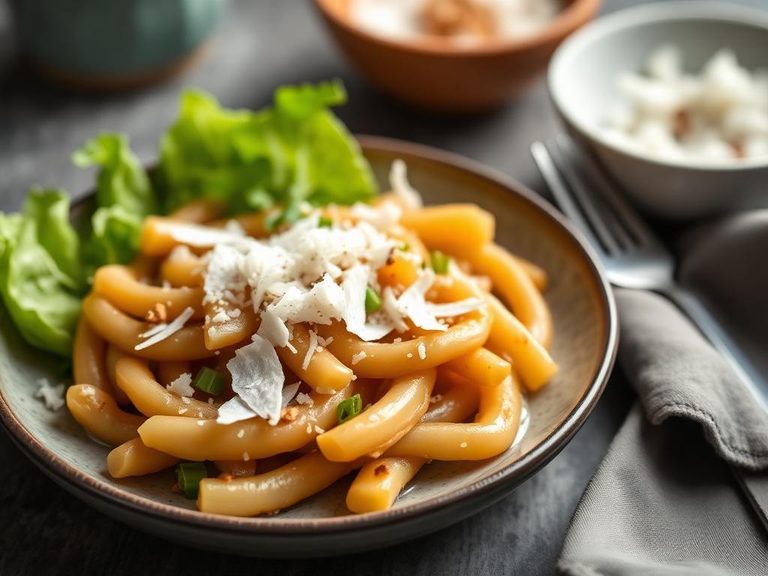 Simmered Hyacinth Beans with Coconut (South Indian style)
🌍 Where it's eaten
💡 Did you know?
The hyacinth bean plant is a vigorous climbing vine that was historically used as an ornamental for its beautiful purple flowers before its edible seeds became widely cultivated.
Full nutrition (USDA data · scales with serving)
| Water | 69.1 g |
| Energy | 117 kcal |
| Energy | 490 kj |
| Protein | 8.1 g |
| Total lipid (fat) | 0.58 g |
| Ash | 1.5 g |
| Carbohydrate, by difference | 20.7 g |
| Calcium, Ca | 40.0 mg |
| Iron, Fe | 4.6 mg |
| Magnesium, Mg | 82.0 mg |
| Phosphorus, P | 120 mg |
| Potassium, K | 337 mg |
| Sodium, Na | 243 mg |
| Zinc, Zn | 2.9 mg |
| Copper, Cu | 0.34 mg |
| Manganese, Mn | 0.48 mg |
| Selenium, Se | 2.8 ug |
| Vitamin C, total ascorbic acid | 0.00 mg |
| Thiamin | 0.27 mg |
| Riboflavin | 0.04 mg |
| Niacin | 0.41 mg |
| Pantothenic acid | 0.32 mg |
| Vitamin B-6 | 0.04 mg |
| Folate, total | 4.0 ug |
| Folic acid | 0.00 ug |
| Folate, food | 4.0 ug |
| Folate, DFE | 4.0 ug |
| Vitamin B-12 | 0.00 ug |
| Vitamin A, RAE | 0.00 ug |
| Retinol | 0.00 ug |
| Vitamin A, IU | 0.00 iu |
| Vitamin D (D2 + D3), International Units | 0.00 iu |
| Vitamin D (D2 + D3) | 0.00 ug |
Fat & fatty acid profile (per 100g)
| Fatty acids, total saturated | 0.10 g |
| Fatty acids, total monounsaturated | 0.03 g |
| MUFA 18:1 | 0.03 g |
| Fatty acids, total polyunsaturated | 0.24 g |
| PUFA 18:2 | 0.24 g |
| Fatty acids, total trans | 0.00 g |
| Cholesterol | 0.00 mg |
Amino acid profile (per 100g)
| Tryptophan | 0.07 g |
| Threonine | 0.32 g |
| Isoleucine | 0.39 g |
| Leucine | 0.69 g |
| Lysine | 0.56 g |
| Methionine | 0.07 g |
| Cystine | 0.10 g |
| Phenylalanine | 0.41 g |
| Tyrosine | 0.29 g |
| Valine | 0.42 g |
| Arginine | 0.60 g |
| Histidine | 0.23 g |
| Alanine | 0.36 g |
| Aspartic acid | 0.96 g |
| Glutamic acid | 1.3 g |
| Glycine | 0.35 g |
| Proline | 0.40 g |
| Serine | 0.45 g |
FAQ
Are hyacinth beans the same as lima beans?
No, they are different. Hyacinth beans (Lablab purpureus) are typically flatter and more kidney-shaped, while lima beans (Phaseolus lunatus) are often larger, thicker, and more buttery in texture.
Do I need to soak dried hyacinth beans before cooking?
Yes, for dried hyacinth beans, soaking them in cold water for at least 8 hours or overnight is recommended to reduce cooking time and improve digestibility. Discard the soaking water.
Why does my canned hyacinth bean listing show 0g fiber?
That is unusual for a whole legume and may indicate a specific processing method, a data reporting error, or that the product is a pre-cooked, peeled, or otherwise modified preparation. Always check the ingredients list for added salt or other additives.
Nutrient density (calculated · NRF9.3)
Nutrient Rich Foods index: beneficial nutrients (protein, fiber, vitamins, minerals) minus saturated fat, added sugar & sodium, per 100 kcal.
NRF9.3 index — Fulgoni, Keast & Drewnowski, 2009. Computed from USDA nutrients.
Weight-loss friendliness (composite index)
Energy density 1.17 kcal/g · 28% calories from protein · 0.0 g fiber · 0.0 g sugar per 100 g.
Composite of energy density (Rolls et al., 1999), protein & fiber satiety, minus sugar. A calculated heuristic — ranks satiety-per-calorie, not a clinical measure.
Dietary load (calculated from USDA values)
Potential renal acid load. Positive = acid-forming, negative = alkaline-forming.
Sodium-to-potassium ratio: 0.72 (lower is better — aim for ≤ 1)
Sodium:potassium per WHO potassium guidance. Computed from USDA nutrients.