

French or Catalina dressing, light
Common food

Photo: Wikipedia
Light French or Catalina dressing is a vibrant, tangy, and sweet vinaigrette with a distinctive orange-red hue, typically made from a base of vinegar, tomato paste, and spices. Its texture is thin and pourable, offering a zesty, slightly fruity kick that cuts through rich foods. Nutritionally, it's a lower-calorie alternative to creamy dressings, but its carbohydrate content, primarily from added sugar, is notable for a condiment.
Calorie split: 1% protein · 54% carbs · 45% fat
↓ Full nutrition💚 Why it's loved
People love it for its bold, sweet-and-sour flavor profile that instantly livens up a simple green salad or a bowl of steamed vegetables. Its versatility as a marinade, dip, or sandwich spread makes it a pantry staple for quick, flavorful meals.
⚠️ Watch-outs & how to enjoy it better
The high sugar content can lead to blood-sugar spikes, and it often contains significant sodium, which may be a concern for those monitoring blood pressure. To counteract this, use it sparingly as a flavor accent, pair it with a protein-rich food like grilled chicken or chickpeas to slow sugar absorption, and opt for low-sodium versions when available.
Key benefits
- Lower in calories and fat than regular creamy dressings
- Adds significant flavor to salads and vegetables without heavy cream
- Quick and convenient way to enhance a meal's palatability
- Can encourage vegetable consumption by making them more appealing
🍽️ Popular dishes
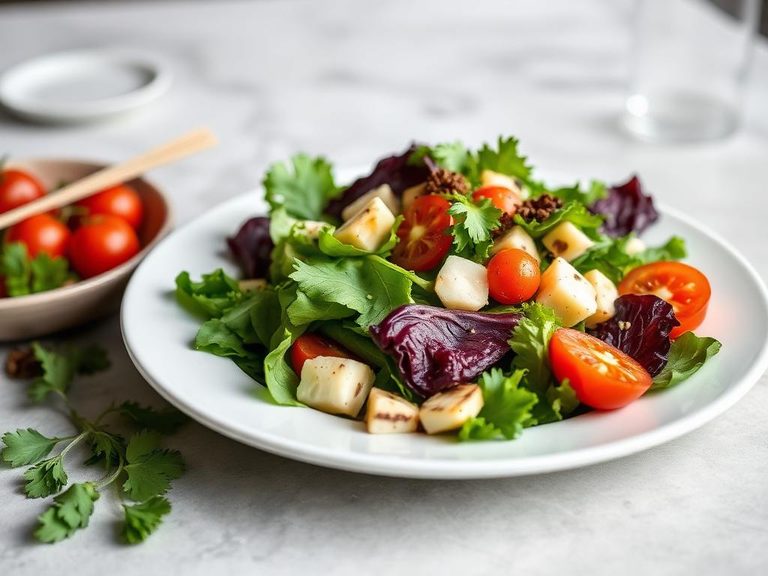
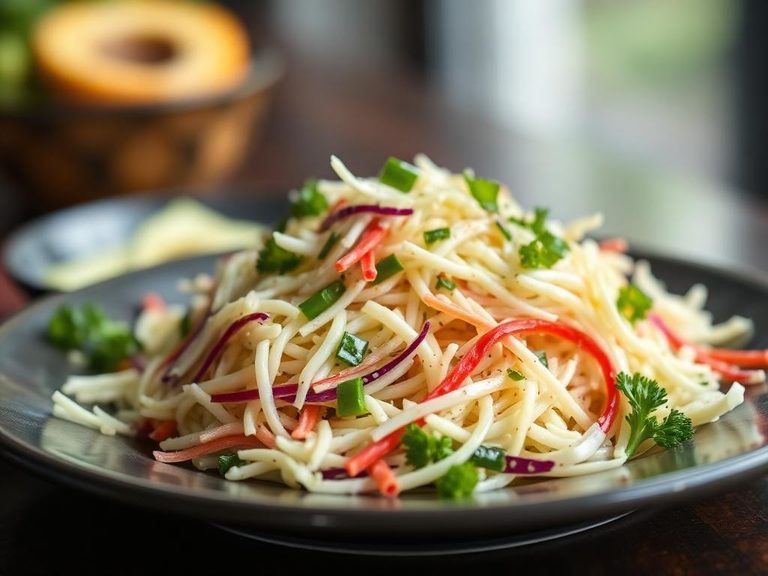
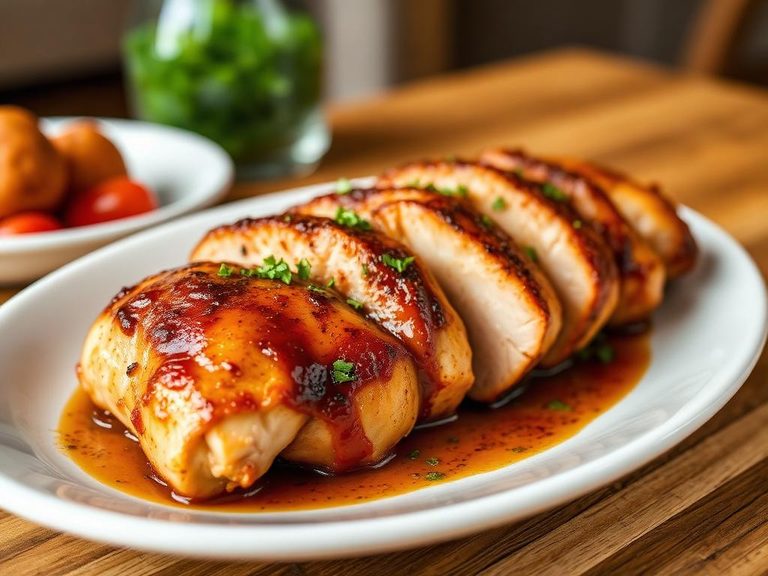
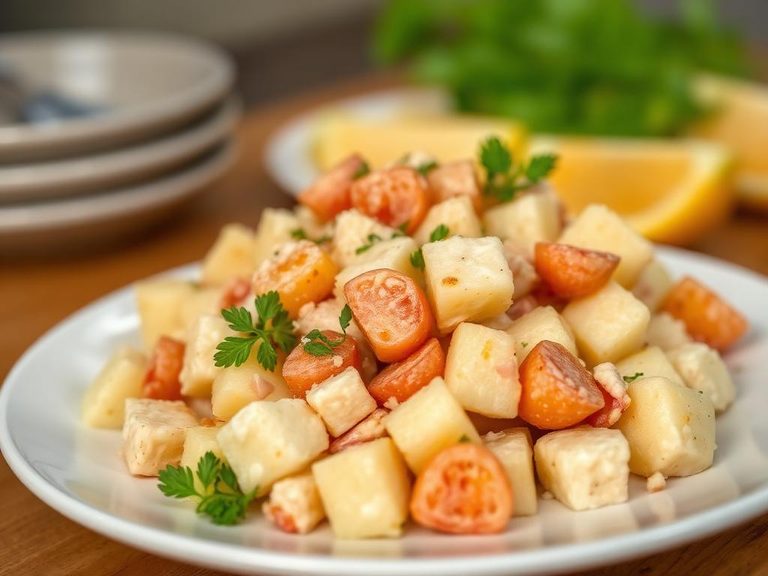
🌍 Where it's eaten
💡 Did you know?
Catalina dressing is often confused with French dressing in the U.S., but Catalina is typically thinner, sweeter, and has a more pronounced tomato flavor, while French dressing can be creamier and spicier.
Full nutrition (USDA data · scales with serving)
| Water | 54.3 g |
| Energy | 222 kcal |
| Protein | 0.58 g |
| Total lipid (fat) | 11.5 g |
| Carbohydrate, by difference | 31.2 g |
| Fiber, total dietary | 1.5 g |
| Total Sugars | 16.9 g |
| Calcium, Ca | 11.0 mg |
| Iron, Fe | 0.73 mg |
| Magnesium, Mg | 8.0 mg |
| Phosphorus, P | 16.0 mg |
| Potassium, K | 107 mg |
| Sodium, Na | 838 mg |
| Zinc, Zn | 0.20 mg |
| Copper, Cu | 0.16 mg |
| Selenium, Se | 1.6 ug |
| Vitamin C, total ascorbic acid | 4.8 mg |
| Thiamin | 0.02 mg |
| Riboflavin | 0.05 mg |
| Niacin | 0.47 mg |
| Vitamin B-6 | 0.06 mg |
| Folate, total | 2.0 ug |
| Folic acid | 0.00 ug |
| Folate, food | 2.0 ug |
| Folate, DFE | 2.0 ug |
| Choline, total | 4.0 mg |
| Vitamin B-12 | 0.00 ug |
| Vitamin B-12, added | 0.00 ug |
| Vitamin A, RAE | 27.0 ug |
| Retinol | 0.00 ug |
| Carotene, beta | 289 ug |
| Carotene, alpha | 0.00 ug |
| Cryptoxanthin, beta | 70.0 ug |
| Lycopene | 2530 ug |
| Lutein + zeaxanthin | 124 ug |
| Vitamin E (alpha-tocopherol) | 1.0 mg |
| Vitamin E, added | 0.00 mg |
| Vitamin D (D2 + D3) | 0.00 ug |
| Vitamin K (phylloquinone) | 17.8 ug |
| Alcohol, ethyl | 0.00 g |
| Caffeine | 0.00 mg |
| Theobromine | 0.00 mg |
Fat & fatty acid profile (per 100g)
| Fatty acids, total saturated | 0.84 g |
| SFA 4:0 | 0.00 g |
| SFA 6:0 | 0.00 g |
| SFA 8:0 | 0.00 g |
| SFA 10:0 | 0.00 g |
| SFA 12:0 | 0.00 g |
| SFA 14:0 | 0.00 g |
| SFA 16:0 | 0.61 g |
| SFA 18:0 | 0.23 g |
| Fatty acids, total monounsaturated | 4.5 g |
| MUFA 16:1 | 0.00 g |
| MUFA 18:1 | 4.4 g |
| MUFA 20:1 | 0.11 g |
| MUFA 22:1 | 0.00 g |
| Fatty acids, total polyunsaturated | 3.9 g |
| PUFA 18:2 | 3.0 g |
| PUFA 18:3 | 0.90 g |
| PUFA 18:4 | 0.00 g |
| PUFA 20:4 | 0.00 g |
| PUFA 20:5 n-3 (EPA) | 0.00 g |
| PUFA 22:5 n-3 (DPA) | 0.00 g |
| PUFA 22:6 n-3 (DHA) | 0.00 g |
| Cholesterol | 0.00 mg |
FAQ
What is the difference between French and Catalina dressing?
French dressing is often creamy and may have a spicier, more complex flavor, while Catalina is typically thinner, sweeter, and has a stronger tomato base. In some regions, the terms are used interchangeably.
Is light dressing healthier than regular dressing?
Light dressings are lower in calories and fat, but they can still be high in sugar and sodium. It's important to check the nutrition label and use them in moderation.
Can I use this dressing as a marinade?
Yes, its acidic and sweet components make it an excellent marinade for chicken, pork, or vegetables. The acidity helps tenderize the meat, while the sugar aids in caramelization during cooking.
How should I store opened light dressing?
Once opened, store it in the refrigerator to maintain freshness and prevent spoilage. It typically lasts for several weeks if kept sealed and cold.
Nutrient density (calculated · NRF9.3)
Nutrient Rich Foods index: beneficial nutrients (protein, fiber, vitamins, minerals) minus saturated fat, added sugar & sodium, per 100 kcal.
NRF9.3 index — Fulgoni, Keast & Drewnowski, 2009. Computed from USDA nutrients.
Weight-loss friendliness (composite index)
Energy density 2.22 kcal/g · 1% calories from protein · 1.5 g fiber · 16.9 g sugar per 100 g.
Composite of energy density (Rolls et al., 1999), protein & fiber satiety, minus sugar. A calculated heuristic — ranks satiety-per-calorie, not a clinical measure.
Dietary load (calculated from USDA values)
Potential renal acid load. Positive = acid-forming, negative = alkaline-forming.
Sodium-to-potassium ratio: 7.83 (lower is better — aim for ≤ 1)
Sodium:potassium per WHO potassium guidance. Computed from USDA nutrients.