

Flour, soy, defatted
Whole food · Legumes and Legume Products
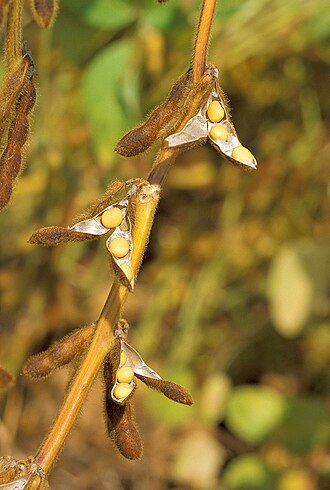
Photo: Wikipedia
Defatted soy flour is the protein-packed, low-fat residue left after extracting oil from soybeans, ground into a fine, pale yellow powder. It has a mild, nutty, and slightly beany flavor with a dry, powdery texture that absorbs moisture readily. Its standout feature is an exceptionally high protein content (over 50%) with minimal fat, making it a lean, functional ingredient.
Calorie split: 56% protein · 36% carbs · 8% fat
↓ Full nutrition💚 Why it's loved
It's loved by bakers and health-conscious cooks as a silent protein booster; it seamlessly adds a nutritional punch to breads, pancakes, and smoothies without dominating the flavor. Its neutral profile and binding properties make it a versatile staple in vegetarian and vegan kitchens.
⚠️ Watch-outs & how to enjoy it better
Some may find its dry, powdery texture and faint beany aftertaste unappealing if used in large, unblended quantities. As a concentrated soy product, it is a common allergen and may cause digestive discomfort (gas, bloating) in sensitive individuals. To counteract, start with small amounts (e.g., replace 10-15% of regular flour), blend thoroughly with other flours and liquids, and ensure adequate hydration in recipes.
Key benefits
- Excellent source of plant-based protein (51g per 100g).
- Very low in fat (3.3g per 100g) and cholesterol-free.
- Rich in essential minerals like iron, phosphorus, and potassium.
- A cost-effective way to boost protein in baked goods and blends.
- Contains isoflavones, naturally occurring plant compounds.
🍽️ Popular dishes
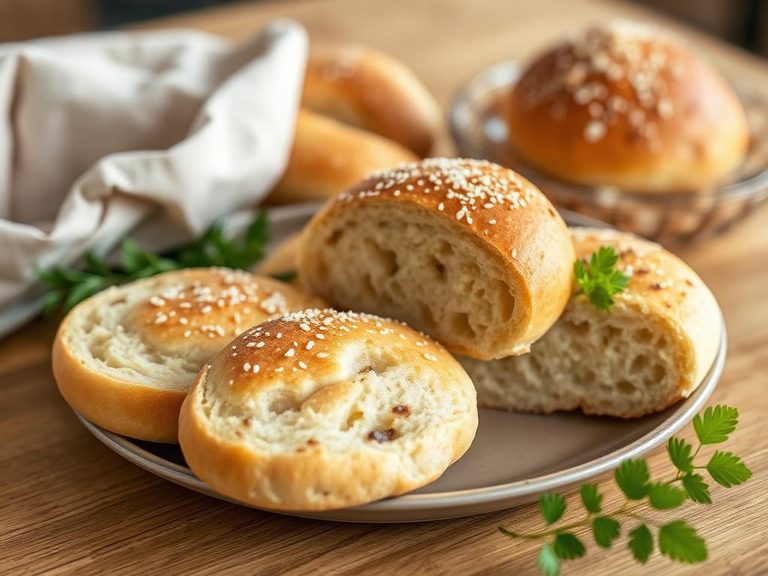
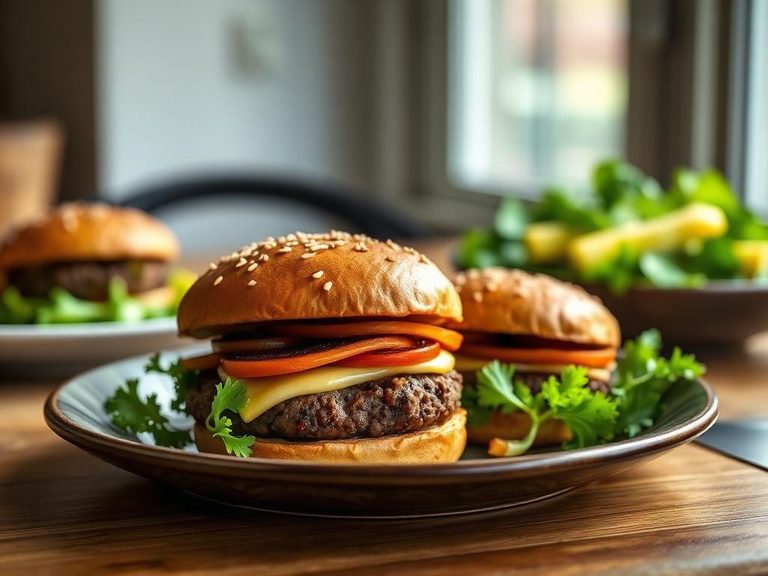
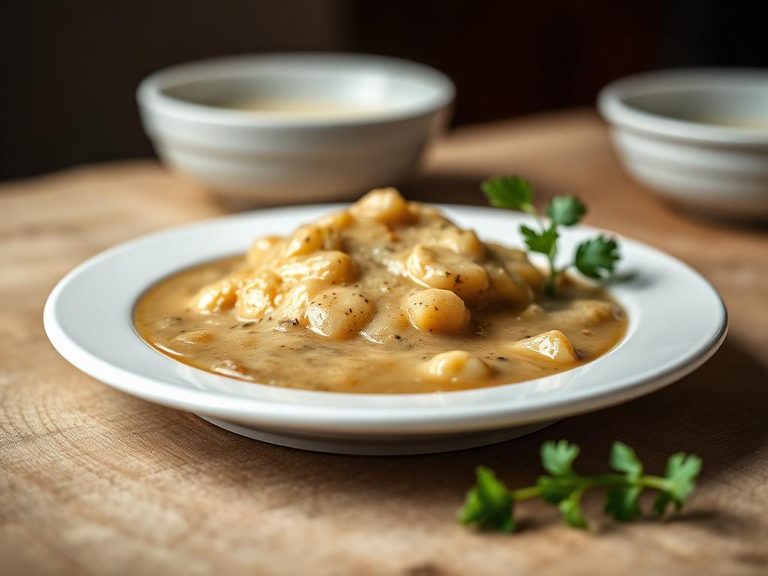


🌍 Where it's eaten
💡 Did you know?
Defatted soy flour is a key ingredient in the 'texturized vegetable protein' (TVP) used in many meat substitutes, where it's extruded under heat and pressure to create a chewy, fibrous texture.
Full nutrition (USDA data · scales with serving)
| Water | 6.2 g |
| Energy (Atwater General Factors) | 366 kcal |
| Energy (Atwater Specific Factors) | 339 kcal |
| Energy | 366 kcal |
| Energy | 1530 kj |
| Nitrogen | 8.2 g |
| Protein | 51.1 g |
| Total lipid (fat) | 3.3 g |
| Ash | 6.5 g |
| Carbohydrate, by difference | 32.9 g |
| Total dietary fiber (AOAC 2011.25) | 24.3 g |
| Calcium, Ca | 338 mg |
| Iron, Fe | 7.3 mg |
| Magnesium, Mg | 313 mg |
| Phosphorus, P | 726 mg |
| Potassium, K | 2480 mg |
| Sodium, Na | 2.0 mg |
| Zinc, Zn | 4.4 mg |
| Copper, Cu | 1.5 mg |
| Manganese, Mn | 3.8 mg |
| Selenium, Se | 45.8 ug |
| Molybdenum, Mo | 211 ug |
| Thiamin | 0.54 mg |
| Riboflavin | 0.30 mg |
| Niacin | 3.4 mg |
| Vitamin B-6 | 0.62 mg |
Fat & fatty acid profile (per 100g)
Estimated from Peanut flour, low fat — USDA does not publish this profile for Flour.
| Fatty acids, total saturated | 3.0 g |
| SFA 14:0 | 0.01 g |
| SFA 16:0 | 2.3 g |
| SFA 18:0 | 0.49 g |
| Fatty acids, total monounsaturated | 10.9 g |
| MUFA 16:1 | 0.00 g |
| MUFA 18:1 | 10.6 g |
| MUFA 20:1 | 0.29 g |
| Fatty acids, total polyunsaturated | 6.9 g |
| PUFA 18:2 | 6.9 g |
| PUFA 18:3 | 0.00 g |
| Fatty acids, total trans | 0.00 g |
| Cholesterol | 0.00 mg |
Amino acid profile (per 100g)
| Tryptophan | 0.62 g |
| Threonine | 2.0 g |
| Isoleucine | 2.3 g |
| Leucine | 4.1 g |
| Lysine | 3.1 g |
| Methionine | 0.62 g |
| Phenylalanine | 2.9 g |
| Tyrosine | 1.7 g |
| Valine | 2.3 g |
| Arginine | 3.9 g |
| Histidine | 1.3 g |
| Alanine | 2.9 g |
| Aspartic acid | 5.0 g |
| Glutamic acid | 9.1 g |
| Glycine | 1.8 g |
| Proline | 2.8 g |
| Serine | 2.7 g |
| Hydroxyproline | 0.18 g |
| Cysteine | 1.0 g |
FAQ
How does defatted soy flour differ from full-fat soy flour?
Defatted soy flour has had most of its oil removed, resulting in much higher protein and fiber concentration per gram, but significantly lower fat and calories compared to full-fat versions.
Can I substitute it directly for regular wheat flour?
Not 1:1. It lacks gluten, so using too much will make baked goods dense and crumbly. It's best used to replace 10-25% of the flour in a recipe to boost nutrition without ruining texture.
Is it gluten-free?
The flour itself is naturally gluten-free, but it is often processed in facilities that also handle wheat. Always check the label for a certified gluten-free seal if you have celiac disease or severe sensitivity.
Nutrient density (calculated · NRF9.3)
Nutrient Rich Foods index: beneficial nutrients (protein, fiber, vitamins, minerals) minus saturated fat, added sugar & sodium, per 100 kcal.
NRF9.3 index — Fulgoni, Keast & Drewnowski, 2009. Computed from USDA nutrients.
Weight-loss friendliness (composite index)
Energy density 3.66 kcal/g · 56% calories from protein · 0.0 g fiber · 0.0 g sugar per 100 g.
Composite of energy density (Rolls et al., 1999), protein & fiber satiety, minus sugar. A calculated heuristic — ranks satiety-per-calorie, not a clinical measure.
Dietary load (calculated from USDA values)
Potential renal acid load. Positive = acid-forming, negative = alkaline-forming.
Sodium-to-potassium ratio: 0.00 (lower is better — aim for ≤ 1)
Sodium:potassium per WHO potassium guidance. Computed from USDA nutrients.