

Flour, almond
Whole food · Nut and Seed Products

Photo: Wikipedia
Almond flour is a finely milled powder made from blanched, ground almonds, offering a soft, slightly grainy texture and a rich, nutty, subtly sweet flavor. It is a nutrient-dense, low-carb alternative to wheat flour, packing a significant protein and healthy fat punch per serving. Its natural moisture and fat content make baked goods tender and moist without needing extra oil.
Calorie split: 17% protein · 10% carbs · 73% fat
↓ Full nutrition💚 Why it's loved
People love almond flour for its ability to add a delicate, buttery richness and moist crumb to baked goods, from macarons to pancakes. Its versatility makes it a staple in gluten-free, keto, and paleo cooking, allowing for indulgent textures without refined grains.
⚠️ Watch-outs & how to enjoy it better
As a tree nut, it is a common allergen and must be avoided by those with almond sensitivities. Its high calorie and fat density means portions should be mindful for strict calorie tracking. To counteract potential dryness in some recipes, pair it with binding agents like eggs or xanthan gum, and store it in the fridge or freezer to prevent the natural oils from going rancid.
Key benefits
- Excellent source of plant-based protein (26g per 100g).
- High in heart-healthy monounsaturated fats.
- Naturally gluten-free and grain-free.
- Rich in fiber, promoting digestive health and satiety.
- Low in carbohydrates compared to traditional flours.
🍽️ Popular dishes

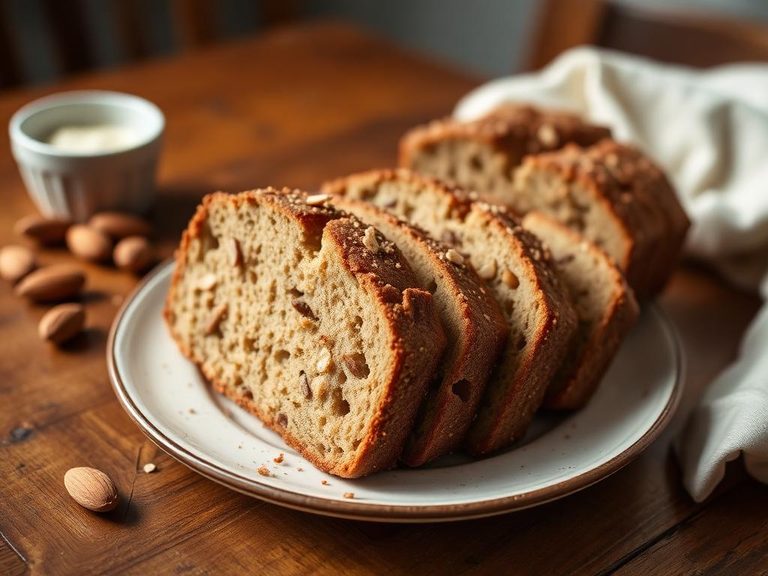

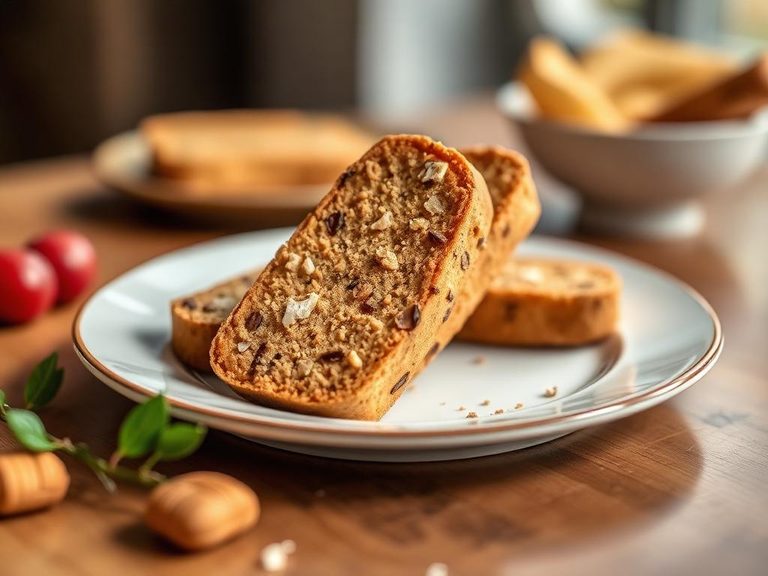

🌍 Where it's eaten
💡 Did you know?
Almond flour is the traditional base for the delicate, meringue-like shells of French macarons, where its high fat content is crucial for creating the signature smooth top and ruffled 'foot.'
Full nutrition (USDA data · scales with serving)
| Water | 4.3 g |
| Energy (Atwater General Factors) | 622 kcal |
| Energy (Atwater Specific Factors) | 578 kcal |
| Nitrogen | 4.2 g |
| Protein | 26.2 g |
| Total lipid (fat) | 50.2 g |
| Ash | 3.0 g |
| Carbohydrate, by difference | 16.2 g |
| Fiber, total dietary | 9.3 g |
| Calcium, Ca | 232 mg |
| Iron, Fe | 3.2 mg |
| Magnesium, Mg | 251 mg |
| Phosphorus, P | 512 mg |
| Potassium, K | 667 mg |
| Sodium, Na | 0.89 mg |
| Zinc, Zn | 2.8 mg |
| Copper, Cu | 0.98 mg |
| Manganese, Mn | 1.8 mg |
| Selenium, Se | 0.74 ug |
| Molybdenum, Mo | 36.1 ug |
| Thiamin | 0.11 mg |
| Riboflavin | 0.75 mg |
| Niacin | 4.0 mg |
| Vitamin B-6 | 0.10 mg |
| Biotin | 69.1 ug |
| Folate, total | 37.8 ug |
Fat & fatty acid profile (per 100g)
Estimated from Seeds, cottonseed flour, low fat (glandless) — USDA does not publish this profile for Flour.
| Fatty acids, total saturated | 0.31 g |
| SFA 14:0 | 0.01 g |
| SFA 16:0 | 0.27 g |
| SFA 18:0 | 0.03 g |
| Fatty acids, total monounsaturated | 0.22 g |
| MUFA 16:1 | 0.01 g |
| MUFA 18:1 | 0.21 g |
| Fatty acids, total polyunsaturated | 0.58 g |
| PUFA 18:2 | 0.57 g |
| PUFA 18:3 | 0.00 g |
| Cholesterol | 0.00 mg |
Amino acid profile (per 100g)
Estimated from Seeds, cottonseed flour, low fat (glandless) — USDA does not publish this profile for Flour.
| Tryptophan | 0.75 g |
| Threonine | 1.8 g |
| Isoleucine | 1.8 g |
| Leucine | 3.4 g |
| Lysine | 2.5 g |
| Methionine | 0.81 g |
| Cystine | 1.3 g |
| Phenylalanine | 3.1 g |
| Tyrosine | 1.8 g |
| Valine | 2.6 g |
| Arginine | 6.7 g |
| Histidine | 1.6 g |
| Alanine | 2.3 g |
| Aspartic acid | 5.4 g |
| Glutamic acid | 12.5 g |
| Glycine | 2.4 g |
| Proline | 2.1 g |
| Serine | 2.5 g |
FAQ
Can I substitute almond flour 1:1 for all-purpose flour?
No, due to its high fat and protein content, almond flour cannot be substituted directly. It requires recipe adjustments, often needing more eggs or a binder like xanthan gum to provide structure.
Why does my almond flour smell or taste bitter?
Bitterness can indicate the flour is rancid, as the natural oils can oxidize. Always smell it before use and store it in an airtight container in the refrigerator or freezer to prolong freshness.
Is almond flour the same as almond meal?
They are similar but not identical. Almond flour is typically made from blanched (skinless) almonds and ground very finely, while almond meal is often made from unblanched almonds and has a coarser, more textured grind.
Nutrient density (calculated · NRF9.3)
Nutrient Rich Foods index: beneficial nutrients (protein, fiber, vitamins, minerals) minus saturated fat, added sugar & sodium, per 100 kcal.
NRF9.3 index — Fulgoni, Keast & Drewnowski, 2009. Computed from USDA nutrients.
Weight-loss friendliness (composite index)
Energy density 6.22 kcal/g · 17% calories from protein · 9.3 g fiber · 0.0 g sugar per 100 g.
Composite of energy density (Rolls et al., 1999), protein & fiber satiety, minus sugar. A calculated heuristic — ranks satiety-per-calorie, not a clinical measure.
Dietary load (calculated from USDA values)
Potential renal acid load. Positive = acid-forming, negative = alkaline-forming.
Sodium-to-potassium ratio: 0.00 (lower is better — aim for ≤ 1)
Sodium:potassium per WHO potassium guidance. Computed from USDA nutrients.