

Dessert pizza
Common food

Photo: Wikipedia
A dessert pizza is a sweet twist on the classic savory pie, featuring a baked dough base topped with ingredients like chocolate, fruit, or sweet cream cheese instead of tomato sauce and cheese. Its texture ranges from a crisp or chewy crust to creamy, gooey, or crunchy toppings, creating a delightful contrast. Nutritionally, it is a high-carbohydrate treat with significant sugar, offering quick energy but little protein or fiber.
Calorie split: 4% protein · 63% carbs · 33% fat
↓ Full nutrition💚 Why it's loved
People love dessert pizza for its playful, indulgent nature, combining the comforting familiarity of pizza with the excitement of a custom dessert. It's a crowd-pleaser that allows for endless creativity, from classic chocolate-hazelnut to gourmet fruit and mascarpone combinations.
⚠️ Watch-outs & how to enjoy it better
The high sugar and refined carbohydrate content can lead to blood sugar spikes and subsequent crashes, making it less suitable for those managing diabetes or insulin resistance. To mitigate this, pair a small slice with a source of protein (like a handful of nuts) or healthy fat (like a dollop of Greek yogurt) to slow sugar absorption, and practice strict portion control.
Key benefits
- Provides a quick source of energy from carbohydrates.
- Offers a fun, shareable format for social gatherings.
- Highly customizable with a wide variety of sweet toppings.
- Can be a creative way to use leftover fruits or sweet spreads.
🍽️ Popular dishes
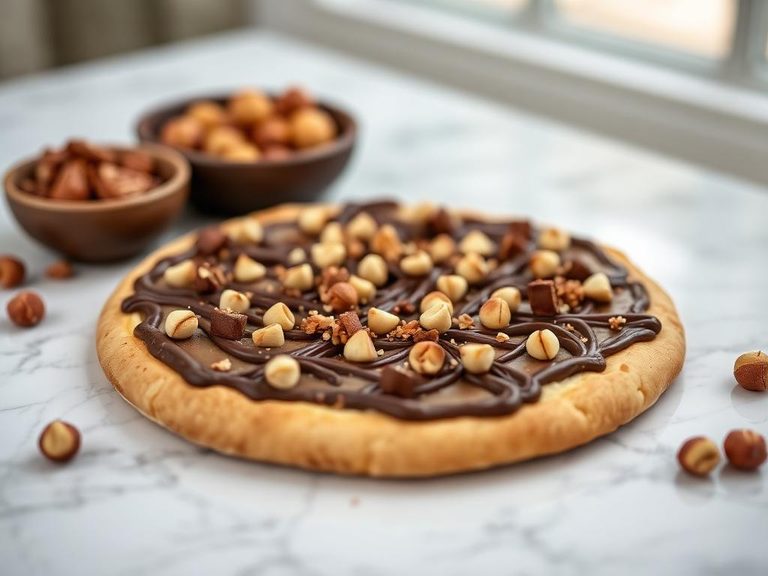
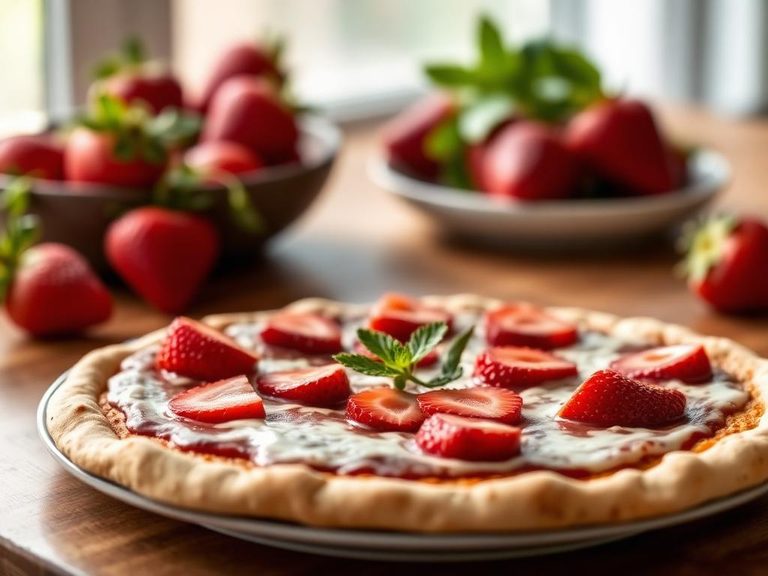
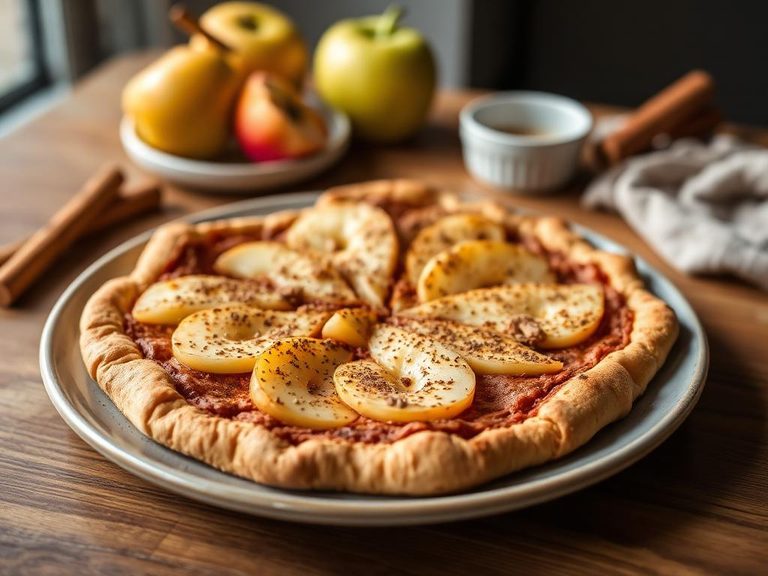

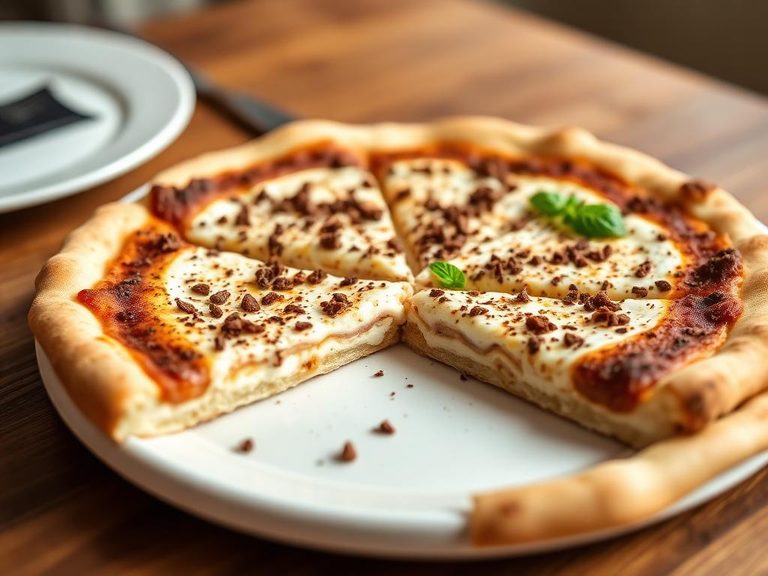

🌍 Where it's eaten
💡 Did you know?
The concept of a 'sweet pizza' is not entirely modern; historical records suggest that some ancient Roman flatbreads were sweetened with honey and cheese.
Full nutrition (USDA data · scales with serving)
| Water | 57.6 g |
| Energy | 204 kcal |
| Protein | 1.8 g |
| Total lipid (fat) | 7.5 g |
| Carbohydrate, by difference | 32.4 g |
| Fiber, total dietary | 1.7 g |
| Total Sugars | 15.8 g |
| Calcium, Ca | 21.0 mg |
| Iron, Fe | 0.88 mg |
| Magnesium, Mg | 13.0 mg |
| Phosphorus, P | 47.0 mg |
| Potassium, K | 120 mg |
| Sodium, Na | 130 mg |
| Zinc, Zn | 0.41 mg |
| Copper, Cu | 0.11 mg |
| Selenium, Se | 1.5 ug |
| Vitamin C, total ascorbic acid | 23.9 mg |
| Thiamin | 0.06 mg |
| Riboflavin | 0.08 mg |
| Niacin | 1.1 mg |
| Vitamin B-6 | 0.04 mg |
| Folate, total | 25.0 ug |
| Folic acid | 12.0 ug |
| Folate, food | 13.0 ug |
| Folate, DFE | 33.0 ug |
| Choline, total | 9.7 mg |
| Vitamin B-12 | 0.00 ug |
| Vitamin B-12, added | 0.00 ug |
| Vitamin A, RAE | 13.0 ug |
| Retinol | 9.0 ug |
| Carotene, beta | 42.0 ug |
| Carotene, alpha | 0.00 ug |
| Cryptoxanthin, beta | 17.0 ug |
| Lycopene | 0.00 ug |
| Lutein + zeaxanthin | 49.0 ug |
| Vitamin E (alpha-tocopherol) | 0.89 mg |
| Vitamin E, added | 0.00 mg |
| Vitamin D (D2 + D3) | 0.00 ug |
| Vitamin K (phylloquinone) | 13.3 ug |
| Alcohol, ethyl | 0.00 g |
| Caffeine | 0.00 mg |
| Theobromine | 0.00 mg |
Fat & fatty acid profile (per 100g)
| Fatty acids, total saturated | 1.8 g |
| SFA 4:0 | 0.02 g |
| SFA 6:0 | 0.02 g |
| SFA 8:0 | 0.01 g |
| SFA 10:0 | 0.02 g |
| SFA 12:0 | 0.03 g |
| SFA 14:0 | 0.10 g |
| SFA 16:0 | 0.97 g |
| SFA 18:0 | 0.60 g |
| Fatty acids, total monounsaturated | 4.6 g |
| MUFA 16:1 | 0.02 g |
| MUFA 18:1 | 4.6 g |
| MUFA 20:1 | 0.01 g |
| MUFA 22:1 | 0.00 g |
| Fatty acids, total polyunsaturated | 0.54 g |
| PUFA 18:2 | 0.49 g |
| PUFA 18:3 | 0.03 g |
| PUFA 18:4 | 0.00 g |
| PUFA 20:4 | 0.00 g |
| PUFA 20:5 n-3 (EPA) | 0.00 g |
| PUFA 22:5 n-3 (DPA) | 0.00 g |
| PUFA 22:6 n-3 (DHA) | 0.00 g |
| Cholesterol | 3.0 mg |
FAQ
Is dessert pizza a traditional Italian dish?
No, it is primarily an Italian-American or modern pizzeria creation. Traditional Italian cuisine features sweet flatbreads like 'pizza dolce,' but they are distinct from the loaded dessert pizzas common today.
Can I make a healthier version at home?
Yes. Use a whole-wheat or cauliflower crust, top with Greek yogurt instead of cream cheese, use fresh fruit instead of sugary jams, and drizzle lightly with dark chocolate or a small amount of honey.
What is the best way to store leftovers?
Store slices in an airtight container in the refrigerator for up to 2 days. Reheat in an oven or toaster oven to help re-crisp the crust, as microwaving can make it soggy.
Nutrient density (calculated · NRF9.3)
Nutrient Rich Foods index: beneficial nutrients (protein, fiber, vitamins, minerals) minus saturated fat, added sugar & sodium, per 100 kcal.
NRF9.3 index — Fulgoni, Keast & Drewnowski, 2009. Computed from USDA nutrients.
Weight-loss friendliness (composite index)
Energy density 2.04 kcal/g · 4% calories from protein · 1.7 g fiber · 15.8 g sugar per 100 g.
Composite of energy density (Rolls et al., 1999), protein & fiber satiety, minus sugar. A calculated heuristic — ranks satiety-per-calorie, not a clinical measure.
Dietary load (calculated from USDA values)
Potential renal acid load. Positive = acid-forming, negative = alkaline-forming.
Sodium-to-potassium ratio: 1.08 (lower is better — aim for ≤ 1)
Sodium:potassium per WHO potassium guidance. Computed from USDA nutrients.