

Chow fun noodles with meat and vegetables
Common food

Photo: Wikipedia
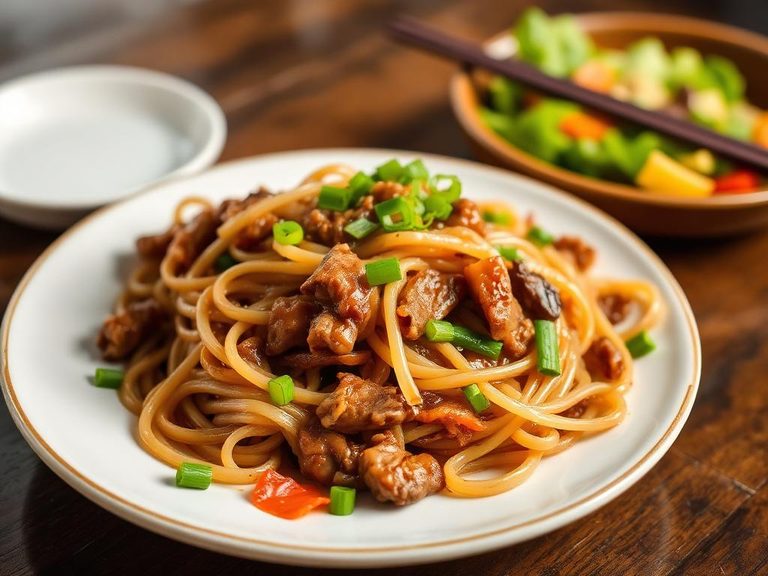
Chow fun noodles are wide, flat rice noodles stir-fried at high heat with meat and vegetables, delivering a signature smoky 'wok hei' aroma and a satisfyingly chewy, slippery texture. This dish offers a balanced, light meal with a moderate calorie count of 102 kcal per 100g, featuring a good protein-to-carb ratio for sustained energy. It is a classic Cantonese street food staple, prized for its savory, umami-rich flavor profile.
Calorie split: 29% protein · 46% carbs · 25% fat
↓ Full nutrition💚 Why it's loved
People love chow fun for its incredible 'wok hei'—the smoky, seared flavor that only a blazing hot wok can produce—and its satisfyingly chewy, springy texture. It's a beloved comfort food that is deeply woven into the culinary fabric of Cantonese cuisine, offering a perfect balance of savory, slightly sweet, and umami notes.
⚠️ Watch-outs & how to enjoy it better
The dish can be high in sodium from soy sauce and oyster sauce, which may be a concern for those monitoring blood pressure. Additionally, the refined rice noodles can cause a rapid blood-sugar spike for some individuals. To counteract this, pair it with extra vegetables and lean protein to slow digestion, practice portion control, and consider using low-sodium soy sauce or adding a splash of vinegar to help moderate the glycemic response.
Key benefits
- Provides a balanced source of protein and carbohydrates for energy.
- Low in fat (2.74g per 100g), making it a lighter stir-fry option.
- Contains dietary fiber (0.9g) to support digestive health.
- Quick to prepare, ideal for a fast, nutritious meal.
- Versatile base for adding lean proteins and a variety of vegetables.
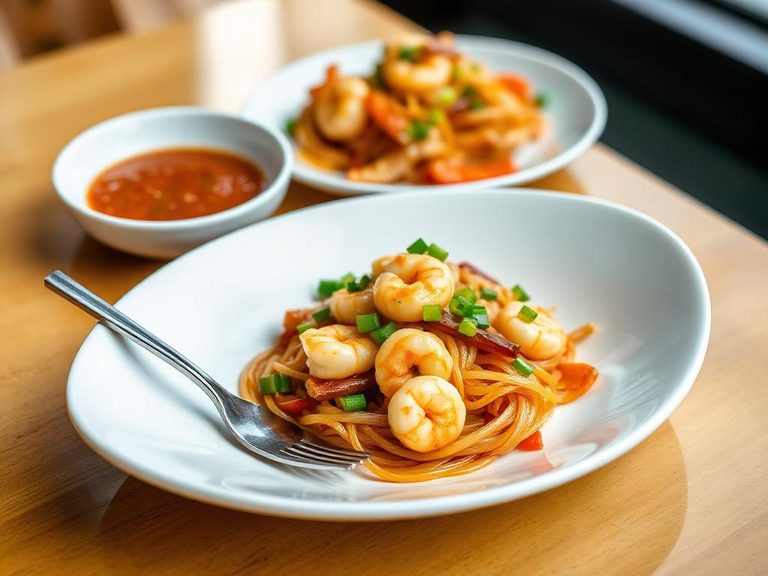
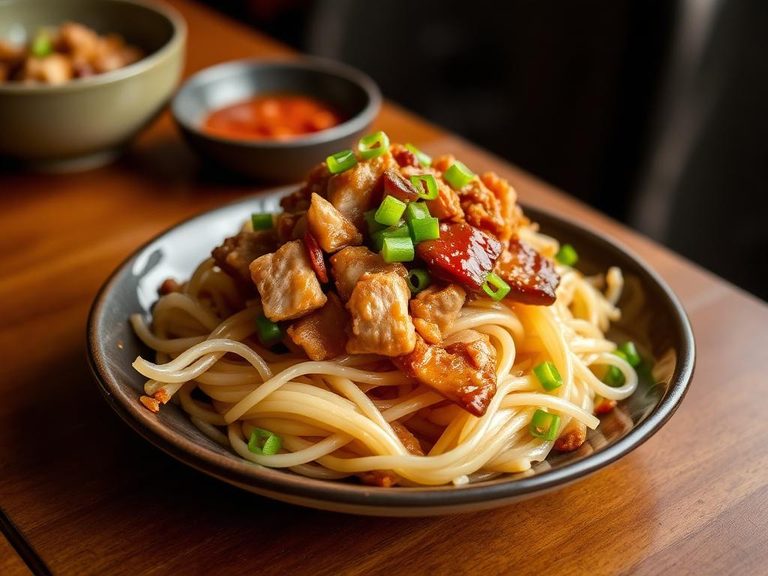
🍽️ Popular dishes
🌍 Where it's eaten
💡 Did you know?
The 'wok hei' or 'breath of the wok' that defines a great chow fun is a complex flavor created by the Maillard reaction and the vaporization of oil at extremely high temperatures, a technique so revered it was inscribed on China's national intangible cultural heritage list in 2022.
Full nutrition (USDA data · scales with serving)
| Water | 78.0 g |
| Energy | 102 kcal |
| Protein | 7.1 g |
| Total lipid (fat) | 2.7 g |
| Carbohydrate, by difference | 11.5 g |
| Fiber, total dietary | 0.90 g |
| Total Sugars | 1.1 g |
| Calcium, Ca | 16.0 mg |
| Iron, Fe | 0.45 mg |
| Magnesium, Mg | 11.0 mg |
| Phosphorus, P | 71.0 mg |
| Potassium, K | 145 mg |
| Sodium, Na | 162 mg |
| Zinc, Zn | 0.69 mg |
| Copper, Cu | 0.04 mg |
| Selenium, Se | 9.1 ug |
| Vitamin C, total ascorbic acid | 3.1 mg |
| Thiamin | 0.22 mg |
| Riboflavin | 0.11 mg |
| Niacin | 1.4 mg |
| Vitamin B-6 | 0.15 mg |
| Folate, total | 17.0 ug |
| Folic acid | 0.00 ug |
| Folate, food | 17.0 ug |
| Folate, DFE | 17.0 ug |
| Choline, total | 27.3 mg |
| Vitamin B-12 | 0.15 ug |
| Vitamin B-12, added | 0.00 ug |
| Vitamin A, RAE | 6.0 ug |
| Retinol | 0.00 ug |
| Carotene, beta | 61.0 ug |
| Carotene, alpha | 12.0 ug |
| Cryptoxanthin, beta | 0.00 ug |
| Lycopene | 0.00 ug |
| Lutein + zeaxanthin | 74.0 ug |
| Vitamin E (alpha-tocopherol) | 0.26 mg |
| Vitamin E, added | 0.00 mg |
| Vitamin D (D2 + D3) | 0.10 ug |
| Vitamin K (phylloquinone) | 7.9 ug |
| Alcohol, ethyl | 0.00 g |
| Caffeine | 0.00 mg |
| Theobromine | 0.00 mg |
Fat & fatty acid profile (per 100g)
| Fatty acids, total saturated | 0.85 g |
| SFA 4:0 | 0.00 g |
| SFA 6:0 | 0.00 g |
| SFA 8:0 | 0.00 g |
| SFA 10:0 | 0.00 g |
| SFA 12:0 | 0.00 g |
| SFA 14:0 | 0.03 g |
| SFA 16:0 | 0.53 g |
| SFA 18:0 | 0.27 g |
| Fatty acids, total monounsaturated | 1.1 g |
| MUFA 16:1 | 0.07 g |
| MUFA 18:1 | 0.97 g |
| MUFA 20:1 | 0.02 g |
| MUFA 22:1 | 0.00 g |
| Fatty acids, total polyunsaturated | 0.55 g |
| PUFA 18:2 | 0.47 g |
| PUFA 18:3 | 0.06 g |
| PUFA 18:4 | 0.00 g |
| PUFA 20:4 | 0.01 g |
| PUFA 20:5 n-3 (EPA) | 0.00 g |
| PUFA 22:5 n-3 (DPA) | 0.00 g |
| PUFA 22:6 n-3 (DHA) | 0.00 g |
| Cholesterol | 17.0 mg |
FAQ
What are the main ingredients in chow fun noodles?
The primary ingredients are wide, flat rice noodles (ho fun), a protein such as beef, chicken, or shrimp, and a mix of vegetables like bean sprouts, scallions, and onions, all stir-fried in a savory sauce.
What is the difference between chow fun and lo mein?
Chow fun uses wide, flat rice noodles, while lo mein uses round, egg-based wheat noodles. Chow fun is typically stir-fried at very high heat for a smoky flavor, whereas lo mein is often tossed with sauce.
Is chow fun gluten-free?
The rice noodles themselves are gluten-free, but the dish often contains soy sauce and oyster sauce, which typically contain wheat. To make it gluten-free, use tamari or a gluten-free soy sauce and ensure all other sauces are gluten-free.
Nutrient density (calculated · NRF9.3)
Nutrient Rich Foods index: beneficial nutrients (protein, fiber, vitamins, minerals) minus saturated fat, added sugar & sodium, per 100 kcal.
NRF9.3 index — Fulgoni, Keast & Drewnowski, 2009. Computed from USDA nutrients.
Weight-loss friendliness (composite index)
Energy density 1.02 kcal/g · 28% calories from protein · 0.9 g fiber · 1.1 g sugar per 100 g.
Composite of energy density (Rolls et al., 1999), protein & fiber satiety, minus sugar. A calculated heuristic — ranks satiety-per-calorie, not a clinical measure.
Dietary load (calculated from USDA values)
Potential renal acid load. Positive = acid-forming, negative = alkaline-forming.
Sodium-to-potassium ratio: 1.12 (lower is better — aim for ≤ 1)
Sodium:potassium per WHO potassium guidance. Computed from USDA nutrients.