

Chocolate candy, sugar free
Common food
Sugar-free chocolate candy is a rich, indulgent treat designed to mimic the classic flavor and satisfying snap of traditional chocolate while using sugar alcohols or non-nutritive sweeteners instead of sucrose. It delivers a deep cocoa flavor and smooth, creamy texture, often with a slightly cooling aftertaste from ingredients like erythritol or maltitol. Nutritionally, it's a high-fat, moderate-protein confection with significantly fewer carbohydrates and sugars than its full-sugar counterpart.
Calorie split: 8% protein · 26% carbs · 66% fat
↓ Full nutrition💚 Why it's loved
People love it for delivering the complex, bittersweet pleasure of real chocolate without the sugar crash, making it a staple for those managing blood sugar or following specific diets. Its versatility shines in everything from a simple after-dinner square to a key ingredient in low-carb baking.
⚠️ Watch-outs & how to enjoy it better
Some sugar alcohols can cause digestive discomfort like bloating or laxative effects if consumed in large quantities. The high fat content means calories can add up quickly, and the cooling aftertaste of certain sweeteners isn't for everyone. To counteract digestive issues, start with a small portion (e.g., 15-20g) and see how your system reacts; pairing a piece with a source of fiber or protein can also help slow absorption.
Key benefits
- Provides a chocolate flavor without the glycemic impact of sugar
- Higher in fat and protein, which can promote greater satiety per piece
- Suitable for low-carb or ketogenic dietary patterns
- Allows people with sugar restrictions to enjoy a confectionery treat
- Often contains cocoa solids, which are a source of antioxidants like flavanols
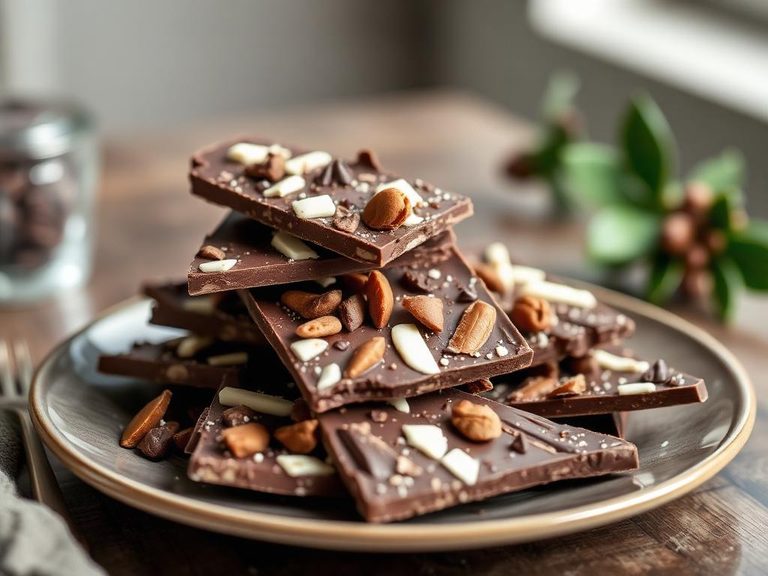
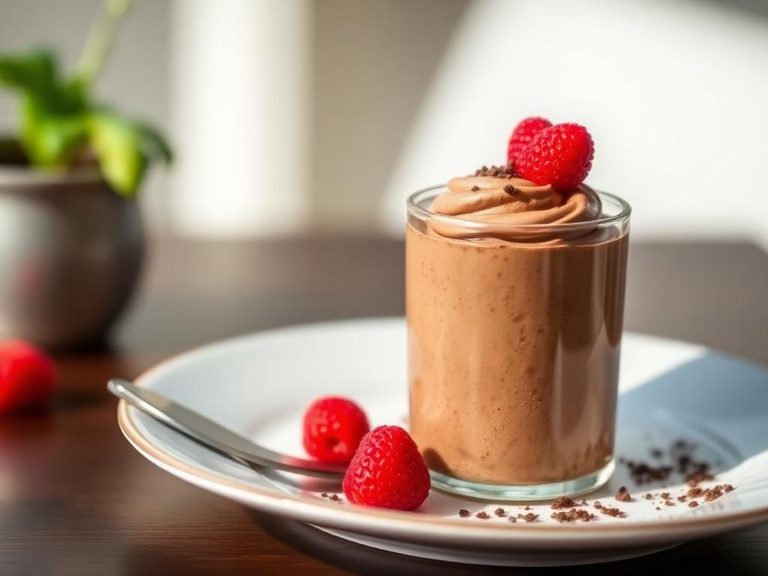
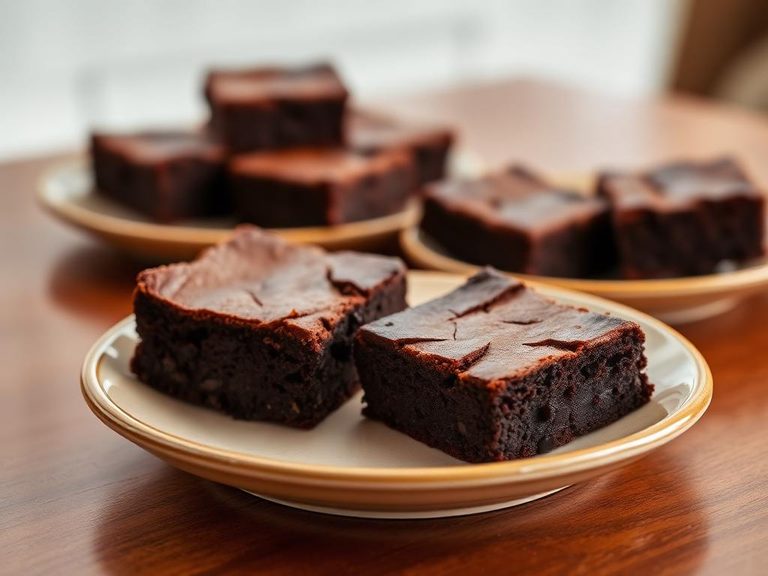
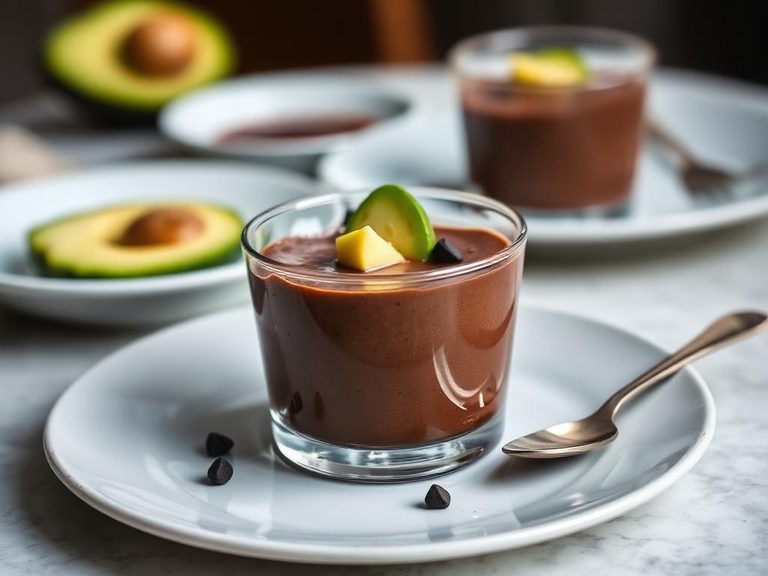
🍽️ Popular dishes
🌍 Where it's eaten
💡 Did you know?
The primary sugar alcohols used, like maltitol, have about 75-90% of the sweetness of sugar but only about half the calories, which is how the 'sugar-free' label is achieved while maintaining a similar texture.
Full nutrition (USDA data · scales with serving)
| Water | 4.0 g |
| Energy | 590 kcal |
| Protein | 12.4 g |
| Total lipid (fat) | 43.3 g |
| Carbohydrate, by difference | 37.7 g |
| Fiber, total dietary | 3.5 g |
| Total Sugars | 14.6 g |
| Calcium, Ca | 285 mg |
| Iron, Fe | 1.4 mg |
| Magnesium, Mg | 129 mg |
| Phosphorus, P | 332 mg |
| Potassium, K | 606 mg |
| Sodium, Na | 111 mg |
| Zinc, Zn | 2.5 mg |
| Copper, Cu | 0.85 mg |
| Selenium, Se | 4.9 ug |
| Vitamin C, total ascorbic acid | 1.4 mg |
| Thiamin | 0.20 mg |
| Riboflavin | 0.48 mg |
| Niacin | 2.3 mg |
| Vitamin B-6 | 0.18 mg |
| Folate, total | 25.0 ug |
| Folic acid | 0.00 ug |
| Folate, food | 25.0 ug |
| Folate, DFE | 25.0 ug |
| Choline, total | 50.1 mg |
| Vitamin B-12 | 0.85 ug |
| Vitamin B-12, added | 0.00 ug |
| Vitamin A, RAE | 55.0 ug |
| Retinol | 54.0 ug |
| Carotene, beta | 13.0 ug |
| Carotene, alpha | 0.00 ug |
| Cryptoxanthin, beta | 0.00 ug |
| Lycopene | 0.00 ug |
| Lutein + zeaxanthin | 6.0 ug |
| Vitamin E (alpha-tocopherol) | 2.6 mg |
| Vitamin E, added | 0.00 mg |
| Vitamin D (D2 + D3) | 0.10 ug |
| Vitamin K (phylloquinone) | 7.5 ug |
| Alcohol, ethyl | 0.00 g |
| Caffeine | 9.0 mg |
| Theobromine | 150 mg |
Fat & fatty acid profile (per 100g)
| Fatty acids, total saturated | 21.7 g |
| SFA 4:0 | 0.22 g |
| SFA 6:0 | 0.14 g |
| SFA 8:0 | 0.66 g |
| SFA 10:0 | 0.69 g |
| SFA 12:0 | 5.1 g |
| SFA 14:0 | 2.4 g |
| SFA 16:0 | 6.9 g |
| SFA 18:0 | 5.4 g |
| Fatty acids, total monounsaturated | 10.9 g |
| MUFA 16:1 | 0.19 g |
| MUFA 18:1 | 10.6 g |
| MUFA 20:1 | 0.04 g |
| MUFA 22:1 | 0.00 g |
| Fatty acids, total polyunsaturated | 4.3 g |
| PUFA 18:2 | 4.2 g |
| PUFA 18:3 | 0.20 g |
| PUFA 18:4 | 0.00 g |
| PUFA 20:4 | 0.00 g |
| PUFA 20:5 n-3 (EPA) | 0.00 g |
| PUFA 22:5 n-3 (DPA) | 0.00 g |
| PUFA 22:6 n-3 (DHA) | 0.00 g |
| Cholesterol | 22.0 mg |
FAQ
Does sugar-free chocolate really have zero sugar?
Not always. It must have less than 0.5 grams of sugar per serving to be labeled sugar-free in the US. It uses sugar alcohols (like maltitol, erythritol) or high-intensity sweeteners (like stevia) for sweetness, which are not metabolized as sugar.
Why might it cause stomach issues?
Sugar alcohols are incompletely absorbed in the gut, where they can be fermented by bacteria, leading to gas, bloating, or a laxative effect, especially in amounts over 10-20 grams at a time.
Is it healthier than regular chocolate?
It's lower in sugar and carbs, making it a better option for blood sugar management. However, it's often similar or higher in total calories and fat, so it's not a 'free food' and should be enjoyed in moderation as part of a balanced diet.
Nutrient density (calculated · NRF9.3)
Nutrient Rich Foods index: beneficial nutrients (protein, fiber, vitamins, minerals) minus saturated fat, added sugar & sodium, per 100 kcal.
NRF9.3 index — Fulgoni, Keast & Drewnowski, 2009. Computed from USDA nutrients.
Weight-loss friendliness (composite index)
Energy density 5.90 kcal/g · 8% calories from protein · 3.5 g fiber · 14.6 g sugar per 100 g.
Composite of energy density (Rolls et al., 1999), protein & fiber satiety, minus sugar. A calculated heuristic — ranks satiety-per-calorie, not a clinical measure.
Dietary load (calculated from USDA values)
Potential renal acid load. Positive = acid-forming, negative = alkaline-forming.
Sodium-to-potassium ratio: 0.18 (lower is better — aim for ≤ 1)
Sodium:potassium per WHO potassium guidance. Computed from USDA nutrients.