

Chicken salad sandwich wrap
Common food

Photo: Wikipedia
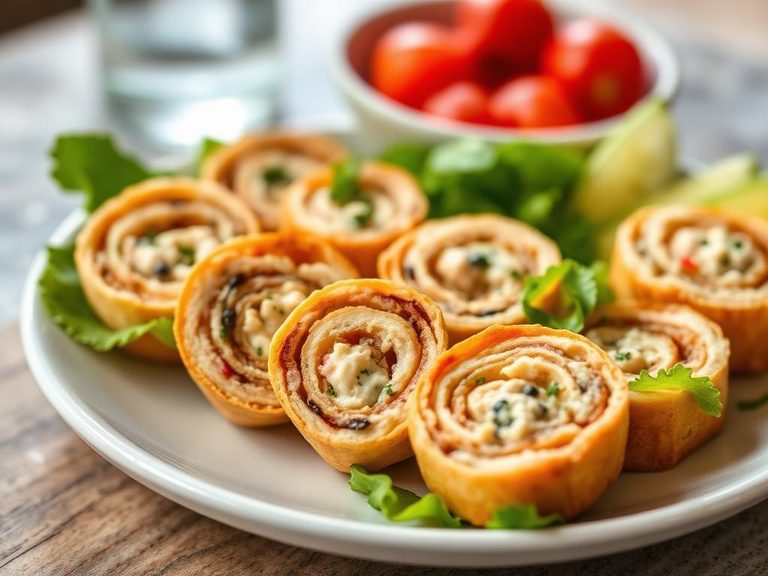
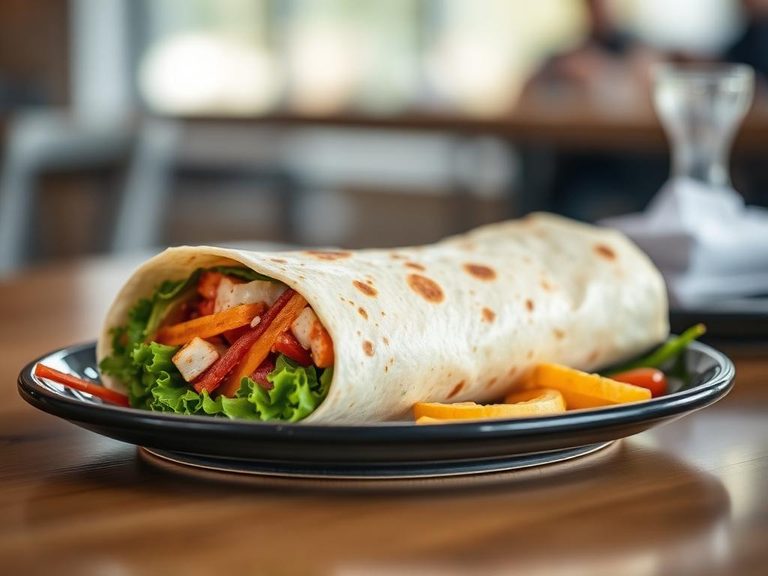
A chicken salad sandwich wrap is a classic handheld meal where creamy, savory chicken salad—typically shredded or diced chicken mixed with mayonnaise, celery, and seasonings—is rolled inside a soft flour tortilla. It offers a satisfying contrast between the cool, rich filling and the slightly chewy, mild wrap. Nutritionally, it provides a solid protein boost from the chicken, though the fat content comes primarily from the mayonnaise-based dressing.
Calorie split: 19% protein · 25% carbs · 55% fat
↓ Full nutrition💚 Why it's loved
People love it for its comforting, familiar flavors and effortless versatility—it's a staple at picnics, delis, and lunchboxes because it's easy to make ahead and eat on the go. The combination of creamy, savory chicken and soft bread hits a nostalgic, satisfying note for many.
⚠️ Watch-outs & how to enjoy it better
The wrap can be high in sodium and saturated fat from the mayonnaise and processed deli chicken, and the refined flour tortilla offers minimal fiber, which may lead to a quicker return of hunger. To counteract this, look for low-sodium chicken, use a light mayo or Greek yogurt blend, and choose a whole-wheat or high-fiber tortilla to increase satiety.
Key benefits
- Good source of high-quality protein for muscle maintenance
- Convenient, portable, and no-cook meal option
- Highly customizable with various mix-ins and vegetables
- Provides quick energy from carbohydrates in the tortilla
🍽️ Popular dishes
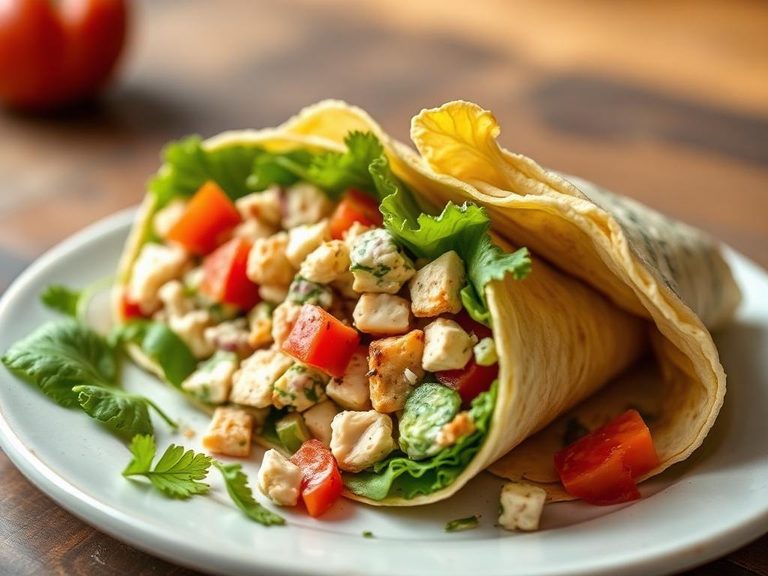
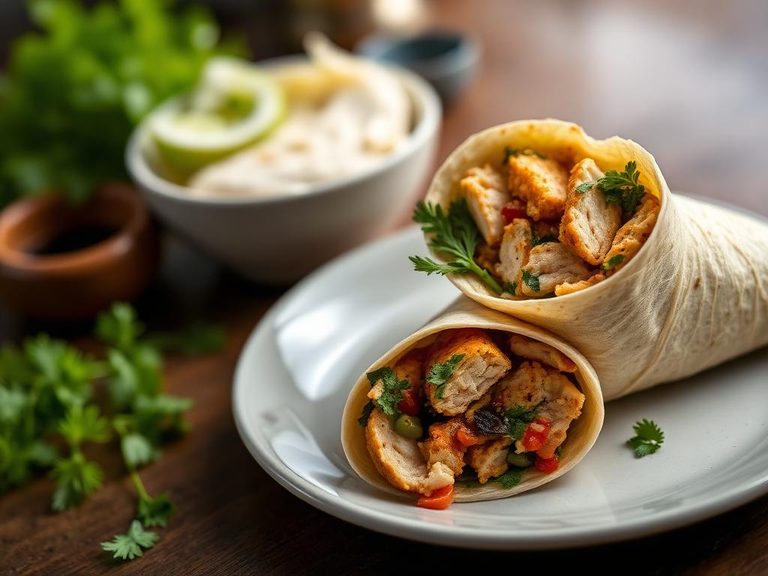
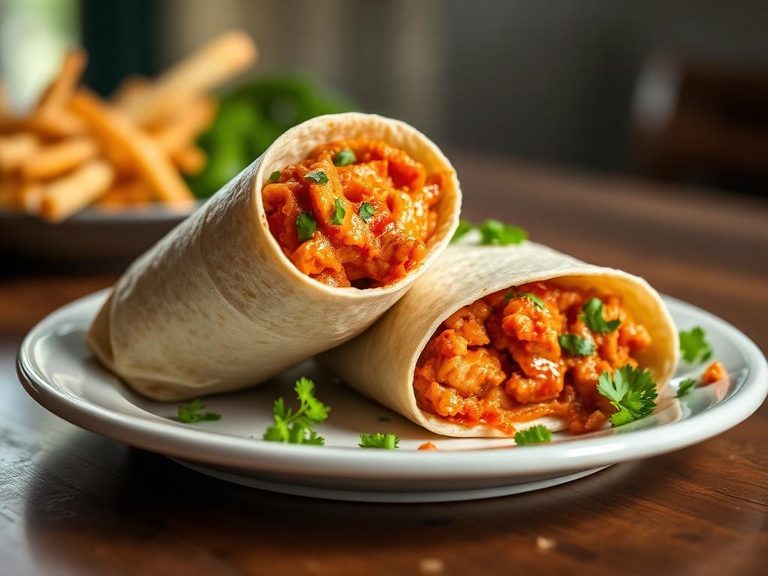
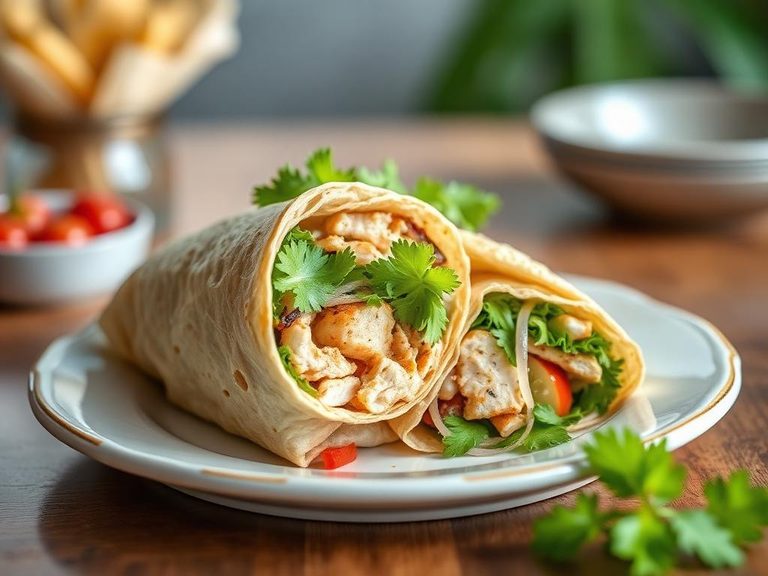
🌍 Where it's eaten
💡 Did you know?
The tortilla wrap as a popular lunch vehicle in the U.S. exploded in popularity in the 1990s, largely credited to a marketing push by the California-based chain 'The Original Mexican Café' and later, national chains like Taco Bell.
Full nutrition (USDA data · scales with serving)
| Water | 51.4 g |
| Energy | 269 kcal |
| Protein | 12.9 g |
| Total lipid (fat) | 16.6 g |
| Carbohydrate, by difference | 17.0 g |
| Fiber, total dietary | 1.3 g |
| Total Sugars | 2.6 g |
| Calcium, Ca | 149 mg |
| Iron, Fe | 1.4 mg |
| Magnesium, Mg | 18.0 mg |
| Phosphorus, P | 200 mg |
| Potassium, K | 177 mg |
| Sodium, Na | 603 mg |
| Zinc, Zn | 1.0 mg |
| Copper, Cu | 0.06 mg |
| Selenium, Se | 16.5 ug |
| Vitamin C, total ascorbic acid | 0.50 mg |
| Thiamin | 0.18 mg |
| Riboflavin | 0.19 mg |
| Niacin | 3.7 mg |
| Vitamin B-6 | 0.11 mg |
| Folate, total | 38.0 ug |
| Folic acid | 24.0 ug |
| Folate, food | 14.0 ug |
| Folate, DFE | 54.0 ug |
| Choline, total | 30.0 mg |
| Vitamin B-12 | 0.28 ug |
| Vitamin B-12, added | 0.00 ug |
| Vitamin A, RAE | 38.0 ug |
| Retinol | 32.0 ug |
| Carotene, beta | 63.0 ug |
| Carotene, alpha | 4.0 ug |
| Cryptoxanthin, beta | 11.0 ug |
| Lycopene | 0.00 ug |
| Lutein + zeaxanthin | 54.0 ug |
| Vitamin E (alpha-tocopherol) | 0.66 mg |
| Vitamin E, added | 0.00 mg |
| Vitamin D (D2 + D3) | 0.40 ug |
| Vitamin K (phylloquinone) | 29.4 ug |
| Alcohol, ethyl | 0.00 g |
| Caffeine | 0.00 mg |
| Theobromine | 0.00 mg |
Fat & fatty acid profile (per 100g)
| Fatty acids, total saturated | 4.5 g |
| SFA 4:0 | 0.06 g |
| SFA 6:0 | 0.05 g |
| SFA 8:0 | 0.03 g |
| SFA 10:0 | 0.07 g |
| SFA 12:0 | 0.09 g |
| SFA 14:0 | 0.30 g |
| SFA 16:0 | 2.7 g |
| SFA 18:0 | 1.1 g |
| Fatty acids, total monounsaturated | 4.1 g |
| MUFA 16:1 | 0.20 g |
| MUFA 18:1 | 3.9 g |
| MUFA 20:1 | 0.05 g |
| MUFA 22:1 | 0.01 g |
| Fatty acids, total polyunsaturated | 6.6 g |
| PUFA 18:2 | 5.8 g |
| PUFA 18:3 | 0.77 g |
| PUFA 18:4 | 0.00 g |
| PUFA 20:4 | 0.02 g |
| PUFA 20:5 n-3 (EPA) | 0.00 g |
| PUFA 22:5 n-3 (DPA) | 0.00 g |
| PUFA 22:6 n-3 (DHA) | 0.00 g |
| Cholesterol | 48.0 mg |
FAQ
Is a chicken salad wrap healthy?
It can be part of a balanced diet. Its healthiness depends heavily on ingredients: using lean chicken breast, a light dressing, and a whole-grain tortilla with added veggies boosts its nutritional profile significantly.
How do I keep my wrap from getting soggy?
Pat your chicken salad very dry, avoid overly wet ingredients like tomatoes, and consider placing a lettuce leaf as a barrier between the filling and the tortilla. Assembling it close to serving time also helps.
Can I make it ahead of time?
Yes, but for best texture, prepare the chicken salad separately and store it in the fridge. Assemble the wrap no more than a few hours before eating to prevent the tortilla from becoming damp and tearing.
Nutrient density (calculated · NRF9.3)
Nutrient Rich Foods index: beneficial nutrients (protein, fiber, vitamins, minerals) minus saturated fat, added sugar & sodium, per 100 kcal.
NRF9.3 index — Fulgoni, Keast & Drewnowski, 2009. Computed from USDA nutrients.
Weight-loss friendliness (composite index)
Energy density 2.69 kcal/g · 19% calories from protein · 1.3 g fiber · 2.6 g sugar per 100 g.
Composite of energy density (Rolls et al., 1999), protein & fiber satiety, minus sugar. A calculated heuristic — ranks satiety-per-calorie, not a clinical measure.
Dietary load (calculated from USDA values)
Potential renal acid load. Positive = acid-forming, negative = alkaline-forming.
Sodium-to-potassium ratio: 3.41 (lower is better — aim for ≤ 1)
Sodium:potassium per WHO potassium guidance. Computed from USDA nutrients.