Cheeseburger, from fast food, 1 medium patty
Common food
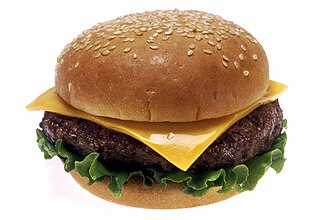
Photo: Wikipedia
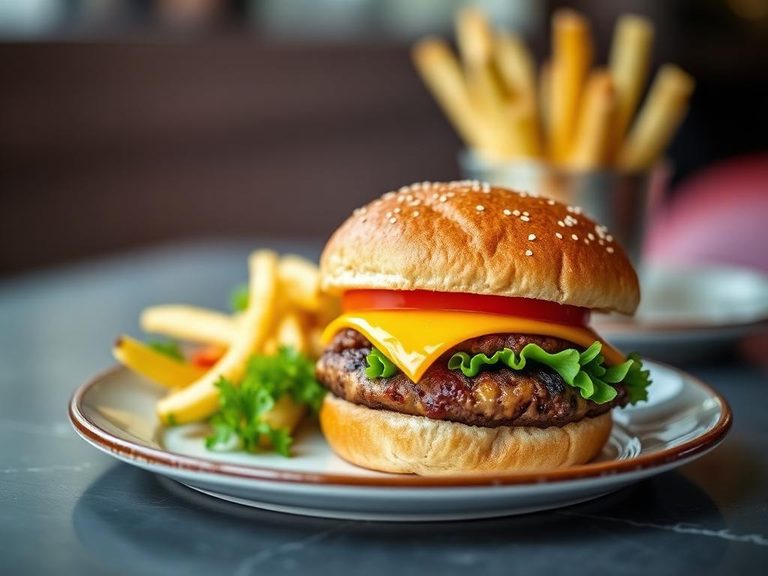
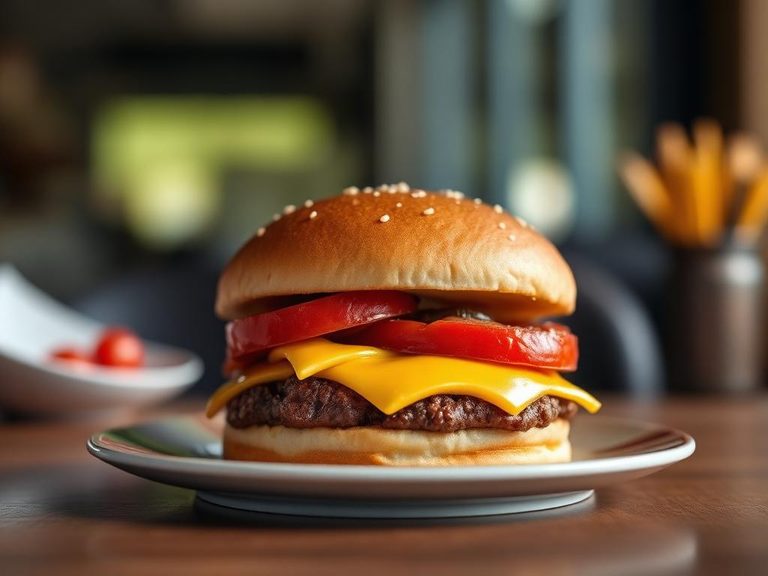
A fast-food cheeseburger is a compact, savory sandwich featuring a single, flame-grilled beef patty nestled in a soft, toasted bun, topped with a slice of melted American cheese, crisp lettuce, a slice of tomato, pickles, and a tangy sauce. Its texture is a satisfying contrast between the juicy, slightly charred beef, the creamy cheese, and the soft bread. Nutritionally, it provides a solid dose of protein (about 18g per 100g) but is also high in fat and refined carbohydrates, making it a calorie-dense meal.
💚 Why it's loved
People love it for the iconic, umami-rich combination of savory beef, salty melted cheese, and sweet-and-tangy condiments, all delivered in a familiar, handheld package. It's a cultural staple of fast-food comfort, offering a quick, satisfying hit of flavor.
⚠️ Watch-outs & how to enjoy it better
The high sodium, saturated fat, and refined carbs can contribute to blood-sugar spikes and are a concern for those monitoring heart health or blood pressure. To counteract this, pair it with a side salad or apple slices instead of fries, choose water or unsweetened tea to drink, and consider eating only half the bun to reduce refined carb intake.
Key benefits
- Good source of complete protein for muscle maintenance.
- Provides quick energy from carbohydrates.
- Contains iron and zinc from the beef patty.
- Convenient and widely available for a quick meal.
🍽️ Popular dishes
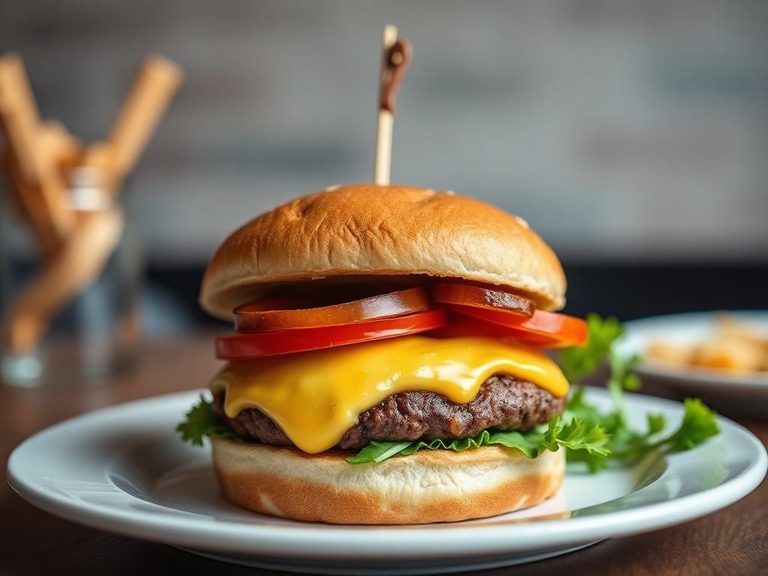
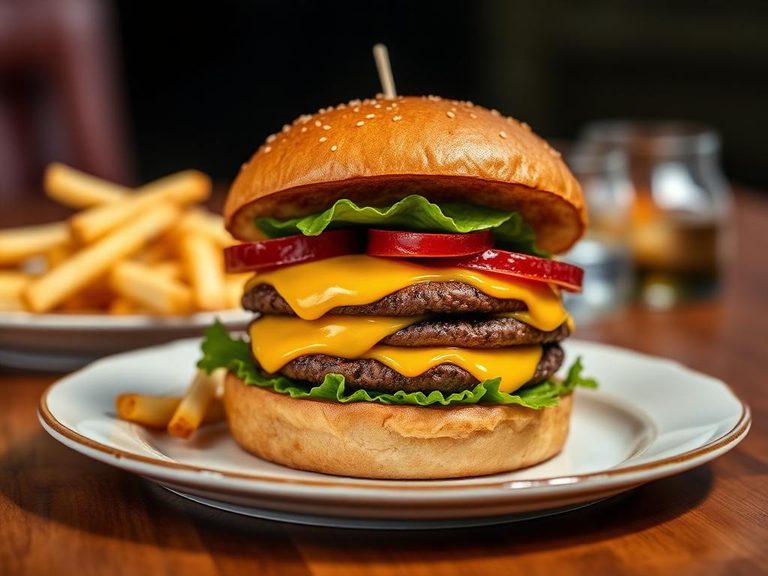
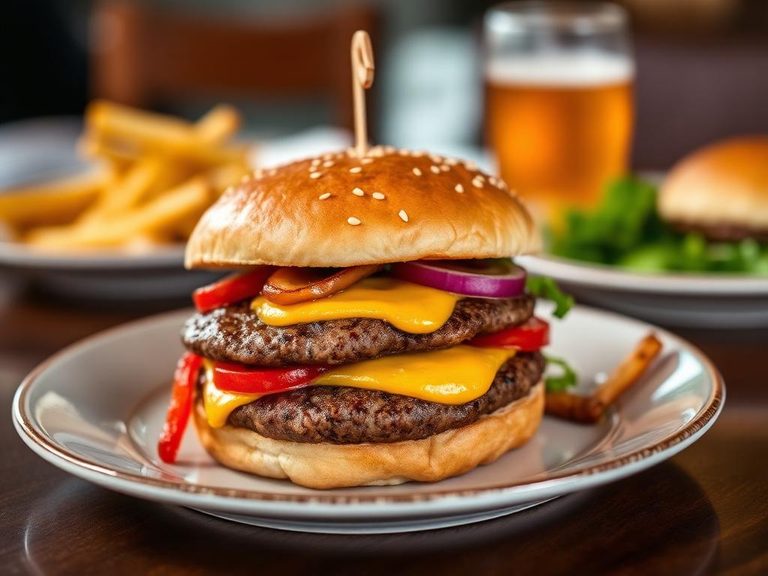
🌍 Where it's eaten
💡 Did you know?
The cheeseburger was reportedly invented in the 1920s or 1930s, with multiple U.S. diners claiming the first slice of cheese was melted on a hamburger patty.
Full nutrition (scales with serving)
| Water | 45.1 g |
| Energy | 296 kcal |
| Protein | 17.9 g |
| Total lipid (fat) | 16.1 g |
| Carbohydrate, by difference | 18.7 g |
| Fiber, total dietary | 0.60 g |
| Total Sugars | 3.0 g |
| Calcium, Ca | 171 mg |
| Iron, Fe | 2.5 mg |
| Magnesium, Mg | 22.0 mg |
| Phosphorus, P | 198 mg |
| Potassium, K | 219 mg |
| Sodium, Na | 438 mg |
| Zinc, Zn | 3.1 mg |
| Copper, Cu | 0.08 mg |
| Selenium, Se | 23.6 ug |
| Vitamin C, total ascorbic acid | 0.50 mg |
| Thiamin | 0.21 mg |
| Riboflavin | 0.24 mg |
| Niacin | 4.2 mg |
| Vitamin B-6 | 0.26 mg |
| Folate, total | 47.0 ug |
| Folic acid | 19.0 ug |
| Folate, food | 27.0 ug |
| Folate, DFE | 60.0 ug |
| Choline, total | 46.2 mg |
| Vitamin B-12 | 1.6 ug |
| Vitamin B-12, added | 0.00 ug |
| Vitamin A, RAE | 34.0 ug |
| Retinol | 33.0 ug |
| Carotene, beta | 10.0 ug |
| Carotene, alpha | 0.00 ug |
| Cryptoxanthin, beta | 1.0 ug |
| Lycopene | 0.00 ug |
| Lutein + zeaxanthin | 5.0 ug |
| Vitamin E (alpha-tocopherol) | 0.19 mg |
| Vitamin E, added | 0.00 mg |
| Vitamin D (D2 + D3) | 0.60 ug |
| Vitamin K (phylloquinone) | 3.2 ug |
| Fatty acids, total saturated | 6.9 g |
| SFA 4:0 | 0.08 g |
| SFA 6:0 | 0.06 g |
| SFA 8:0 | 0.04 g |
| SFA 10:0 | 0.09 g |
| SFA 12:0 | 0.10 g |
| SFA 14:0 | 0.69 g |
| SFA 16:0 | 3.7 g |
| SFA 18:0 | 1.9 g |
| Fatty acids, total monounsaturated | 5.9 g |
| MUFA 16:1 | 0.42 g |
| MUFA 18:1 | 5.4 g |
| MUFA 20:1 | 0.03 g |
| MUFA 22:1 | 0.00 g |
| Fatty acids, total polyunsaturated | 1.1 g |
| PUFA 18:2 | 1.00 g |
| PUFA 18:3 | 0.10 g |
| PUFA 18:4 | 0.00 g |
| PUFA 20:4 | 0.01 g |
| PUFA 20:5 n-3 (EPA) | 0.00 g |
| PUFA 22:5 n-3 (DPA) | 0.01 g |
| PUFA 22:6 n-3 (DHA) | 0.00 g |
| Cholesterol | 54.0 mg |
| Alcohol, ethyl | 0.00 g |
| Caffeine | 0.00 mg |
| Theobromine | 0.00 mg |
FAQ
How does the protein in a fast-food cheeseburger compare to other protein sources?
A 100g serving provides about 18g of protein, which is comparable to a similar serving of cooked chicken breast or a hard-boiled egg, but it comes with significantly more fat and sodium.
Is the cheese on a fast-food cheeseburger real cheese?
Most fast-food chains use processed cheese products (like American cheese) because they melt smoothly and consistently. These are made from cheese but contain emulsifiers and extra ingredients.
Can I make a healthier version at home?
Yes. Use lean ground beef (90% lean or higher), whole-grain buns, and load up on fresh toppings like lettuce, tomato, onion, and avocado. Skip the high-sugar sauces and use mustard or salsa instead.