Cereal, fruit rings
Common food
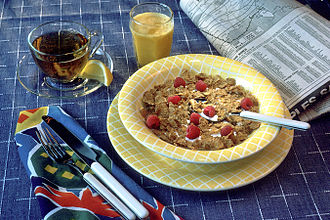
Photo: Wikipedia
Fruit rings are a vibrant, crunchy breakfast cereal shaped like colorful hoops, offering a sweet, fruity flavor and a satisfying, airy texture. While they are a quick source of energy, their nutritional profile is dominated by carbohydrates and added sugars, with minimal protein and fat.
💚 Why it's loved
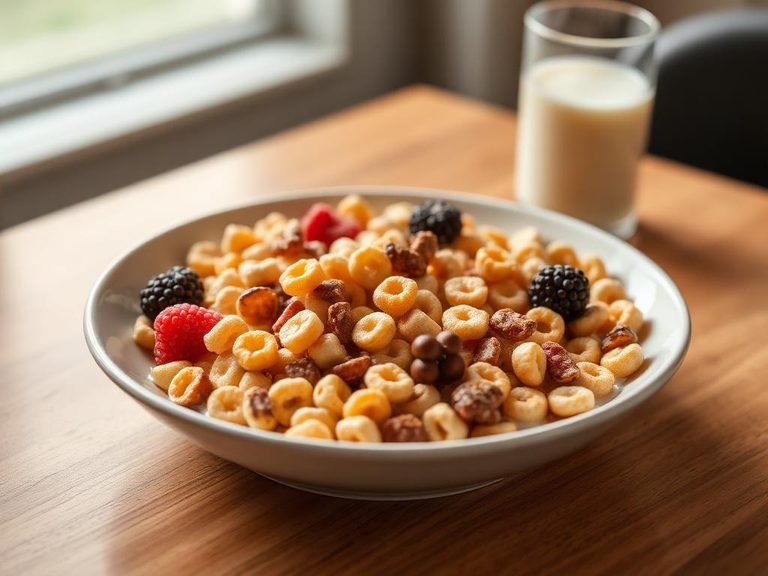
People love fruit rings for their nostalgic, sugary sweetness and the playful, colorful crunch that makes breakfast feel like a treat. Their versatility allows them to be enjoyed with milk, yogurt, or even as a snack straight from the box.
⚠️ Watch-outs & how to enjoy it better
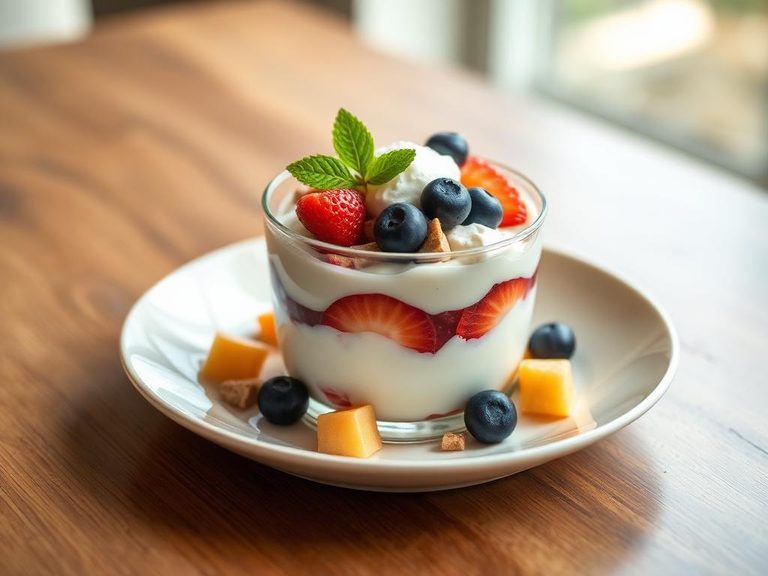
The high sugar content (over 30g per 100g) can lead to rapid blood-sugar spikes and subsequent energy crashes, and they are often low in satiating protein. To counteract this, pair a measured portion with a source of protein or healthy fat (like Greek yogurt or a handful of nuts) and choose a high-fiber cereal if possible.
Key benefits
- Quick and convenient source of energy
- Fortified with essential vitamins and minerals like iron and B vitamins
- Appealing to children, making it a common vehicle for nutrient fortification
- Low in fat and contains some dietary fiber
🍽️ Popular dishes
🌍 Where it's eaten
💡 Did you know?
The artificial colors used in many fruit ring cereals are derived from petroleum sources, not actual fruit.
Full nutrition (scales with serving)
| Water | 7.3 g |
| Energy | 383 kcal |
| Protein | 5.1 g |
| Total lipid (fat) | 3.2 g |
| Carbohydrate, by difference | 82.2 g |
| Fiber, total dietary | 5.4 g |
| Total Sugars | 31.6 g |
| Calcium, Ca | 5.0 mg |
| Iron, Fe | 9.7 mg |
| Magnesium, Mg | 21.0 mg |
| Phosphorus, P | 68.0 mg |
| Potassium, K | 94.0 mg |
| Sodium, Na | 504 mg |
| Zinc, Zn | 0.48 mg |
| Copper, Cu | 0.07 mg |
| Selenium, Se | 8.0 ug |
| Vitamin C, total ascorbic acid | 22.8 mg |
| Thiamin | 0.55 mg |
| Riboflavin | 0.52 mg |
| Niacin | 6.7 mg |
| Vitamin B-6 | 0.74 mg |
| Folate, total | 138 ug |
| Folic acid | 119 ug |
| Folate, food | 19.0 ug |
| Folate, DFE | 222 ug |
| Choline, total | 5.8 mg |
| Vitamin B-12 | 0.89 ug |
| Vitamin B-12, added | 0.89 ug |
| Vitamin A, RAE | 6.0 ug |
| Retinol | 0.00 ug |
| Carotene, beta | 54.0 ug |
| Carotene, alpha | 35.0 ug |
| Cryptoxanthin, beta | 0.00 ug |
| Lycopene | 0.00 ug |
| Lutein + zeaxanthin | 907 ug |
| Vitamin E (alpha-tocopherol) | 0.28 mg |
| Vitamin E, added | 0.00 mg |
| Vitamin D (D2 + D3) | 5.0 ug |
| Vitamin K (phylloquinone) | 3.1 ug |
| Fatty acids, total saturated | 0.79 g |
| SFA 4:0 | 0.00 g |
| SFA 6:0 | 0.00 g |
| SFA 8:0 | 0.00 g |
| SFA 10:0 | 0.00 g |
| SFA 12:0 | 0.00 g |
| SFA 14:0 | 0.00 g |
| SFA 16:0 | 0.28 g |
| SFA 18:0 | 0.48 g |
| Fatty acids, total monounsaturated | 0.84 g |
| MUFA 16:1 | 0.00 g |
| MUFA 18:1 | 0.83 g |
| MUFA 20:1 | 0.01 g |
| MUFA 22:1 | 0.00 g |
| Fatty acids, total polyunsaturated | 1.1 g |
| PUFA 18:2 | 1.1 g |
| PUFA 18:3 | 0.05 g |
| PUFA 18:4 | 0.00 g |
| PUFA 20:4 | 0.00 g |
| PUFA 20:5 n-3 (EPA) | 0.00 g |
| PUFA 22:5 n-3 (DPA) | 0.00 g |
| PUFA 22:6 n-3 (DHA) | 0.00 g |
| Cholesterol | 0.00 mg |
| Alcohol, ethyl | 0.00 g |
| Caffeine | 0.00 mg |
| Theobromine | 0.00 mg |
FAQ
Are fruit rings a healthy breakfast option?
They are often fortified with vitamins but are typically high in added sugar and low in protein and fiber. For a more balanced meal, pair them with protein-rich milk or yogurt and add fresh fruit.
Why are fruit rings so colorful?
The bright colors are almost entirely from artificial food dyes, not from the fruit flavors they represent.
Can I eat fruit rings on a gluten-free diet?
Many brands are made from corn or rice and are gluten-free, but you must always check the label for 'gluten-free' certification, as cross-contamination can occur.