

Cabbage, bok choy, raw
Whole food · Vegetables and Vegetable Products

Photo: Wikipedia
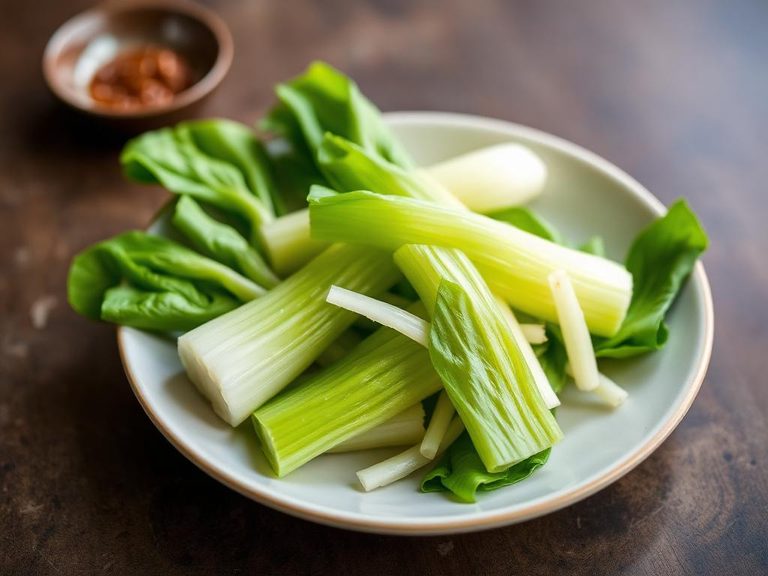
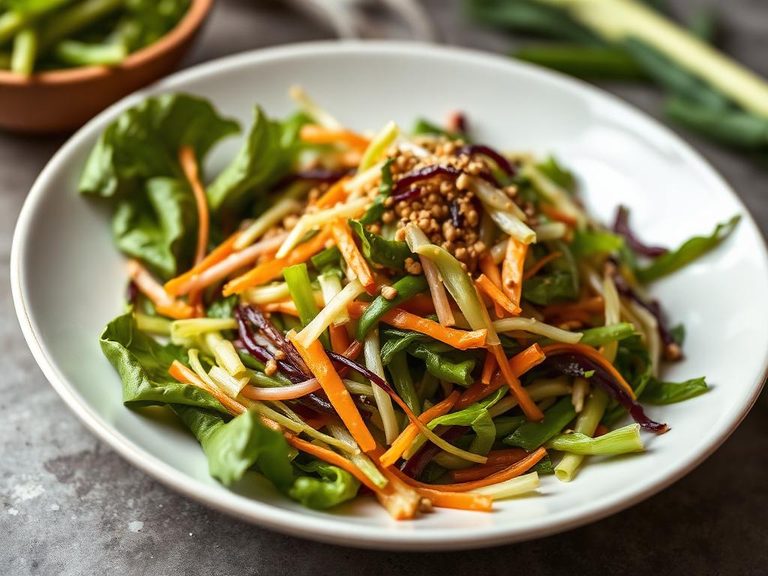
Bok choy is a crisp, leafy cruciferous vegetable with a mild, slightly peppery flavor and a satisfying crunch from its thick, white stalks. Its vibrant green leaves and pale stems offer a refreshing, watery texture when raw, making it a staple in salads and slaws. Nutritionally, it's a low-calorie powerhouse, providing a good source of fiber and vitamins A and C for its minimal energy cost.
Calorie split: 20% protein · 69% carbs · 10% fat
↓ Full nutrition💚 Why it's loved
People adore bok choy for its versatile, mild flavor that absorbs sauces beautifully while retaining a pleasant crunch. It's a cornerstone of many Asian cuisines, valued for its ability to cook quickly and add both texture and nutrition to stir-fries and soups.
⚠️ Watch-outs & how to enjoy it better
Raw bok choy contains goitrogens, compounds that can interfere with thyroid function in very large amounts, especially for those with existing thyroid conditions. To mitigate this, lightly cooking it (steaming, stir-frying) deactivates most goitrogens. Additionally, its high vitamin K content may be a consideration for individuals on blood-thinning medications like warfarin.
Key benefits
- Low in calories and high in water content for hydration.
- Good source of dietary fiber, supporting digestive health.
- Contains vitamins A and C, which are antioxidants.
- Provides minerals like calcium and potassium.
- Naturally low in fat and sugar.
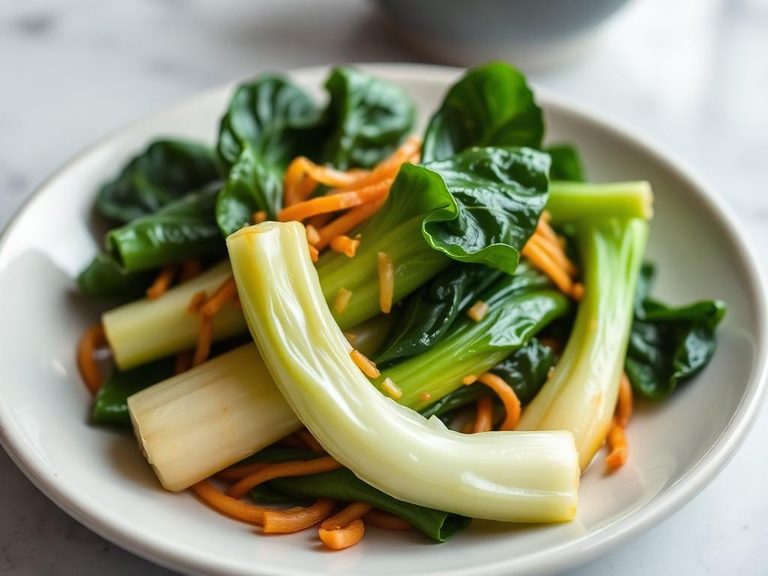
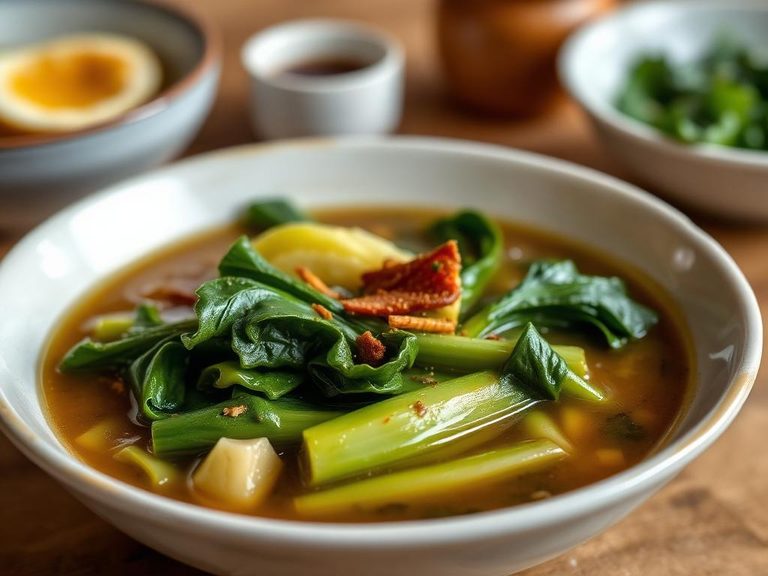
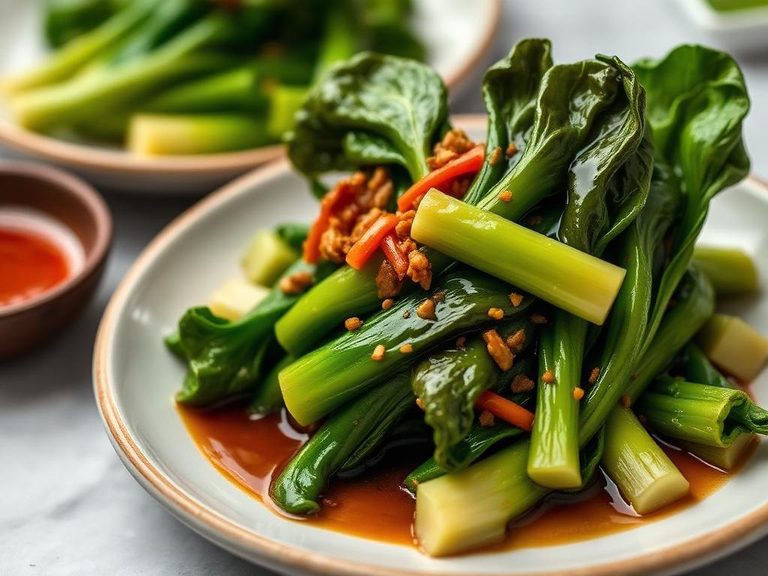
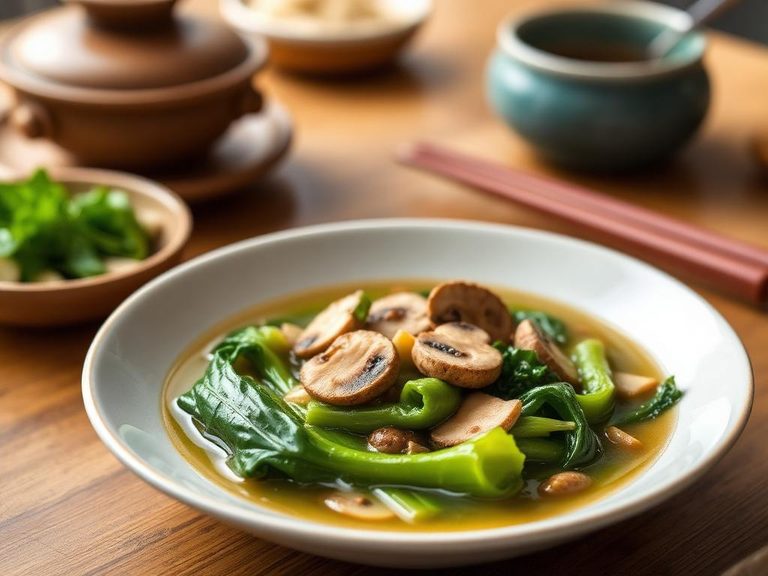
🍽️ Popular dishes
🌍 Where it's eaten
💡 Did you know?
The name 'bok choy' comes from the Cantonese pronunciation of the Chinese characters 白菜 (báicài), which literally means 'white vegetable,' a reference to its distinctive pale stalks.
Full nutrition (USDA data · scales with serving)
| Water | 94.5 g |
| Energy (Atwater General Factors) | 20.3 kcal |
| Energy (Atwater Specific Factors) | 17.0 kcal |
| Nitrogen | 0.16 g |
| Protein | 1.0 g |
| Total lipid (fat) | 0.23 g |
| Ash | 0.69 g |
| Carbohydrate, by difference | 3.5 g |
| Fiber, total dietary | 1.3 g |
| Calcium, Ca | 61.9 mg |
| Iron, Fe | 0.44 mg |
| Magnesium, Mg | 13.6 mg |
| Phosphorus, P | 30.5 mg |
| Potassium, K | 228 mg |
| Sodium, Na | 14.3 mg |
| Zinc, Zn | 0.27 mg |
| Copper, Cu | 0.03 mg |
| Manganese, Mn | 0.20 mg |
| Vitamin C, total ascorbic acid | 30.3 mg |
| Folate, total | 68.0 ug |
| 5-methyl tetrahydrofolate (5-MTHF) | 50.0 ug |
Fat & fatty acid profile (per 100g)
Estimated from Cabbage, red, cooked, boiled, drained, with salt — USDA does not publish this profile for Cabbage.
| Fatty acids, total saturated | 0.01 g |
| SFA 4:0 | 0.00 g |
| SFA 6:0 | 0.00 g |
| SFA 8:0 | 0.00 g |
| SFA 10:0 | 0.00 g |
| SFA 12:0 | 0.00 g |
| SFA 14:0 | 0.00 g |
| SFA 16:0 | 0.01 g |
| SFA 18:0 | 0.00 g |
| Fatty acids, total monounsaturated | 0.01 g |
| MUFA 16:1 | 0.00 g |
| MUFA 18:1 | 0.01 g |
| Fatty acids, total polyunsaturated | 0.04 g |
| PUFA 18:2 | 0.02 g |
| PUFA 18:3 | 0.02 g |
| PUFA 20:4 | 0.00 g |
| Fatty acids, total trans | 0.00 g |
| Cholesterol | 0.00 mg |
Amino acid profile (per 100g)
Estimated from Cabbage, red, cooked, boiled, drained, with salt — USDA does not publish this profile for Cabbage.
| Tryptophan | 0.01 g |
| Threonine | 0.04 g |
| Isoleucine | 0.04 g |
| Leucine | 0.05 g |
| Lysine | 0.05 g |
| Methionine | 0.01 g |
| Cystine | 0.01 g |
| Phenylalanine | 0.04 g |
| Tyrosine | 0.02 g |
| Valine | 0.05 g |
| Arginine | 0.09 g |
| Histidine | 0.03 g |
| Alanine | 0.05 g |
| Aspartic acid | 0.14 g |
| Glutamic acid | 0.35 g |
| Glycine | 0.04 g |
| Proline | 0.06 g |
| Serine | 0.06 g |
FAQ
What's the difference between bok choy and baby bok choy?
Baby bok choy is simply a younger, smaller variety harvested earlier. It has a more tender texture, sweeter flavor, and is often cooked whole or halved, while mature bok choy has thicker, more pronounced stalks.
How do I store raw bok choy?
Wrap unwashed bok choy loosely in a paper towel and place it in a plastic bag in the refrigerator's crisper drawer. It should stay fresh for up to a week. Avoid washing until ready to use, as excess moisture can promote spoilage.
Is the white part of bok choy edible?
Yes, the entire vegetable is edible. The crisp, white stalks have a milder flavor and take slightly longer to cook than the tender green leaves. You can separate them and add the stalks to the pan first for even cooking.
Nutrient density (calculated · NRF9.3)
Nutrient Rich Foods index: beneficial nutrients (protein, fiber, vitamins, minerals) minus saturated fat, added sugar & sodium, per 100 kcal.
NRF9.3 index — Fulgoni, Keast & Drewnowski, 2009. Computed from USDA nutrients.
Weight-loss friendliness (composite index)
Energy density 0.20 kcal/g · 20% calories from protein · 1.3 g fiber · 0.0 g sugar per 100 g.
Composite of energy density (Rolls et al., 1999), protein & fiber satiety, minus sugar. A calculated heuristic — ranks satiety-per-calorie, not a clinical measure.
Dietary load (calculated from USDA values)
Potential renal acid load. Positive = acid-forming, negative = alkaline-forming.
Sodium-to-potassium ratio: 0.06 (lower is better — aim for ≤ 1)
Sodium:potassium per WHO potassium guidance. Computed from USDA nutrients.